Updated August 3, 2026
Medical resident housing in Mexico City is chosen for routine, not tourism. A four, six, eight, or twelve week rotation demands real rest, a kitchen, laundry, a desk, Wi-Fi, and a route to the hospital that works on your schedule, not just on the map. The apartment that looks best on a listing photo is rarely the one that survives your third post-guardia Tuesday.
StayWork’s strongest fit for residents is Narvarte, especially when the rotation is tied to the corridor of Centro Medico Siglo XXI, Hospital General, Hospital Infantil, or nearby areas. StayWork operates a small number of furnished units in Narvarte and Roma Norte only, so this page is honest about what fits and what does not. If your case is not a rotation but another kind of healthcare stay, start with medical staff housing in Mexico City . Spanish: alojamiento para personal médico covers residents and the wider clinical-staff case.
Every peso figure on this page is a 2026 reference range in MXN for serviced furnished stays. Ranges move with season, dates, and stay length. Treat them as budget planning, not as a quote.
Who this fits
This page is built for:
- R1, R2, R3, or R4 residents with a temporary block in CDMX
- visiting fellows and subspecialists
- medical students on a hospital rotation
- interns or clinical staff with shifting schedules
- two residents who want to share an apartment
- coordinators booking for someone in the program
If you are comparing neighborhoods, read medical rotation housing in CDMX: Narvarte vs Doctores vs Roma Sur . If your hospital is already Centro Medico Siglo XXI and you are torn between two zones, use the specific comparison Narvarte vs Doctores for Centro Medico residents . For a wider look at where residents in this city actually end up living, read where medical residents actually live in Mexico City .
What medical resident housing in Mexico City actually has to do
Residents are not normal monthly guests. A remote worker needs good Wi-Fi and a cafe. You need a building that cooperates with a schedule most apartments were never designed around. Five requirements do almost all the work.
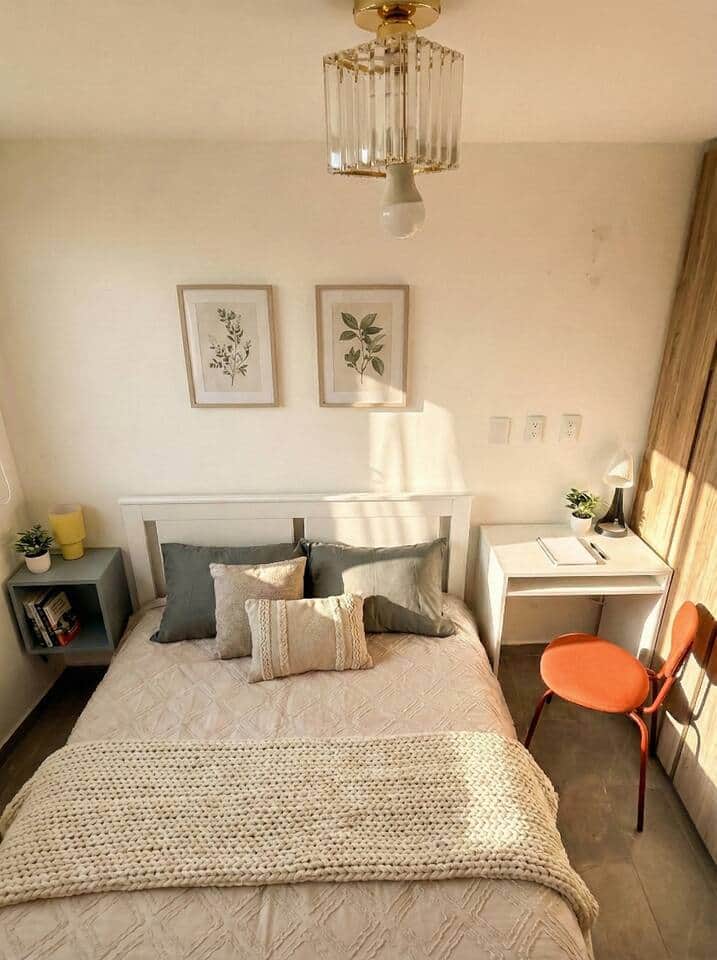
1. Sleep during daylight. After a 24-hour guardia you go to bed at 09:00 and try to stay down until 16:00. That is the hardest sleep in the city to protect. Street noise, a bedroom facing a main avenue, morning construction, and thin curtains all cost you a shift’s worth of recovery. Before booking, ask which direction the bedroom faces, whether it fronts an avenue or an interior patio, and whether the window has blackout coverage. In Narvarte this is a real advantage: interior blocks between Eje 5 Sur and Xola are residential rather than bar-facing, so daytime sleep is a normal request instead of a losing battle.
2. A short post-guardia commute. The commute that matters is not the average one. It is the one you make at 08:00 after 26 hours awake, carrying scrubs and a laptop. Twenty minutes at that moment is roughly double what it feels like when you are rested. A base on the Line 3 corridor keeps that trip short and repeatable, and gives you a walkable fallback when the Metro is unusable.
3. Cheap, reliable food within a few minutes. You cannot cook every day on a rotation, and you should not have to. What you need is a mixed layer: a full supermarket for the weekly shop, a market or fonda for a cheap comida corrida on days you get out at 15:00, and something open late for the nights you get out at 22:00. Narvarte has all three within short walks. See the supermarket map for Roma Norte and Narvarte monthly stays if you want to plan the weekly shop before you arrive.
4. Laundry that does not eat a rest day. Scrubs generate more laundry than an ordinary stay. In-unit laundry is the best case. Failing that, a neighborhood lavanderia with drop-off service, at $80-120 MXN per load as a 2026 reference, turns a half-day chore into a five-minute errand on the way to the hospital. Ask specifically whether the building has a washer, whether it is shared, and how far the nearest lavanderia is on foot.
5. Month-to-month flexibility matched to rotation blocks. Rotations are assigned in blocks, and traditional Mexican leases are not. A standard unfurnished contract in CDMX typically wants a year, a deposit, a guarantor, and often a fiador with property in the city. None of that is available to a visiting R2 who will be gone in ten weeks. Serviced furnished stays exist precisely to fill that gap, and the premium you pay over an unfurnished lease is what buys the exit.
The post-guardia commute test
Do not evaluate the route on a map at midday. Evaluate it three ways.
- The normal day. Leaving at 06:30 for a 07:00 pase de visita. This is the trip you make most often, and it is usually the easiest.
- The post-guardia day. Leaving the hospital around 08:00 or 09:00 after 24 hours on. You want the fewest possible transfers and the shortest walk at the end.
- The bad night. Getting home at 23:00 after a late case. Here you care about street lighting, how far the last block is, and whether the building has clean after-hours access.
Narvarte’s practical advantage for residents is Metro Line 3. The same line links Hospital General, Centro Medico, Etiopia/Plaza de la Transparencia, Eugenia, Division del Norte, and Zapata, which is why so much of the medical corridor’s temporary population lives along it. Eugenia station sits on Avenida Cuauhtemoc between Concepcion Beistegui and Eje 5 Sur, with exits toward Vertiz Narvarte and Del Valle. Metro fare is $5 MXN per trip and Metrobus is $6 MXN, so even two trips a day for a full month comes to roughly $300 MXN. Transport is almost never the line item that breaks a resident’s budget. Housing is.
Test the exact station exit, not the station. A five-minute difference between exits is real when you are carrying equipment and have not slept. For the full route picture, read Narvarte transport and accessibility for long stays .
What a rotation actually costs per month in MXN
These are 2026 reference ranges for serviced furnished monthly stays. They move with season, dates, and stay length, and none of them is a quote.
| Format | Area | 2026 monthly reference (MXN) | Who it fits |
|---|---|---|---|
| Private room + private bath | Narvarte | $9,000–$17,000 | Solo R1–R4 on a stipend; the realistic default |
| Full 1BR | Narvarte | $22,000–$32,000 | Solo resident who needs total quiet and a study desk |
| 2BR | Narvarte | $32,000–$45,000 | Two residents splitting, or a resident with a partner |
| StayWork operated Roma loft | Roma Norte | $23,000–$33,000 | Rotation sites north or west of the corridor |
| 1BR (market reference) | Roma Norte | $28,000–$40,000 | Context for comparing quotes elsewhere |
| 1BR | Del Valle | $24,000–$34,000 | South-central sites; residential and calm |
| 1BR | Juarez | $26,000–$38,000 | Reforma-side hospitals and institutes |
| 1BR | Condesa | $30,000–$44,000 | Rarely the right call on a resident stipend |
| 1BR | Polanco | $38,000–$55,000 | Effectively out of range for a rotation budget |
For most residents the honest read of that table is short: the Narvarte private room with its own bathroom is the band that fits a stipend. Everything above it is a comfort decision you should make with open eyes, not a default.
The rest of the month
Housing is one line. The month has four or five more, and they are the ones people forget when they compare a hospital dorm against a private apartment.
| Line item | 2026 reference (MXN) | Note for a resident |
|---|---|---|
| Groceries for one | $3,500–$5,000 / month | Assumes you cook most breakfasts and some dinners |
| Lavanderia, per load | $80–$120 | Scrubs push you toward 5–8 loads a month |
| Metro fare | $5 per trip | Roughly $300 / month at two trips a day |
| Coworking day pass | $150–$350 / day | Only if you need a quiet desk outside the apartment |
| Parking | $1,500–$3,000 / month | Only if you drive; most residents should not |
| Platform service fees | ~14–16% of the booking | Charged on nightly bookings, avoided when you book direct |
That last row is worth real money on a rotation. On a $25,000 MXN month, a 14–16% platform service fee adds roughly $3,500–$4,000 MXN on top of the rate. Across a three-month block that is $10,500–$12,000 MXN you did not need to spend. Booking direct on the StayWork live availability calendar is the single largest cost lever most residents have, and it costs nothing to use.
Room share versus 1BR: the actual math
Put housing and living costs together and the comparison stops being abstract. The living column below is built from the rows in the table above: groceries at $3,500–$5,000, five to eight lavanderia loads at $80–$120 each, and about $300 of Metro. That comes to roughly $4,200–$6,300 MXN a month for a resident who cooks most days and does not run a car.
| Setup | Housing / month | Living / month | Approximate all-in |
|---|---|---|---|
| Private room + bath, Narvarte | $9,000–$17,000 | $4,200–$6,300 | $13,200–$23,300 |
| Half of a Narvarte 2BR, split with a co-resident | $16,000–$22,500 | $4,200–$6,300 | $20,200–$28,800 |
| Full 1BR, Narvarte, solo | $22,000–$32,000 | $4,200–$6,300 | $26,200–$38,300 |
Two things fall out of that table.
First, the 2BR split is better value than most residents assume. Half of a $32,000–$45,000 MXN two-bedroom is $16,000–$22,500 MXN each. At the top of the private-room band you are already paying $17,000 MXN for a room in a shared apartment, so for a small step up two residents each get a real bedroom, a door, and a shared kitchen they control. If you have a co-resident on the same rotation block, run this number before either of you books separately.
Second, the solo 1BR is roughly double the private room, and the honest question is what the extra $13,000–$15,000 MXN a month buys. For most people it buys guaranteed silence for daylight sleep and a desk that is always free. If you are on a heavy guardia schedule and your rest has already failed once in a shared setup, that is a defensible spend. If you are on a lighter rotation, it usually is not. Compare the specific Narvarte inventory on Narvarte furnished monthly apartments before deciding.
Booking by rotation block: one, two, or three months
Rotations come in blocks, and the booking should follow the block rather than the calendar month.
One month. The right choice when the rotation is a single block, when you are new to the city and want to see the neighborhood before committing further, or when the program has told you the assignment is provisional. The tradeoff is that you are re-entering the market at the end, and the unit you liked may already be taken by someone booking a longer stay.
Two months. The most common resident block and usually the sweet spot. It is long enough that setting up a kitchen and a laundry routine pays off, and long enough that the stay is priced as a monthly rather than as a stretched short stay.
Three months or more. Book this in one reservation when the posting is confirmed. A single longer booking protects both the unit and the rate against seasonal movement, and it removes the mid-rotation move, which is the single most disruptive thing that can happen to a resident’s schedule. Moving apartments during a rotation costs you a rest day you cannot get back.
A practical middle path when dates are soft: book the block you are certain about, and raise the possible extension before you pay, not after you arrive. Whether a fourth or fifth month is possible depends on what is already on the live calendar behind you. Asking early is free; asking in week nine may mean the answer is no.
If the rotation ends early, say so as soon as the program tells you. Do not assume an unused month is automatically refundable, and do not assume it is not. Ask.
Documentation your program or hospital may ask for
Residents get caught out here more than any other guest type, usually because a coordinator asks for paperwork after the stay has already been paid. Sort it in the first message.
- A stay confirmation letter. The most commonly requested document: legal name, full address of the apartment, exact check-in and check-out dates, and a signature. Programs use it to verify you were housed for the rotation period.
- A quote before payment. If your university or hospital is reimbursing rather than paying directly, they usually want a written quote in MXN with the dates and the total before you commit.
- CFDI, if a Mexican entity is paying. A CFDI needs the paying entity’s legal name, RFC, fiscal regime, and postal code. If a hospital, university, or employer is on the invoice, collect those four fields from their finance office before booking rather than after. Read corporate housing CFDI basics so you know what to ask for.
- A named-guest list. Some programs require the housed resident to be the named guest on the booking. If a coordinator is paying on your behalf, flag this so the reservation is in the correct name.
- Insurance or address registration. A few programs ask for a local address for insurance or registration purposes. The confirmation letter usually covers it.
Message info@stayworkcdmx.com with your dates, guests, institution, and the exact fields required. Do not assume documentation is automatic once you have paid.
How to compare against hospital-provided housing
Many programs offer a room in or near the hospital, sometimes free, usually far cheaper than anything on the private market. That option deserves a serious look before you spend $9,000 MXN or more a month. It is not automatically the right answer, and it is not automatically the wrong one either.
Compare on six things, and be specific:
- Daylight sleep. Can you sleep 09:00 to 16:00 without interruption? A shared room with residents cycling through on opposite schedules usually cannot deliver this, and this is the most expensive thing to get wrong.
- Kitchen access. Is there a real kitchen you can use, or a microwave in a corridor? Over a three-month block, no kitchen means eating out twice a day, and a food line that would have sat inside the $3,500–$5,000 MXN grocery band climbs well past it. That difference quietly undoes a large part of the savings.
- Laundry. In-building, nearby, or a problem? Scrubs make this non-negotiable.
- Guests. Can a partner or family visit and stay? Many hospital rooms say no. Over a long block, that matters more than residents expect at the start.
- Term. Does it cover your whole block, or does it end between rotations and leave you finding housing twice?
- Distance. Being inside the hospital is genuinely excellent for the commute, and that should count in its favor.
A reasonable rule: if the hospital option fails on two or more of the first four, price out a Narvarte private room before you accept it. At $9,000–$17,000 MXN a month, the gap is often smaller than it looks once you add the meals you would otherwise be buying out.
Some residents run a hybrid: take the hospital room for the heaviest guardia block, and rent privately for the lighter months when you have time to actually live in the city. That is a legitimate plan, and it is easier to arrange if you say so up front.
Is closest-to-hospital always the right choice?
Staying as close as possible to the hospital can sound logical, but a long rotation also depends on:
- whether you can sleep after a shift
- whether the block feels practical when you come back late
- whether you can cook simple meals
- whether you can do laundry without losing half a day
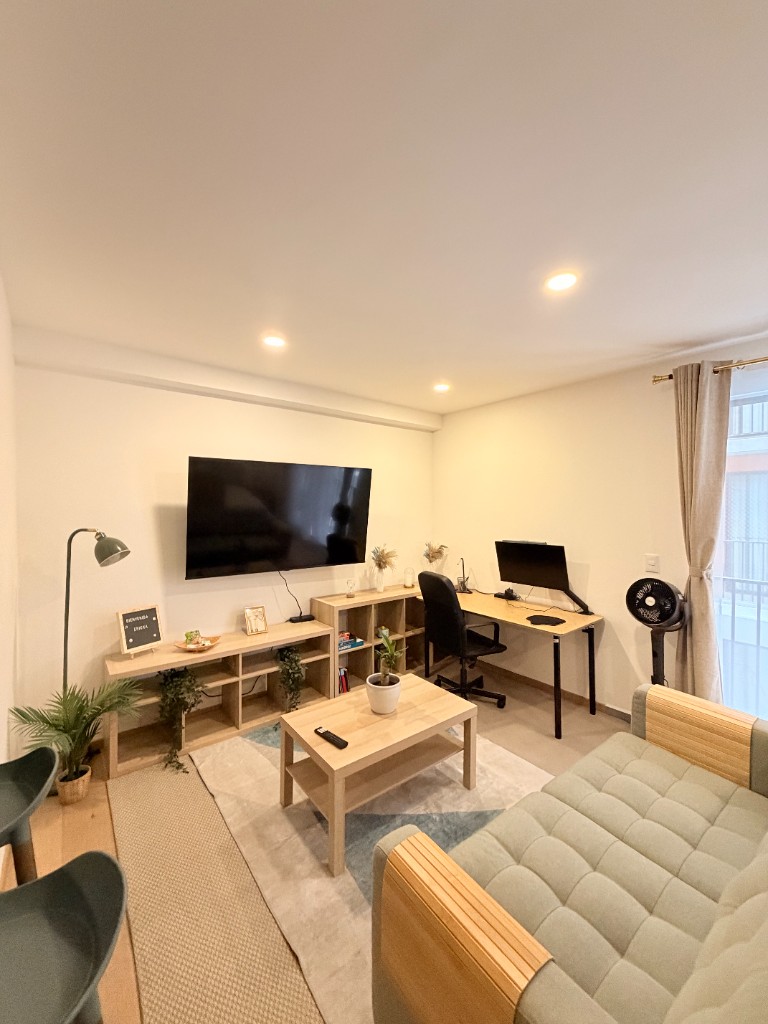
- whether there is a desk for study, reports, or calls
- whether the building has clear after-hours access
- whether the monthly cost still makes sense after transport and food
That is why Narvarte can beat a zone glued to the hospital: sometimes ten extra minutes of travel buys a more stable month. For broader context on the area, read the Narvarte neighborhood page .
One resident vs two residents
Single resident: weigh budget against privacy. A private room can work if you need a simple base, monthly value, and access to the hospital corridor. A full apartment makes more sense if you value quiet, calls, occasional visitors, or recovery between shifts. Run the all-in numbers in the room-share table above before you assume the 1BR is out of reach or that the private room is automatically the cheaper answer.
Two residents: prioritize two real bedrooms, separate beds, space to study, and clear rules for visitors. When shift schedules do not line up, separating rest from shared living matters more than a nice amenity. Agree three things in writing between yourselves before booking: who pays what and when, what happens if one of you rotates out early, and what the quiet hours are when one of you is post-guardia and the other is not.
Medical student or intern on a short block: you are usually the tightest budget and the shortest stay, which is the hardest combination in this market. The private room is normally the only format that works, and a one-month booking is normally the right length. Do not over-buy on space you will not use in six weeks.
Fellow or visiting physician: if the trip includes procedures, academic sessions, or institutional calls, confirm Wi-Fi, desk, billing, and arrival before payment. When an institution is paying, compare corporate housing in Mexico City for invoicing and approval context.
Checklist before booking
Before booking housing for a medical rotation, confirm:
- The hospital, tower, service, or exact entrance.
- Real arrival and departure times on normal days and shift days.
- Route by app, Metro, Metrobus, or walking, tested at your actual shift hours.
- Which Metro station exit is closest to the exact address, not just which station.
- Likely bedroom noise, and which way the bedroom faces.
- Whether the bedroom has blackout curtains for daylight sleep after a guardia.
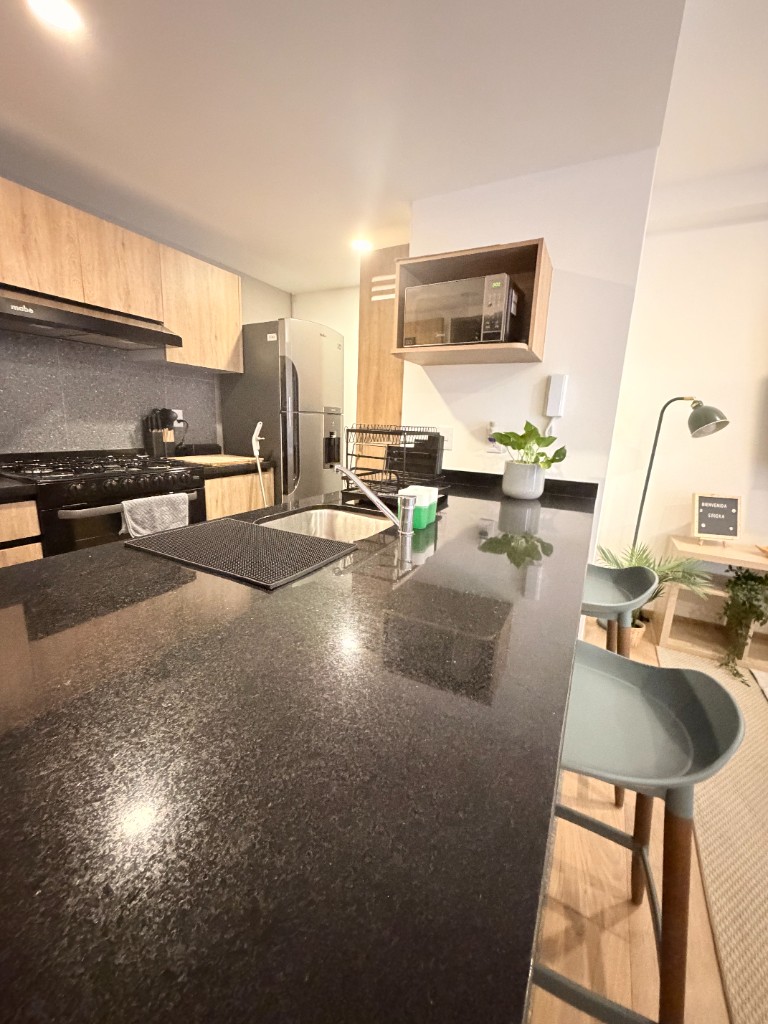
- Kitchen, fridge, utensils, and laundry.
- Whether laundry is in-unit, in-building, or a nearby lavanderia, and how far on foot.
- Desk, chair, Wi-Fi, and outlets.
- Building access early or late, and whether self check-in covers a post-shift arrival.
- Policy if the rotation moves, extends, or ends early.
- Whether a partner or family member can visit during the block.
- Invoice, quote, CFDI, or a stay confirmation letter if an institution is paying or reimbursing.
Work through it in one message rather than three. The answers are quick to give and expensive to discover in week two. For a broader guide, read long-stay housing near CDMX hospitals for medical staff .
Recommended path
- Define your hospital and main entrance.
- Test the route on the real schedule of the rotation.
- If you are going to Centro Medico Siglo XXI, compare Narvarte vs Doctores for residents .
- Compare Narvarte hospital housing and hospital stays in Mexico City .
- If you need a quote, invoice, or flexible dates, email info@stayworkcdmx.com before payment.
- If your dates are clear, open Book Direct and review the live calendar.
Related pages
- Complete hospital housing guide for Mexico City
- Medical staff housing in Mexico City
- Apartment near Centro Médico Siglo XXI
- Narvarte vs Doctores vs Roma Sur for a rotation block
- Furnished monthly apartments near the CDMX medical corridor
This page is housing guidance. It is not medical advice, it does not promise travel times, and it does not replace confirming conditions with your hospital, university, or program.