If you are coming to Mexico City for the 2026 World Cup, the easiest mistake is choosing your stay around one stadium day. That sounds logical but usually is not.
For a normal tourist weekend, staying near the big event can work. For a World Cup trip in CDMX, especially if you are staying more than a few nights, working remotely, traveling as a couple, or trying to live a semi-normal routine, the better question is:
Where can I sleep well, work if needed, move around the city, and still get to the match without building my whole trip around stadium proximity?
This guide works from that question. If you are still at the broader planning stage, read Mexico City before the 2026 World Cup: what to expect first, then use this article to choose the right base neighborhood.
For schedule context, FIFA says the 2026 World Cup runs from June 11 to July 19, 2026, with Mexico City Stadium hosting the opening match on Thursday, June 11, 2026. FIFA’s Mexico fixture page lists Mexico opening there against South Africa, then playing Korea Republic in Guadalajara on Thursday, June 18, and Czechia in Mexico City on Wednesday, June 24. FIFA’s schedule also lists Mexico City Stadium for knockout-stage matches including Round of 32 Match 79 and Round of 16 Match 92. Check FIFA’s full match schedule and Mexico fixtures page before you book around a specific match.
Quick answer
Quick answer
For most World Cup 2026 visitors, do not base the whole stay around Mexico City Stadium unless the match is the only reason you are in Mexico City. Locals still know it as Estadio Azteca, so you may hear both names when asking for directions.
Choose a livable central base instead:
- Roma Norte for restaurants, cafes, social energy, and first-time CDMX convenience
- Condesa for parks, calmer evenings, couples, and softer daily rhythm
- Narvarte for quieter nights, stronger monthly value, and practical transit
- Polanco for premium corporate comfort and higher budgets
- Centro/Reforma/Juarez for sightseeing and hotel-style centrality, with more street intensity
- Coyoacan/Tlalpan only if south-city access matters more than central CDMX life
If your trip is 30+ nights or work-heavy, start with monthly rentals in Mexico City and compare the decision against Mexico City neighborhoods for monthly stays , not only a stadium map.
If you are still choosing the lodging format itself, compare World Cup 2026 Mexico City accommodation options: apartment vs hotel vs Airbnb before you shortlist neighborhoods.
Best neighborhoods at a glance
World Cup 2026 base neighborhoods in Mexico City
| Base area | Best for | Match-day tradeoff | Longer-stay reality |
|---|---|---|---|
| Roma Norte | First-time visitors, remote workers, restaurants, cafes | Not the closest to the stadium | Best all-around city experience if you can manage noise by exact block |
| Condesa | Couples, parks, calmer central stay | Similar match-day logistics to Roma | Softer daily rhythm, often with premium pricing |
| Narvarte | Quiet work stays, value, practical errands | Less tourist-scene energy | Stronger routine if you want a real month, not only nightlife |
| Polanco | Corporate travelers, luxury stays, premium dining | Longer southbound match-day route | Comfortable but expensive and less local-residential |
| Centro/Reforma/Juarez | Sightseeing, hotels, museums, first nights | Traffic and protest risk can matter | Convenient but more variable for sleep and routine |
| Coyoacan/Tlalpan | South-city plans, stadium-side logic | Better for the south, weaker for central CDMX | Good only if you want that part of the city most days |
The honest rule: choose daily life first, match day second
World Cup travel creates a weird planning bias. You look at the map, find the stadium, and assume the closest apartment is the smartest apartment. That only works if your stay is basically one night before and one night after the match.
For everyone else, the stay has more moving parts:
- airport arrival and departure
- meals before and after match days
- sleep after late nights
- cafes, groceries, laundry, and errands
- work calls if you are not fully offline
- safe late-night returns
- the actual neighborhood you will wake up in every morning
If you are staying 7-30+ nights, the apartment and neighborhood rhythm matter more than shaving theoretical minutes off one stadium route. Mexico City is large and traffic is real, so match days will not behave like normal map estimates.
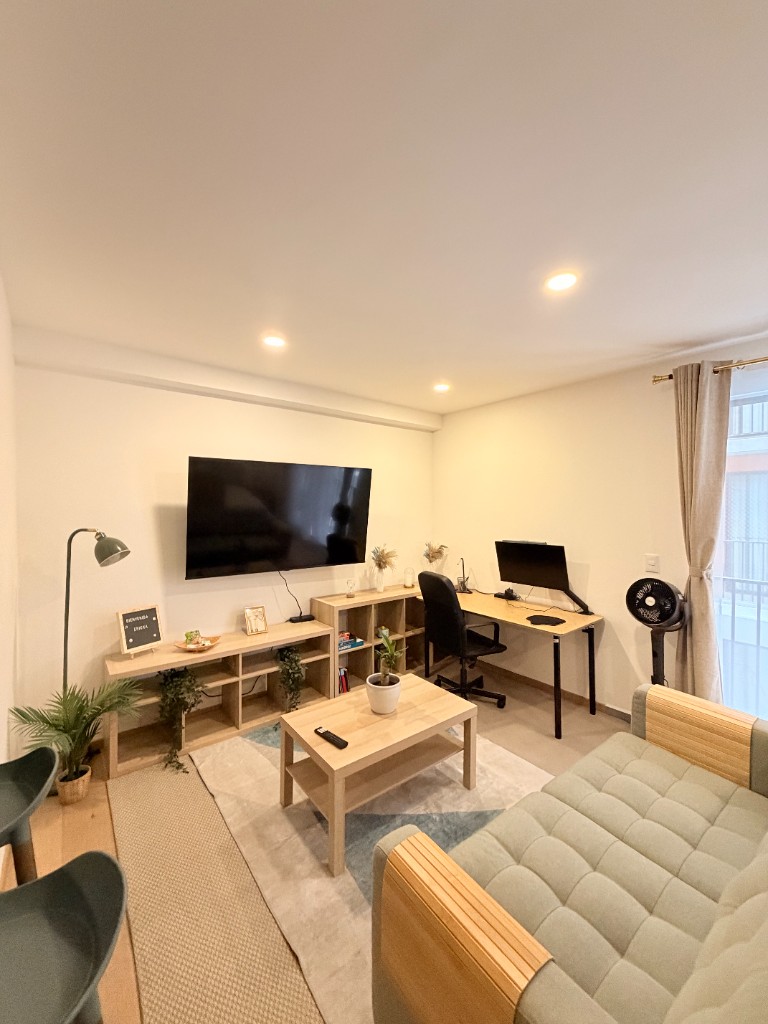
This matters even more for remote workers. A famous neighborhood will not save a weak desk, noisy bedroom, or unreliable call setup. Use digital nomad apartments in CDMX if work fit is part of the trip, then narrow by neighborhood.
Roma Norte: best all-around if you want CDMX energy
Roma Norte is the easiest default for many World Cup visitors because it gives you the most useful version of central Mexico City.
You get restaurants, bars, cafes, walkable streets, coworking backups, parks nearby, and easy access to Condesa, Juarez, Reforma, and Centro. If this is your first CDMX trip and you want to feel the city between matches, Roma Norte is hard to beat.
The tradeoff is noise. Some blocks are lively late, especially near restaurant and nightlife corridors. That can be fun on a tournament trip and a problem by day five of a remote-work month.
Choose Roma Norte if:
- you want the strongest restaurant and cafe density
- you like walking to plans instead of taking rides for every meal
- you want social energy during the tournament
- you can confirm the apartment is not facing the loudest street
If Roma is already your likely base, compare Roma Norte apartments early. During a demand spike, the best unit is the one with the right block, bedroom orientation, desk, Wi-Fi, and check-in flow, and that is rarely the cheapest Roma listing.
Condesa: best for couples, parks, and calmer central rhythm
Condesa is the usual alternative when guests want central CDMX without Roma Norte’s full intensity.
It is greener, softer, and more park-oriented. Morning walks around Parque Mexico or Parque Espana can make a longer stay feel less like event travel and more like a real city routine. For couples, this matters. You can still reach Roma quickly, but your home base feels less like the middle of the scene.
The catch is cost. Condesa is popular, and tournament demand can make average listings feel expensive for what they provide, so inspect the unit as well as the neighborhood name.
Choose Condesa if:
- you want a central base but care about sleep
- parks and walking loops are part of the trip
- you are traveling as a couple
- you want restaurants nearby without being on top of nightlife
If you are comparing Condesa with Roma and Polanco, use Polanco vs Condesa vs Roma Norte before locking the decision.
Narvarte: best practical base for quiet, value, and routine
Narvarte is not the neighborhood most World Cup visitors search first, and that is why it deserves attention.
It is more residential, calmer at night, practical for groceries and repeat errands, and often better value than the most famous tourist zones. For a longer stay, especially if you need to work, recover, cook sometimes, or sleep properly, that can be a better setup than paying a premium to be surrounded by visitors.
What you give up is scene density: Roma’s cafe grid and Condesa’s park loop will not be at your door. In exchange, you get a neighborhood that works well when the apartment is where you live day to day.
Choose Narvarte if:
- quiet nights matter
- you want better monthly logic during peak demand
- you are comfortable taking short rides or transit for nightlife
- your trip includes remote work or a normal weekday routine
For this profile, start with Narvarte furnished stays and pressure-test whether you need a more famous colonia; many guests do not.
Polanco: best for premium comfort, not value
Polanco is the premium option, suited to corporate travelers, guests with higher budgets, and people who want polished dining, shopping, and hotel-style comfort.
For World Cup travel, Polanco can be comfortable but not necessarily efficient. It is not the natural choice if your main goal is stadium access, local daily rhythm, or value; pick it when budget is secondary and you want a more upscale base.
Choose Polanco if:
- you are traveling for corporate hospitality or executive plans
- premium restaurants and service matter more than local texture
- you are comfortable paying more for comfort
- you do not need the most efficient south-city route every day
Skip Polanco if you are trying to stretch a month-long budget. You will usually get better routine value in Roma Norte, Condesa, or Narvarte.
Centro, Reforma, and Juarez: convenient but uneven
Centro, Reforma, and Juarez can make sense if your trip is museum-heavy, hotel-based, or focused on sightseeing before and after matches.
Reforma gives you big-city convenience, hotels, offices, and access to Chapultepec, Juarez, Roma, and Centro. Juarez can be a strong hybrid if you want restaurants and nightlife without being fully inside Roma. Centro has the history and sightseeing, but it is more variable block by block, especially at night.
These areas can be excellent for a few nights and more tiring once you need a routine for a longer stay. Traffic, events, demonstrations, street closures, and late-night movement can affect daily plans. For airport logistics, pair this decision with our AICM airport transportation guide . For ride-hailing choices during the trip, read Uber vs Didi in CDMX .
Choose Centro/Reforma/Juarez if:
- you want hotels, museums, and central sightseeing
- you are staying fewer nights
- you are comfortable with more city intensity
- you do not need a quiet apartment-first routine
Coyoacan and Tlalpan: useful for the south, weaker for central life
Coyoacan and Tlalpan are the tempting choices if you are focused on south Mexico City and the stadium area.
They can be beautiful, especially Coyoacan, and they may reduce some southbound movement. But for most visitors, they are less practical as a whole-trip base. You give up easy access to Roma, Condesa, Juarez, Reforma, and Polanco, and your non-match days become more spread out.
Choose Coyoacan or Tlalpan if:
- you strongly prefer the south of the city
- your plans are mostly near that side
- you are not trying to sample central CDMX every day
- stadium-side logic matters more than remote work or nightlife
Do not choose them only because the map looks closer to the match; on event days, “closer” does not always mean simpler.
Why stadium proximity can get expensive
World Cup demand raises prices near the stadium, and it also makes indecision expensive.
If you wait too long, you may find yourself choosing between an overpriced famous neighborhood, an inconvenient far-flung listing, or a property with weak work and sleep basics. Many travelers lose value that way, through a stack of small compromises instead of one obvious fee.
Watch for:
- nightly rates that look reasonable before taxes and fees
- listings far from transit that require more ride-hailing
- apartments with no real desk for work days
- street-facing bedrooms on loud corridors
- cancellation terms that do not match tournament uncertainty
- “near the stadium” claims that still require a complicated route
For 30+ nights, the better comparison is total livability. Start from where to stay in Mexico City for monthly stays and then decide whether World Cup logistics change the answer.
Choose by traveler type
World Cup visitor here for 3-6 nights
Choose Roma Norte, Condesa, Reforma, Juarez, or a good hotel-style central base. You want easy meals and movement in a neighborhood that feels good immediately. Stadium proximity matters, but not enough to isolate the whole trip.
Remote worker staying 2-6 weeks
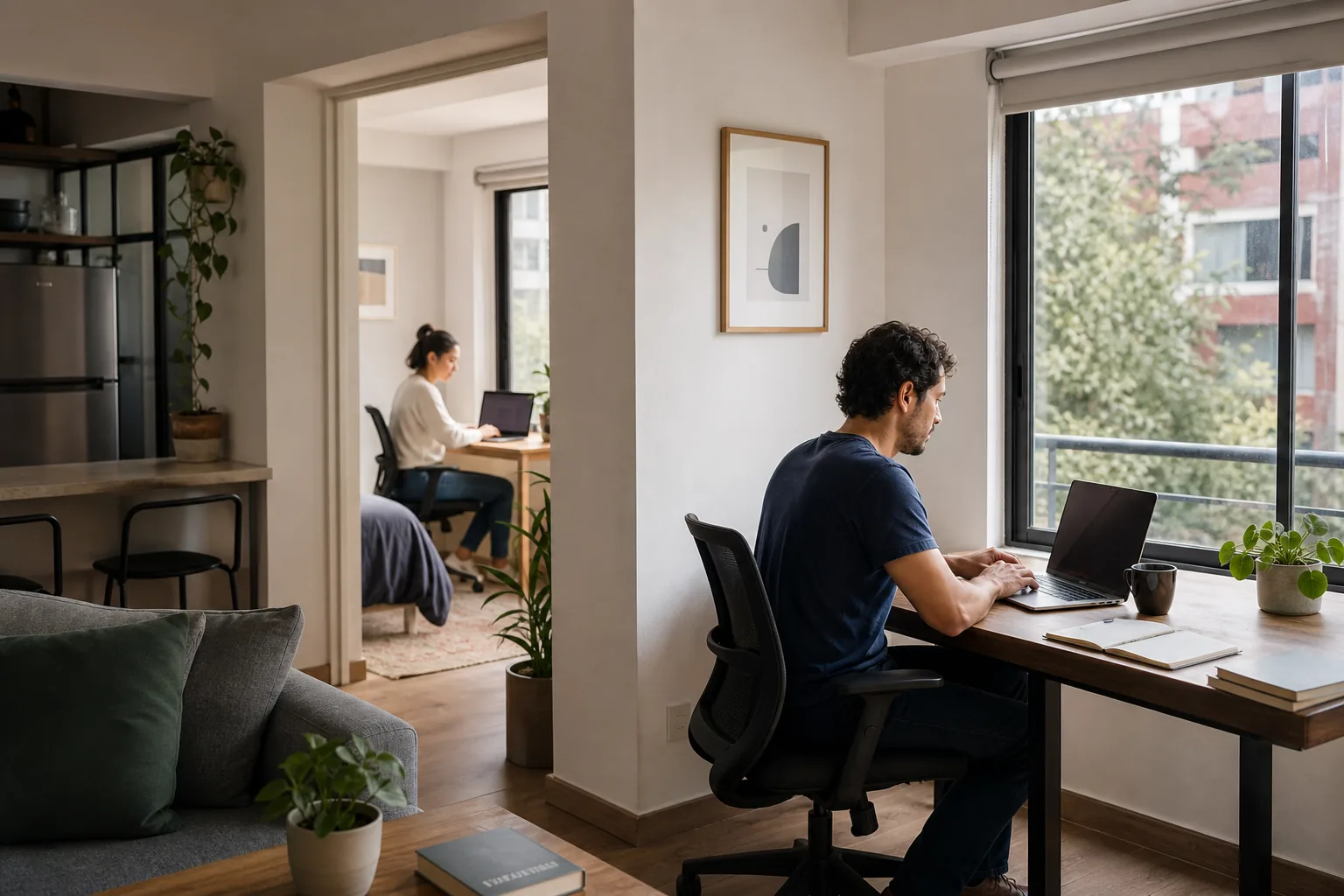
Choose Roma Norte for cafe density and social options, Narvarte for calmer workdays and stronger value, or Condesa for a central but softer rhythm.
The apartment matters more than the postcard neighborhood. Confirm desk, Wi-Fi, bedroom noise, and daylight before you pay.
Couple combining matches and city time
Condesa is often the easiest fit, with Roma Norte close behind. Narvarte works if you care more about quiet and value than being surrounded by restaurants every night.
Longer-stay traveler using CDMX as a base
Start with monthly logic and compare routine, groceries, laundry, transit, and sleep. Use long term rentals in Mexico City first, then decide whether Roma, Condesa, Narvarte, or another area fits the actual month.
A realistic match-day plan from a central base
The StayWork recommendation is to base yourself in Roma Norte, Condesa, or Narvarte. Keep normal days easy: walk to coffee, buy groceries, work from the apartment, sleep properly, and use the city like a city instead of treating every day like an event transfer.
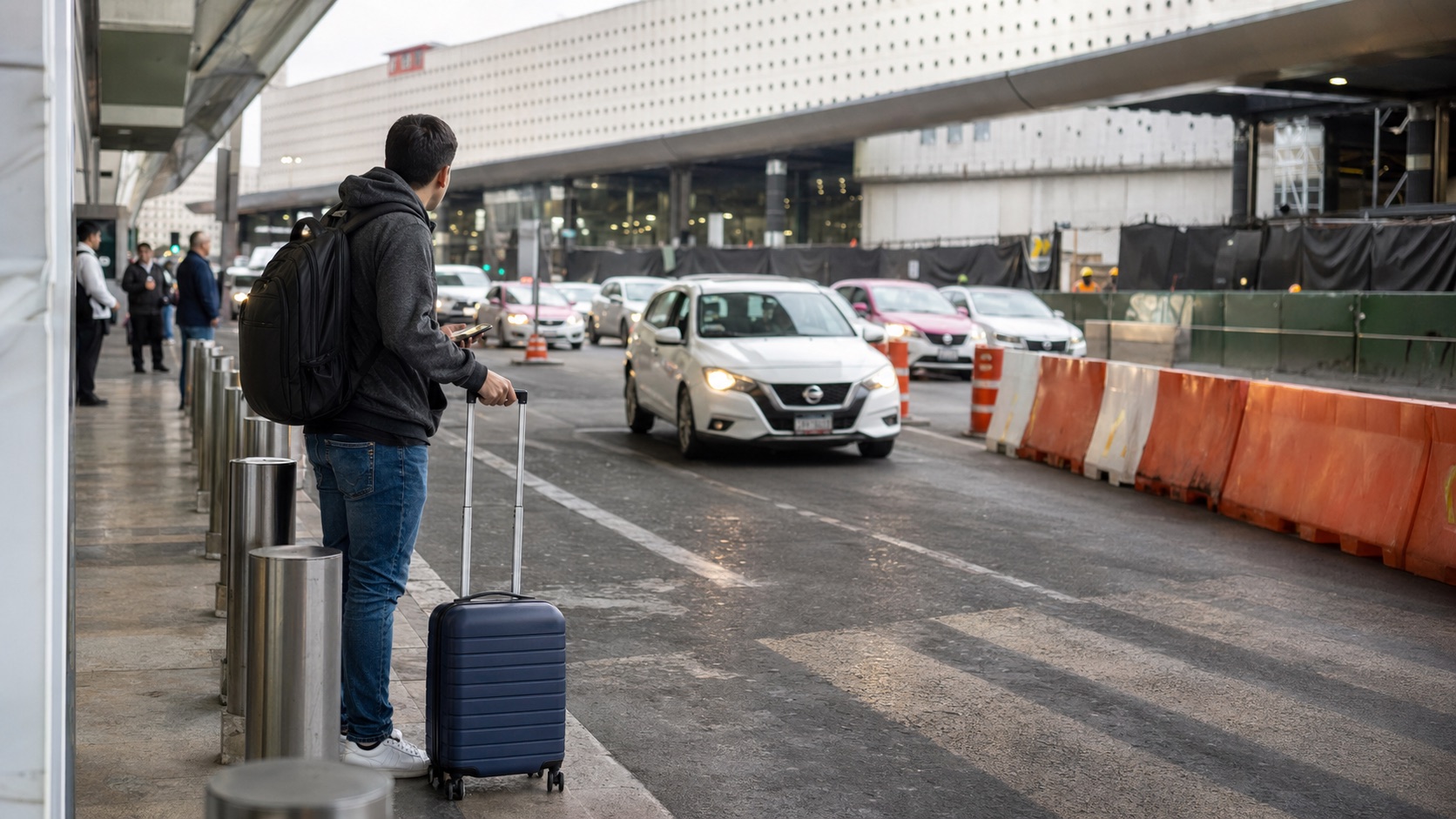
Then treat match day as its own operation:
- Leave earlier than a normal maps estimate suggests.
- Use transit where it is clearly better than surface traffic.
- Keep ride-hailing as a backup, not the whole plan.
- Expect crowds around stations, pickup points, and major avenues.
- Return with patience instead of scheduling a tight dinner immediately after.
This is why we do not recommend booking solely around stadium proximity: you can solve match day with planning, but a bad apartment, a noisy block, or a neighborhood that does not fit the rest of the trip is harder to solve.
What to confirm before you book
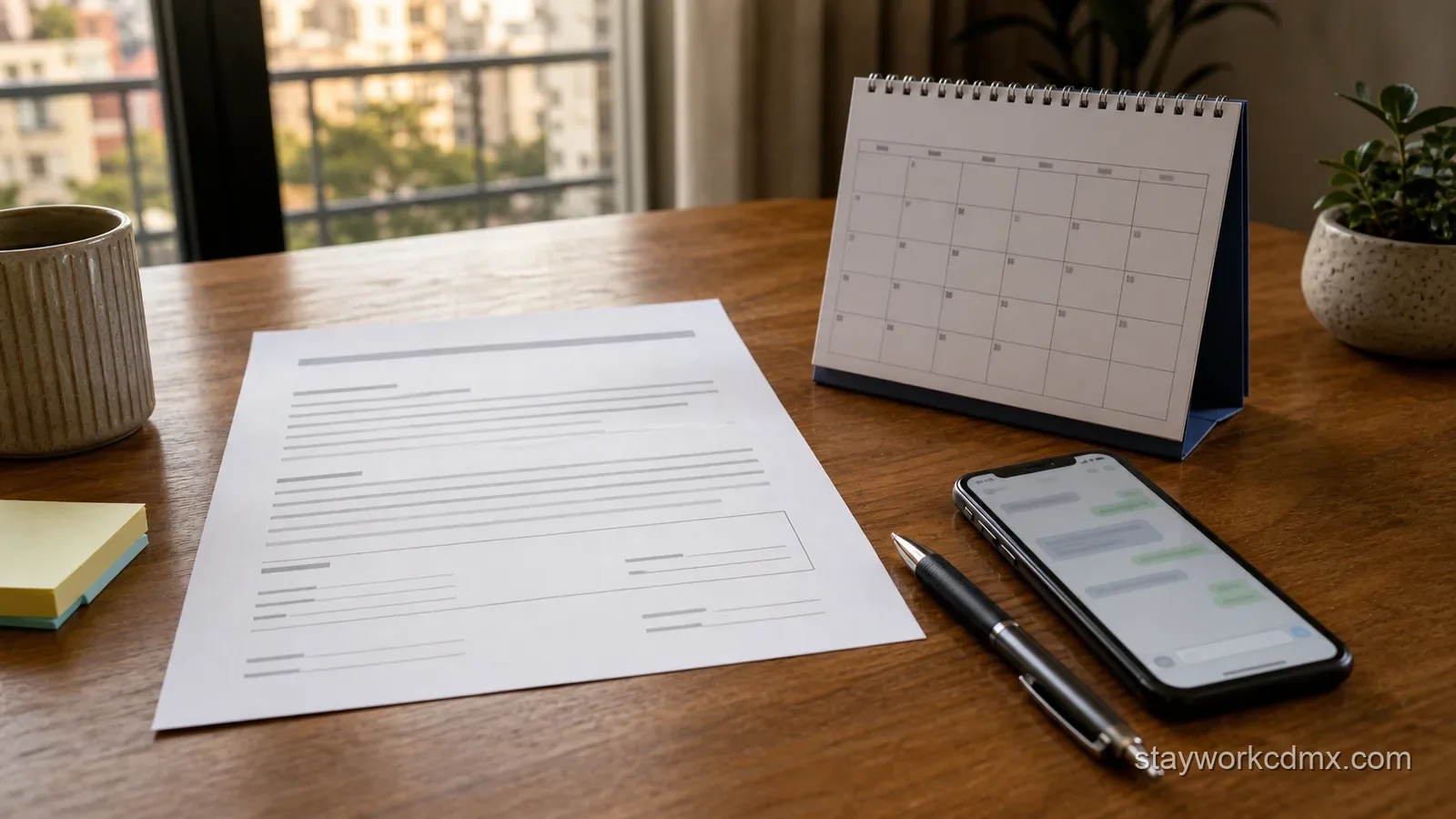
Before you commit to any World Cup stay, ask:
- Is the bedroom interior-facing or street-facing?
- Is there a real desk and chair if I need to work?
- What is the Wi-Fi setup and backup expectation?
- How far is the apartment from useful transit, not just a major avenue?
- Are groceries, laundry, and normal meals easy nearby?
- What are the all-in fees and cancellation terms?
- How does late arrival work if the airport or traffic is delayed?
For longer stays, this checklist matters more than a decorative listing photo. If the trip includes remote work, read the neighborhood and apartment details together.
For monthly stays
Choose a livable World Cup base in CDMX
For World Cup 2026, our bias is to choose a base that works on non-match days, then plan match-day transport separately.
Compare Mexico City monthly rentals , review the neighborhood fit, and use Book Direct when you are ready to ask about dates, apartment setup, and arrival logistics.
Final verdict
If you are coming to Mexico City for World Cup 2026, stay near the life you want for the whole trip, not only near the stadium for one day.
For most visitors, that means Roma Norte, Condesa, or Narvarte. Polanco works when budget and premium comfort matter more. Reforma, Juarez, and Centro work for short sightseeing-heavy stays. Coyoacan and Tlalpan only make sense when south-city access is the priority.
Our recommendation is to choose a livable central base, protect sleep and routine, and plan match-day transport as a separate decision.
When you are ready to move from research to dates, use Book Direct so the conversation can move past the neighborhood label to the exact apartment.
FAQ
What is the best neighborhood in Mexico City for World Cup 2026?
For most visitors, Roma Norte, Condesa, and Narvarte are the strongest practical bases. Roma Norte gives the most city energy, Condesa gives a calmer central rhythm, and Narvarte gives quieter value for longer stays.
Should I stay near Mexico City Stadium?
Usually no, unless the match is the main purpose of a very short trip. Locals still know the venue as Estadio Azteca, but FIFA uses Mexico City Stadium in current schedule wording. For longer visits, remote work, couples, and first-time CDMX stays, a central livable neighborhood is usually better.
Is Narvarte too far for World Cup visitors?
Not necessarily. Narvarte can be a smart base if you value quiet nights, grocery access, and monthly practicality. It is less touristy than Roma or Condesa, but that can be an advantage during peak demand.
Is Polanco worth it during the World Cup?
Polanco is worth it if you want premium comfort, corporate-style travel, and a higher service level. It is not usually the best value play or the most natural stadium-access choice.
How early should I book a World Cup stay in Mexico City?
As early as your dates and cancellation comfort allow. The best units for sleep, work, transit, and neighborhood fit are usually limited, and World Cup demand makes weak options more expensive later.