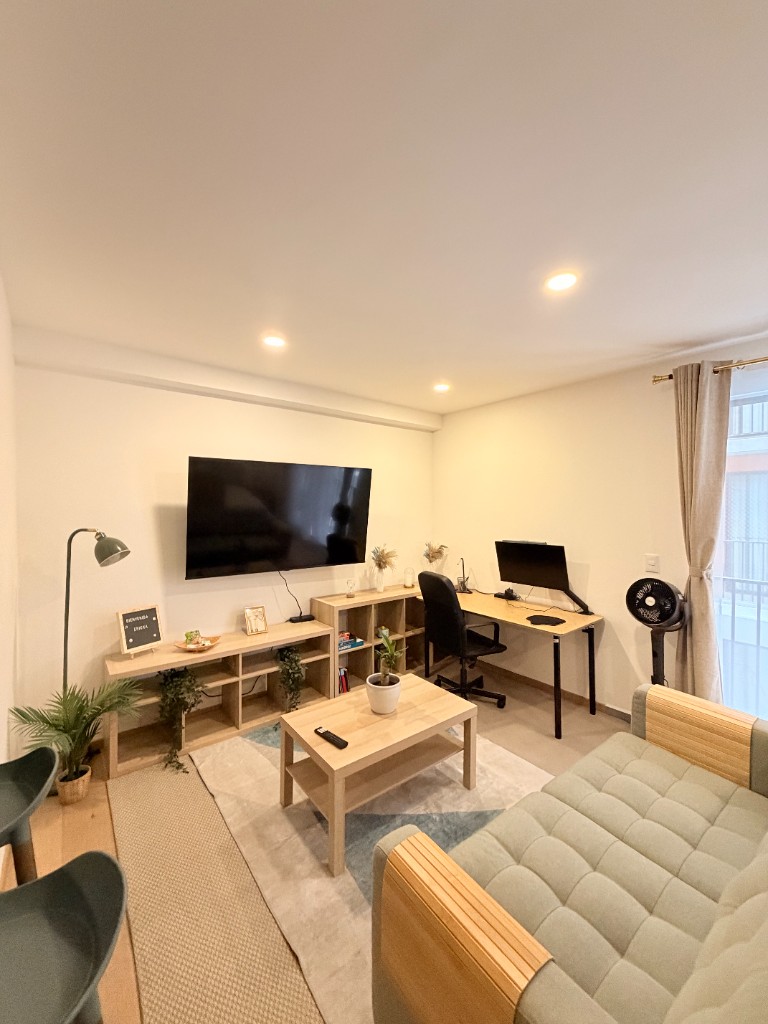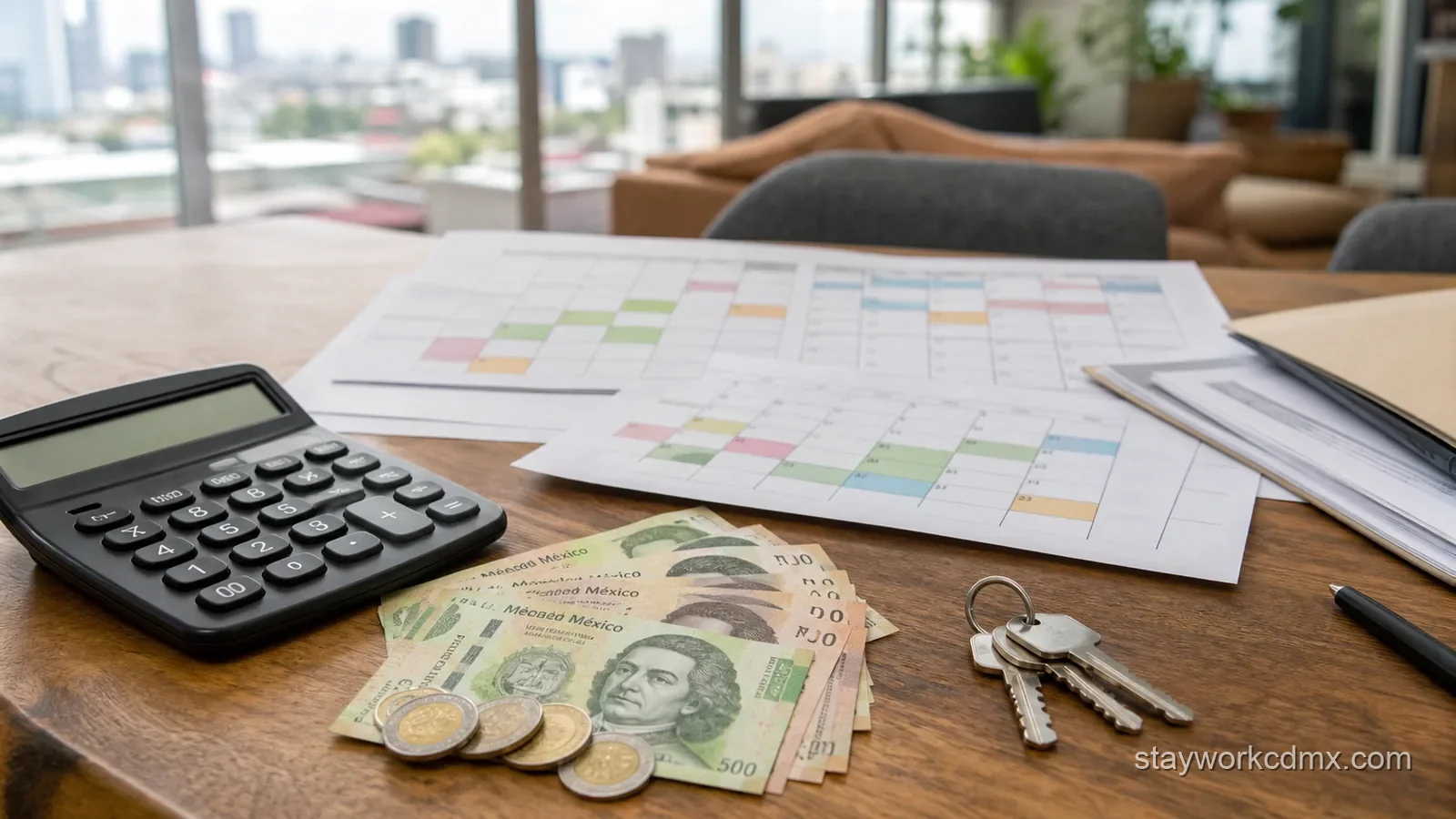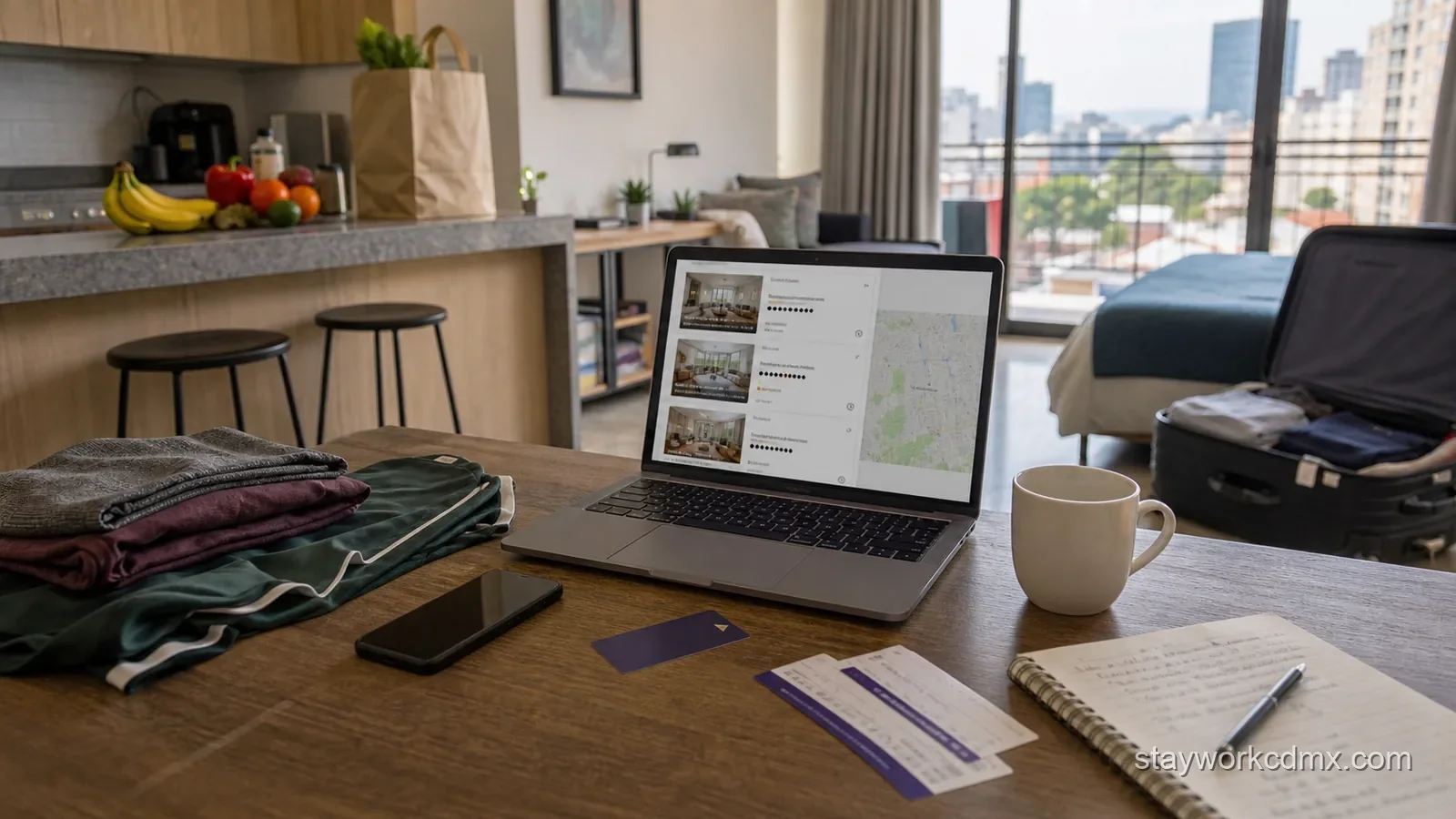
If you need World Cup 2026 Mexico City accommodation for more than a match weekend, plan the stay the way you would plan a temporary home.
A hotel can be the right call for a short match weekend, and an Airbnb-style platform can be useful while you are still scanning options. But if your trip includes remote work, laundry, groceries, multiple match days, a partner, or small corporate travel, compare the total stay. The nightly rate is only one part of it.
If Roma Norte is sold out or priced beyond the trip, do not panic-book the closest stadium room. Condesa, Narvarte, Juárez/Reforma, Napoles, and Del Valle can all work when the apartment, sleep, transit, and work setup are stronger.
For the city context, our Mexico City World Cup 2026 planning guide covers construction, airport movement, neighborhoods, and day-of travel friction. This article covers the accommodation decision: apartment vs hotel vs Airbnb-style platform booking.
Official FIFA pages list the tournament window from June 11 to July 19, 2026, with the opening match at Mexico City Stadium on Thursday, June 11, 2026. Locals still know the venue as Estadio Azteca. FIFA also lists Mexico against South Africa there on June 11, Mexico against Czechia there on June 24, plus knockout-stage fixtures in Mexico City. Check FIFA’s full match schedule and Mexico fixture page before booking around specific match dates.
Quick Answer
Quick answer
For 2-4 nights, a hotel can be best if you want service, daily housekeeping, and a simple check-in.
For 2-6 weeks around World Cup 2026, a furnished apartment is usually the better default because you need routine: a kitchen, laundry access, a work setup, space to unpack, and written clarity on the total stay.
Use Airbnb-style platforms for discovery and public reviews, but do not book a long tournament stay from photos alone. Confirm the full total, cancellation terms, exact apartment, Wi-Fi, workspace, laundry, cleaning, and building rules before payment.
If you already know you want a longer stay, compare monthly rentals in Mexico City once your dates are firm, then get the exact apartment, total, workspace, laundry, and arrival terms in writing.
Apartment vs Hotel vs Airbnb-Style Booking at a Glance
Best lodging option for a longer World Cup stay in Mexico City
| Factor | Furnished apartment | Hotel | Airbnb-style platform booking |
|---|---|---|---|
| Best for | 2-6 week stays, remote work, couples, small teams, routine | 2-4 nights, service, daily housekeeping, loyalty benefits | Discovery, reviews, broad inventory, familiar checkout |
| Main advantage | Livable setup with kitchen, laundry, workspace, storage | Convenience and service | Easy comparison across many listings |
| Main risk | Booking before the exact terms and apartment fit are clear | Total cost rises with meals, laundry, workspace, and service needs | Choosing from photos without long-stay verification |
| Work setup | Can be strong if verified before booking | Variable; desk may be small or uncomfortable | Listing language may not prove daily work suitability |
| Food and laundry | Usually easier for a multi-week routine | Often pushes you toward restaurants and paid laundry | Depends on the exact unit and host clarity |
| Booking clarity | Strong when terms are written direct with the operator | Clear for short stays, less efficient for long living | Governed by platform policies and listing settings |
| Better next step | Ask for total terms and long-stay details | Compare final nightly checkout plus daily costs | Read recent reviews and verify monthly details in writing |
World Cup demand makes weak booking assumptions more expensive. In a normal week, a small room, vague workspace, or unclear cancellation term may be annoying. During a tournament window, the same details can affect your work calls, sleep, match-day movement, and ability to adjust plans.
Why Longer World Cup Stays Change the Math
For a 2-night trip, you can live out of a suitcase, eat every meal out, send laundry later, and work from a cafe if needed. For a 2-6 week stay, that stops working.
Putting a hotel nightly rate next to an apartment nightly rate leaves most of the cost out. Compare the all-in stay cost plus daily friction, which includes:
- taxes and mandatory fees
- platform or service fees
- cleaning charges
- cancellation and date-change terms
- restaurant and delivery spend
- laundry
- workspace overflow
- transport patterns on match days
- noise and sleep quality
- whether you can live normally between games
That is why we usually separate short service trips from longer living trips, and the same pattern holds in normal CDMX demand. World Cup dates make these costs more important to verify.
Hotels: Best for Short, Service-First World Cup Trips
If you are coming for one match, staying 2-4 nights, and want daily housekeeping, breakfast, front-desk support, luggage storage, and a familiar arrival, a hotel can be the right choice and may be easier than an apartment.
A hotel is especially practical when:
- you will not work much from the room
- you want daily service more than space
- you have a very short stay
- you value loyalty points or corporate booking systems
- you prefer a staffed front desk
- you do not want to coordinate cleaning, laundry, or building access
Hotels are designed around service and short stays, not always around living and working for several weeks, so they often become less efficient when the stay stretches past a few nights.
For a multi-week trip, you may start paying indirectly for normal life: restaurants because there is no kitchen, laundry because there is no washer, coworking because the desk is not comfortable, and extra transport because your location is good for one match day but weak for the rest of the trip.
Furnished Apartments: Usually Better for 2-6 Weeks
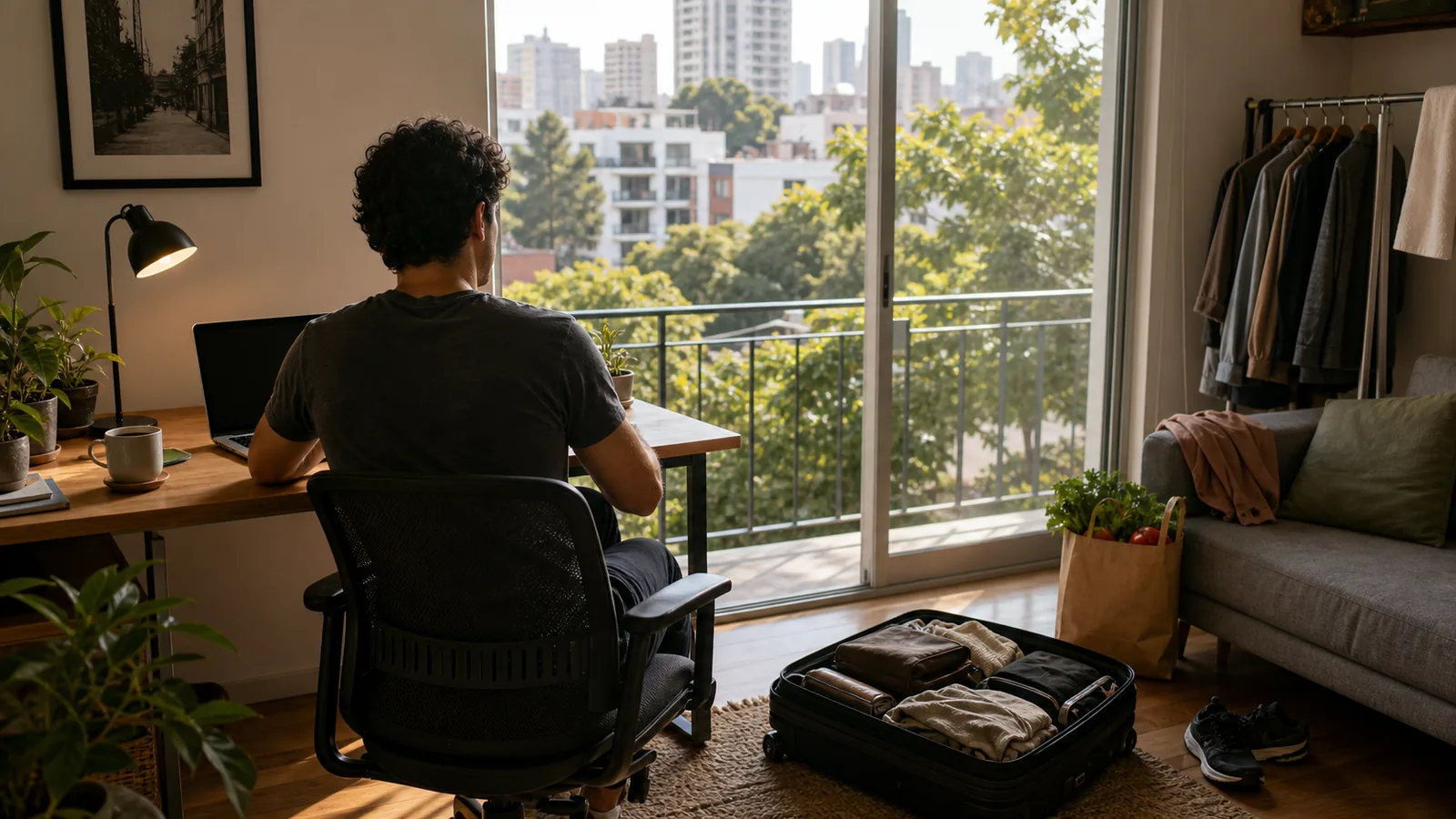
A furnished apartment is usually the stronger fit when the trip includes work, routine, and repeated days in the city.
For World Cup visitors staying longer, an apartment lets you:
- unpack instead of living from luggage
- make breakfast, coffee, snacks, and simple meals
- do laundry without turning it into a project
- take calls from a more private space
- separate sleep, work, and eating more easily
- manage late nights and recovery days better
- stay in a neighborhood that fits the full trip, not just one event
This matters for remote workers extending the trip, couples sharing a stay, small corporate travelers, and anyone mixing match days with normal workdays.
The apartment still needs checking. Do not assume every furnished apartment is ready for a serious work stay; before booking, confirm the desk, chair, Wi-Fi reliability, laundry setup, cleaning expectations, building rules, and exact total.
If your stay is a month or close to it, start from a monthly-stay comparison and do not book it like a weekend rental.
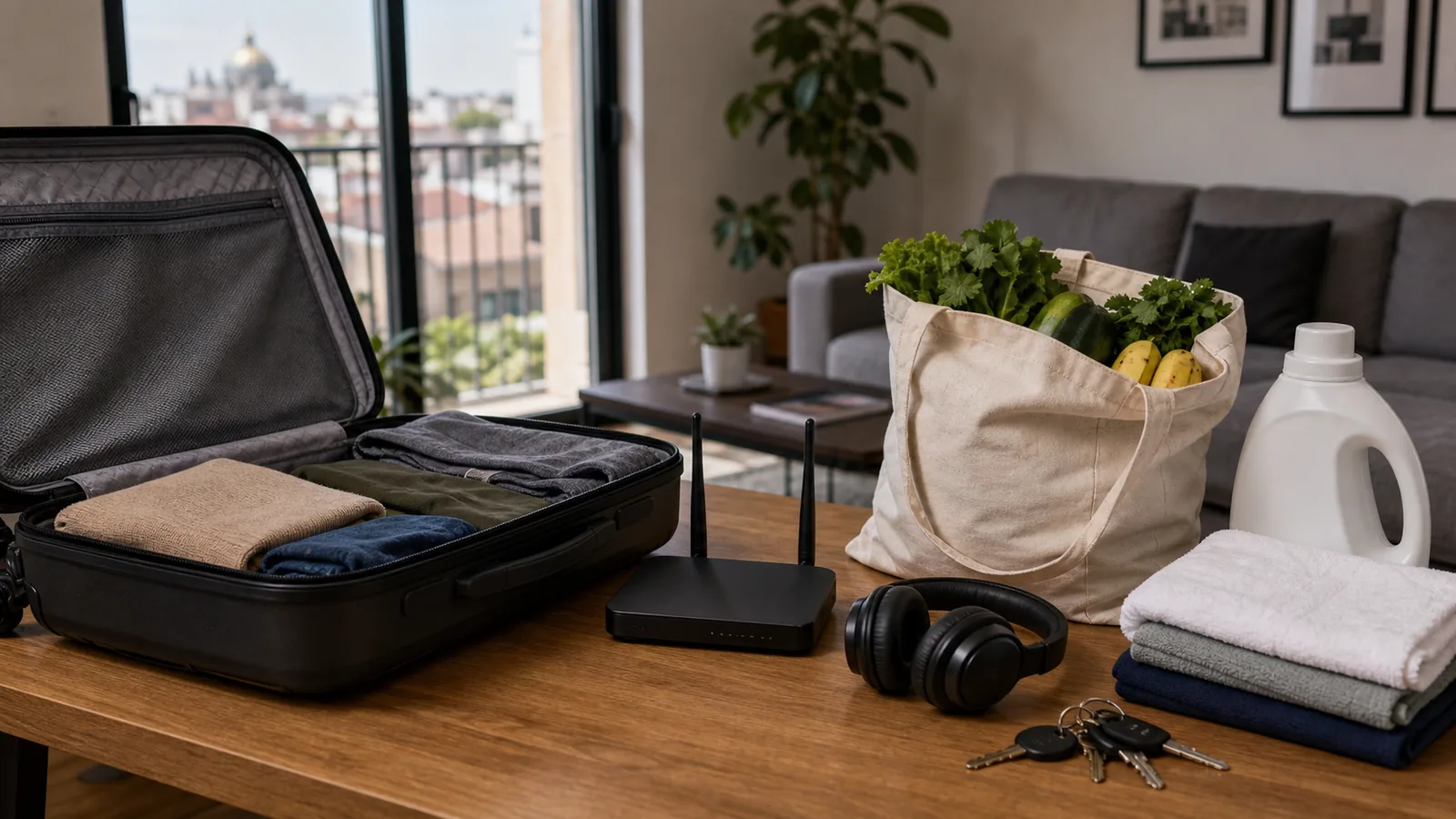
For World Cup dates, check whether the operator can confirm the same unit, same dates, workspace, laundry, kitchen setup, and total stay terms in writing before you pay. A listing that says “monthly” does not answer that.
Airbnb-Style Platforms: Useful for Discovery, Risky Without Verification
Airbnb-style platforms are useful while you are still learning the market. You can scan neighborhoods, compare photos, read public reviews, and see what different price points look like, which helps first-time visitors.
Platform listings are often written to reassure short-stay guests and say less about whether a place holds up for a long stay. A listing might show a nice living room but not the chair you will use for calls. It might say “workspace” and mean a small dining table, or show a washer without explaining the building laundry rules. Great reviews from weekend guests can still say very little about a four-week work stay during a high-demand event window.
Before booking through any platform, verify:
- the full checkout total, not only the nightly price
- recent reviews during comparable dates or seasons
- exact cancellation and date-change terms
- whether the apartment shown is the apartment reserved
- Wi-Fi reliability for video calls
- desk, chair, lighting, and call privacy
- laundry access and cost
- cleaning rules and fees
- building rules for visitors, deliveries, and noise
- arrival process if your flight or match-day transport is delayed
For any channel, slow the decision down once the stay reaches a month. The checkout path matters less than whether the apartment, written terms, and daily routine hold up for the actual dates.
The Cost Pressure Is Not Only the Room Rate
World Cup weeks can create price pressure across lodging, transport, dining, and flexible services. Not every listing is overpriced and not every direct booking is cheaper, so compare the complete cost of each stay.
For a 2-6 week trip, add the costs that usually get ignored:
Costs to compare before booking a World Cup stay
| Cost or term | Why it matters for 2-6 weeks |
|---|---|
| Full lodging total | Taxes, fees, cleaning, and platform charges can change the real number |
| Food routine | A kitchen can reduce forced restaurant and delivery spend |
| Laundry | Weekly laundry becomes part of the stay, not an optional extra |
| Workspace | Poor room setup can push you into paid cafes or coworking |
| Transport | Match-day congestion can make location and transit access more important |
| Cancellation | Tournament dates can make changes expensive or difficult |
| Date flexibility | Remote workers may extend before or after matches |
| Written terms | Verbal assumptions are not enough for high-demand dates |
Direct booking does not guarantee a lower price, but it can make the conversation more specific: you can ask about one apartment, one set of dates, and one written total.
For corporate travelers, that clarity may matter even more. Invoice needs, arrival instructions, guest names, work setup, and internal approval all need to line up, or the trip turns into a normal tourist booking with extra admin work attached.

Which Option Fits Your Trip?
Remote worker staying 3-6 weeks
A furnished apartment usually wins. You need a place that supports work calls, sleep, laundry, groceries, and days when you are not going to a match. Choose the neighborhood and apartment setup first, then compare booking terms.
If your trip is partly work-based, use the same test you would use for any remote-work stay: desk, chair, Wi-Fi, call privacy, grocery access, laundry, and quiet nights matter more than a famous neighborhood label.
Couple extending the tournament trip
A furnished apartment usually wins here too. Two people make hotel-room friction more obvious: less storage, less privacy, more restaurant meals, more laundry, and less separation between work and rest. A one-bedroom apartment can be calmer than sharing a hotel room for several weeks.
Small corporate traveler or project team
A serviced or professionally managed furnished apartment may be the best fit. The main questions are written terms, invoice needs, arrival logistics, work setup, and neighborhood access to meetings. A hotel can still be right for executives who need service. For a 2-6 week project stay, apartment clarity usually matters more.
Fan coming for one match weekend
A hotel may be better. If you fly in, attend one match, and leave, service and convenience may matter more than kitchen, laundry, or desk setup. Check the final total and transport plan before assuming the closest room is the best room.
First-time visitor who is still unsure where to stay
Use platforms for research, then verify before booking. Look at maps, recent reviews, and neighborhood fit, then ask the long-stay questions before payment. A beautiful listing can still be a poor fit if the desk is wrong, the night noise is high, or the cancellation terms are too rigid.
Neighborhood Choice: Do Not Only Chase the Stadium
For a multi-week stay, the best neighborhood is not always the closest point to Mexico City Stadium.
If you are only in town for one match, proximity may matter. If you are staying 2-6 weeks, choose based on the whole routine:
- where you can sleep well
- where you can work comfortably
- where groceries and laundry are easy
- where you can move around the city without relying only on car traffic
- where your partner, team, or guests will feel comfortable
- where you want to spend non-match days
Roma Norte and Condesa work well for walkability, restaurants, cafes, and social life. Narvarte can work well for a calmer residential base with strong local food and transit access. Juárez, Reforma, Napoles, and Del Valle can also make sense depending on meetings, budget, and daily movement.
If you have not settled on a neighborhood, use our guide to where to stay in Mexico City for World Cup 2026 . If your main concern is the stadium route, compare Estadio Azteca World Cup neighborhoods and transport tradeoffs before choosing a south-side base.
Airport timing matters too: if your arrival or departure sits near match-day congestion, check airport routes and rideshare assumptions before choosing a location that depends on car trips at the wrong time.
Booking Checklist Before You Pay
Use this checklist for any hotel, apartment, or platform listing during the tournament window.
Confirm the stay terms
- What is the full total for the exact dates?
- What taxes, service fees, platform fees, or cleaning fees are included?
- What is refundable, and until when?
- Can dates change if travel plans move?
- Is payment in MXN, USD, or another currency?
- Are deposits required?
Confirm the daily-life setup
- Is there a real desk and work chair?
- Is the Wi-Fi suitable for video calls?
- Is laundry in-unit, shared, nearby, or paid separately?
- Is cleaning included or optional?
- Can you cook normal meals?
- Is there enough storage for 2-6 weeks?
- What is the likely noise profile?
Confirm arrival and movement
- How does check-in work after a delayed flight?
- Can you receive delivery or packages?
- Are there building rules for guests?
- How will you reach airport, meetings, and match-day plans?
- Is the location strong for the whole stay, not just one event?
Answer these before you pay. During peak dates, they are harder to solve after booking.
Verdict
For World Cup 2026 in Mexico City, the right lodging choice depends on stay length.
For 2-4 nights, a hotel can be the cleanest option if service, daily housekeeping, and a front desk matter most.
For 2-6 weeks, a furnished apartment is usually the better default because you need kitchen access, laundry, workspace, storage, privacy, and a routine that survives more than one match day.
Use Airbnb-style platforms for discovery, reviews, and comparison, but for longer stays do not book from photos alone. Verify the exact apartment, full total, cancellation terms, Wi-Fi, workspace, laundry, and cleaning before paying.
The practical next step is to compare long term rentals in Mexico City with the checklist above, then confirm written terms for your actual dates before you commit.
Next step
FAQ
Should I book a hotel, apartment, or Airbnb for World Cup 2026 in Mexico City?
For 2-4 nights, a hotel can be easiest. For 2-6 weeks, a furnished apartment usually works better because you need kitchen, laundry, workspace, privacy, and routine. Airbnb-style platforms are useful for discovery, but long-stay guests should verify the exact terms before booking.
Is a furnished apartment better than a hotel for a 2-6 week World Cup stay?
Usually, yes. The longer the stay, the more kitchen access, laundry, storage, workspace, and privacy matter. Hotels can still be better for short service-first trips.
What should I verify before booking a World Cup apartment in Mexico City?
Verify the full total, exact dates, cancellation terms, payment timing, cleaning, laundry, utilities, Wi-Fi, desk and chair setup, building rules, noise, and arrival logistics.
Should I stay near Mexico City Stadium?
Not automatically. For one match weekend, proximity can help. For 2-6 weeks, choose the neighborhood that supports sleep, work, groceries, laundry, transit, and non-match days.
Where should I stay if Roma Norte is sold out for World Cup 2026?
Do not panic-book the closest stadium room. Compare Condesa for a calmer central stay, Narvarte for quieter value and south-side access, Juárez/Reforma for hotel-style centrality, or Napoles and Del Valle when daily logistics point south. The right answer depends on the exact apartment, sleep setup, and route, not only the neighborhood name.
Is direct booking always cheaper than an Airbnb-style platform?
No. Direct booking can make terms and communication clearer, but it does not guarantee savings. Compare the full checkout or written quote before deciding.
What is the safest next step for a longer World Cup stay?
Choose your likely neighborhood, shortlist apartments that support your routine, compare the all-in total, ask long-stay questions in writing, and reserve only when the apartment, dates, and terms are clear.