Most digital nomad guides sell Mexico City on food, cafes, architecture, cost, and nightlife.
Those things matter. But if you work with US clients, they are not the main operational advantage.
The real advantage is boring and extremely valuable: Mexico City lets you work US hours without wrecking your life.
CDMX is close enough to Central, Mountain, and Pacific Time that client calls, standups, approvals, Slack replies, and same-day fixes still happen inside a normal day. That is the killer feature versus Lisbon, Bali, Buenos Aires, and many other remote-work favorites.
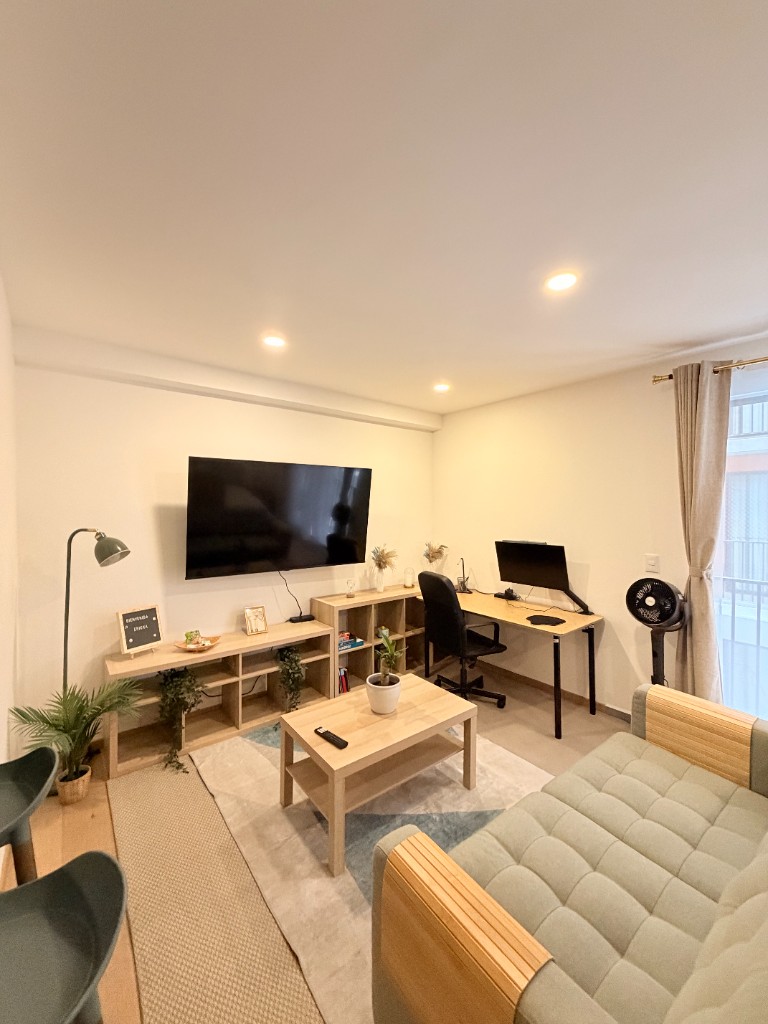
If you are choosing a base for 30+ days, do not compare only rent and restaurants. Compare your calendar. Start with remote-work apartments in Mexico City if desk setup and calls matter, then use the monthly apartment checklist before paying for a work month.
Quick answer
Why CDMX works so well for US-client remote work
Mexico City runs on UTC-6 year-round. During US standard time, it matches US Central Time. During US daylight saving time, it sits one hour behind Central, equal to Mountain, and one hour ahead of Pacific.
That means US-client work stays practical: an 8:00am Pacific call is 9:00am in CDMX during US daylight saving time, a 10:00am Central standup is 9:00am, and a 3:00pm Pacific client review is 4:00pm. You finish with daylight left.
CDMX vs Lisbon, Bali, and Buenos Aires by workday overlap
The timezone comparison is not close once your income depends on US calls.
Mexico City timezone fit for US remote workers, 2026
| Base city | Timezone reality | US-client workday fit |
|---|---|---|
| Mexico City | UTC-6 year-round | Strong overlap with Central, Mountain, Pacific; Eastern still workable |
| Lisbon | UTC+0 or UTC+1 | Fine for Europe; late afternoons and evenings collide with US calls |
| Bali | UTC+8 | US work usually means nights, very early mornings, or heavy async |
| Buenos Aires | UTC-3 year-round | Good for Eastern, worse for Pacific; later US calls push into night |
| Medellin | UTC-5 year-round | Strong for Eastern and Central; still workable for Pacific |
Mexico City is not always the absolute closest timezone for every US worker. Medellin can be cleaner for East Coast. Buenos Aires can be workable for New York-heavy teams. But for the widest US spread, CDMX is hard to beat because it does not force a major sacrifice from Central, Mountain, or Pacific clients.
That matters for US remote workers because many client calendars are not one timezone. A consultant in Mexico City may have a Chicago operator at 10:00am, a Denver founder at noon, and a Los Angeles review at 3:00pm Pacific. CDMX absorbs that spread. Lisbon and Bali do not.
The hidden cost of bad timezone alignment
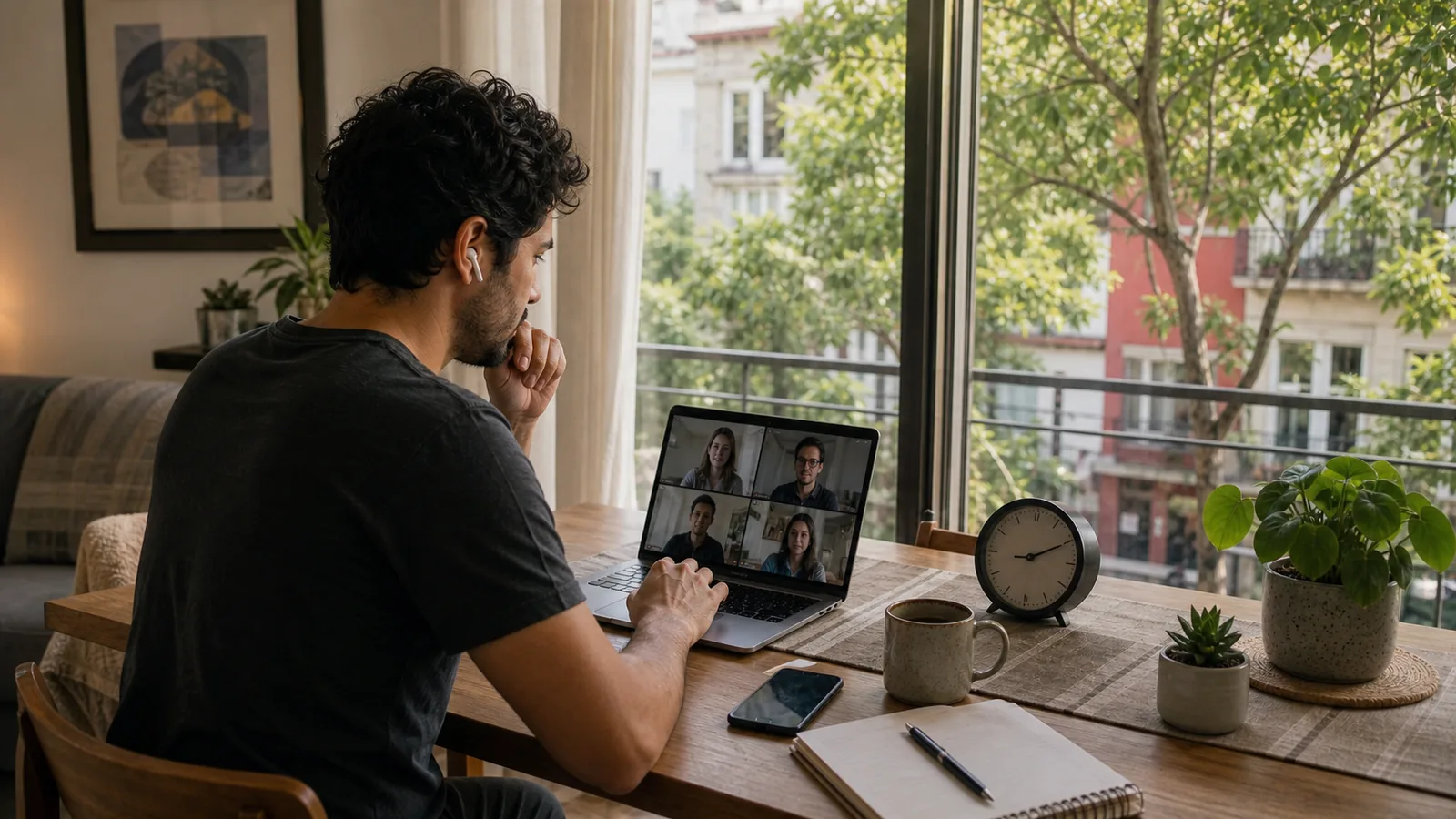
Bad timezone alignment looks manageable in a spreadsheet. In real life, it gets expensive.
At first, you tell yourself late calls are fine. Then the pattern starts:
- dinner gets pushed later
- workouts disappear
- deep work happens before you are awake or after you are tired
- same-day client feedback turns into tomorrow’s problem
- your best social hours are spent in meetings
- your apartment has to be quiet at odd hours
- weekends become recovery instead of exploration
That is the finance angle most nomad comparisons miss. A cheaper rent in Bali or a beautiful apartment in Lisbon can still be a worse business decision if it costs you attention, client responsiveness, or sleep.
For a US freelancer, consultant, founder, account manager, designer, developer, or agency operator, timezone overlap is not a perk. It is revenue protection.
If one delayed answer risks a client relationship, or one late-night call ruins the next morning’s output, the cheaper city is not actually cheaper. Compare the total workday, not only monthly rent. For the full CDMX budget picture, use the cost of living in Mexico City for digital nomads guide.

Who benefits most from the CDMX timezone
The timezone advantage is strongest for people whose work is still synchronous.
CDMX is especially good for:
- US consultants who need client calls, workshops, and fast follow-up
- agency owners and account leads who cannot disappear during client business hours
- software engineers on US product teams with standups, reviews, and incident response
- designers and product managers who need feedback loops during the same workday
- sales and customer success roles tied to US buyer availability
- founders fundraising, hiring, selling, and operating with North American partners
- couples working remotely when both people need overlapping US schedules
The last group is under-discussed. A solo worker can survive a weird schedule for a while. Two people both taking US calls from Lisbon or Bali usually discover the friction faster: meal timing, sleep timing, call rooms, and neighborhood routine all break at the same time. If that is your setup, read couples working remotely in Mexico City before choosing a one-bedroom.
Mexico City is less ideal if your clients are mostly in Europe or Asia. In that case, Lisbon, Madrid, Bangkok, or Bali may fit better. The point is not that CDMX wins every remote-work scenario. It wins the North American client scenario unusually well.

A normal US-client workday from Roma Norte or Narvarte
Here is what the CDMX schedule feels like during US daylight saving time, when most US clients are shifted one hour later relative to Mexico City.
If your clients are in Central Time:
- 7:30am CDMX: wake up, coffee, review messages
- 8:00am CDMX: 9:00am CT standup
- 9:00am-12:00pm CDMX: deep work and client replies
- 12:00pm CDMX: lunch while clients are also midday-active
- 1:00pm-4:00pm CDMX: reviews, calls, approvals
- 4:30pm-5:30pm CDMX: wrap-up while US clients are still online
- evening: gym, walk, dinner, errands, friends
If your clients are on Pacific Time, the day starts later and ends slightly later. That is still manageable: a 9:00am PT call is 10:00am in CDMX, and a 4:00pm PT call is 5:00pm. You are not working at midnight.
If your clients are on Eastern Time, early meetings require more discipline. During US daylight saving time, 9:00am ET is 7:00am in CDMX. But that is still better than Lisbon for West Coast calls or Bali for almost every US call.
Neighborhood choice then becomes practical. Roma Norte is strongest if you want cafes, coworking, client dinners, and high-energy after-work options. Narvarte is stronger if you want quieter nights, residential errands, and more apartment-for-the-money. Use Roma Norte vs Narvarte for a monthly stay once your workday pattern is clear.

What to verify before booking the apartment
Timezone gets you the overlap. The apartment still has to support the work.
Before booking a Mexico City base for US-client work, confirm:
- Dedicated fiber internet: not vague “fast Wi-Fi”
- Desk and chair: not a dining chair pretending to be an office setup
- Call-friendly noise: street, construction, neighbors, and building rules
- Lighting: enough natural light for long workdays without glare
- Backup workspace: cafe or coworking nearby if one day goes wrong
- Bedroom orientation: sleep matters if early East Coast calls are common
- Kitchen basics: eating every meal out gets old on a client-heavy week
- Laundry and storage: monthly stays fail when daily logistics are annoying
This is where a furnished apartment beats a hotel for many US remote workers. The question is not just “where do I sleep?” It is “can this unit handle my actual work calendar for four to eight weeks?”
For a broader apartment-level filter, use the Roma Norte furnished apartment remote-work checklist . If your dates are already firm, compare long term rentals in Mexico City and use book direct for the cleanest availability path.
When CDMX is not the right timezone choice
Be honest about your calendar.
Do not choose Mexico City only because it is popular if:
- your clients are mostly in London, Berlin, Paris, or Dubai
- your team requires live work during European mornings
- you want to disconnect from US business hours completely
- your role is fully async and timezone overlap has little value
- you are optimizing for beaches, not city work rhythm
Mexico City is a city for people who want their remote work to stay operational while their life gets richer. It is not an escape from work hours. It is a way to keep the workday normal in a better setting.

The honest verdict
For US-client remote work, Mexico City’s timezone advantage is one of the strongest reasons to choose CDMX over Lisbon, Bali, or Buenos Aires.
It is not as photogenic as a rooftop, a taco crawl, or a weekend trip to Teotihuacan. But it matters more from Monday to Friday.
If your income comes from US clients, CDMX lets you stay responsive without turning your nights into meetings. It keeps Central, Mountain, and Pacific work hours sane, keeps Eastern clients manageable, and gives you actual evenings in the city you came to experience.
Choose the apartment after you choose the calendar. If CDMX fits your calls, the next step is making sure the unit fits your workday.
For monthly stays
Working US hours from CDMX?
Sources and further reading
- Timeanddate: current and future time zone in Mexico City
- Timeanddate: daylight saving time in the United States in 2026
- Government of Mexico: Ley de los Husos Horarios and Mexico’s daylight saving changes
- CDMX vs Lisbon for digital nomads
- CDMX vs Buenos Aires for digital nomads
- CDMX vs Medellin for digital nomads