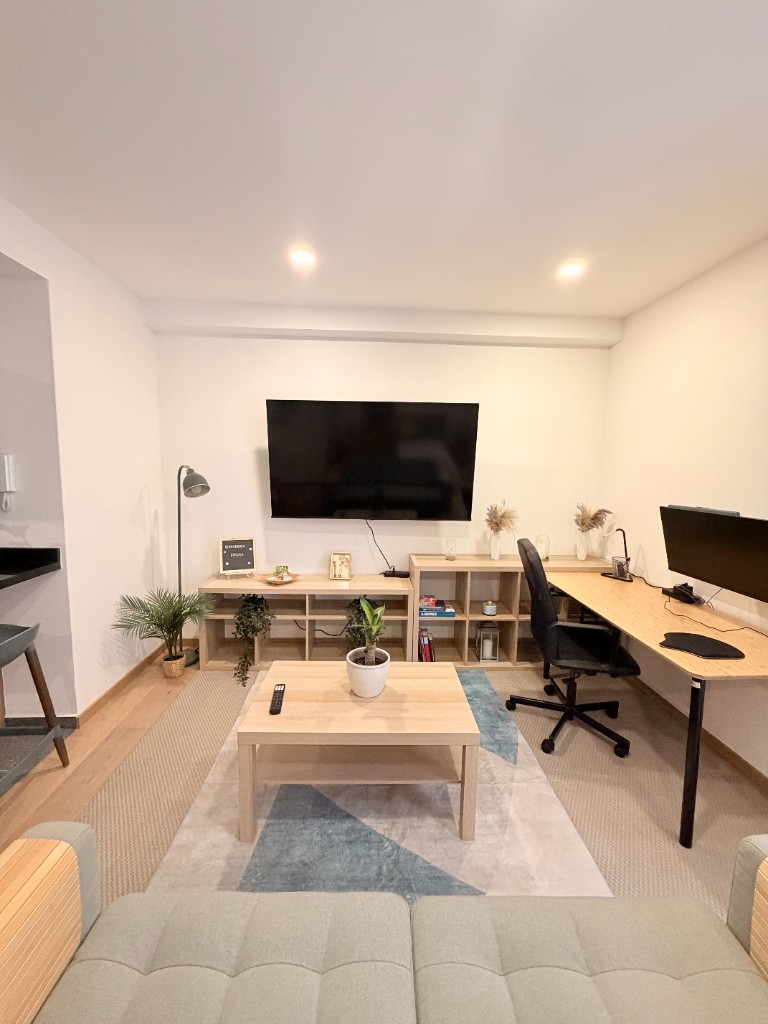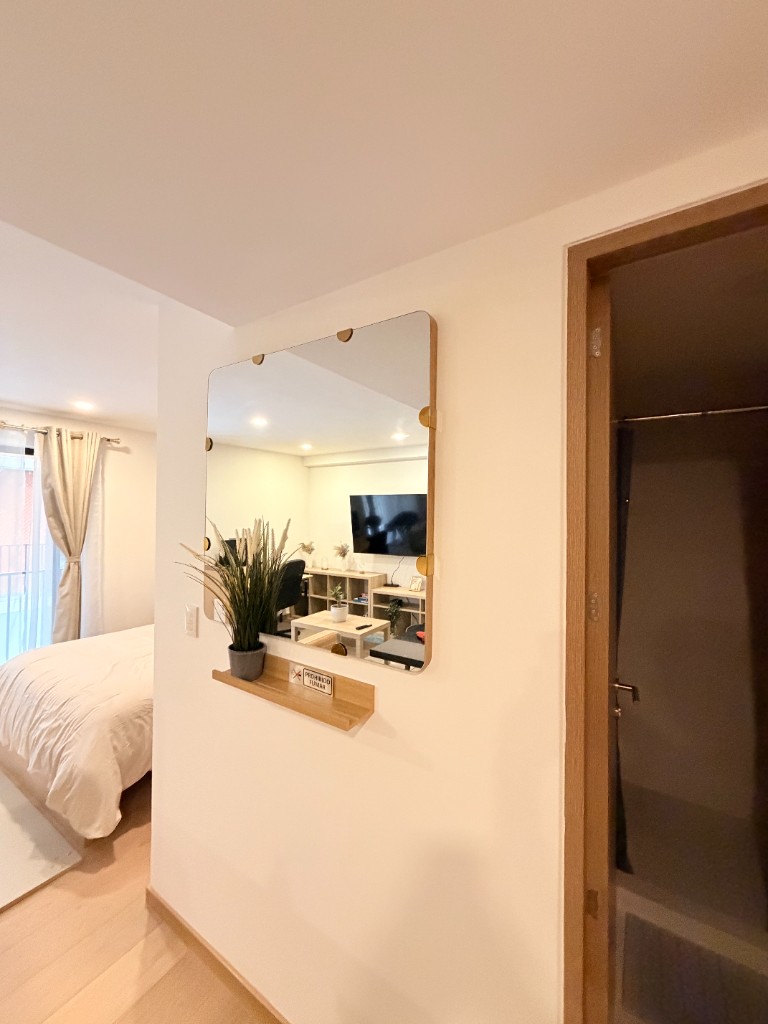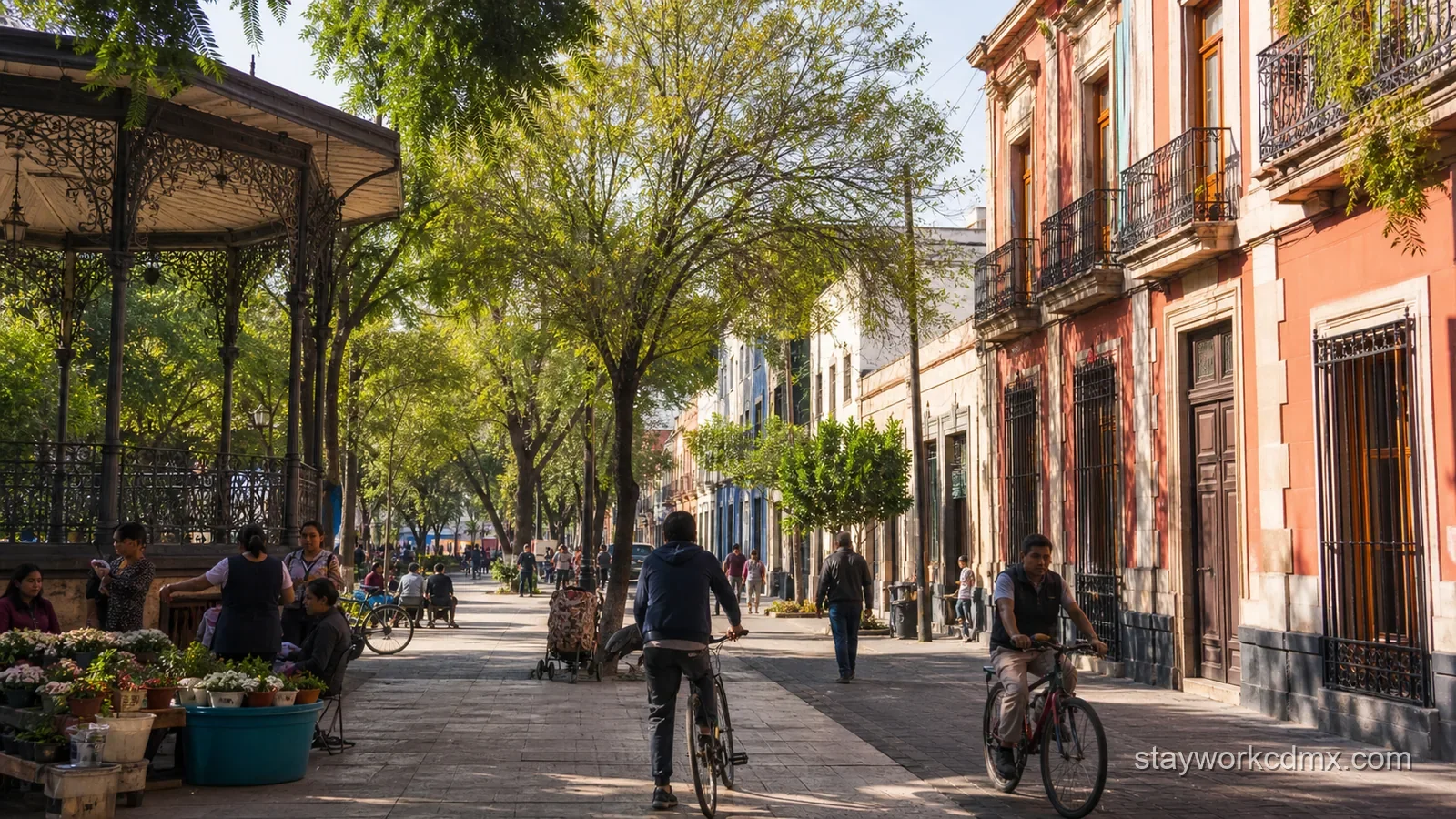
Santa María la Ribera is one of the most useful “ordinary life” bases in central Mexico City. It has a famous park and a beautiful kiosk, but a month here runs on market trips, Metro walks, calls from a real desk, errands on foot, and occasional trips south or east for meetings. That routine decides the real Santa María la Ribera monthly cost for a remote worker.
If you are comparing long term rentals in Mexico City , ask whether the apartment lets you use the neighborhood’s practical advantages instead of paying for a lifestyle you will not use. That matters more than whether Santa María beats Roma Norte on one universal scale, because the same monthly rent can feel generous in a quiet, well-equipped unit or expensive in a noisy building with weak Wi-Fi and no usable kitchen.
This guide uses live listing evidence checked in July 2026, official transit and provider information, and a routine designed for a remote worker staying roughly 30 nights. Treat the prices as planning bands, not quotes: inventory, exchange rates, seasonality, maintenance, utilities and booking channel all change the final total.
Quick answer
Is Santa María la Ribera a good monthly base?
For one remote worker, plan on MXN 23,000–34,000 for a lean but workable month, MXN 32,000–48,000 for a comfortable month, or MXN 48,000–70,000+ for a larger or more social month. The furnished apartment usually accounts for the largest swing.
Choose Santa María if you want historic streets, a local market rhythm, central-north transit and more space per peso than the most searched Roma or Condesa blocks. Choose Roma Norte if you are paying for daily cafés, nightlife and coworking redundancy. Choose Narvarte if south-central errands, hospital access and quieter residential streets matter more.
Before paying, verify the exact cross streets, bedroom orientation, desk, Wi-Fi, laundry, water pressure, cleaning and final monthly total. The colony label is only the first filter.
The answer in one table
30-day Santa María la Ribera budget scenarios for one remote worker (MXN)
| Monthly category | Lean, apartment-first | Comfortable, balanced | Premium or social month |
|---|---|---|---|
| Furnished apartment | MXN 15,500–20,000 | MXN 20,000–28,000 | MXN 28,000–38,000+ |
| Groceries and market food | MXN 3,500–4,500 | MXN 4,500–6,500 | MXN 6,500–9,000 |
| Restaurants and delivery | MXN 1,500–3,000 | MXN 3,000–5,500 | MXN 6,000–10,000+ |
| Cafés and occasional coworking | MXN 500–1,500 | MXN 1,500–3,500 | MXN 3,500–6,500 |
| Public transport | MXN 250–600 | MXN 500–1,000 | MXN 1,000–2,000 |
| Rideshares and airport/late trips | MXN 300–900 | MXN 900–1,800 | MXN 1,800–3,500 |
| Mobile data and connectivity backup | MXN 150–500 | MXN 300–700 | MXN 500–1,200 |
| Estimated total before deposit | MXN 21,700–31,000 | MXN 30,700–47,000 | MXN 47,300–70,200+ |
The table assumes a solo guest and an apartment where basic internet is already active. A deposit, legal policy, cleaning fee, parking, electricity cap or international card fee can sit outside the monthly operating budget. Keep a separate arrival reserve for those one-time costs instead of hiding them inside a food estimate.
Santa María la Ribera monthly cost: what current rent evidence says
The strongest current evidence is a spread of real listings. A July 2026 Inmuebles24 result for Santa María la Ribera shows furnished inventory around the mid-teens to low twenties. One 67 m² two-bedroom listing on Hortensia was advertised at MXN 16,600, including maintenance and two cleanings each month. Another 50 m² furnished loft in the same search set was listed at MXN 20,000 with water, electricity, gas and internet included, subject to formal requirements.
Smaller two-bedroom apartments also appear around MXN 16,500–17,000, sometimes with maintenance extra or with a parking constraint. The important difference is the product: a local one-year lease may require a deposit, póliza jurídica and proof of income, while a flexible furnished month can cost more but remove the setup burden. Treat the listing links as evidence of the current range, not a promise that a specific unit remains available.

When you compare a listing, ask what the headline excludes. Maintenance, electricity, gas, internet, cleaning, parking and a second occupant can change the all-in total. A lower-rent apartment on a loud avenue can also create a workday cost: café spending, extra rideshares, poor sleep and the risk of moving mid-month.
Three realistic rent positions
The value apartment (MXN 15,500–20,000): Usually compact, older or further from the park, with a practical kitchen and fewer extras. It can be excellent if the bedroom is interior, the desk is real and the Wi-Fi is testable. It is not automatically a bargain if you need parking or a dedicated second bedroom for calls.
The comfortable central apartment (MXN 20,000–28,000): More likely to include a better living room, elevator, laundry, balcony, maintenance or a second bedroom. This is the band I would use for a professional who wants a sustainable month without paying for a premium postcode.
The premium or flexible product (MXN 28,000–38,000+): Newer construction, terrace, parking, building security, bundled services or a short-term operator. Pay this only when the extra feature changes your routine: a separate office, quiet bedroom, reliable building access or a host who can solve problems.
For a citywide baseline, compare the furnished monthly apartment cost guide . For unit-level questions, use the monthly apartment checklist before you compare a final number.
How Santa María rent compares with the usual alternatives
Most guests weighing Santa María la Ribera are choosing between four monthly bases. On the furnished-listing evidence used across this cost series, a work-ready one-bedroom month lands roughly here:
| Neighborhood | Furnished 1BR monthly band (MXN) | Why it prices that way |
|---|---|---|
| Santa María la Ribera | $15,500–$28,000 | Historic housing stock, low visitor pressure, market-led food system |
| San Rafael | $18,000–$30,000 | Reforma and Buenavista access, similar residential texture |
| Narvarte | $22,000–$32,000 | South-central value benchmark, hospital corridor, quiet nights |
| Roma Norte | $28,000–$42,000 | Café and coworking density, highest short-stay demand in the corridor |
If your month points south rather than north, the Narvarte guide for remote workers covers the value benchmark in detail, and Narvarte furnished monthly apartments shows what operated inventory costs there right now. If you would trade rent for café density, the Roma Norte vs Condesa monthly-stay comparison explains what the extra MXN 8,000–15,000 per month buys in the famous corridor.
Food, groceries and the real kitchen test
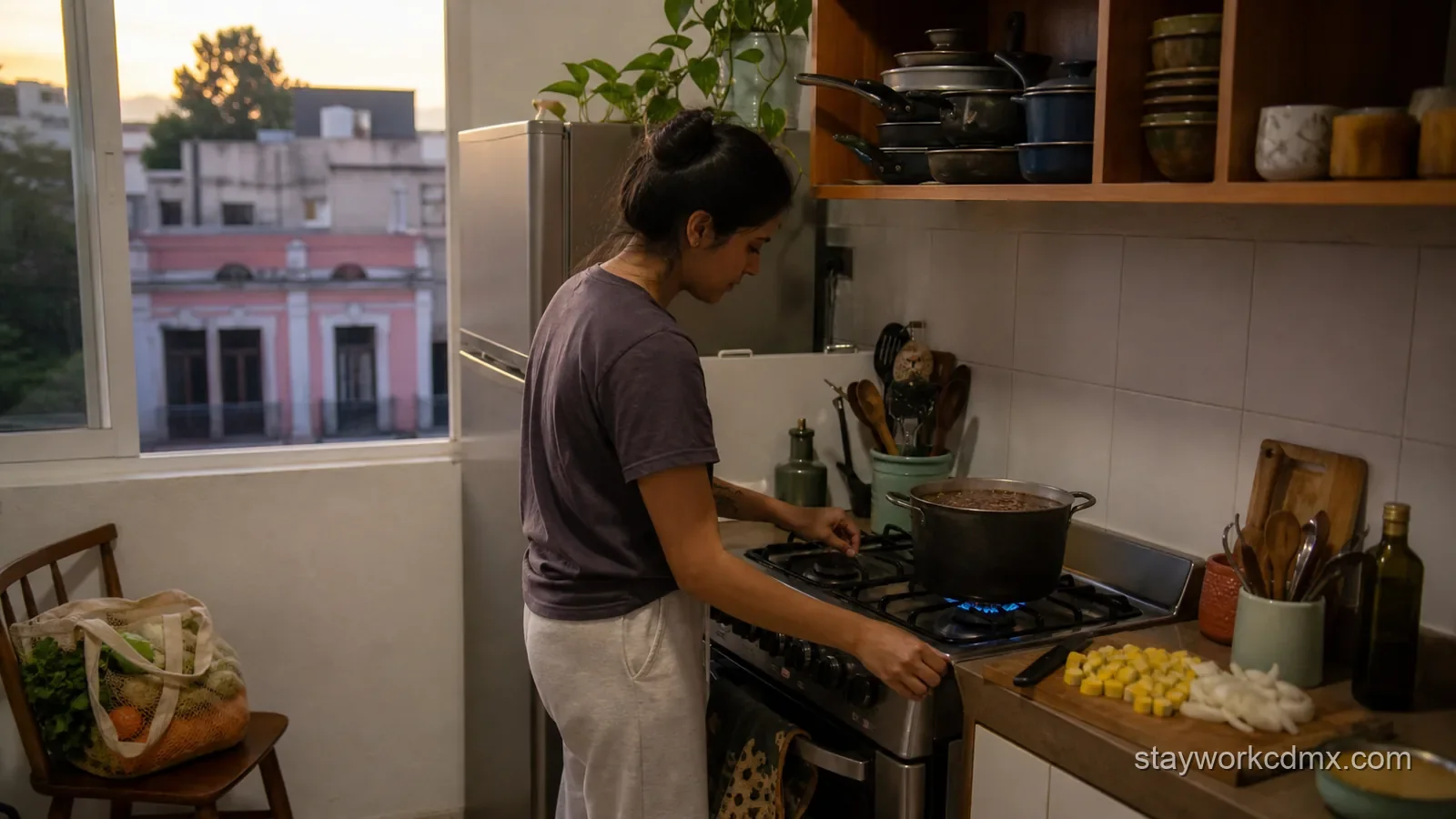
Santa María works well for a cook-first month because the daily food system is layered. The Mercado La Dalia area and small neighborhood shops can cover produce, tortillas, prepared food and staples; supermarkets and convenience stores fill the gaps. The Profeco price tool is useful for checking national staple movements, but its basket is not a complete one-person month with coffee, fresh fruit, protein, snacks and restaurant meals.
For one person, a practical food pattern is:
- Cook-first: MXN 850–1,150 per week for market produce, eggs, tortillas, beans, rice, fruit and simple proteins.
- Balanced: MXN 1,150–1,650 per week for breakfasts at home, several lunches cooked, two or three meals out and coffee.
- Social: MXN 1,650–2,400+ per week for delivery, specialty coffee, dinners and weekend plans.
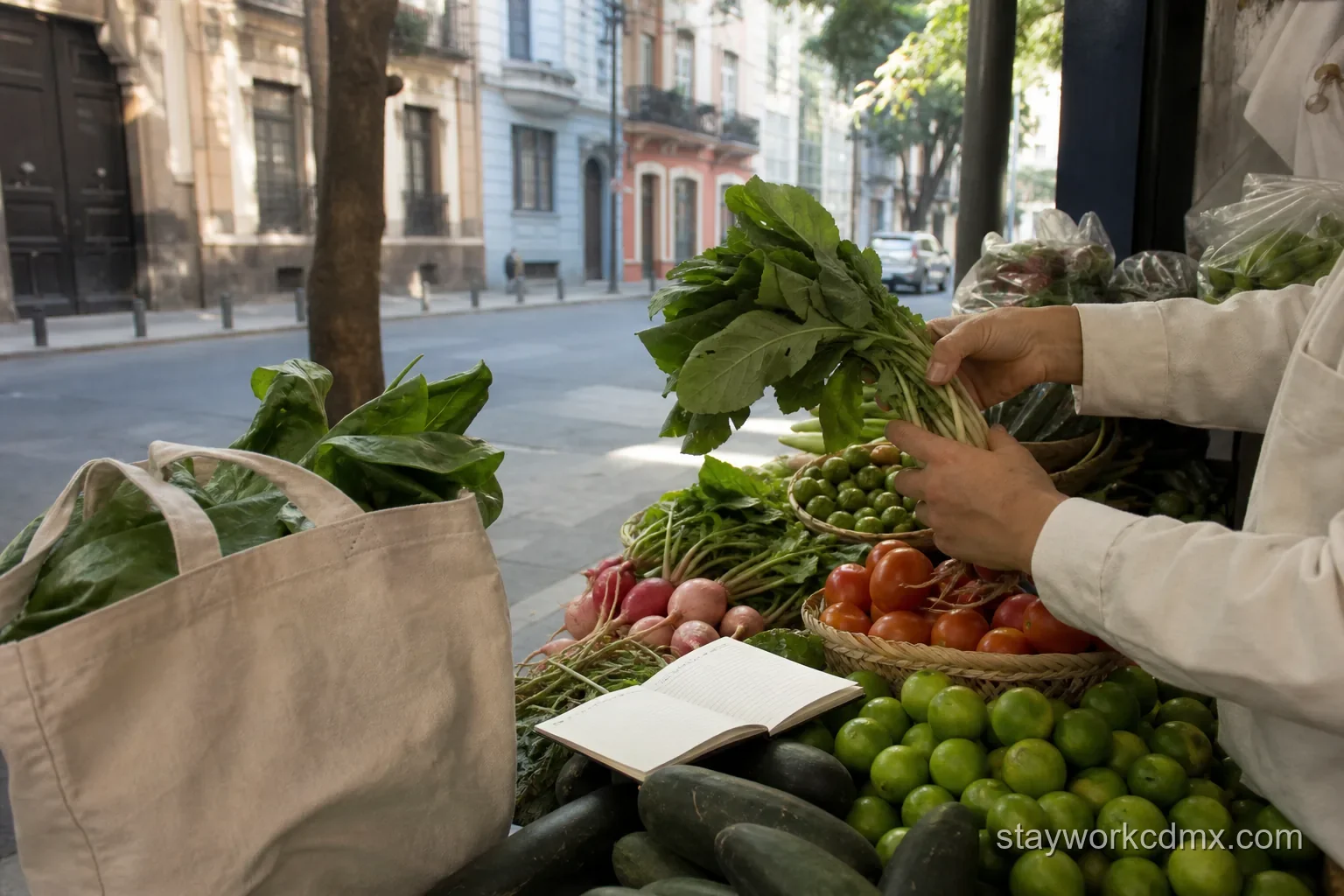
The kitchen determines whether the first band is realistic. Check refrigerator size, knives, cutting board, pans, water filter, stove ventilation and counter space. Ask whether a washing machine is inside the apartment or shared, and whether the building’s water pressure is reliable in the morning. “Fully equipped” has no fixed meaning, so ask for a current photo of the actual workspace and kitchen.
A useful weekly pattern is to buy vegetables and fruit early in the week, keep eggs and tortillas for fast lunches, and reserve one market meal for the day when a deadline makes cooking impossible. This keeps food spending predictable without turning the month into a self-imposed retreat.
Internet, mobile data and work infrastructure
In an apartment-first neighborhood, the unit has to carry the workday. Ask for a recent speed test made inside the unit, at the desk, rather than a provider’s advertised maximum. Confirm where the router sits, whether the connection is shared, and whether the host has a backup plan for an outage. A 200 Mbps plan behind thick walls can perform worse than a smaller plan with the router next to your desk.
If you had to arrange service yourself, Telmex’s current home plans list 120 Mbps at MXN 389, 150 Mbps at MXN 435, 250 Mbps at MXN 499 and 350 Mbps at MXN 599, subject to promotions and conditions. izzi’s internet plans sit in a similar planning range. Those are household products; do not assume a short-term guest can install service before their first call.
Bring a local SIM or eSIM hotspot as a backup. A MXN 150–500 data reserve is sensible for urgent calls; heavy tethering, video meetings and a second device can push it higher. For outside work, use a café for a short focus block; do not assume the nearest café can carry a full day of client meetings.
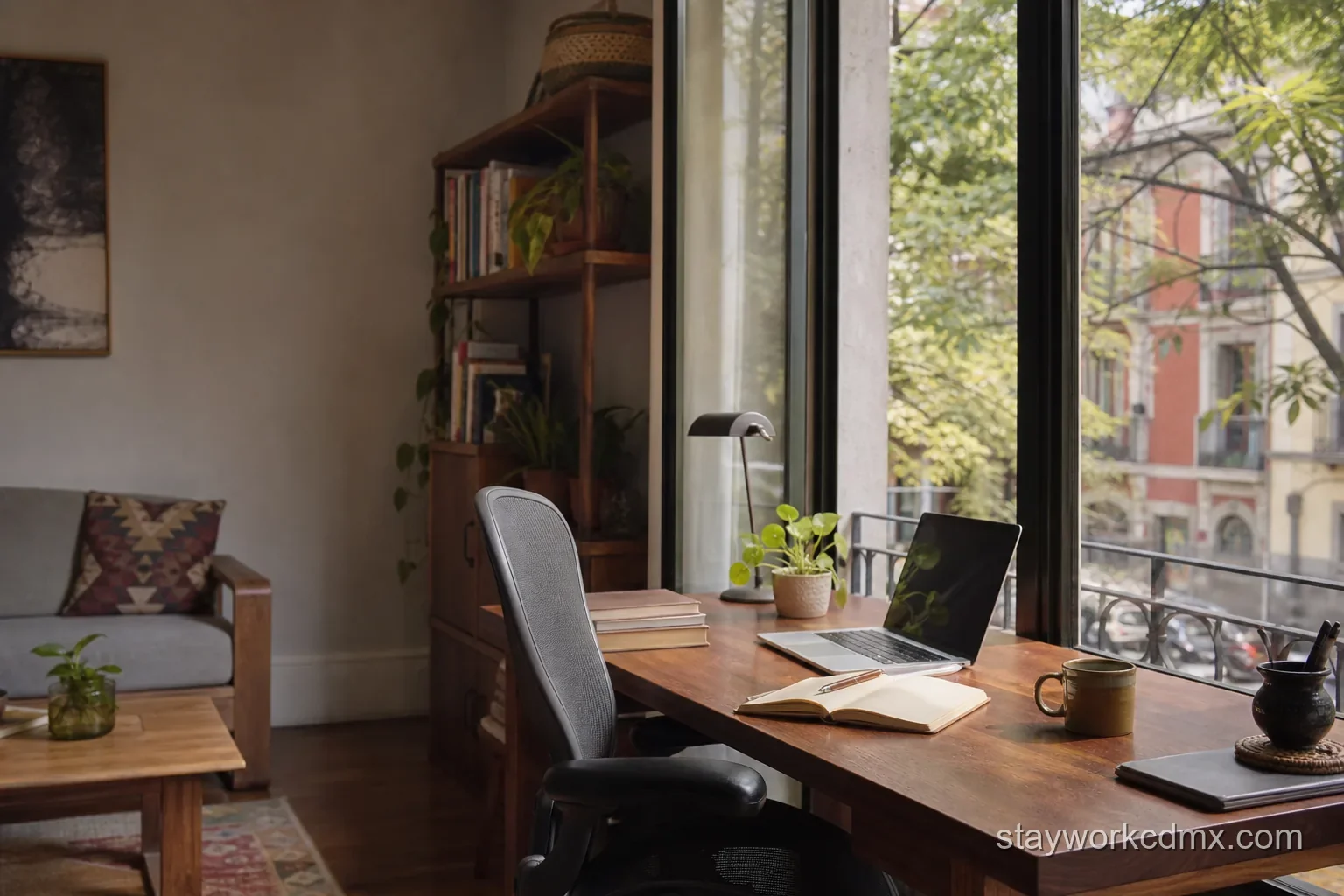
Before booking, send this question: “Can you share a current photo of the desk, chair, router location and a speed test from the apartment?” A clear answer tells you more than a glossy listing description.
Transport: central north-side access at a low operating cost
Santa María’s transport advantage is its location. Depending on the block, you can reach San Cosme, Revolución, Normal or Buenavista on foot or with a short connection. Metro fare is currently MXN 5 on the official network; Metrobús is MXN 6 on the official payment page . Use the Metro network to test the exact station and transfer rather than assuming the closest-looking pin is the fastest route.
For a solo remote worker, 44 weekday Metro trips are MXN 220. Add weekend rides, transfers and a few rideshares, and a realistic monthly transport line is MXN 500–1,800. Airport luggage, rain, late returns and cross-city meetings can raise that number. Ecobici can work for short trips, but check the current membership terms at the official Ecobici plans page before you buy as a foreign visitor.
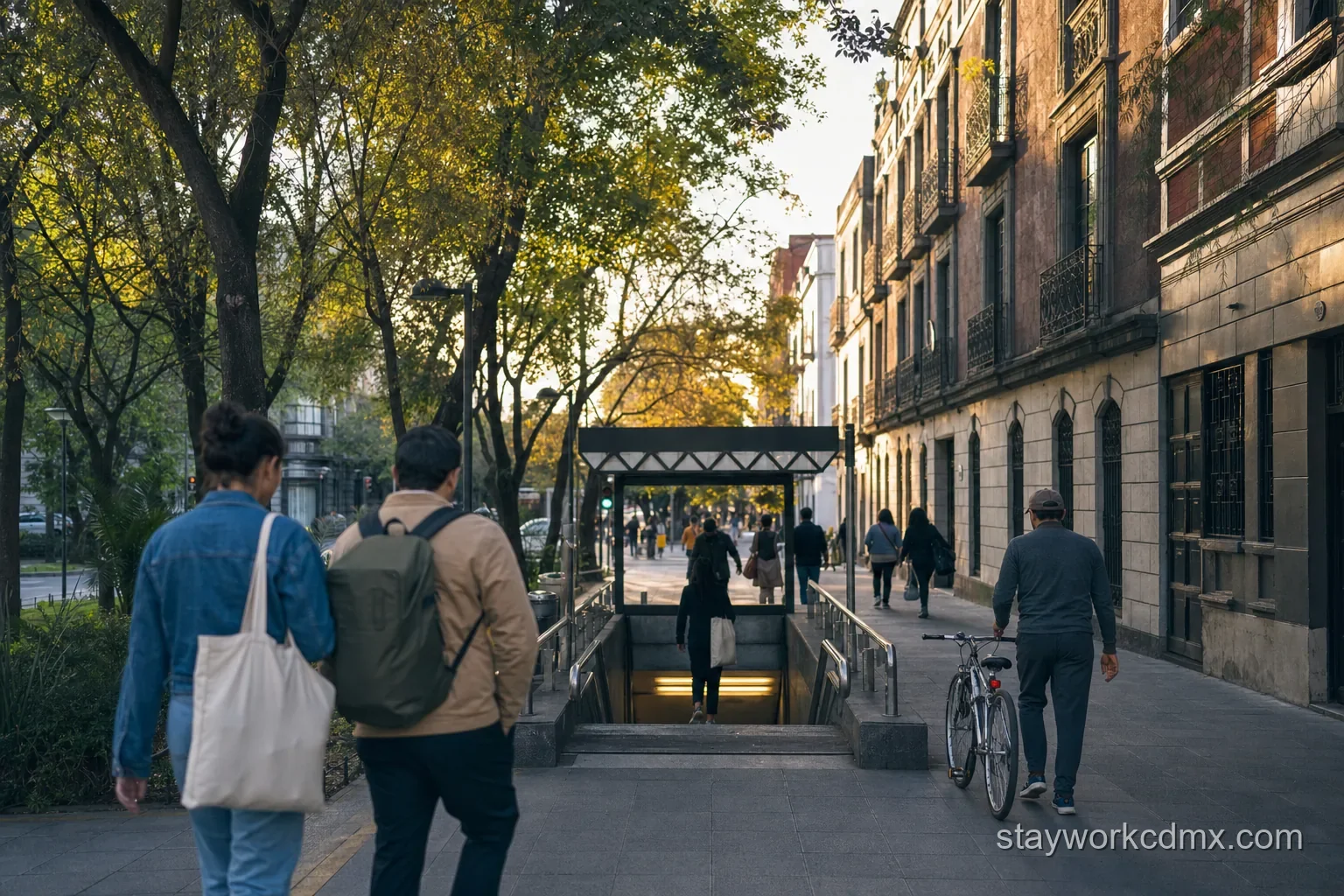
Before booking, mark your three repeated destinations (office, client venue, school or hospital) plus the supermarket you will use. Test the door-to-door route at the hour you will actually travel. A central address is helpful, but the last eight minutes from station to building decide how often you will use the network.
A month in Santa María: the routine that makes the budget work
Monday — establish the radius
Buy water, breakfast ingredients and two days of groceries. Walk the block in daylight, identify the nearest pharmacy and test the Wi-Fi at the desk. Work from home for the first calls, then take a short loop through Alameda de Santa María la Ribera. This is a deliberately boring first day: it reveals noise, street lighting, building access and the distance to the things you will repeat.
Tuesday — focused work, then a market lunch
Keep important calls inside the apartment. After lunch, use the market or a local comedor for a low-cost change of scene and return before the late-afternoon rush. If you need a café, choose a two-hour block, then leave so a small room does not become your permanent office.
Wednesday — errands and a cultural hour
Midweek is ideal for laundry, produce and one cultural visit. The Kiosco Morisco and Museo Universitario del Chopo area give you a reason to walk without spending heavily. Protect the afternoon for deep work; the neighborhood pays off when the errand and the reset both happen within a short radius.
Thursday — one intentional trip south or east
Schedule the meeting that justifies a longer ride on Thursday. Metro makes the trip predictable; save rideshares for rain or a late return. Return to Santa María for dinner or cook something simple so a single meeting does not expand into a full day of transport spending.
Friday — local food, early finish
Close the workweek from the apartment, walk for coffee or a simple dinner, and keep the evening flexible. Santa María is strongest when you can choose between a neighborhood meal and a short ride to Centro, Juárez or Roma without planning a production.
Saturday — longer walk and one paid experience
Do the larger grocery run, visit the park and choose one restaurant, museum or café you want. Budget one indulgence so delivery and small rides do not drift into the premium scenario.
Sunday — reset the apartment
Wash clothes, check the coming calendar, top up mobile data and prepare two easy lunches. The best reason to choose a furnished apartment is that a calm Sunday makes Monday cheap and manageable.
What to ask before booking
Send a specific message and keep the answers in writing:
- What are the exact cross streets and the building entrance?
- Which direction does the bedroom face, and is there a current noise video?
- What are the desk dimensions, chair type, outlet locations and router position?
- Is internet included, and can you share a recent speed test from the unit?
- Is laundry private, shared or off-site? How often is cleaning included?
- Are electricity, gas, water and maintenance included or capped?
- What is the final amount including deposit, cleaning, taxes and any legal policy?
- How do check-in, deliveries, late returns and an extension work?
Use where to stay in Mexico City for monthly stays when you are still comparing neighborhoods. Once the apartment passes the checklist, go to Book Direct to confirm live dates and ask unit-specific questions.
Who should choose Santa María — and who should not
Santa María is a good fit for a remote worker who values space, local texture, central-north connections and a repeatable apartment routine. It is especially sensible for someone who will cook, work from home several days a week and explore the city by transit rather than paying for a café on every block.
It is not the easiest first month for a guest who wants nightlife at the door, a dense coworking scene or a polished tourist corridor. Roma Norte offers more immediate choice; Narvarte can be calmer for a south-central routine; San Rafael is a useful comparison when your meetings point toward Reforma and Buenavista. If you are still building the shortlist, the ranked guide to the best Mexico City neighborhoods for remote workers in 2026 puts all of these side by side on rent, noise, transit and café depth, but the apartment still needs its own test.
Final verdict
Budget Santa María la Ribera as a mid-value, apartment-first month: roughly MXN 23,000–34,000 for a disciplined solo routine, with a comfortable ceiling around MXN 48,000 before premium housing or frequent social spending. Judge value by whether the unit lets you sleep, work, cook, wash clothes and reach your repeated destinations without friction, not by the lowest rent.
If the apartment passes the desk, Wi-Fi, bedroom, kitchen, laundry and final-total checks, Santa María can feel more lived-in and more generous than a better-known colony at the same budget. If it fails those checks, keep comparing; the Mexico City neighborhood guide will help you move the search without starting over.
For monthly stays
Compare furnished monthly stays in Mexico City
Sources and research note
- Inmuebles24 Santa María la Ribera listings and the Hortensia furnished two-bedroom example : listing evidence checked July 2026.
- Mexico City Metro network and Metrobús payment information : fares and route orientation; verify live service before travel.
- Telmex home plans , izzi internet , Profeco price tool and Ecobici plans : current planning references.