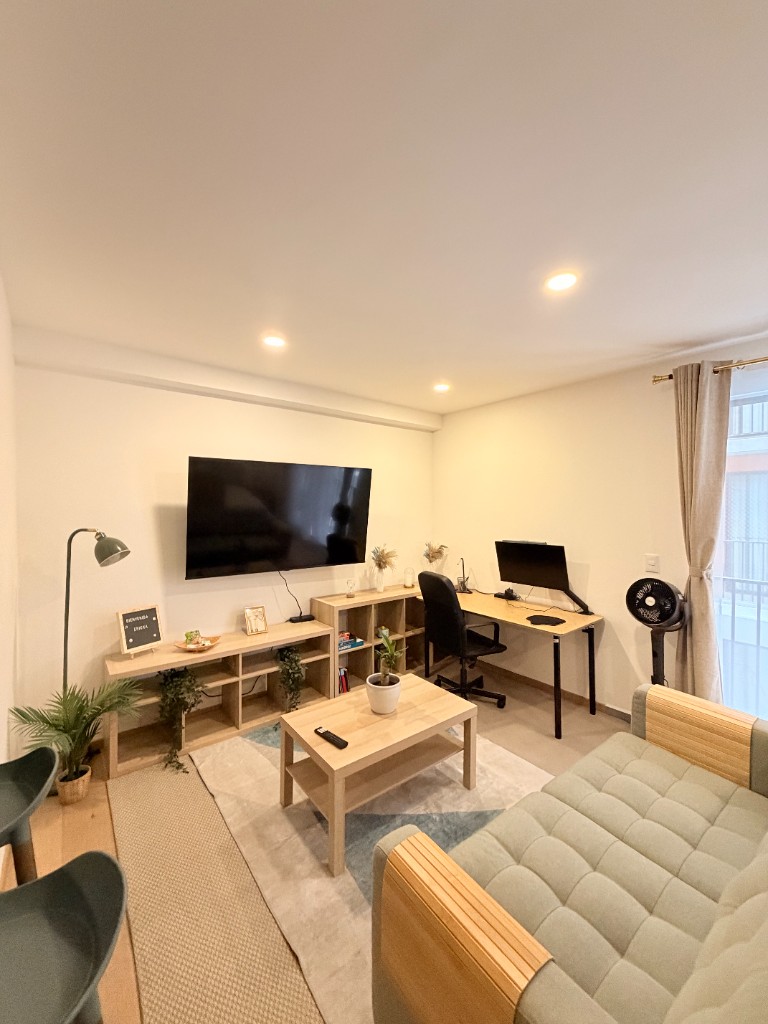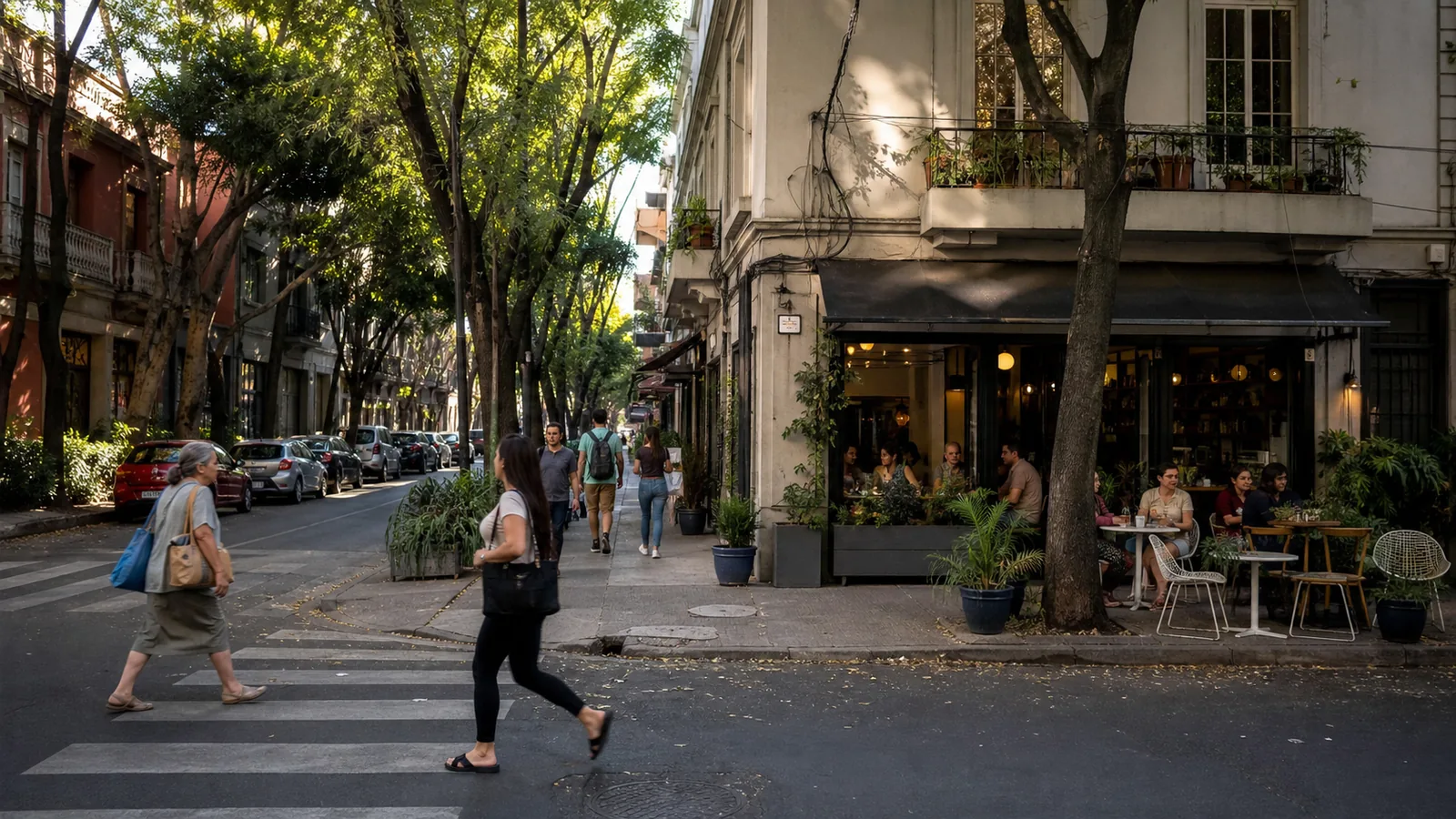
If you search Roma Norte gentrification 2025 or Roma Norte gentrification 2026, you usually find one of two lazy answers.
One says foreigners ruined everything. The other says locals are just angry that a popular neighborhood got expensive.
Neither is honest enough.
Roma Norte is gentrified. It is also still a real neighborhood, not just a backdrop for remote workers, restaurants, mezcal bars, and short-term rentals. The frustration you hear in 2025-2026 is not imaginary. Rents have climbed, long-time residents have been displaced or priced out, local businesses have changed, and short-term furnished apartments are part of the pressure.
At the same time, blaming every visitor misses the system that made the neighborhood so profitable: weak tenant protections, real-estate speculation, short leases, local and international investment, scarce affordable housing, and a city economy that turned certain central neighborhoods into global lifestyle products.
This guide is written for visitors, remote workers, and monthly guests who like Roma Norte but do not want to pretend the conflict is someone else’s problem. If you are still choosing where to stay, compare Roma Norte monthly stays with Narvarte monthly stays before you treat Roma as the only serious option.
Quick answer
Is Roma Norte gentrification real?
Yes. Roma Norte is one of Mexico City’s clearest examples of modern gentrification: higher-income newcomers, short-term rental conversion, rising rents, restaurant and retail change, and displacement pressure on residents who built their lives there before the neighborhood became globally fashionable.
But the honest answer is not “foreigners did it alone.” Foreign remote workers and tourists are visible, but they are only one layer. The deeper issue is housing being treated as an investment product in a central neighborhood with weak protections for renters.
What changed in 2025-2026?
The public mood changed.
Roma Norte, Condesa, Juarez, and nearby central neighborhoods had been getting more expensive for years. But in July 2025, anti-gentrification protests pushed the issue into international media. The signs were blunt, sometimes angry, sometimes xenophobic, and often aimed at short-term rentals, foreign residents, and English-speaking visitor culture.
That did not come from nowhere. By 2025, the lived complaint in Roma Norte was easy to understand:
- rents were moving faster than local wages
- apartments were being converted into short-term or medium-term rentals
- restaurants, cafes, and retail were increasingly priced for visitors and upper-income residents
- noise, parties, and building turnover changed daily life
- Spanish was less dominant in some commercial spaces
- people who grew up nearby could no longer imagine renting there
UNAM researchers described Mexico City’s gentrification as selective, concentrated along corridors such as Insurgentes, Reforma, Roma, and Condesa. They also pointed to short-term rental platforms as an added layer of pressure, not the whole cause.
For a visitor, that distinction matters. The problem is not that you had coffee in Roma Norte. The problem is what happens when thousands of higher-income visitors, investors, hosts, developers, restaurants, and platforms all discover the same small set of blocks and the housing system cannot absorb the pressure fairly.
The part visitors do not want to hear
If you earn in dollars, euros, or pounds, your “normal” rent may be someone else’s impossible rent.
That does not make you individually evil. It does mean your housing choices have local consequences. A remote worker who can pay $1,800 USD for a furnished one-bedroom is operating in a different economy from a local renter earning in pesos. When enough people arrive with that purchasing power, landlords and investors notice.
The usual visitor defense is: “But I am helping the local economy.”
Sometimes, yes. You buy meals, tip, take Ubers, pay hosts, and support businesses. But that does not cancel the housing effect. A neighborhood can receive visitor money and still lose residential affordability. Both can be true.
This is why the better question is not “Am I allowed to stay in Roma Norte?” The better question is:
Can I stay in a way that reduces avoidable harm and respects that people actually live here?
Where short-term rentals fit in
Short-term rentals are not the only cause of Roma Norte gentrification, but they are one of the most visible accelerants.
When an apartment can earn more from nightly or monthly guests than from a local long-term tenant, owners have an incentive to convert housing into hospitality inventory. That reduces the practical supply for residents, especially in central neighborhoods where demand is already intense.
Mexico City has tried to respond. In 2024, the local Congress advanced reforms to regulate digital lodging platforms, including host and platform registries. By 2025, reporting from major outlets showed the debate was still messy, with legal challenges and enforcement questions. In 2026, the city is still discussing broader rent and housing measures, including limits on excessive rent increases and stronger public housing policy.
For guests, the practical takeaway is simple: do not pretend every furnished stay is neutral. Before booking, ask whether the stay is legal, professionally managed, transparent about rules, and appropriate for the building. If you are comparing platforms, read book direct vs Airbnb in CDMX and book direct vs Airbnb for monthly apartments so you understand the tradeoffs beyond the nightly price.
Is Roma Norte still a good place to stay?
Yes, for some trips. Not for every trip.
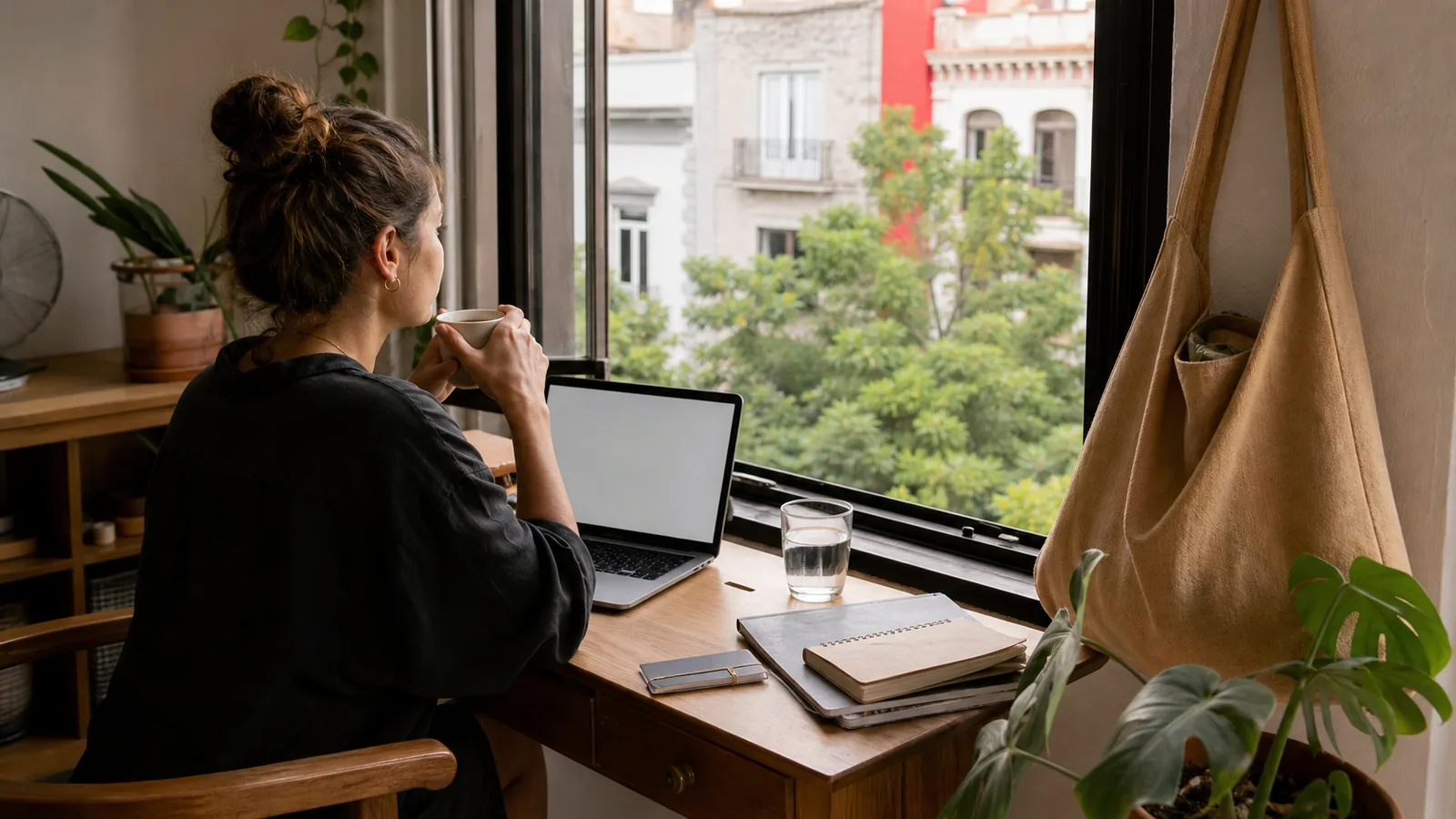
Roma Norte is still one of CDMX’s most practical neighborhoods for a first stay: cafes, restaurants, parks, transit, coworking, nightlife, galleries, and walkability are all close. If you have one month in Mexico City and want the easiest landing, it makes sense that Roma appears on your shortlist.
But popularity is exactly the pressure point. Roma Norte is not always the most respectful, comfortable, or cost-effective choice for a longer stay.
Consider Roma Norte if:
- it is your first CDMX stay and you need easy orientation
- you will use cafes, coworking, restaurants, and transit daily
- your schedule benefits from being central
- you can afford the premium without treating the area like a cheap substitute for home
- you are willing to behave like a temporary neighbor, not a tourist passing through a stage set
Consider Narvarte, Roma Sur, Del Valle, Escandon, San Rafael, or other areas if:
- you want quieter nights
- you are staying 30+ days and need routine more than nightlife
- you do not need to be in the highest-demand blocks
- you want better value
- you want a more residential rhythm
For the practical stay decision, use Roma Norte vs Narvarte for a monthly stay and Roma Norte vs Roma Sur for remote workers . Those comparisons are more useful than pretending every visitor belongs in the same three neighborhoods.
What responsible visitors can actually do
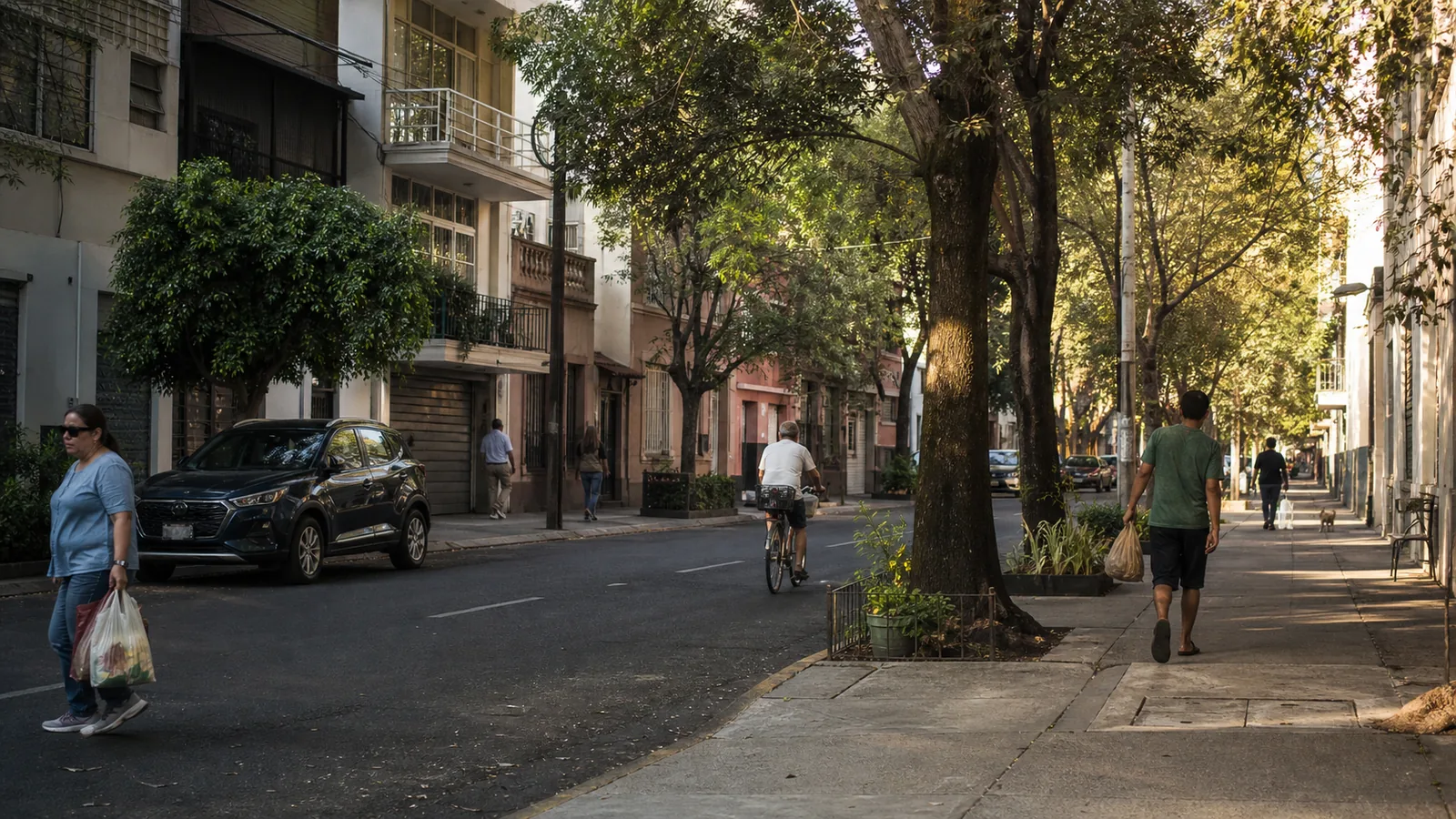
No individual booking fixes a housing crisis. But individual behavior still matters, especially when repeated by thousands of visitors.
Here is the non-performative version:
- Stay longer when you can. A month-long stay generally creates less churn than three separate weekend trips. It also makes you more likely to build routine and respect building life.
- Book transparent furnished stays. Avoid listings that feel like hidden hotels inside residential buildings with no rules, no local accountability, and no clear host identity.
- Do not party in residential buildings. Roma Norte already absorbs enough nightlife pressure. Your apartment building is not an extension of the bar.
- Learn basic Spanish. You do not need fluency to show respect. You do need enough Spanish to greet neighbors, handle errands, and avoid making English the default burden.
- Support older and local businesses too. The algorithm will send you to the same brunch spots as everyone else. Mix in markets, fondas, bakeries, repair shops, bookstores, and family-run restaurants.
- Do not negotiate like local wages are irrelevant. Bargaining aggressively with drivers, cleaners, small businesses, or local service workers while paying premium rent is a bad look because it is bad behavior.
- Tip normally and pay fairly. If your cost advantage comes from earning abroad, do not make local workers absorb your savings.
- Choose the right neighborhood for your actual routine. If you only want a desk, groceries, quiet sleep, and a few good meals, Roma Norte may be more neighborhood than you need.
For a pre-booking filter that focuses on the apartment itself, read the monthly apartment checklist before you pay.
What hosts and furnished-stay operators should admit
This part matters because StayWork is part of the furnished-stay market.
Hosts cannot honestly write about Roma Norte gentrification as if housing pressure has nothing to do with our industry. Furnished apartments, remote-work stays, and direct booking all sit inside the same neighborhood economy. The ethical question is not whether a host can magically remove that tension. The question is whether the host operates with accountability.
That question gets more concrete if you own a unit here rather than book one. The economics, the registry obligations and the longer-stay alternatives are covered on the owner side of this site, starting with whether a Mexico City rental still pencils out neighborhood by neighborhood .
At minimum, responsible furnished-stay operators should:
- be transparent about who the stay is for
- avoid party positioning
- set building rules clearly
- price and market for serious stays, not extraction
- support longer, calmer occupancy over constant churn where possible
- tell guests when a quieter neighborhood is a better fit
- avoid pretending Roma Norte is empty lifestyle real estate
That is also why we often send monthly guests to compare Narvarte. Roma Norte is useful for centrality and first-stay ease. Narvarte is often better for quiet workweeks, medical access, and residential routine. The right answer depends on the guest, not the prestige of the neighborhood name.

What not to do in Roma Norte
Avoid the behaviors that make resentment predictable:
- treating anti-gentrification concerns as jealousy
- calling everything “cheap” in public because it is cheap to you
- filming residents, vendors, or protests as content
- assuming English should work everywhere
- complaining that traditional places are not optimized for foreigners
- using residential buildings for parties, content shoots, or guest overflow
- telling locals that tourism is automatically good for them
Also avoid the opposite mistake: guilt-posting online while making the same choices anyway. Quietly changing how you book, spend, speak, and behave matters more than a dramatic caption.
So, should you stay in Roma Norte in 2026?
Stay in Roma Norte if it genuinely fits your trip and you are prepared to act like a temporary neighbor.
Do not stay there just because every list says it is the default. Do not stay there if what you really need is quiet, value, and a stable work month. Do not stay there if you plan to treat a residential building like a hotel with no social cost.
For many first-time visitors, Roma Norte remains the easiest Mexico City landing. For many monthly guests, it is one good option among several. The more honest 2026 answer is:
Roma Norte is not cancelled. It is contested.
That means you should arrive with more awareness than the average travel guide gives you.
For monthly stays
Choosing a CDMX monthly base?
Sources and further reading
- UNAM Gaceta: gentrification in traditional neighborhoods such as Roma and Condesa
- UNAM Gaceta: selective gentrification and short-term rental pressure in CDMX
- Congress of Mexico City: regulation of digital lodging platforms
- Urbanet: short-term rentals and Mexico City’s housing crisis
- El Pais: 2026 fair rent law proposal in Mexico City
- La Jornada: UNAM analysis of selective gentrification and rent pressure