You’re location-independent and tired of coworking spaces charging $300/month for a desk and loud coffee. What you need is a remote work apartment in Mexico City: kitchen, sleeping space, WiFi fast enough for video calls, and the option to work from your couch on Fridays without guilt. Mexico City is the move for time zone overlap with North America, cost of living 40–60% below US cities, and enough expat infrastructure that you’re not completely alone.
This guide is for digital nomads, freelancers, and location-independent workers deciding where to rent furnished apartments in Mexico City for 1–12 months. It compares neighborhoods on the WiFi speed, cafe culture, and community density remote work needs. If you already know you want a work-ready base, start with remote-work apartments in Mexico City for the desk-and-Wi-Fi setup, or compare Mexico City rentals monthly across Roma Norte and Narvarte. The best neighborhoods in Mexico City for remote workers in 2026 comparison has the full shortlist and its trade-offs.
Best neighborhoods for remote workers in CDMX
Narvarte: Quiet, reliable, underrated
Narvarte is the sleeper hit for remote work. It’s best for serious remote workers who put focus and stability ahead of nightlife. You get:
- Fiber-class WiFi: most furnished apartments have 100+ Mbps (verified by asking the landlord to run a speed test)
- Quiet: residential, no nightlife pressure, and early-morning calls don’t disturb neighbors
- Value: a furnished 2BR runs about $32,000–$45,000 MXN per month (roughly US$1,700–2,400), or $16,000–$22,500 MXN each split with a coworker
- Nearby cafes and coworking: the Parque Delta area has decent cafes, fewer than Roma but workable
- Metro access: 25 minutes to Roma, Condesa, or Polanco if you want to socialize
The downside is less community vibe; you won’t run into other expats every morning, so you build your own routine.
Read more: the Narvarte remote workers guide covers cafés, blocks, and daily rhythm, and Narvarte furnished monthly apartments shows what monthly-ready units look like.
Roma Norte: Community density, cafe culture, noise trade-off
Roma is the default choice for digital nomads, especially those who want social connection, walkability, and other remote workers around them. You get:
- Dozens of cafes with WiFi, 3+ coworking spaces, and laptop workers everywhere
- Constant run-ins with other nomads, expats, and locals
- Restaurants, bars, bookstores, and parks all within 15 minutes
- A young, energetic, international crowd
It costs more: a furnished 2BR runs $40,000–$60,000 MXN per month (roughly US$2,100–3,200). The weekend and weeknight bar scene can also be loud. Some furnished apartments are on quiet interior streets (ask when booking); others face the street and get truck deliveries at 6am.
Most apartments have WiFi, but check the speed before signing. Some older buildings have cable internet at 30 Mbps, unusable for video work; newer units get 100+ Mbps.
Read more: Roma Norte monthly stays shows work-ready units there, and the wider hub for furnished apartments in Mexico City compares across areas.
Condesa: Balanced, parque-centered, family-friendly
Condesa is the middle ground for nomads who want community and quiet, walkable but not chaotic:
- Parque México and Parque España at its center, with green space, joggers, and actual trees (a different feel from Roma’s street-level density)
- Cafes when you need them, but no bars surrounding your building
- A mix of families, professionals, and expats, with less “party backpacker” vibe than Roma
- A furnished 2BR costs $44,000–$65,000 MXN per month (roughly US$2,350–3,500), the priciest of the three
It’s less nomad-dense than Roma but has enough foreign residents that you won’t feel alone, and more locals means you’ll meet people from Mexico as well as other travelers. WiFi is generally good; as in Roma, ask for speed verification.
If you’re torn between the two, the Roma Norte vs Condesa monthly stay comparison breaks down rent, noise, and routine block by block.
Del Valle: The value pick nobody tells you about
Del Valle suits remote workers who want more space per peso and a fully local, residential rhythm. It sits just south of Narvarte and is similar: wide residential streets, real supermarkets, parks with actual runners at 7am, and fiber internet as the default in newer buildings. Furnished 1BRs run about $23,000–$34,000 MXN per month, and units tend to be larger than their Roma equivalents at the same price. There’s no nomad scene to speak of, which is the appeal if your goal is deep work weeks with Roma’s café circuit a 15-minute ride away. The Del Valle monthly cost and routine guide maps a full month there, budget included.
WiFi speed and coworking access
The non-negotiable minimum for remote work is 50 Mbps download and 10 Mbps upload. For video calls and file uploads, 100+ Mbps is ideal.
To verify before booking:
- Ask the landlord directly: “Can you run a speed test right now via speedtest.net?”
- If they say “It’s fast, everyone’s happy,” keep digging. Fast is subjective.
- Get it in writing in the lease: “Internet speed minimum 100 Mbps” (puts pressure on the landlord to deliver)
Coworking spaces in CDMX (2026 prices, in MXN):
- Premium chains (WeWork Polanco, The Pool): hot desks from about $3,459–$5,000 MXN/month. Good if you want enterprise polish and meeting rooms.
- Roma Norte anchors (Colony Spaces, Impact Hub, Co-Madre): $3,000–$4,500 MXN/month, day passes $300–$500 MXN. Best community density.
- Narvarte and Del Valle budget spaces (Spacioss, Jobs Coworking, 358 Grados): $2,900–$3,500 MXN/month, often with 24-hour access.
The full space-by-space table, with ratings and day-pass prices, is in the coworking price comparison for CDMX .
You probably won’t cowork full-time. You’ll work from your apartment 80% of the time and hit a cafe or coworking space 1–2 days/week for variety. Budget $800–$1,800 MXN/month for occasional day passes and cafe days.
Community and social setup
Remote work can be lonely, and location-independent freedom can turn into isolation. Mexico City has enough expat infrastructure that you don’t have to be alone, but you need to seek it out.
How to meet people
Expat groups and meetups:
- Facebook groups: “Expats in Mexico City” and “Digital Nomads Mexico City” (active, weekly hangouts)
- Meetup.com: remote work brunches, language exchanges, board game nights
- Language exchanges and Spanish classes: built-in friend groups
Coworking spaces are the best way to meet other remote workers. Even a few days a month means you see familiar faces.
Find “your” cafe and go 2–3 times per week at the same time; you’ll run into regulars.
Lots of remote workers are also here partly because dating apps work better in a city with international demographics. If that’s part of your calculus, Roma and Condesa have that infrastructure.
Timezone reality check
Mexico City is UTC-6 (Central Standard Time) year-round, with no daylight saving.
- US East Coast: 1–2 hours ahead of you, depending on daylight saving. A 9am call in Mexico City is 10–11am in NYC, comfortably inside the workday.
- US West Coast: 1–2 hours behind you. 9am Mexico time is 7–8am in LA, early but not unreasonable.
- Europe: you’re 7–8 hours behind. 9am Mexico time is 4–5pm in most of Europe, the end of the European work day, so overlap is limited.
If your clients are mostly European, Mexico City might not be ideal. If you’re US-based or doing asynchronous work globally, it’s perfect.
What remote work apartments in Mexico City cost (in MXN)
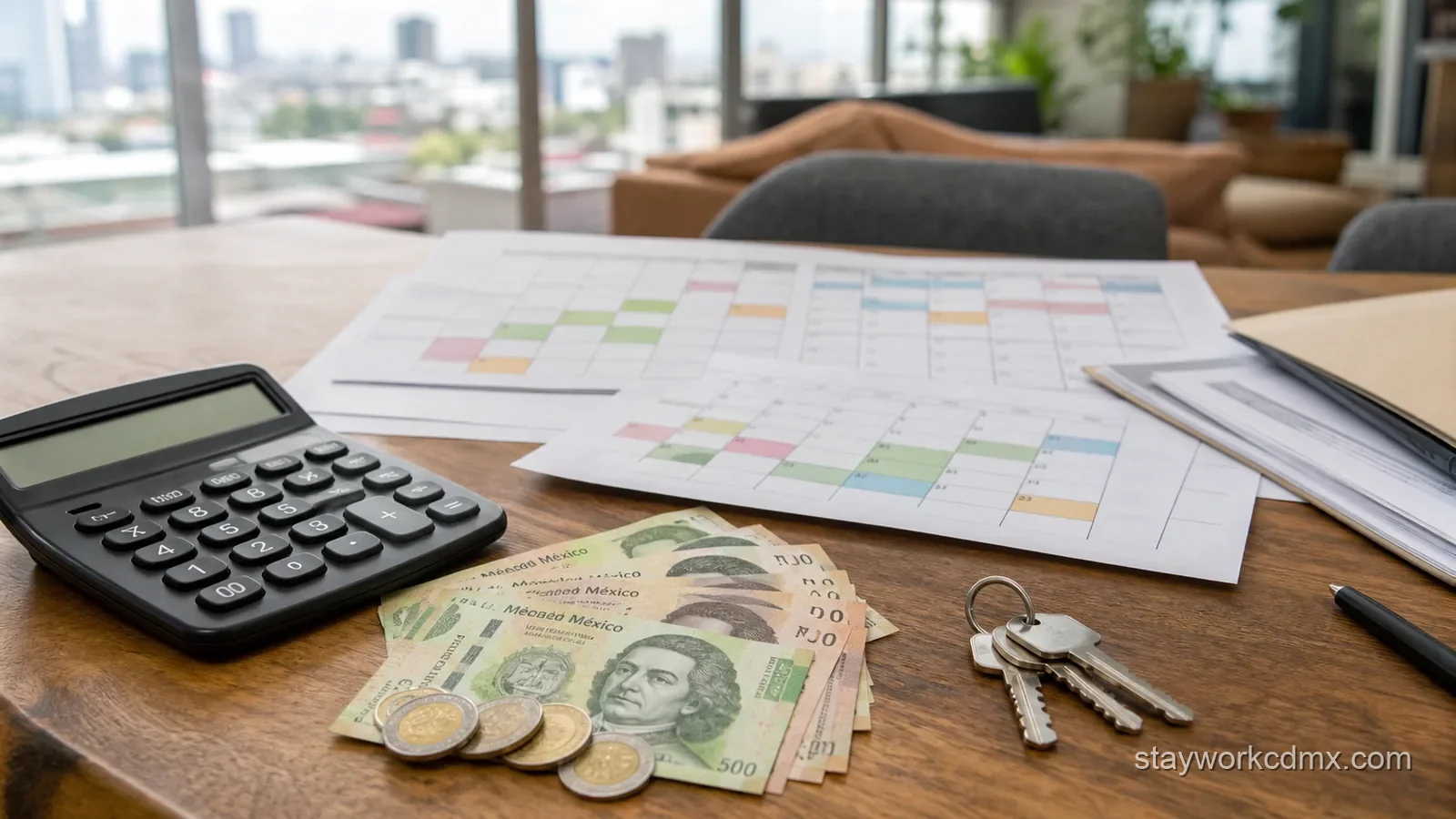
Rent is the anchor of the budget, and it varies by neighborhood far more than by apartment quality. Typical furnished monthly ranges in mid-2026:
| Neighborhood | 1BR furnished | 2BR furnished | Character |
|---|---|---|---|
| Narvarte | $22,000–$32,000 MXN | $32,000–$45,000 MXN | Residential, quiet nights, best value |
| Del Valle | $23,000–$34,000 MXN | $34,000–$48,000 MXN | Residential, larger units, calm |
| Roma Norte | $28,000–$42,000 MXN | $40,000–$60,000 MXN | Café culture, walkable, high demand |
| Condesa | $30,000–$46,000 MXN | $44,000–$65,000 MXN | Parks, expat demand, priciest of the four |
A realistic full monthly budget for one person looks like this:
| Item | Monthly cost (MXN) |
|---|---|
| Furnished 1BR apartment (Narvarte/Del Valle) | $22,000–$34,000 |
| Groceries | $3,000–$5,000 |
| Meals out (3–4× per week) | $3,000–$6,000 |
| Metro/Metrobús + Uber/Didi | $1,000–$1,900 |
| Coworking + cafe + social | $1,000–$2,500 |
| Phone/SIM + laundry | $500–$1,000 |
| Total | $30,500–$50,400 MXN (~US$1,650–2,700) |
Splitting a 2BR with a coworker drops the housing line to $16,000–$30,000 MXN each and the total closer to US$1,300–2,000.
A remote worker in the SF Bay Area spends $2,500–3,500 USD/month on the same categories; in London it’s $2,200–3,200, and in Mexico City roughly $1,650–2,700 with rent in a good, central neighborhood and no roommates. For the line-by-line version of this math, see the furnished monthly apartment cost guide for 2026 .
Practical remote work setup
Apartment essentials
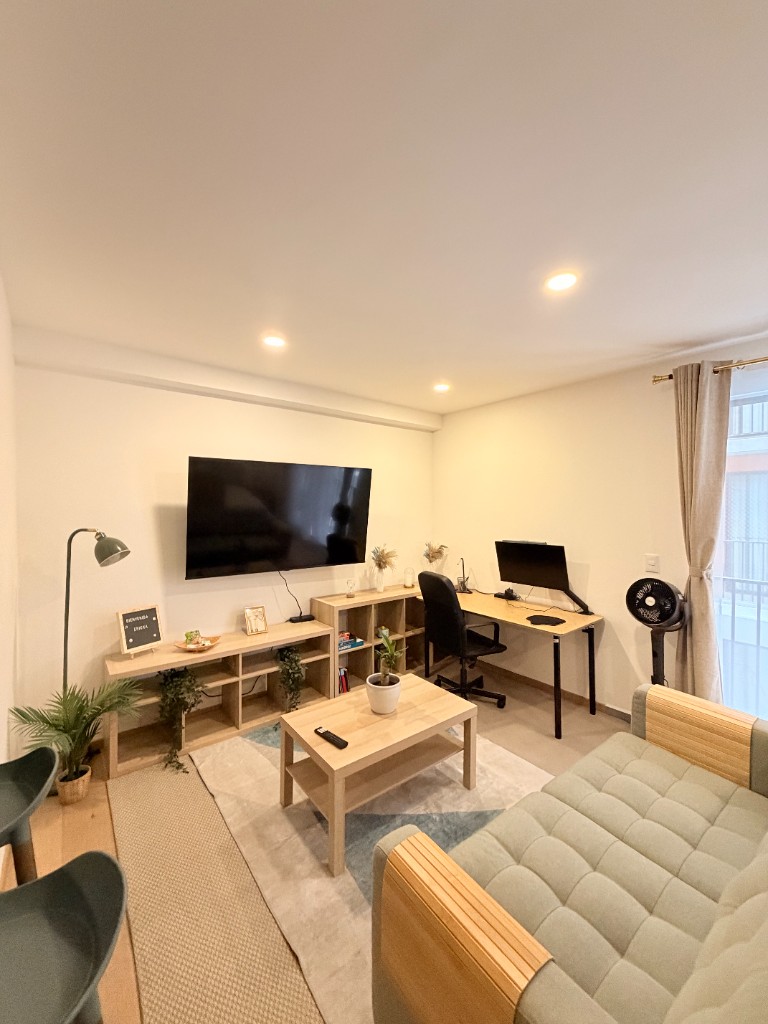
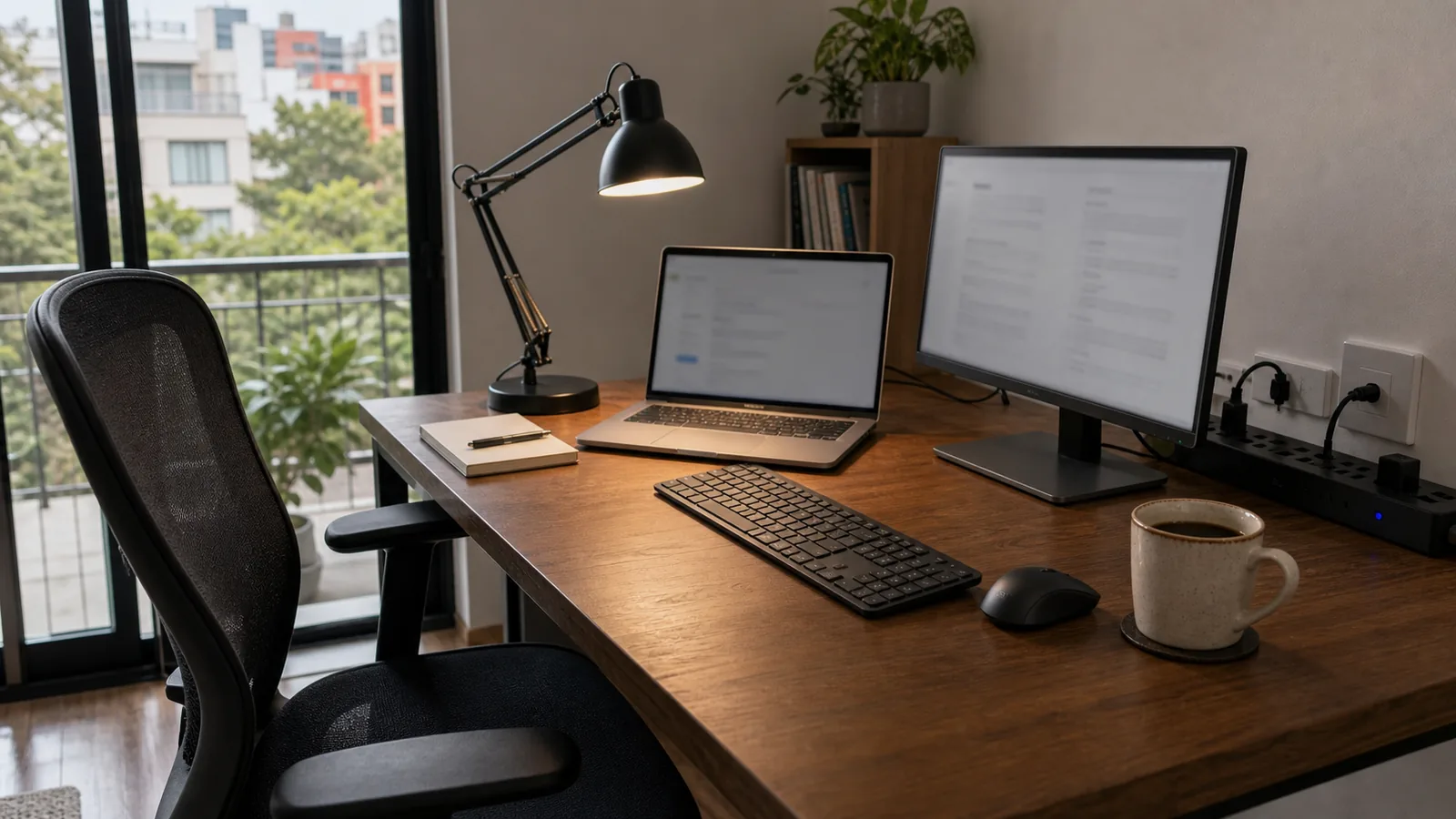
- Desk or table: not all furnished apartments come with a real desk, so check photos. If sketchy, budget $1,500–$3,000 MXN to buy a cheap one on Facebook Marketplace and sell it when you leave.
- Desk chair: cafe chairs and bed edges destroy your back. Bring an ergonomic chair or buy one ($2,500–$6,000 MXN).
- Lighting: Mexican apartments often have dim overhead lighting, so get a desk lamp ($300–$700 MXN).
- Backup internet: get a local phone SIM with a generous data plan ($200–$500 MXN/month). If the apartment WiFi dies before an important call, tether to your phone.
Getting internet set up fast
- On arrival, ask the landlord about internet specs and who to call if it’s slow.
- Bring a laptop with an ethernet cable. Some older buildings need ethernet to debug (the WiFi can be the building’s issue, not the line).
- Test on day 1. If it’s slower than promised, escalate that day.
- Keep a backup phone SIM (sold at the airport or any corner store).
Time management in a different timezone
- Work async-first: write decisions down instead of relying on real-time Slack threads.
- Set office hours for calls (e.g., 9am–12pm Mexico time for meetings, the rest of the day for deep work).
- Respect boundaries: being able to work at midnight doesn’t mean you should.
Mental health and avoiding burnout
Remote work in a foreign city can spiral into isolation and overwork.
Warning signs:
- You’re working 10+ hours daily because “might as well, nothing else to do”
- You haven’t left your apartment in 3 days
- You’re eating only delivery food
Prevention:
- Exercise is non-negotiable: the gym, yoga, or a running loop in Parque México or Parque España.
- Schedule social commitments like work calls (Tuesday coworking space, Friday cafe with someone, Sunday language exchange) and treat them as unmissable.
- Explore with a weekend trip to Teotihuacan or Xochimilco, or just a different neighborhood. Novelty helps.
- Join a coworking space or expat group early, before you’re already depressed.
Coliving in Mexico City: when it makes sense
Coliving spaces in Mexico City (Roma Norte, Condesa, and Juárez) bundle a furnished private room with shared common areas, cleaning, and community events. Realistic all-in monthly totals run $16,000–$26,000 MXN once meals and coworking upgrades are counted. Coliving fits short trial periods and nomads who want a built-in social life. For 30+ night stays where a private kitchen, quiet workspace, and consistent Wi-Fi matter more, a furnished private apartment usually wins on both privacy and monthly cost; the coliving vs furnished apartment comparison runs the full math side by side.
Furnished apartments vs alternatives for nomads
Hotels are expensive ($1,500–2,800 MXN/night, or $45,000–84,000 MXN for a month), impersonal, and have no kitchen.
Unfurnished apartments have cheaper rent ($14,000–$24,000 MXN/month for a central 1BR), but mean 40 hours of furniture hunting, utility setup in Spanish, a fiador or deposit hurdle, and a 12-month lease.
Furnished apartments are the sweet spot: WiFi, kitchen, desk space, and month-to-month flexibility. They cost $22,000–$42,000 MXN/month depending on neighborhood, but the peace is worth it.
Coliving spaces are community-focused furnished rooms designed for remote workers, with realistic all-in totals of $16,000–$26,000 MXN/month. They’re good if you actively want built-in social infrastructure, at the cost of privacy and a real kitchen of your own.
For most remote workers, furnished apartments are the right call.
Next steps: Picking a neighborhood and booking
- Decide your priority: quiet focus (Narvarte, Del Valle), community energy (Roma), or a balance (Condesa). The 2026 remote-worker neighborhood comparison settles this in one read.
- Tour by video before committing; check the WiFi box and desk setup.
- Ask about WiFi speed explicitly and get it in writing.
- Book month-to-month. If the neighborhood doesn’t vibe, you leave after 30 days.
- Plan your community in the first week: find your cafe, join a meetup group, and set up a language exchange.
Next reading:
- Furnished apartments in Mexico City : full apartment guide
- Narvarte for remote workers : more on Narvarte
- Moving to CDMX for work : first-month checklist, even if you’re not an employee
When you’re ready, book direct with your preferred neighborhood, dates, and WiFi speed requirements, or message us first. We’ll find you a place where you can focus.