If you’re trying to decide between Roma Norte, Condesa, and Polanco for a stay in Mexico City in 2026, the honest answer is that each serves a different type of person. The wrong one for your situation doesn’t become the right one because it photographs well on Instagram.
This guide compares the three neighborhoods on what matters for a mid-term stay: cost, remote work infrastructure, daily rhythm, safety, transit, and which type of traveler each one suits. Pricing is current for 2026 and includes World Cup context.
Quick Verdict Before the Detail
| Factor | Roma Norte | Condesa | Polanco |
|---|---|---|---|
| Monthly rent (furnished 1-bed, USD) | $900–$1,600 | $1,000–$1,800 | $1,400–$3,500 |
| Café and coworking density | ★★★★★ | ★★★★☆ | ★★★☆☆ |
| Green space | ★★☆☆☆ | ★★★★★ | ★★★★☆ |
| Nightlife / social energy | ★★★★★ | ★★★☆☆ | ★★☆☆☆ |
| Safety perception | ★★★★☆ | ★★★★☆ | ★★★★★ |
| Transit access | ★★★★☆ | ★★★☆☆ | ★★★☆☆ |
| Furnished monthly inventory | High | Moderate | Moderate |
| Value for money | ★★★☆☆ | ★★★☆☆ | ★★☆☆☆ |
Ratings are relative within this comparison, not absolute city scores.
Roma Norte: Energy, Density, and the Best Café Infrastructure in CDMX
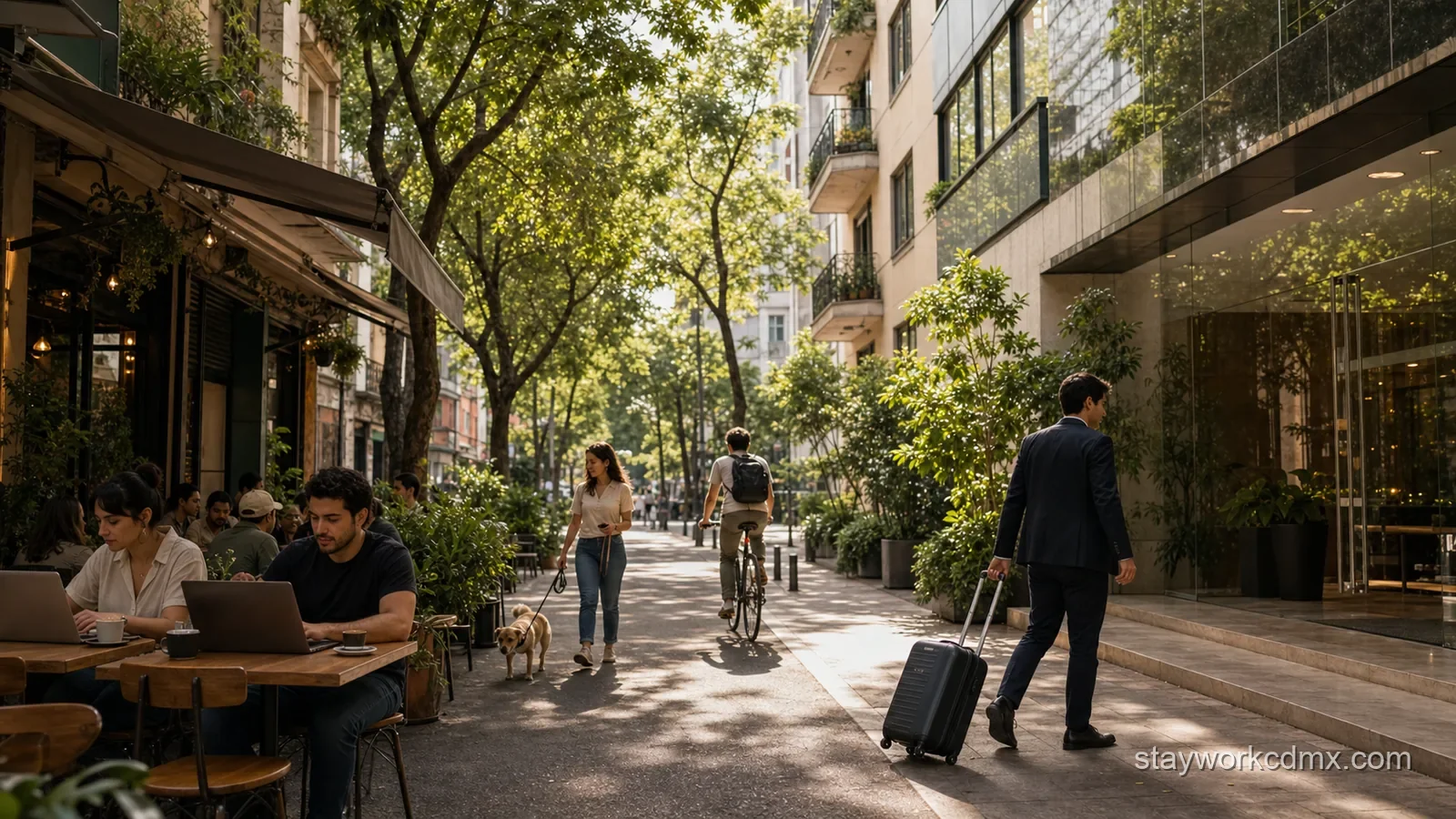
Roma Norte is Mexico City’s most popular neighborhood for remote workers because it solves the first-week problem better than anywhere else. You can land, settle in, find your coffee shop in a day, and have a routine before you’ve worked out which metro line goes where.
The case for Roma Norte:
Within a 15-minute walk you’ll find multiple coworking spaces, dozens of cafés you can work from all day, grocery stores, gyms, pharmacies, laundry services, and more restaurants per block than most neighborhoods in Latin America. When you close your laptop, you don’t have to commute to find dinner or a drink.
It also has the most furnished apartment inventory of the three, so you get more options at different price points and more flexibility on timing.
The case against Roma Norte:
It’s not quiet. Orizaba, Álvaro Obregón, and the surrounding streets stay active late into the night. If you’re a light sleeper or need silence for a demanding work schedule, the neighborhood can work against you. An upper-floor apartment or one on a quieter side street helps, but you can’t fully escape the street noise.
It also costs more than equivalent options in Narvarte or Escandón. Furnished monthly inventory competes with short-stay platforms that list the same apartments as nightly Airbnbs, which drives prices up and can tighten availability, especially during high-demand periods.
If your stay overlaps with June–July 2026, expect the World Cup to push up Roma Norte demand and prices. Book at least 8 weeks ahead for peak match windows.
Monthly costs in Roma Norte (2026):
| Apartment Type | Monthly Rate (USD) | Typical Inclusions |
|---|---|---|
| Studio / work-ready loft | $900 – $1,200 | Utilities, Wi-Fi, workspace |
| 1-bedroom apartment | $1,100 – $1,600 | Utilities, Wi-Fi |
| 2-bedroom apartment | $1,600 – $2,500 | Utilities, Wi-Fi; scarce in quality monthly inventory |
Direct-booked rates. Platform rates (Airbnb, Booking.com) run 20–30% higher.
Choose Roma Norte if:
- This is your first month in CDMX
- You work primarily from cafés and need high café density
- Social energy, walking nightlife, and food options matter to your daily experience
- You want the most furnished apartment options at various price points
Condesa: Parks, a Calmer Daily Rhythm, and Green Space That Roma Norte Lacks
Condesa and Roma Norte are adjacent neighborhoods that get compared constantly, usually in a way that understates how they differ. Both have walkable streets, good restaurants, independent cafés, and a young, international crowd, but the daily rhythm is not the same.
The case for Condesa:
Parque México is a proper park, with shaded walking paths, a dog run, a small amphitheater, and benches for laptops. Parque España is smaller but just as pleasant. On a 30- to 90-day stay, green space you actually use matters for your health and work quality in a way a one-week trip doesn’t reveal.
Condesa’s streets are slightly quieter than Roma Norte’s core, with fewer bars opening onto the street and more residential buildings. The café scene is excellent, though not as dense as Roma Norte’s. If your shortlist is already down to these two, our Roma Norte vs Condesa monthly-stay comparison settles it on workweek criteria: noise, cafés, parks, and cost.
The case against Condesa:
In some building types it costs slightly more than Roma Norte, and it has fewer furnished monthly options. If apartment availability and value are your priorities, Roma Norte beats Condesa on both.
Some remote workers describe Condesa as slightly less connected, with fewer coworking spaces within a 5-minute walk and a more spread-out layout. It’s still walkable and well served, but Roma Norte is denser.
Monthly costs in Condesa (2026):
| Apartment Type | Monthly Rate (USD) | Typical Inclusions |
|---|---|---|
| Studio / 1-bed near Parque México | $1,000 – $1,400 | Utilities, Wi-Fi |
| 1-bed in premium buildings | $1,400 – $1,800 | Utilities, Wi-Fi, concierge |
| 2-bed apartment | $1,700 – $2,600 | Utilities, Wi-Fi |
Choose Condesa if:
- Morning runs, evening walks, or outdoor time are part of how you work well
- You’re traveling with a partner, a dog, or anyone who benefits from park access
- You want Roma Norte’s character with a little less noise
- You’re staying 60+ days and the neighborhood’s daily feel matters more than its nightlife
Polanco: Premium Infrastructure, Corporate Stays, and a Different Kind of CDMX
Polanco doesn’t compete with Roma Norte or Condesa on the same terms. It’s a different product for a different type of guest, built for corporate comfort: premium residential towers, private security visible on the street, embassies and international offices nearby, Chapultepec Park just to the south, and a high-end restaurant scene. Furnished apartment inventory is smaller than Roma Norte’s, but the quality ceiling is higher.
The case for Polanco:
If you’re on a corporate housing allowance, meeting clients or colleagues in the Paseo de la Reforma corridor, traveling with family, or simply want the most secure and polished version of Mexico City life, Polanco removes friction the other two neighborhoods don’t. Premium buildings have concierge-level service, corporate billing is factura-ready, and the neighborhood is generally clean and orderly.
Chapultepec is close, too: the park complex, the Anthropology Museum, and the Soumaya and Jumex Museums are all a short walk or quick Uber away, which counts for more on a longer stay.
The case against Polanco:
Cost is the main barrier. A quality furnished 1-bedroom in Polanco starts around $1,400/month and goes significantly higher in premium buildings. You’re paying for the address and the infrastructure, not additional square footage or included services.
Working from cafés is harder than in Roma Norte or Condesa. Polanco has excellent restaurants and hotel bars, but fewer independent coffee shops with the outlets and quiet corners that remote workers need for a full workday. You’ll rely more on your apartment, which is fine if the setup supports it, and more on coworking spaces or hotel lobbies.
Polanco can also feel cut off from the social core of CDMX that Roma Norte and Condesa anchor. If you want to wander and discover the city’s independent culture, look for a different base.
Monthly costs in Polanco (2026):
| Apartment Type | Monthly Rate (USD) | Typical Inclusions |
|---|---|---|
| Studio in a modern building | $1,400 – $1,900 | Utilities, Wi-Fi, concierge |
| 1-bed in premium building | $1,900 – $2,800 | Utilities, Wi-Fi, gym, parking |
| 2-bed executive apartment | $2,800 – $4,000+ | Full services, corporate billing |
Choose Polanco if:
- You’re on a corporate housing allowance or an employer is covering costs
- You need proximity to the Reforma financial corridor
- Security and premium infrastructure are primary requirements
- You’re traveling with family and want the most reassuring version of CDMX
- You can’t do without factura / corporate billing
Condesa vs Polanco: Which One Fits Your Stay?
If your shortlist is down to these two, the numbers separate them fast. A furnished studio in Condesa runs $1,000–$1,400/month, while a comparable studio in a modern Polanco building starts at $1,400–$1,900; premium 1-beds go $1,400–$1,800 in Condesa versus $1,900–$2,800 in Polanco. Condesa wins for parks (Parque México, Parque España), walkable mornings, and a softer daily rhythm that suits couples, dog owners, and remote workers who want Roma Norte’s character at lower volume. Polanco wins when the stay is corporate: factura-ready billing, visible security, premium towers, and the Reforma financial corridor within reach. The 2026 cost tables above give the full breakdown for both.
Side-by-Side: Remote Work Considerations
Remote workers need to evaluate three things beyond general livability: apartment-based work quality, café-based work options, and coworking access.
Apartment-Based Work
All three neighborhoods have quality furnished apartment inventory with fiber internet available. The difference is what “furnished” includes:
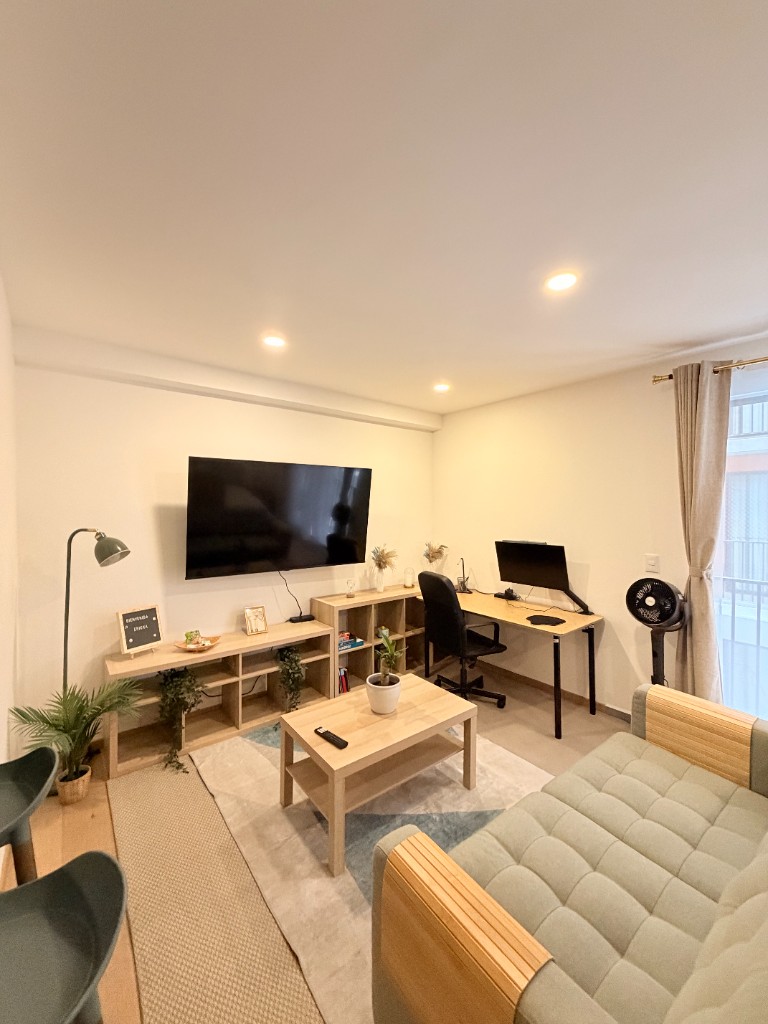
- Roma Norte: more work-ready inventory, meaning apartments set up for remote workers with a real desk, monitor, and ergonomic chair instead of a dining table pressed into service as a workspace.
- Condesa: similar quality at lower volume. There are fewer explicitly work-ready setups and more standard furnished apartments where the workspace is an afterthought.
- Polanco: high quality in premium buildings, but “workspace” often means a desk in the corner. The best work setups are in apartments designed for it, so confirm before booking.
Café-Based Work
Roma Norte wins on raw density and variety. Our guide to the best coffee shops in Roma Norte for remote work picks the best options by Wi-Fi speed, noise level, and outlet availability.
Condesa has good options, just fewer of them, and the best ones (Café Amada and several spots around Parque México) are excellent. Polanco has hotel lobbies and a few dedicated café-coworking hybrids; the independent café scene is thinner.
Coworking Spaces
Roma Norte has the most dedicated coworking spaces at multiple price points. Condesa has a few. Polanco has more corporate-oriented spaces, often pricier.
Neighborhood Safety: An Honest Read
Roma Norte, Condesa, and Polanco are all among the safest neighborhoods in Mexico City for daytime and evening activity. Normal precautions apply (don’t flash expensive gear, and use Uber/Didi at night rather than walking unfamiliar routes), but you don’t need to change your daily behavior much from what you’d do in any major North American or European city.
Polanco has the most visible private security and the lowest petty crime rates of the three. Roma Norte and Condesa are comparable in practice and very livable for international visitors. The safety differences across the three are real but not dramatic.
For practical notes on getting around Mexico City safely and cost-effectively, see our Uber vs Didi CDMX guide , which covers fare expectations, airport pickup rules, and night-travel considerations.
What About Narvarte?
Narvarte isn’t in this three-way comparison because it competes mainly on value and work discipline, while Roma Norte, Condesa, and Polanco all lead with lifestyle. It’s still the most important neighborhood this article doesn’t cover, and our Narvarte guide for remote workers profiles it in full.
If you’re seriously considering any of the three above and price is a factor, compare them against Narvarte’s $800–$1,250 range for a furnished 1-bedroom, or against Del Valle, one colonia further south. The Del Valle monthly cost and routine breakdown for remote workers itemizes a full month there line by line. Our Mexico City neighborhoods guide for remote workers 2026 compares eight CDMX areas, Narvarte included, and our cost of living in Mexico City for remote workers guide shows how rent fits into a complete monthly budget with food, transport, coworking, and insurance.
2026 Timing and World Cup Context
The FIFA World Cup runs 11 June to 19 July 2026, with matches in Mexico City. The tournament will tighten furnished monthly inventory across all three neighborhoods and drive short-stay prices higher on Airbnb and similar platforms during match windows.
In practice:
- Book Roma Norte and Condesa monthly stays for June–July at least 8 weeks in advance
- Polanco is less affected than Roma Norte/Condesa because it has fewer short-stay platforms competing for the same inventory
- If your dates are flexible, late July after the final and August are softer on both price and availability; early June is already inside the tournament build-up
- Monthly apartments booked direct (not Airbnb) are less affected by World Cup pricing spikes
For monthly stays
If Roma Norte wins your shortlist, book it direct
Frequently Asked Questions
Is Roma Norte or Condesa better for a first visit to CDMX? Roma Norte for a first visit. It has more to explore in a smaller radius, the highest café density, and the best furnished apartment inventory. Condesa is the better answer once you’ve been to CDMX before and park access and a calmer rhythm matter more than novelty.
Can you walk between Roma Norte and Condesa? Yes. The neighborhoods share a border and are walkable from each other in 10–20 minutes depending on where you’re going. Many people treat them as a combined zone.
Is Polanco worth the cost for a remote worker? Polanco is worth it only if you need what it specifically offers: corporate billing, security, proximity to Reforma or Chapultepec, or premium building standards. For pure remote work quality, Roma Norte gives you more café and coworking options at lower cost. The cost premium in Polanco pays for the address and infrastructure, not the work environment.
Which neighborhood has better monthly apartment availability in 2026? Roma Norte has the largest volume of furnished monthly inventory, but it’s also the most competed-over during high-demand periods. Condesa has less availability. Polanco has stable inventory at the premium tier.
What’s the best neighborhood if I’m staying with a partner? Condesa, for its parks and a calmer shared daily rhythm. Roma Norte if you both want maximum social and food options. Polanco if you’re both working and want premium infrastructure and quiet evenings.
How much cheaper is Narvarte than Roma Norte? Narvarte is typically 20–30% cheaper than Roma Norte for equivalent furnished apartment quality. A setup that costs $1,200/month in Roma Norte will often run $850–$950 in Narvarte with similar included utilities and work infrastructure.
Book a StayWork CDMX Apartment in Roma Norte or Narvarte
StayWork CDMX rents work-ready furnished apartments in Roma Norte and Narvarte, booked direct with no platform fees. Current availability includes a work-ready loft in Roma Norte with a dedicated desk and 27-inch QHD monitor, and a furnished apartment in Narvarte suited for longer assignments.
Current pricing and availability: Long term rentals in Mexico City
Questions before you book: FAQ