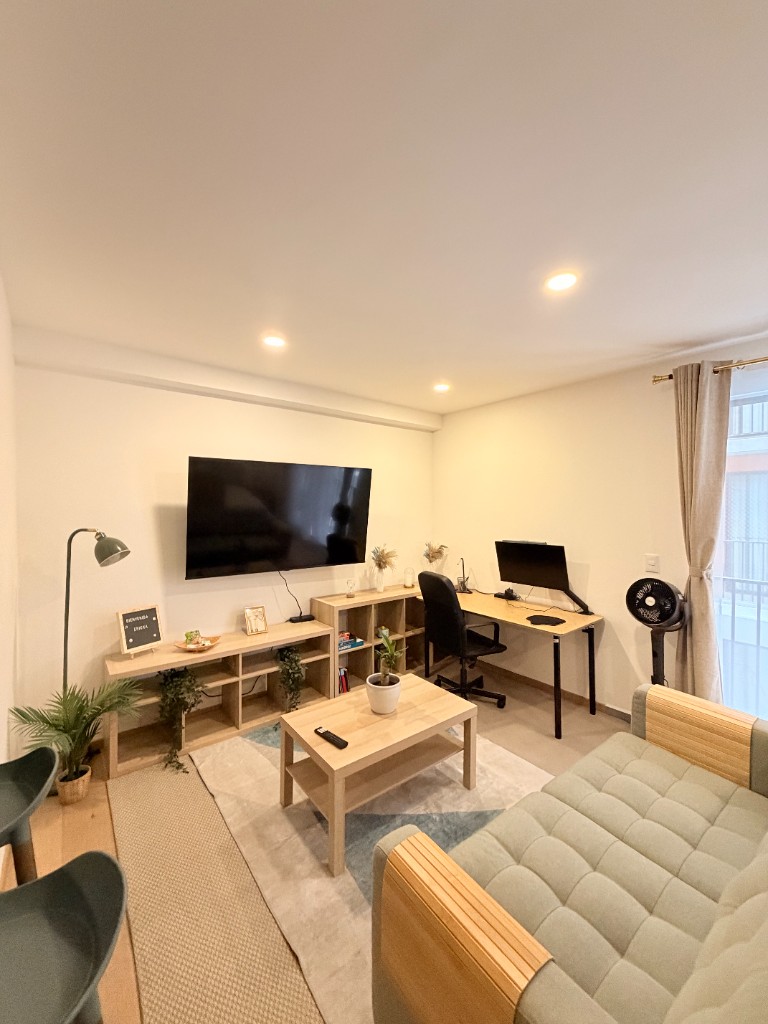
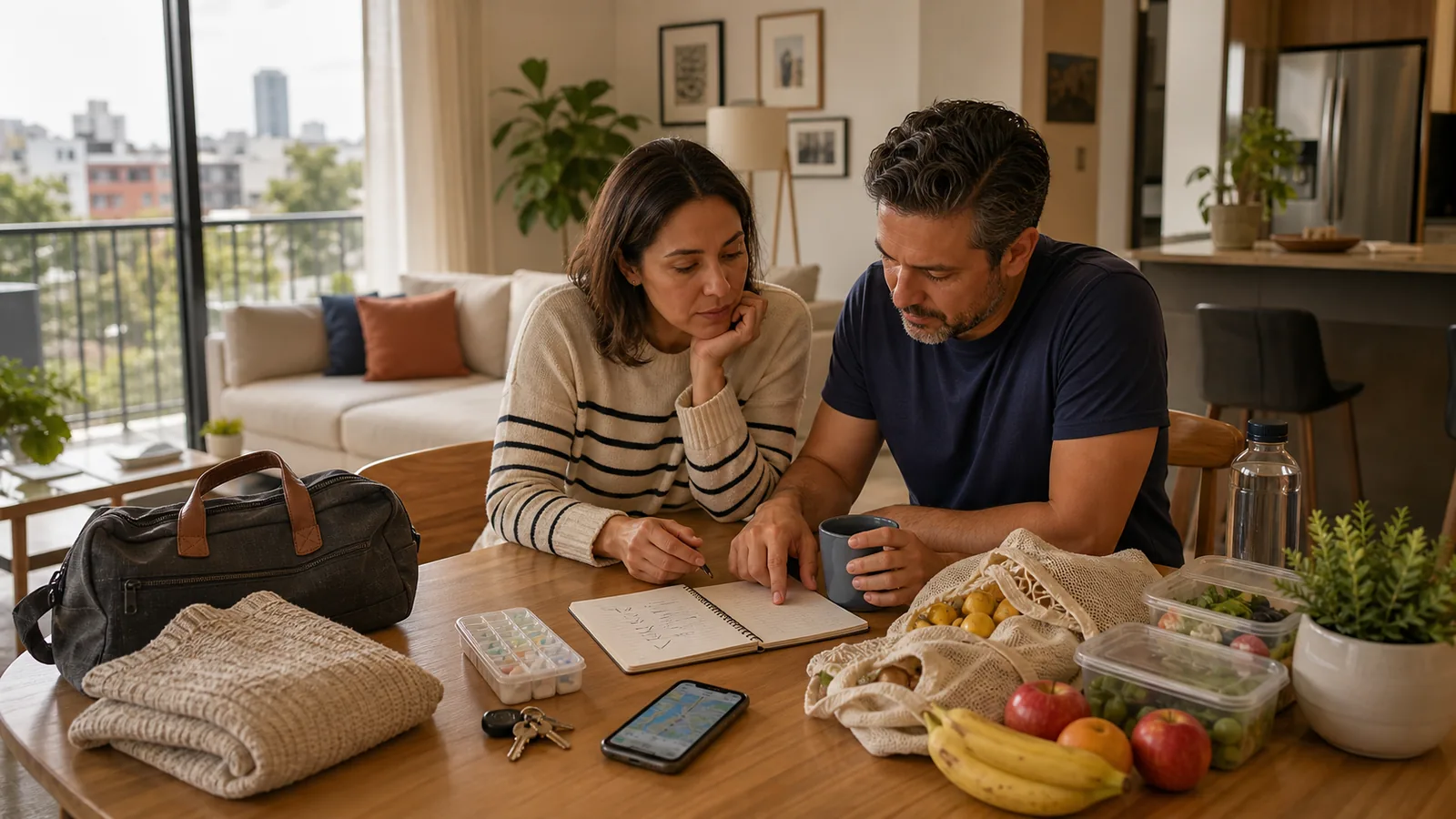
When a family member is in hospital, the housing question feels secondary until it isn’t. After the first week of rotating between a hospital hallway, a hotel room with no kitchen, and a restaurant for every meal, the logistics of where the support team sleeps, eats, and regroups become a daily problem. A furnished apartment near the hospital turns that problem into a manageable routine.
This guide is for families supporting a patient at a Mexico City hospital — usually Centro Medico Siglo XXI, Hospital General de Mexico, or Hospital Infantil de Mexico Federico Gómez — who need housing measured in weeks or months, not a weekend.
For the citywide medical-stay hub, start with hospital stays in Mexico City . For the Narvarte neighborhood focus, use monthly apartments near hospitals in Narvarte . For the neighborhood comparison (Narvarte vs Doctores vs Roma Sur vs Del Valle), read best areas in CDMX for medical-adjacent monthly stays .
Spanish: Hospedaje para familiares de pacientes cerca de hospitales en CDMX .
Quick Answer
Quick answer
Narvarte is the strongest starting point for patient-family housing near CDMX’s central hospital corridor. A furnished 2BR apartment gives families a kitchen, separate bedrooms, laundry, and a residential rhythm that holds up for 30 to 90 nights.
Choose by situation:
- 2BR furnished apartment: best for families of two or more who need separation between sleep, calls, and shared living — especially when visitors rotate or a caregiver works remotely
- Private room: best for a solo family member on a tighter budget who still wants the Narvarte neighborhood and routine
- Hotel near the hospital: only practical for visits under two weeks with no cooking, coordination, or shared-space needs
The right housing makes the hospital stay survivable. The wrong housing adds a second source of daily friction.
Who This Guide Is For
This article is for family members and close support networks whose housing need is driven by someone else’s medical situation:
- Parents of a hospitalized child at Hospital Infantil or a pediatric unit within Centro Medico, needing weeks near the hospital with a kitchen for special meals and a quiet place to sleep between visiting hours.
- Adult children supporting an aging parent through surgery, treatment, or recovery at Hospital General or Centro Medico, often coordinating with siblings or a hired caregiver.
- Spouses or partners accompanying someone through a multi-week treatment course, where the apartment becomes home base for emotional, logistical, and administrative support.
- Extended family groups where two or three relatives rotate presence at the hospital, sharing an apartment as a relay base.
- Out-of-town Mexican families arriving from other states (Puebla, Veracruz, Oaxaca, Querétaro) who need CDMX housing for an undefined stretch while a relative receives specialized care unavailable at home.
- International families whose relative is receiving treatment in Mexico City, combining an unfamiliar city with an already stressful medical situation.
The common thread: the apartment is not a vacation rental. It is a support base where people cook, sleep, cry, make phone calls, wash clothes, and try to maintain some version of daily life while spending most of their waking hours at a hospital.
Why a Furnished Apartment Beats a Hotel for Patient Families
For the first three nights, a hotel works fine. After that, the absence of a kitchen, living room, and laundry becomes a tax on every day:
- Kitchen access changes the food equation. Hospital cafeterias and nearby restaurants are fine occasionally, but feeding a family three meals a day for a month at restaurant prices is expensive and exhausting. A kitchen lets you cook simple meals, store leftovers, prepare food for the patient when allowed, and maintain some normalcy.
- Separate bedrooms protect sleep. When one person returns from the hospital at 11 PM and another leaves at 6 AM, a studio or hotel room creates conflict. A 2BR apartment lets different schedules coexist.
- Living space supports coordination. Insurance calls, family updates, video calls with relatives back home, paperwork, and emotional processing all need space that is not a bed. A living room with a table is not a luxury — it is where the logistical side of a hospital stay actually happens.
- Laundry access prevents the suitcase spiral. On a multi-week stay, running out of clean clothes is not theoretical. In-unit or building laundry removes one more errand from an already full day.
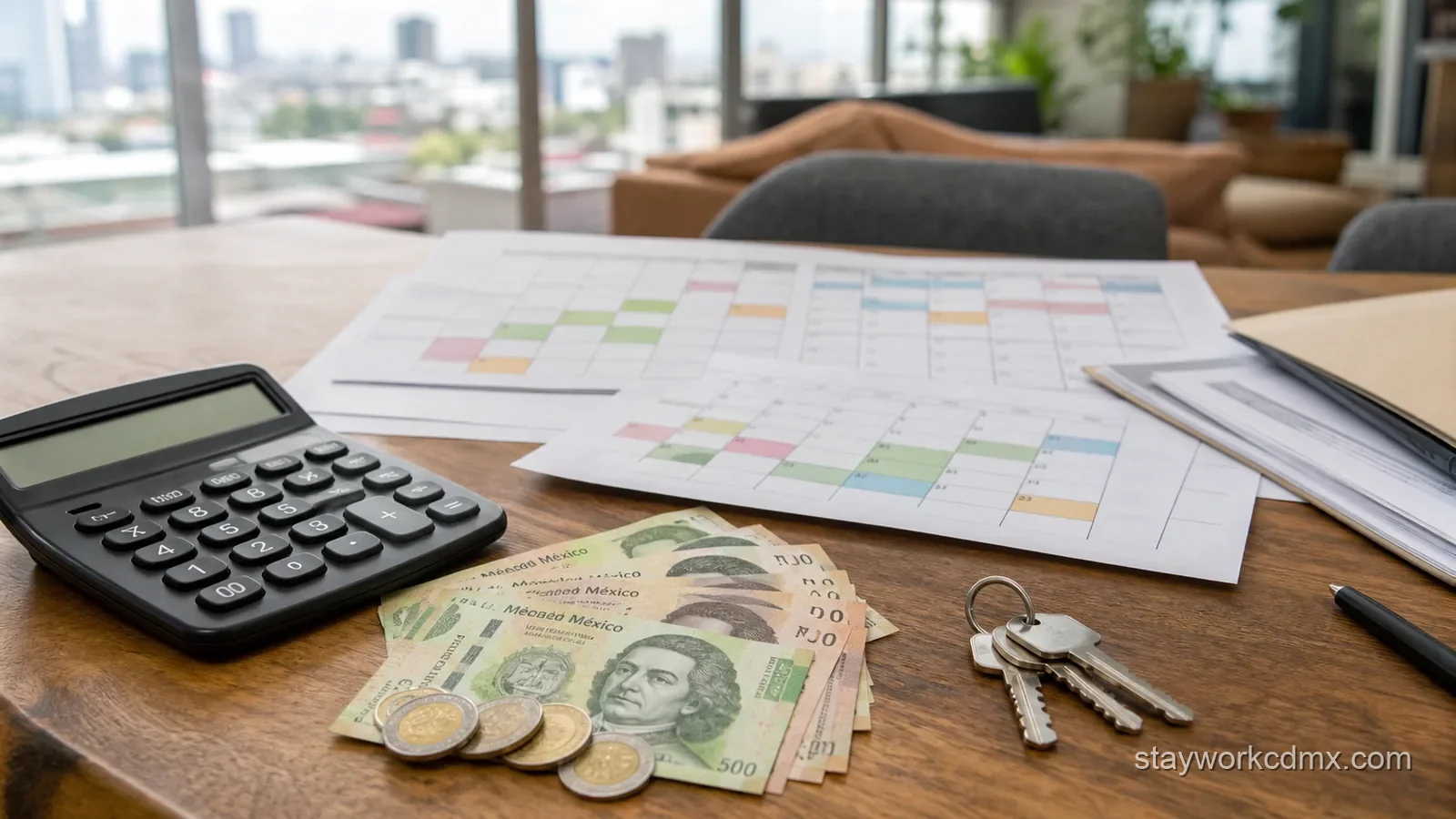
- Cost compounds differently. A hotel room at 1,200–2,500 MXN per night for 30 nights adds up to 36,000–75,000 MXN with no kitchen. A furnished monthly apartment in Narvarte, even accounting for groceries, typically costs less while providing more space and autonomy.
Hotel vs furnished apartment for patient-family stays
| Factor | Hotel near hospital | Furnished apartment in Narvarte |
|---|---|---|
| Stay length sweet spot | 1–14 nights | 14–90+ nights |
| Kitchen | None or microwave only | Full kitchen with stovetop and refrigerator |
| Sleeping separation | Usually one room | 2BR options available |
| Laundry | Hotel service at extra cost | In-unit or building access |
| Work and coordination space | Desk in bedroom | Living area with table, separate from bedrooms |
| Daily food cost | High (restaurants for every meal) | Lower (cooking most meals) |
| Visitor flexibility | Hotel policies vary | More natural for rotating family members |
| Monthly cost (approximate) | 36,000–75,000+ MXN | Often lower for equivalent or better space |
Why Narvarte Works for Patient Families
Narvarte is not the flashiest neighborhood in Mexico City, and that is the point. For a family living around hospital visits, the qualities that matter are residential calm, practical errands, and a functioning daily routine.
- Pharmacies and supermarkets within walking distance. Farmacias Guadalajara, Farmacias del Ahorro, Bodega Aurrera, Soriana, and Mercado de Narvarte are all accessible without a cross-city trip. When you need medication, groceries, or basics at 8 PM after a hospital day, proximity matters.
- Parque Delta mall for practical needs. Not a tourist destination, but a useful one — bank branches, phone carrier stores, a food court for the days nobody wants to cook, and general errands that accumulate during a long stay.
- Quieter blocks than Roma Norte or Condesa. The streets settle earlier, weekend noise is lower, and the residential rhythm supports the kind of rest that hospital families actually need.
- Workable routes to the hospital corridor. Metro, Metrobús, rideshare, and taxi options connect Narvarte to Centro Medico, Hospital General, and Hospital Infantil without requiring a car.
- Value across 30+ nights. Narvarte’s monthly rates are typically more sustainable than comparable space in higher-demand neighborhoods, which matters when the stay length is uncertain and the budget is already strained by medical costs.
For the detailed neighborhood view, use Narvarte hospital housing or the broader Narvarte neighborhood guide .
Choosing by Hospital
The right apartment depends on which hospital entrance your family visits most. Each campus has its own access patterns:
- Centro Medico Siglo XXI: Multiple towers (Cardiología, Oncología, Pediatría) with distinct entrances. The Narvarte route varies by 5–10 minutes depending on which tower you need. Read the Centro Medico apartment page and the Centro Medico routing guide .
- Hospital General de Mexico: The Cuauhtémoc-side and Doctor Balmis-side entrances are not interchangeable in traffic. Confirm which gate your family uses before mapping the route. See the Hospital General apartment page .
- Hospital Infantil de Mexico Federico Gómez: Families with hospitalized children often visit multiple times per day, making route predictability critical. The Doctor Liceaga area is faster from western Narvarte. See the Hospital Infantil apartment page .
Test the route at the hours you will actually travel — morning, evening, and late night. A route that works at noon may not work at 7 AM when school traffic fills the cross streets.
What the Apartment Needs to Do
For a patient-family stay, evaluate the apartment as a support base, not a vacation rental:
- Kitchen: stovetop, refrigerator with enough space for a week of groceries, basic cookware, plates and utensils for the full group. Families often prepare food to bring to the hospital.
- Bedrooms: enough beds for the group, with the ability to close a door between sleepers on different schedules. A 2BR layout handles most family configurations.
- Living area: a table or desk where someone can sit with a laptop, make phone calls, review insurance documents, or simply decompress without being in a bedroom.
- Laundry: in-unit is ideal. Building-shared is workable. Off-site lavandería is manageable if the route is short, but adds one more errand.
- Wi-Fi: stable enough for video calls with family back home, telehealth consultations, remote work if a caregiver is also employed, and uploading documents.
- Building access: secure 24/7 entry. Hospital schedules are unpredictable — late-night returns after an emergency, early departures for surgery prep, or mid-day trips back to rest should all be possible without complications.
- Elevator: matters when family members carry bags, food, or are physically exhausted after long hospital days.
Managing an Uncertain Stay Length
Patient-family stays rarely have a firm end date. Treatment extends, surgery gets rescheduled, discharge depends on recovery milestones, or a follow-up course adds two more weeks. This uncertainty affects housing in specific ways:
- Ask about flexibility before booking. Can the stay be extended by a week or two if treatment runs longer? What is the process and cost? Confirm this in writing before payment, not when the extension is already needed.
- Understand the cancellation terms. If the patient is discharged earlier than expected, what happens to the remaining nights? Some operators can adjust; others cannot. Know the policy before you are in the middle of it.
- Budget for the longer scenario. If the stay might be 30 nights or 60 nights, compare the monthly rate at both lengths. A furnished apartment on a monthly rate usually handles extensions better than a hotel at a nightly rate.
- Keep a packed bag ready. Families in hospital-support situations sometimes need to leave quickly. An apartment with good storage and an organized layout makes this easier than living out of suitcases in a cramped space.
Practical Tips for the First Week
The first week in Mexico City as a patient-family guest is the hardest — the city is new, the hospital routine is forming, and the apartment is not yet home. A few practical steps:
- Stock the kitchen on day one. Find the nearest supermarket or Mercado de Narvarte before you need it. Buy basics: water, coffee, bread, eggs, fruit, and whatever the patient’s diet requires. This prevents the first three days from being an expensive string of takeout meals.
- Map the hospital route in person. Do not rely on the map app estimate. Walk or drive the route at the time you will actually travel. Note where to get dropped off, where to wait for rideshare pickup, and where the nearest Metro entrance is.
- Locate the nearest pharmacy. Prescriptions, over-the-counter needs, and medical supplies come up unpredictably. Know the closest Farmacia Guadalajara or del Ahorro before you need it at 9 PM.
- Set up a communication system. Decide how family back home will get updates — a WhatsApp group, daily calls, shared notes. Having this settled before the hospital routine absorbs all available attention prevents the “I forgot to call everyone” guilt spiral.
- Give yourself permission to rest. Caregiver fatigue is real and cumulative. The apartment exists to make rest possible. Use it.
Booking Path for Patient Families
When dates are firm enough to book:
- Identify the hospital entrance your family visits most.
- Compare the Narvarte 2BR listing for family groups or the private room for a solo family member.
- Email info@stayworkcdmx.com before payment if the stay involves uncertain dates, rotating family members, billing or paperwork context, or any question that does not fit a standard booking form.
- Use Book Direct for the booking flow once details are confirmed.
StayWork does not promise prices, availability, documentation outcomes, or commute times from article content. Those depend on the specific unit, dates, and booking path. This guide is housing guidance, not medical advice — confirm all healthcare, treatment, and hospital-access questions with the relevant medical team.
For monthly stays
Find a family base near CDMX hospitals
Related Pages
- Hospital stays in Mexico City — citywide medical-stay hub
- Monthly apartments near hospitals in Narvarte — Narvarte hospital focus
- Long-stay housing near CDMX hospitals — medical staff angle
- Best areas in CDMX for medical-adjacent monthly stays — neighborhood comparison
- Where to stay near Centro Medico Siglo XXI — hospital-specific routing
- Spanish: Hospedaje para familiares de pacientes