You can open a Mexican bank account as a foreigner with a passport, a migration document and a comprobante de domicilio, in a branch, without an RFC. The Mexican rule book is looser than the bank counter, and knowing where the two split is what gets you an account. By law an individual does not need an RFC to open one — the anti-money-laundering rule records your CURP and RFC “cuando disponga de ellos,” when you already have them — and none of BBVA, HSBC, Banamex, Scotiabank or Banco Azteca lists an RFC in its published requirements for a personal account. What is genuinely locked is the channel: opening a Nivel 2 account remotely from an app requires a CURP, and opening anything above Nivel 2 remotely is reserved for Mexican nationals resident in Mexico. That clause is why a foreigner ends up in a branch with a passport, a migration document and a comprobante de domicilio — and the comprobante is the piece that stops most people.
We host guests in Roma Norte and Narvarte who arrive on tourist permits, on residency cards, and on everything in between, and we get asked this every month. What follows is not their anecdotes. It is what the regulation and each bank’s own published requirements say, read line by line — because nobody does that part for you, and the gap between the two is where people get stuck. The difference between this going smoothly and badly is almost never the visa. It is whether the paperwork lines up before you queue.
Quick Answer
Quick answer
A Mexican account is worth having for one reason above all: a CLABE. That 18-digit number is how rent, salaries, refunds and deposits actually move here, over the SPEI rail.
- Residency card, CURP and RFC in hand: the easy case. Branch or app, bank or neobank, most doors open.
- Residency card but no RFC: open anyway. The RFC is not a legal precondition, though a branch may still ask.
- Passport and tourist permit only: Scotiabank is the one bank publishing visitor status as an accepted immigration category; HSBC names the Forma Migratoria Múltiple in its ID list. No Mexican neobank has a confirmed passport-only path.
- What actually blocks people is proof of address, not immigration status. A current lease is on the regulator’s accepted list, with no age limit and no registration required.
- Get a Mexican SIM before the branch. BBVA lists “un número de celular vigente” among its requisitos, Hey requires a smartphone with a Mexican number, and DiMo runs on a Mexican mobile line. Cheapest requirement on the list, and the easiest one to arrive without.
What a Mexican account actually buys you
A CLABE and SPEI. Everything else is secondary. SPEI is Banco de México’s interbank transfer system, running since 2004, around the clock. Your CLABE is the address transfers arrive at. Once you have one you stop paying rent in cash, you can be reimbursed by any Mexican business in minutes, and you can pay a plumber from your phone at 11pm.
Banxico’s Circular 11/2026 tightened this. Banks must now assign at least one CLABE to every account classified as Nivel 2, 2 Bis, 3 or 4 — Nivel 1 is deliberately not on that list. The same rule makes DiMo mandatory on request for those levels: ask, and the bank must link the last ten digits of your Mexican mobile number so people can pay you by phone number.
Two things an account does not do. It does not solve international transfers by itself: money from abroad reaches your CLABE through a correspondent bank or a provider paying out over SPEI. And Wise does not issue a Mexican CLABE. Wise publishes local receiving details for exactly eight currencies (AUD, CAD, EUR, GBP, HUF, NZD, SGD, USD) and the peso is not one. Wise also cannot pay pesos out to BanCoppel, Caja Popular Mexicana, Banco Azteca, CIBanco, Intercam or Vector, and sending pesos from an external Mexican account through Wise is capped at 84,000 MXN a month. CoDi, Banxico’s free QR layer, needs an account at a participating institution and a phone; adoption has been thin for nearly seven years.
The three tiers: bank, neobank, foreign fintech
The important difference is not the app. It is what happens to your money if the institution fails.
| Banco múltiple | SOFIPO (most neobanks) | IFPE (e-money) | |
|---|---|---|---|
| Examples | BBVA, HSBC, Banamex, Scotiabank, Azteca, Ualá, Hey Banco | Klar, Stori, Nu México (until 6 Aug 2026) | Mercado Pago |
| Deposit protection | IPAB, 400,000 UDIS per person per bank (≈3,518,004 MXN) | Fondo de Protección, 25,000 UDIS (≈219,875 MXN) | None. Funds held segregated under the Ley Fintech |
| Opening channel | Branch, for foreigners above Nivel 2 | App | App |
Peso figures use the UDI value the DOF published for 3 August 2026: 8.795010 MXN. Every peso number here derives from it and moves as the UDI moves.
That sixteen-fold gap between IPAB and the SOFIPO fund is the most under-reported fact in this area. A neobank paying 13% on a balance you would hate to lose is a different proposition from a bank paying 6.75% with IPAB behind it.
Nu México is mid-transformation and the dates matter. It has been a Sociedad Financiera Popular covered to 25,000 UDIS; CNBV authorised its conversion on 10 July 2026 and Nu says it begins operating as a bank on 6 August 2026, at which point IPAB applies. Before that date a Nu balance sat under the 25,000-UDIS Fondo de Protección; from it, under IPAB’s 400,000. Check which licence the app is operating under on the day you open.

Account levels: what a passport alone reaches
Mexican deposit accounts sit on five rungs. Circular 3/2012 sets the money limits; the SHCP’s Disposiciones under article 115 of the Ley de Instituciones de Crédito set the identity file each rung demands. Both moved in 2026.
| Level | Monthly deposit cap | ≈ MXN | Remote opening by a foreigner? |
|---|---|---|---|
| Nivel 1 | 750 UDIS; balance never above 1,000 UDIS | ≈6,596 / ≈8,795 | No CLABE guaranteed. File is name and date of birth only |
| Nivel 2 | 3,000 UDIS | ≈26,385 | Yes — but only with a CURP or valid CURP temporal |
| Nivel 2 Bis | 15,000 UDIS, max 3,000 in cash | ≈131,925 / ≈26,385 | No — and no branch route either. Mexican nationals resident in Mexico only |
| Nivel 3 | 10,000 UDIS | ≈87,950 | No. Remote opening reserved for Mexican nationals — branch |
| Nivel 4 | No limit unless agreed with the bank | — | No. Branch |
Peso equivalents are approximations: the regulation computes each month’s cap from the UDI value on the last day of the previous month, so they drift.
Read the right-hand column again. A foreigner with a CURP can open a Nivel 2 account from a phone. A foreigner who wants more headroom than roughly 26,000 pesos a month in deposits cannot open remotely at all. That is what “you need residency to open an account” really means, and it is about channel, not visa.
Ignore the Nivel 2 Bis headlines. The press sold it as the account you can get without an RFC, which is true and irrelevant: its own text limits it to “personas físicas de nacionalidad mexicana con residencia en territorio nacional.” Banks have until January 2028 to finish the technical build, and the resolution’s transitional rules already set out how they may open the account in the meantime — so availability is a per-bank question, not a date. Separately, SPEI participants have until 14 December 2026 to adopt Banxico’s homologated mobile transfer experience — two instruments, two deadlines, frequently merged in coverage.
One more thing before you queue: exceeding your level’s cap, or holding a second account at the same institution, forces a full in-person interview and a complete file, and the bank cannot execute operations above the cap until that finishes.

The requirement matrix
All of this comes from each institution’s own published requirements, read on 3 August 2026. Note what is missing from every row.
What Mexican banks publish as requirements for foreign individuals, August 2026
| Institution / product | Documents published | Immigration status named | RFC required | Cost & balance rules |
|---|---|---|---|---|
| HSBC — Producto Básico General | Passport plus residency card or Forma Migratoria Múltiple; comprobante ≤3 months (INE with full address, phone, electricity, predial, water), originals | Residente Temporal, Residente Permanente, FMM; list also names abolished FM2 categories | Not listed | No minimum opening, no initial deposit, $0 membership and handling; $60 MXN to keep the account open. Branch |
| Scotiabank — Cuenta Scotia / Nómina Clásica | “Pasaporte y forma migratoria vigentes”; comprobante ≤3 months. No CURP mentioned | Visitante (permit up to 180 days for tourism, transit, business), Residente Temporal, Residente Permanente | Not listed | Branch. Income proof only for credit. Eight bilingual CDMX branches; English line 55 5728 1900, option 9 |
| Scotiabank — Cuenta Básica | Official photo ID; comprobante ≤3 months; CURP constancia required; passport and forma migratoria for foreigners | As above | Not listed | No minimum opening; $1,000 MXN average monthly balance. Missing it again within 60 days can lead to closure after written notice |
| BBVA — Tarjeta Básica | INE, or two official IDs such as passport plus cartilla; “si eres extranjero, una copia de tu forma migratoria”; comprobante ≤3 months | Scoped to foreigners resident in Mexico | Not listed | $0 opening, $0 handling; $1,000 MXN minimum balance or the account is cancelled. Deposits capped at 3,000 UDIS/month. Branch |
| BBVA — Libretón Básico | Forma migratoria or residency card (page still says “FM2 o FM3”), passport, CURP constancia only if missing from the migration document, comprobante ≤3 months explicitly not required to be in your name | Scoped to foreigners with residence in Mexico | Not listed | $0 deposit, $0 opening fee; monthly $62 + IVA, falling to $0 with 0–4 card withdrawals. App withdrawals do not count |
| Banamex — Cuenta Base | “Pasaporte y Forma Migratoria”; comprobante ≤3 months; CURP only if the residency card omits it | “Persona física mexicana o extranjera radicada en México” | Not listed | No minimum opening, no penalty for missing an average balance. Branch. Biometric checks above $9,000 MXN in person; foreigners substitute passport plus INM documents |
| Banco Azteca — Guardadito | IFE/INE or passport, “incluir Forma Migratoria Múltiple para extranjeros”; comprobante ≤3 months | “Extranjeros con residencia en territorio nacional”. Folleto dated July 2019 | Not listed | $1 MXN opening; no handling fee, no minimum balance; $50 + IVA after a year of inactivity. Wise cannot pay pesos into it |
Santander and Banorte are absent on purpose. Neither site would load for us across repeated attempts on 3 August 2026, and we will not republish secondhand figures for two of Mexico’s largest banks. Call the branch.
Three readings. The uniform blank in the RFC column is the finding. Not one of these banks lists it.
Eligibility and identification are different questions. BBVA, Banamex and Azteca accept a migration document as ID while scoping the product to foreigners resident in Mexico. An FMM being valid identification does not establish that an FMM holder is eligible. Scotiabank is the genuine exception: it lists visitante as a status category, not merely a document.
Bank copy is maintained loosely. BBVA still writes “FM2 o FM3,” abolished by the Ley de Migración in 2012; HSBC’s list mixes live residency cards with the same dead ones. Branches read these as “residency card,” but published lists are weak evidence of what a counter will do.
One reconciliation with our CURP and RFC guide : every bank list here still asks for a constancia de CURP, and the July 2026 resolution defers the biometric-CURP verification regime until SEGOB publishes and implements the verification processes. Biometric enrolment is where CURP issuance is heading. It is not yet what a bank counter checks.
The RFC question, answered plainly
Our CURP and RFC guide recommends getting the RFC before the bank. Still the smoothest sequence. But the widely repeated claim that the RFC is required to open an account is a simplification.
The rule lists, among the client data a bank must record, “Clave Única de Registro de Población y la clave del Registro Federal de Contribuyentes (con homoclave), cuando disponga de ellos.” Conditional. For companies the parallel clause lists the RFC unconditionally. That asymmetry is deliberate: RFC-at-opening is bank policy, not statute. The regulator confirmed the direction of travel in July 2026 by writing, for the new Nivel 2 Bis, that banks need not collect the RFC at all.
Two caveats. We verified the clause in the DOF base text of April 2009 and in the version compiled through February 2017, and read the 2024 and July 2026 resolutions in full: neither touches the data item carrying the RFC. What we could not obtain are the 2012, 2019 and 2022 resolutions, which renumbered that list — so we can say the clause was not amended by the two most recent instruments, not that the wording survives verbatim in a consolidated current text. And a branch officer who asks for a constancia de situación fiscal is not breaking any rule we can point at.
Where the RFC bites for real is yield. Nu’s account contract, clause 16, requires a valid RFC to enable the Cajita de Ahorro — without one you hold a Nu account and earn nothing. Ualá’s folleto lists RFC with homoclave as required documentation outright. Not a legal gate on opening; often a practical gate on the product you wanted. If you hold residency, get the CURP and then the RFC first and skip the argument.
The comprobante de domicilio chokepoint
This is where people get stuck, and it has nothing to do with your passport.
The regulation, as rewritten in July 2026, accepts: electricity, telephone, natural gas, predial, water and bank statements, all no more than three months old; the lease contract current at the date you present it; the RFC registration certificate; plus anything else CNBV approves. Two details matter enormously. The 2009 text required the lease to be “registrado ante la autoridad fiscal competente” — that phrase is gone. And the lease carries no three-month age limit; it only has to be in force. Nowhere does the rule say the document must be in your own name.
Banks are stricter than the rule. Banamex still demands a lease “registrado en la SHCP y/o Tesorería del Distrito Federal.” HSBC’s Producto Básico list omits leases and bank statements entirely. There is no single national list in practice, which is why the same folder gets accepted at one branch and returned at another.
The documented ways through, in the order we would try them:
- Your lease. On the regulator’s list, no notarisation or registration required by the rule itself. Individual banks add conditions — ask which, before you queue.
- A statement from another Mexican bank. Explicitly accepted by Banamex. This is why the first account is hard and the second easy: once anyone gives you a CLABE, the statement it generates unlocks everyone else.
- The RFC inscription certificate, itself a listed comprobante.
- Banamex’s expatriate carve-out, the most on-point published sentence for anyone in furnished housing: it accepts a “comprobante de domicilio válido a nombre de Persona Física o Persona Moral (hotel o estadía ejecutiva) que refleje el domicilio en donde reside el Expatriado.” A third party’s name, explicitly, for an executive stay.
- Open at Nivel 1 or Nivel 2, where the regulation treats your address as data to be recorded rather than a document to be proved. CONDUSEF describes exactly this: a simplified branch account opened with name, date of birth, a Mexican address and one ID.

Now the honest part, in two sentences that must not be run together. The regulation permits a low-level account with no address document at all. No Mexican bank or fintech was confirmed to open an account on a self-declared address — every institution page we checked lists a comprobante.
For monthly stays
A written contract and a real invoice, from day one
One dead end to skip: the CDMX alcaldía certificado de residencia. Iztapalapa requires at least six months and a day of prior residence; La Magdalena Contreras says more than six months. Useless to a new arrival, and absent from the list banks must accept — though the SAT does take a carta de radicación, on a four-month window rather than three. Bank rules and SAT rules are not the same rules.
Tourist permit reality
If you are here on an FMM, the picture is genuinely mixed and we will not pretend otherwise.
In law, a visitor is contemplated. The provision covering a foreigner who declares no inmigrante/inmigrado status requires a passport, plus the INM document “cuando cuente con este último” — when they have one — plus proof of address “en su lugar de residencia,” which for someone resident abroad may be an address abroad. For a person living outside Mexico who also keeps a Mexican correspondence address, the rule says the bank records that address as data rather than proving it.
In practice, compliance departments read the document list as surviving that simplification and ask for a Mexican comprobante anyway. What we can say with sources: Scotiabank’s page enumerates a visitor permit as an accepted immigration document, HSBC’s ID list names the FMM, and no bank publishes a statement that it will refuse an FMM holder. No primary source documents actual counter behaviour, which is the biggest gap in this topic.
On the neobank side the answer is cleaner and less welcome: no Mexican neobank has a confirmed passport-only path for a tourist. Klar’s card requirements demand Mexican nationality or a residency card. Stori’s binding CONDUSEF disclosure lists “Persona Física Nacionalidad Mexicana” and a CURP. Ualá’s folleto lists only an INE or an SRE-issued constancia de residencia, plus an RFC. Nu’s requirements say only “residir en México,” a factual state rather than an immigration status — it neither confirms nor excludes a visitor.
If nothing opens, there is a fallback unconnected to accounts: a foreign individual can change currency at Mexican airports and ports against a passport plus boarding details, up to a combined USD 1,500 per calendar month.
ATM fees and the currency-conversion trap
Two rules protect you at a Mexican ATM, and one exception undoes half of it. On an interbank withdrawal only the ATM operator may charge a commission; a Mexican card issuer may not stack its own on top. And the machine must show you, after you choose the operation and before you authorise it, the legend “Por esta operación pagará una comisión de: ____ pesos, IVA incluido.” The peso figure on screen already includes VAT.
The exception: those rules bind Mexican issuers. A card issued by a foreign bank sits outside them, so a Mexican operator surcharge and your home bank’s own fee stack freely. That is the real cost of living on a foreign card, and the strongest practical argument for a local account.
Published tariffs as reported in May 2025 for withdrawing at a bank other than your card issuer. Banks reset these at the start of each year, so treat them as an order of magnitude and check your own bank’s current tabulador:
| Bank | Withdrawal at another bank’s ATM | Balance query |
|---|---|---|
| Banamex | $26.50 | $10 |
| Santander | max. $30 + IVA | $12 + IVA |
| HSBC | $30.90 + IVA | $11.75 + IVA |
| BBVA | $33 + IVA | $12 + IVA |
Then dynamic currency conversion. When a machine offers to bill you in your home currency, decline. Visa’s rules require the choice to be offered, require the amount in both currencies plus the exchange rate and “los cargos adicionales o el margen de beneficio aplicados,” and forbid using font size or colour to steer you. We will not quote a markup percentage — the figures circulating online are secondhand and disagree wildly. The rule needs no number: always choose pesos.

Tax and reporting: what an account triggers
Opening a Mexican account is not a taxable event. It triggers three other things: a tax-residence self-certification you sign at opening, reportability under FATCA and CRS, and — if you are American — a balance that counts toward your filings.
Residency is not decided by your bank form, and not by 183 days. Article 9 of the Código Fiscal de la Federación asks whether your casa habitación is in Mexico; if you also keep a home abroad, you are resident here only when your centro de intereses vitales is — presumed when more than half your annual income has a Mexican source, or when Mexico is the principal centre of your professional activities. That article contains no 183-day test for individuals. A remote worker paid by a foreign employer for work billed abroad typically fails both limbs however long they stay. Our CURP and RFC guide mentions a filing obligation past 183 days: that obligation attaches once article 9 has already made you a resident, it is not a separate test that makes you one. Typically is not always: sign a Mexican lease for a year and you have arguably established casa habitación here, which is the first limb. That is where a contador earns their fee.
Interest. The 2026 Ley de Ingresos sets the annual withholding rate at 0.90%, up from 0.50%, and it applies to the principal that generates the interest, not the interest — a creditable provisional payment against an annual Mexican return. Residents abroad fall under a different title of the income tax law, where withholding is definitive rather than creditable. Which regime a bank applies to a customer who certified foreign tax residence is not something we could confirm. Ask before parking serious money at a headline yield.
Cash deposits. Institutions report to the SAT monthly, by the 17th of the following month, when cash deposits across all your accounts at the same institution exceed $15,000 MXN in a month. Two corrections: it is a reporting obligation, not a tax — the impuesto a los depósitos en efectivo was repealed on 1 January 2014 — and it captures physical cash only. Incoming electronic transfers, foreign ones included, do not trip it. They are visible to your bank and flow into the FATCA/CRS reporting Mexican institutions file by 31 August each year, but the $15,000 trigger is not what sees them.

US citizens. The part most articles skip is the presence test, and it works the opposite way from what nomads assume.
| Filing | If you live in the US or fail the presence test | If you pass the presence test |
|---|---|---|
| FBAR (FinCEN 114) | Over $10,000 aggregate across all foreign accounts at any time in the year. Due 15 April, automatic extension to 15 October | Same |
| Form 8938, single / separate | Over $50,000 at year-end or $75,000 at any time | Over $200,000 at year-end or $300,000 at any time |
| Form 8938, joint | Over $100,000 at year-end or $150,000 at any time | Over $400,000 at year-end or $600,000 at any time |
To use the right-hand column you need bona fide residence in a foreign country for an uninterrupted period covering the entire tax year, or 330 days physically present abroad in a consecutive twelve months. A nomad ducking in and out of Mexico on a tourist permit very plausibly fails both, and therefore reports at the lower thresholds.
Open banking in Mexico: nothing for you yet
Article 76 of the 2018 Ley Fintech promised standardised data sharing. The secondary rules covering transactional data were never issued. Two entrepreneurs have filed an amparo in the Juzgado Octavo de Distrito en Materia Administrativa in Mexico City alleging “omisión normativa absoluta” for the failure to publish them; the case surfaced in the press in January 2026. Eight years in, open finance here is closer to an intention than an operating scheme. For a consumer opening an account this month, it does nothing.
Which route fits you
Long-stay resident with card, CURP and RFC. Pick on economics, not access. HSBC’s Producto Básico General is the cheapest documented product in the set. For yield with real deposit insurance, Ualá is a banco múltiple advertising 6.75% base, 12% with $3,000 monthly spend and 15% with $6,000, all capped at a $30,000 MXN balance — but its December 2025 folleto — the most recent published — lists only an INE or SRE constancia as ID, so confirm the app takes your residency card first.
Resident with a card and CURP, no RFC yet. Open now. Klar and Nu are realistic same-day options from a phone, with the caveat that Nu’s yield product needs the RFC.
Arriving on a tourist permit for one to five months. Try Scotiabank first — the only bank publishing visitor eligibility, and its bilingual branches in Condesa, Polanco, Torre Mayor, Reforma 222 and four others remove the language variable. HSBC second, on the FMM in its ID list and the $60 minimum. Bring passport, FMM and a comprobante. If both refuse, live on your foreign card, choose pesos at every ATM, and revisit when you have residency. Our 30-day relocation checklist sequences this against the rest of your first month, and the cost-of-living guide covers what you will spend through the account.
Relocated by a company. Ask HR whether payroll runs through a Mexican entity — a payroll account opens doors an individual walk-in does not, and Banamex’s expatriate carve-out on proof of address exists precisely for this. Corporate housing with CFDI invoicing gives finance the paperwork and gives you the address document at once.
Everyone. Get one account, any account. The second is easy, because the statement from the first is itself a comprobante.

If something goes wrong, CONDUSEF is the financial ombudsman. Complaints go through the Portal de Queja Electrónica or 55 5340 0999, and it cannot act unless you can evidence a contractual relationship — a signed contract, a statement, something the institution issued.
Key resources
- CONDUSEF — Portal de Queja Electrónica — complaints against any regulated financial institution
- Banco de México — SPEI — how the transfer rail works
- Diario Oficial de la Federación — the daily UDI value every peso threshold here derives from
- IPAB — deposit insurance — what 400,000 UDIS covers, and which institutions it does not
- SAT — accepted proofs of address — the tax authority’s list, which differs from the banks'
- IRS — FBAR and Form 8938 thresholds
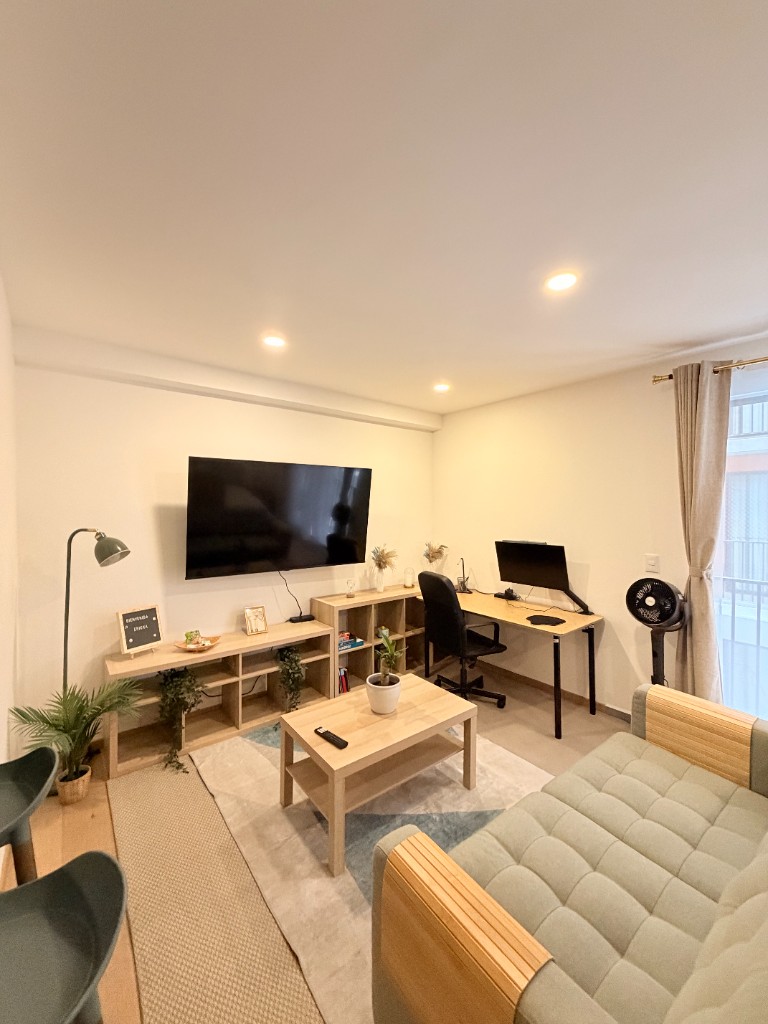
A furnished monthly apartment in Mexico City gives you an address, a contract and an invoice from day one, and you can book direct without a fiador, a CURP or an RFC.
FAQ: opening a Mexican bank account as a foreigner
Can I open a Mexican bank account on a tourist permit (FMM)? Scotiabank is the only major bank whose own page lists a visitor permit for stays up to 180 days as an accepted immigration document, and HSBC names the Forma Migratoria Múltiple in its ID list. BBVA, Banamex and Banco Azteca accept migration documents as ID but scope the product to foreigners resident in Mexico. No bank publishes a refusal, and no source documents what a branch actually does.
Do I need an RFC to open a bank account in Mexico? Not by law. The anti-money-laundering rule says banks record your CURP and RFC “cuando disponga de ellos” — when you already have them. It is unconditional only for companies. None of BBVA, HSBC, Banamex, Scotiabank or Banco Azteca lists an RFC in its published requirements for individuals. What a specific branch asks for is a separate, undocumented question.
Which Mexican bank is easiest for foreigners? Two answers. HSBC’s Producto Básico General is the cheapest documented product — no minimum opening amount, no initial deposit, no membership fee, 60 MXN to keep it open — and its ID list names the Forma Migratoria Múltiple. Scotiabank is the only bank enumerating visitor status as acceptable, and it runs eight bilingual branches in Mexico City.
What can I use as proof of address if I live in a furnished apartment? The regulation accepts a current lease, with no age limit and no requirement that it be registered or notarised, plus utility bills and bank statements under three months old. Nothing in the rule requires the document to be in your name; that is bank policy. Banamex publishes an expatriate carve-out accepting a hotel or executive-stay comprobante in a third party’s name.
Can I open a Mexican bank account from an app without going to a branch? Only a Nivel 2 account, and only if you hold a CURP or a valid temporary CURP. Remote opening of a Nivel 3 account is restricted to Mexican nationals resident in Mexico, so a foreigner who wants higher deposit limits has to appear in a branch. The gate is the channel, not the visa.
Is my money safe in a Mexican neobank like Nu, Klar or Stori? It depends on the licence. A banco múltiple carries IPAB insurance up to 400,000 UDIS, roughly 3.5 million pesos. A SOFIPO such as Klar or Stori carries Fondo de Protección cover up to 25,000 UDIS, about 220,000 pesos — sixteen times less. An electronic-money institution like Mercado Pago carries no deposit insurance at all.
Does opening a Mexican bank account make me a Mexican tax resident? No. Residency for individuals is set by article 9 of the Código Fiscal de la Federación: your casa habitación in Mexico, and if you also keep a home abroad, whether your centro de intereses vitales is here. That article contains no 183-day test for individuals. Opening an account is not a taxable event.
Do US citizens have to report a Mexican bank account? Above the thresholds, yes. FBAR triggers when your foreign accounts together exceed 10,000 USD at any point in the year. Form 8938 thresholds depend on a presence test — bona fide residence for the whole tax year, or 330 days abroad in twelve months. Fail it and you report at the lower 50,000 or 75,000 USD thresholds.
Every bank requirement, fee and rate here was read from the institution’s own pages and disclosure documents on 3 August 2026, and every peso threshold derives from the UDI value the DOF published that day (8.795010 MXN). Regulatory citations come from Banxico’s Circular 3/2012 as amended by Circular 11/2026, and from the SHCP’s Disposiciones under article 115 of the Ley de Instituciones de Crédito as reformed on 10 July 2026. Bank product pages change without notice and branch practice varies. Confirm with the specific branch before you queue.
Last updated: August 2026