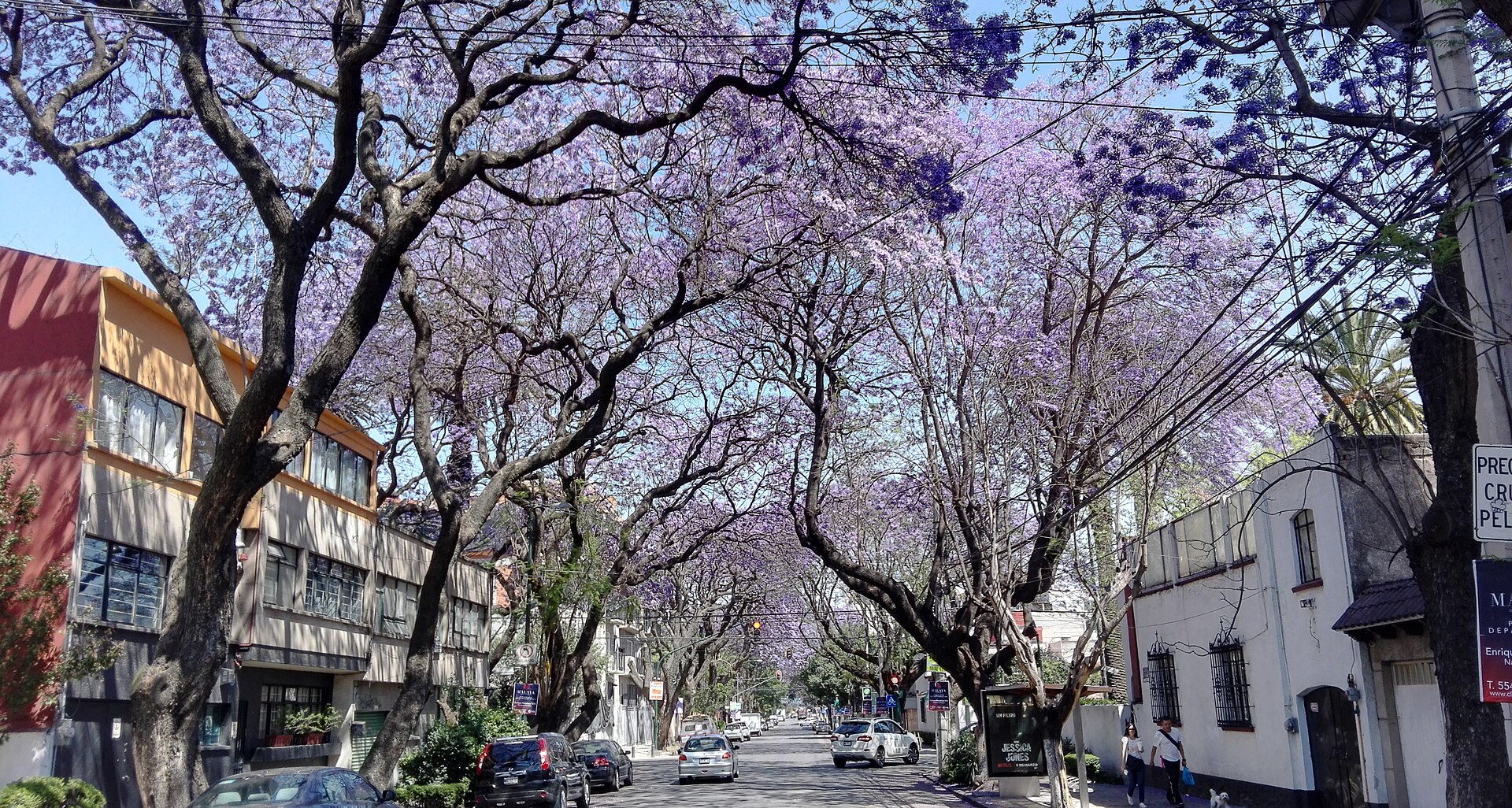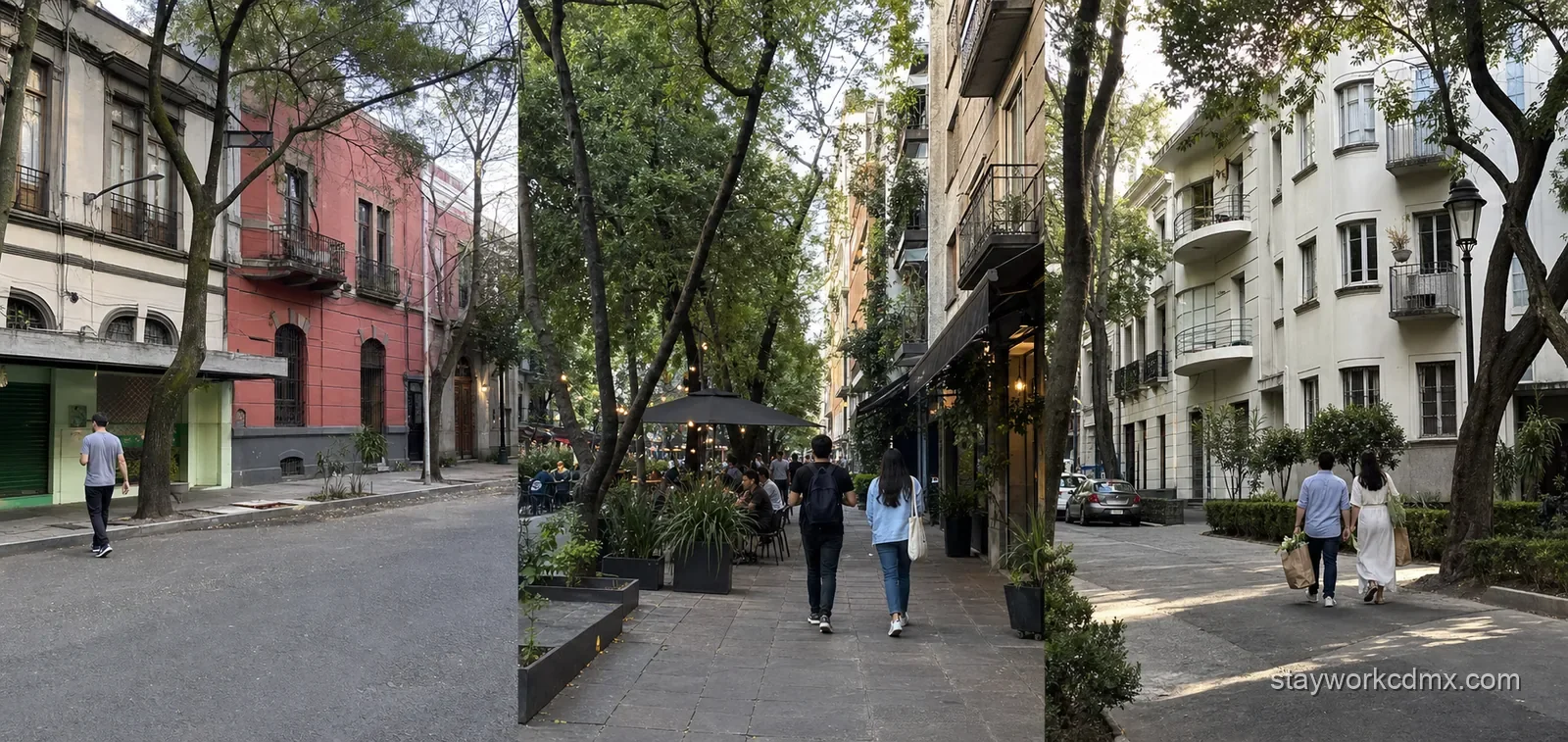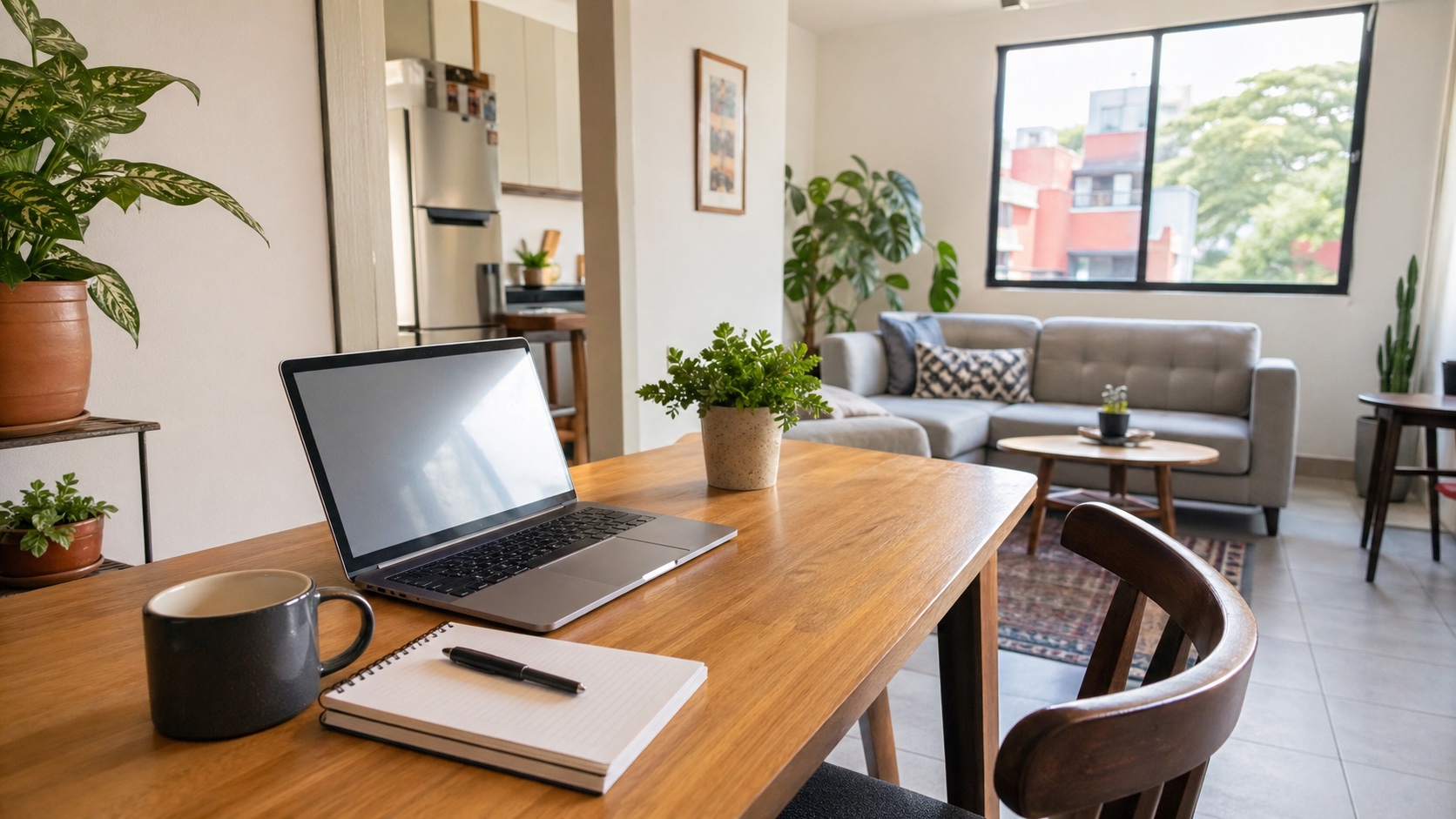
Narvarte is one of the strongest long-stay transport bases in central-south Mexico City. It is less tourist-facing than Roma Norte, but Line 3, the Centro Médico corridor, buses, bike routes and practical errands make the neighborhood easier to live in for a month than its reputation suggests.
The catch is scale: Narvarte has long avenues and several possible stations, so “near Metro” is not precise enough. A guest needs the right station entrance, the right side of Avenida Cuauhtémoc and a building that works with luggage, work equipment or mobility needs. Start with furnished monthly apartments in Narvarte and the Narvarte remote-worker guide .
Quick answer
Is Narvarte a good transport base for a long stay?
Yes, especially for guests whose repeated routes involve Centro Médico, Hospital General, Del Valle, Coyoacán or the south-central university corridor. Line 3 stations include Etiopía/Plaza de la Transparencia, Eugenia and División del Norte. Metro costs MXN 5; Metrobús costs MXN 6.
For accessibility, choose the exact station and apartment together. Wide avenues, long crossings and mixed sidewalks can make a short map distance difficult. Confirm elevator status, curb cuts and a flat route to the building.
The answer in one table
Narvarte transport fit for 30+ night stays
| Need | Narvarte strength | What to verify |
|---|---|---|
| Medical routes | Fast Line 3 access to Hospital General and Centro Médico | Exact hospital entrance, shift-time traffic and station exit |
| South-central work | Eugenia, División del Norte, buses and Insurgentes connections | Crossings, route frequency and last-mile distance |
| Daily errands | Markets, supermarkets and local services | Whether the apartment is on a noisy avenue or calmer interior street |
| Mobility needs | Several Line 3 stations and taxis can reach many blocks | Current elevator/stair-lift status and building lift |
| Long-stay living | Residential routine with strong practical services | Workspace and laundry so fewer trips are necessary |
Line 3 and the hospital corridor
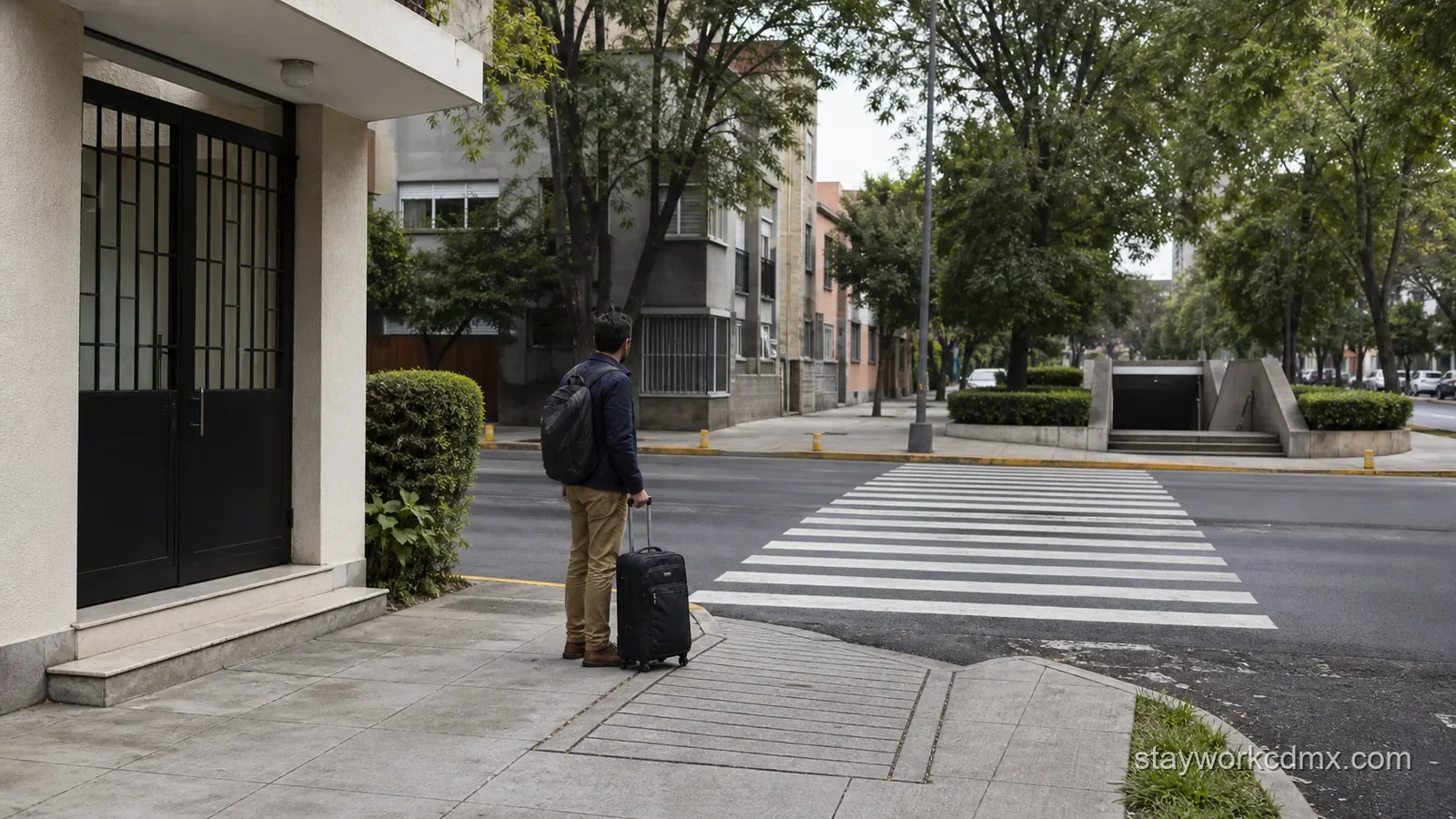
The official Eugenia station page places the station on Avenida Cuauhtémoc between Concepción Beistegui and Eje 5 Sur, with exits toward Vértiz Narvarte and Del Valle. The same Line 3 sequence connects Hospital General, Centro Médico, Etiopía, Eugenia, División del Norte and Zapata. That corridor is why Narvarte works so well for medical residents, patient families and south-central professionals.
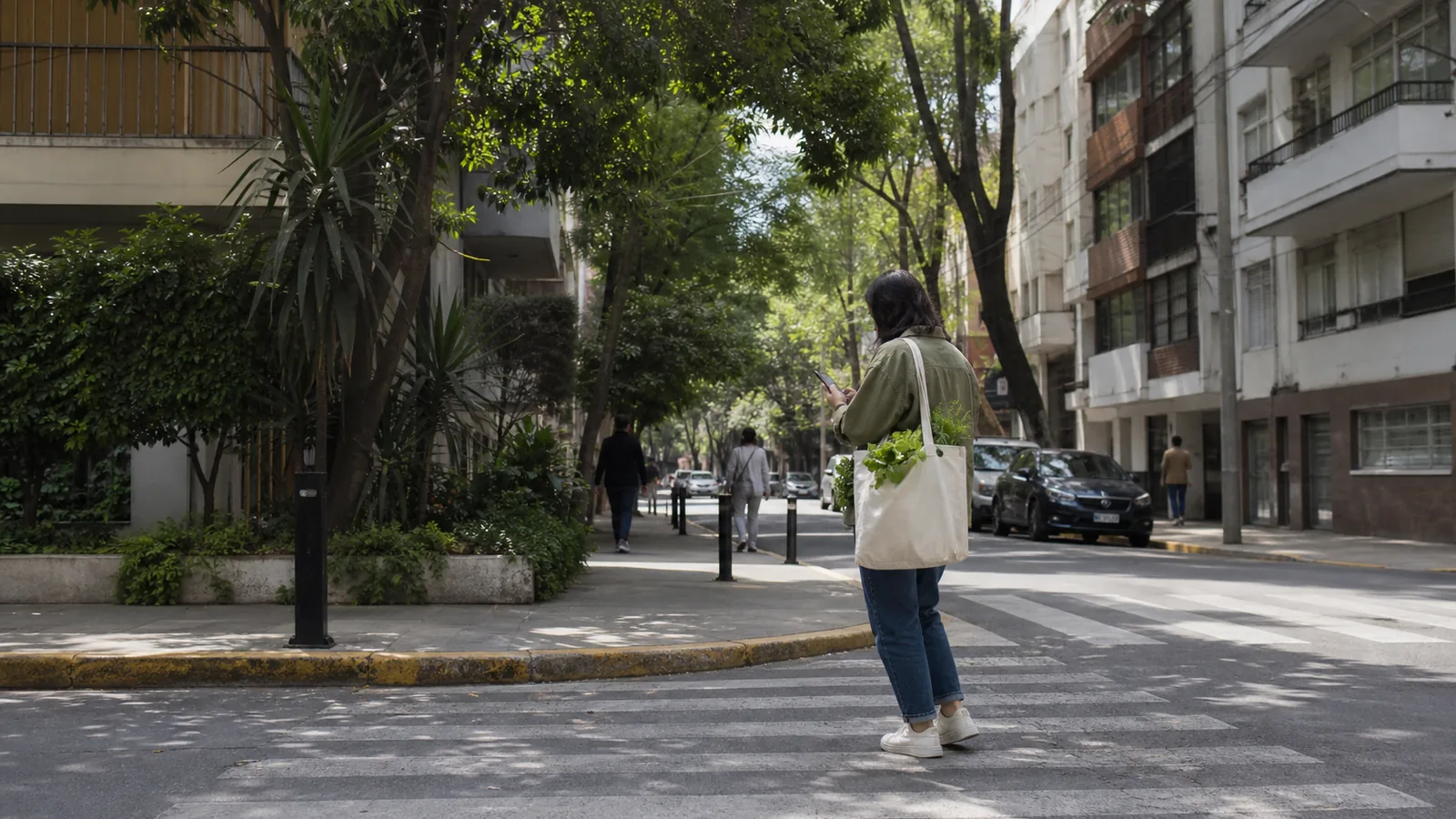
The best route is not always the closest station. Compare which side of Cuauhtémoc you need, whether the entrance has a lift, and how many crossings separate the apartment from the platform. For a 30-night guest, 44 Metro rides cost roughly MXN 220, so the fare matters less than whether the route stays comfortable after a 12-hour shift or with a suitcase.
Metrobús and buses add flexibility, but service patterns and platform design differ. Check the official Metrobús payment page for current fares and transfer rules, then test the specific line in a maps app.
Accessibility and the long Narvarte block
Check the Metro’s official accessibility equipment list before each trip, because equipment status changes and a copy saved in a booking note goes stale. A station can have an elevator on one entrance and stairs on the route you naturally choose.
At street level, Narvarte’s wide avenues cut both ways: sidewalks may be generous, but crossings are longer, parked cars block curb ramps and traffic is more intense. Ask for a daylight video from the apartment to the station or hospital entrance. Confirm the building’s lift, bathroom threshold, bed height and whether a taxi can stop close to the door.
Long-stay route patterns
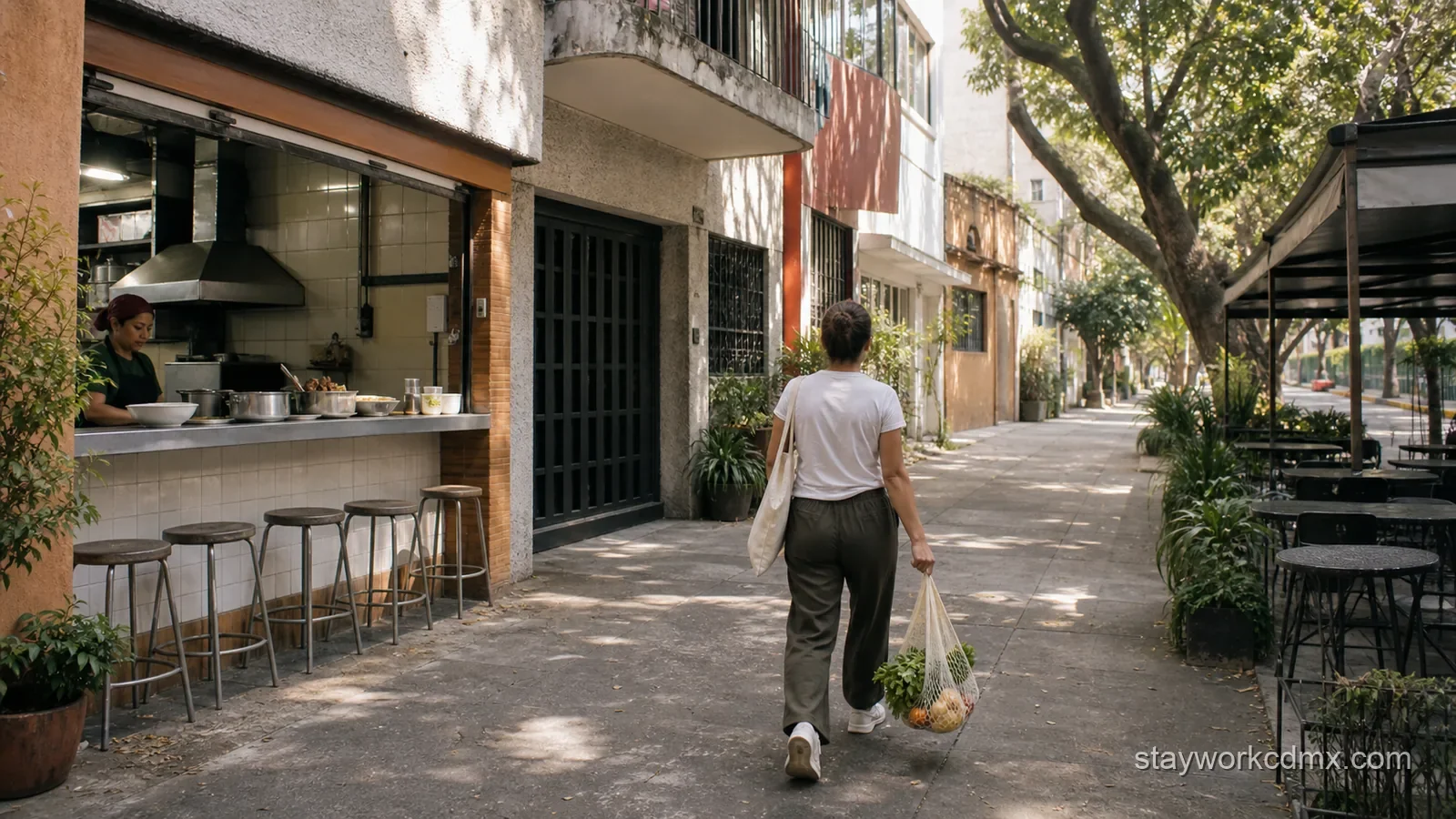
For medical staff, group the hospital route, pharmacy and grocery run on the same corridor. Remote workers should pick a strong desk and Wi-Fi so they do not need to escape the apartment every day. Couples on different schedules can cut trips with a second room or two work surfaces. Older guests and mobility-limited travelers should prioritize a short, flat last mile over a lower rent on the wrong side of a major avenue.
Narvarte also connects well to Roma Sur for restaurants and cafés. Del Valle can offer quieter streets and larger apartments, and the Del Valle monthly cost and routine guide covers that alternative. Compare those choices in Narvarte vs. Condesa and the broader neighborhood guide .
A practical week
Monday checks the station entrance, Wi-Fi, pharmacy and supermarket. Tuesday is apartment-first work with a short local walk. Wednesday tests the real hospital or office route at the actual departure hour. Thursday uses a café or coworking backup near home. Friday returns along the shortest comfortable route. Saturday combines market shopping and laundry. Sunday prepares meals, charges the hotspot and checks the week’s station status. The rhythm is deliberately practical, because Narvarte’s value comes from reducing repeated friction.
Three route tests for a Narvarte apartment
For the hospital test, put the exact apartment and the actual hospital entrance into a route planner for the start of a shift. Centro Médico and Hospital General each have multiple entrances and surrounding streets, so test the final walk as well as the Metro line. If a guest uses a wheelchair or walker, ask for the flattest entrance and whether a taxi can stop there.
For the grocery test, walk to the market or supermarket with a tote bag. Wide avenues can hide a long crossing, blocked curb ramp or steep corner. Check whether a delivery driver can bring water to the lobby and whether the building lift is large enough for groceries, luggage or equipment.
The recovery test asks whether you can return after a long workday without a second difficult transfer. A slightly longer direct route may be better than the shortest route with stairs, crowds and a narrow sidewalk. On long stays, a route you can repeat matters more than theoretical speed.
Transport economics for 30+ nights
Narvarte’s low-friction local errands can keep a monthly transport budget moderate. Metro fares are MXN 5 and Metrobús fares are MXN 6, but a medical schedule can add early rideshares, late returns and weather trips. Build a reserve in case a shift does not end on a train.
The right apartment can save more than a cheap station-adjacent room. A proper kitchen, laundry and workspace prevent trips made only because the apartment is uncomfortable. For couples, a second work zone may cost more in rent but less in duplicated café and taxi spending.
A realistic 30-night transport budget for one person:
| Line item | Monthly estimate (MXN) | Notes |
|---|---|---|
| Metro rides (~44 at MXN 5) | 220 | Hospital, office and errand trips |
| Metrobús rides (~10 at MXN 6) | 60 | Insurgentes corridor backup |
| Rideshare reserve | 600–1,200 | Late shifts, rain, luggage |
| Airport transfers (2) | 250–500 | Arrival and departure |
| Total | ≈ 1,130–1,980 | Lower if the apartment covers most workdays |
Accessibility protocol for the first week
Check the official station equipment list on the day of the first important trip. Walk the route in daylight and at the real shift hour. Note platform crowding, staff location, elevator signage, curb cuts, traffic islands and the safest crossing.
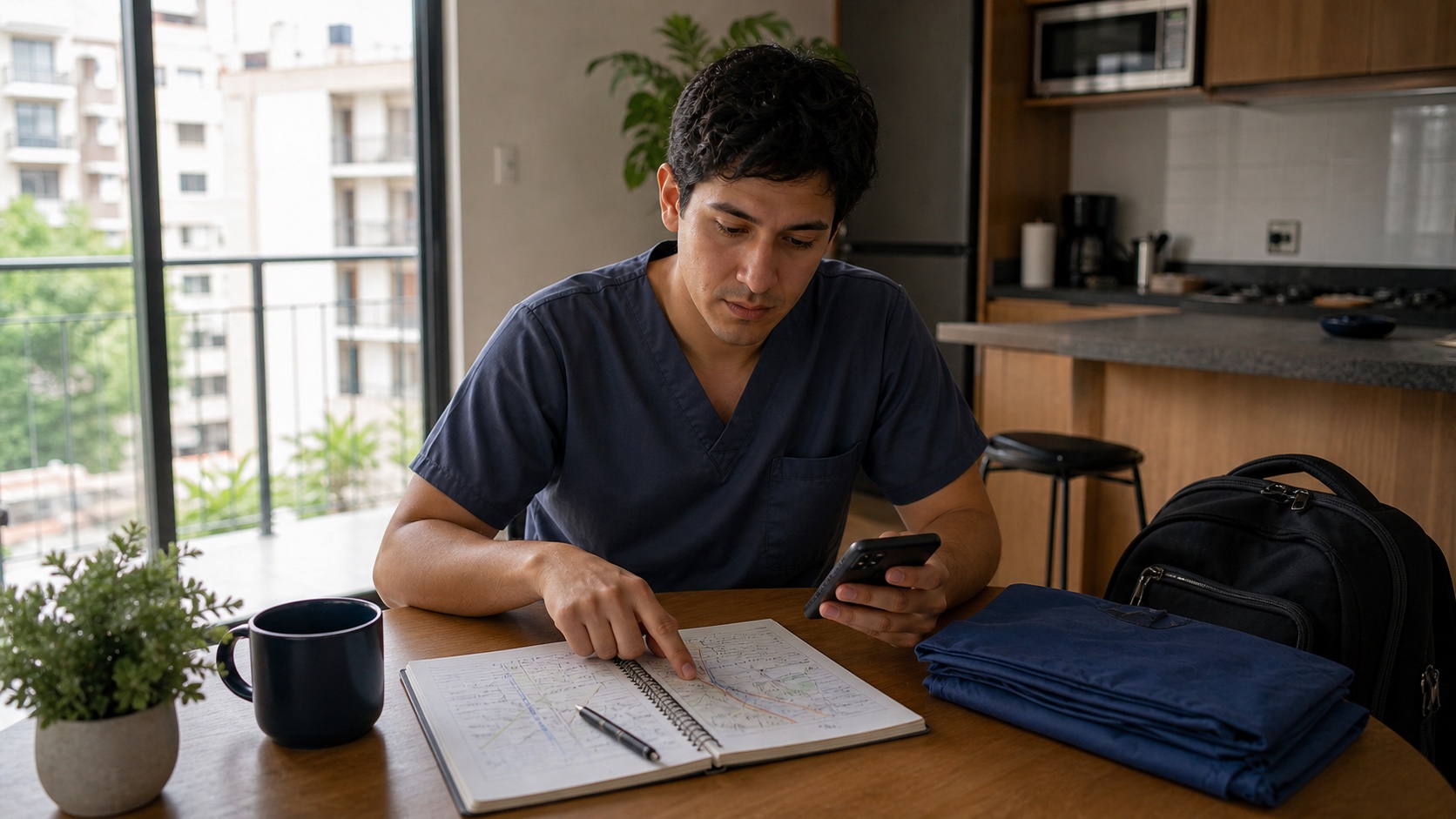
Inside the apartment, test the building lift with luggage, the bathroom threshold and the distance between bedroom, desk and kitchen. Ask the operator what happens during a lift or Wi-Fi outage. If an answer is vague, keep another unit on the shortlist.
Who should choose Narvarte?
Narvarte is particularly strong for medical residents, patient families, remote professionals and couples who want a practical 30+ night routine. Roma Sur can be better when Roma access and market life matter; Del Valle can be better when larger, quieter apartments are the priority. Compare exact routes before deciding, and use the best neighborhoods in Mexico City for remote workers for the wider shortlist.
Narvarte route planning for a long assignment
Make a small route card before booking. Put the exact apartment at the top, then list the hospital or office entrance, the nearest Metro entrance, the pharmacy, the grocery stop and a taxi pickup point. Estimate the route at 06:30, 09:00 and 18:30 if your work shifts change, because Narvarte’s broad avenues behave differently across those times.
For medical staff, the route card should include the entrance used after a shift and the nearest place to buy food when you are tired. A remote worker’s card should list a quiet backup outside the apartment, though important calls still belong at home. For a guest using a walker or wheelchair, measure the narrowest section, identify the accessible station entrance and ask whether a taxi can use the building curb without leaving you in traffic.
The first week should include one test trip with the same bag or equipment you will carry during the month. Note the platform, the lift, the crossing and the final sidewalk. If the route is not comfortable, change the unit or route immediately; do not wait until the month is half over.
Keep a route log, not just a map screenshot
Record the time from the apartment door to the station platform and from the station exit to the actual destination. Note whether the lift was operating, whether the crossing was blocked, and whether a taxi could reach the building. This is especially useful for medical rotations, where a route that works at midday may feel entirely different at shift change.
Ask the host to put the backup plan in writing: which station to use if the lift is out, where the car should stop, who handles building maintenance and how quickly Wi-Fi or water issues are solved. A long stay is a small operations project, and clear answers before arrival are part of accessibility.
Booking checklist
- Which Line 3 station and entrance are closest to the exact address?
- Is the route flat, clear and usable with luggage or a mobility aid?
- What is the current elevator/stair-lift status for the chosen station?
- How many steps exist from sidewalk to lobby and lobby to apartment?
- Can a taxi stop at the building entrance?
- Is the bedroom quiet enough after early hospital shifts?
- What are desk dimensions, Wi-Fi speed and outage support?
- What is the all-in monthly total including cleaning, utilities and parking?
Read the monthly apartment checklist and then check Narvarte furnished stays .
When the route changes
Plan for rain, road works, shift-change traffic and station maintenance. Save the alternate station, the hospital entrance, a taxi pin and the host’s contact offline. If you rely on an elevator or step-free path, check the official status before leaving and add time for a different entrance. Narvarte’s long-stay strength is that the apartment, errands and Line 3 corridor can work together when the route has a clear default and a clear backup.
A seven-day route diary
Monday tests the station, pharmacy and grocery route. Tuesday works from the apartment and walks locally. Wednesday takes the real hospital or office route at its actual hour. Thursday uses a café or coworking backup. Friday chooses the simplest return. Saturday combines market shopping and laundry. Sunday reviews station status, weather and the next week’s shift times. This rhythm fits transport around life in the apartment, so not every day turns into a commute.
What makes the last mile manageable
For Narvarte, measure the route in three pieces: apartment to curb, curb to station entrance and station exit to destination. A route can be accessible in the middle and still fail at either end. Look for curb ramps, a place to rest, clear signage, lighting and a building entrance without surprise steps. Ask for exact measurements rather than relying on “easy access” in a listing.
Keep the host’s contact and the station accessibility page in the same note. If the lift or sidewalk route fails, you should know whether to use the alternate station, a taxi or a different entrance before the workday is at risk.

Turn a hospital or office route into a stable month
Narvarte works best when the guest spends the first week auditing routes. Start with the exact door you need: a hospital tower, clinic entrance, university gate or office lobby. Then test the journey from the apartment at the real departure hour. Write down the station entrance, platform direction, crossing and final sidewalk. A map that ends at “Centro Médico” is not enough when the destination has several entrances.
Keep a second route for the days when the default is uncomfortable. That may mean using Eugenia instead of a nearer but awkward entrance, taking a short taxi to avoid a difficult avenue, or arranging groceries and pharmacy deliveries after a long shift. Save the pickup point and the address in Spanish offline. That bit of preparation protects work and rest when the phone signal is weak or the guest is carrying equipment.
The apartment should make the route sustainable: a proper desk, quiet bedroom, kitchen, laundry and reliable water reduce trips that happen only because the unit is inconvenient. For a medical visitor, a clear bathroom path and a lift that accepts luggage can matter more than a few hundred metres of advertised distance. For a couple, two work surfaces may cost more in rent but prevent two daily café commutes.
At the end of week one, compare the planned routine with what actually happened. If stairs, crowds or the final crossing make the route unreliable, raise the issue early with the operator. Narvarte’s practical resilience depends on a documented default and backup, so do not assume every long block will be easy.
Final verdict
Narvarte is a practical, central-south transport base for long stays, especially for Centro Médico and Hospital General routines. It is accessible when the exact station, crossing and apartment are chosen together. Research the neighborhood’s long blocks before booking, because they punish assumptions.
For monthly stays
Find a practical Narvarte long stay
Sources and research note
- Metro Eugenia , Metro accessibility , Metrobús fares .
- StayWork’s Narvarte remote-worker guide and Narvarte furnished stays .