You’ve accepted the job and booked the flight. Moving to Mexico City for work compresses a lot into one month: visa lines, apartment hunting, setting up a bank account, learning Metro routes. Your first weeks will feel like drinking from a firehose. This checklist covers what to do before you arrive, what to prioritize in week 1, and what can wait until you’re settled, with a realistic budget in pesos so the numbers aren’t a surprise.
30 days before: visas and paperwork
Days 1–10: Visa application
The temporary resident visa (residente temporal) is the standard path for work stays of 4–12 months or longer. Processing typically takes 10–15 business days, but consulate appointment availability varies, so start early.
You’ll need:
- Valid passport (6+ months validity)
- Employment letter from your Mexican employer (or offer letter if hired locally)
- Proof of income (last 3 months of payslips, or the employer documentation the consulate requests)
- Bank statements showing solvency (thresholds vary by consulate, so check yours)
- Completed visa application form
- Passport photo
Apply at a Mexican consulate in your home country. If your employer is sponsoring you for work permission, they start part of the process with the INM (Instituto Nacional de Migración) in Mexico. Many remote workers paid from abroad enter as visitors, but stay lengths granted at entry are discretionary, so long-stayers should look seriously at the temporary resident route. For the residency paperwork itself, see our guide to the Mexico residence permit for digital nomads .
The consulate visa fee is roughly $50 USD, plus resident-card fees once in Mexico. Budget a few hundred dollars total for the full process.
If your employer is slow with paperwork, don’t panic-book flights around a pending visa. Confirm the consulate appointment first, since that’s the bottleneck.
Days 10–20: Confirm logistics with your employer
- Confirm start date and first-day logistics
- Ask: will they help with visa paperwork, or are you solo?
- Ask: do they have a corporate housing partnership, or do you find your own?
- Ask: is there a relocation stipend? Some companies offer a housing bonus.
- Confirm: salary currency (USD or MXN?), tax treatment, and how often payroll runs
Days 20–30: Arrange short-term housing
You’re arriving next week. Your permanent apartment can wait; what you need is breathing room in week 1. Book a furnished short-term unit or a monthly-stay apartment with flexible dates to:
- Explore neighborhoods before committing to 3 months
- Sleep off jet lag without feeling pressured
- Have a stable address for your visa-related appointments
A decent furnished temporary unit runs roughly $900–$1,800 MXN per night, and a monthly rate booked from day one is much better value.
Week 1: Arrival and settling
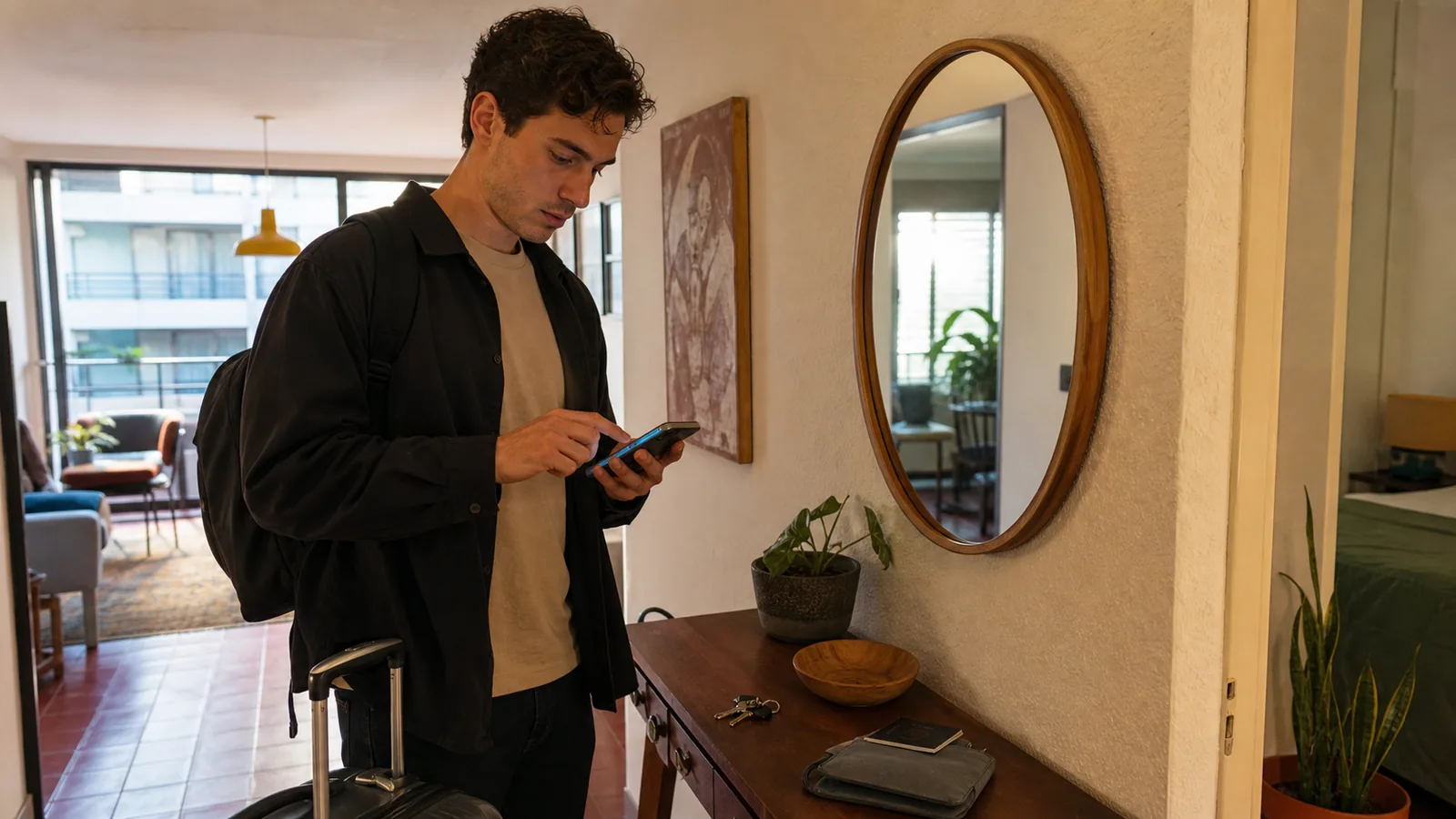
Day 1–2: Airport to apartment
Benito Juárez International Airport (MEX) is inside the city, roughly 10 km east of the central neighborhoods. Options:
- Uber/Didi: roughly $200–$350 MXN to Roma, Condesa, or Narvarte; 30–45 minutes depending on traffic
- Metrobús Line 4: cheap and direct to the center, but hard with big luggage
- Pre-arranged driver: if your company offers one, take it
Get your phone set up right away:
- Telcel prepaid SIM: the safest default for coverage. A prepaid package with generous data runs roughly $200–$500 MXN. Airport kiosks charge more; an OXXO or Telcel store in town is cheaper.
- AT&T Mexico: a solid alternative if its current prepaid promo fits your stay.
- Load your phone and test WhatsApp, Mexico’s default messaging app for everything from landlords to plumbers.
Full comparison: best SIM card in Mexico City for 2026 .
Day 2–3: Neighborhood walk and first meals
You’re jet-lagged, so skip anything important and walk your temporary neighborhood:
- Find a supermarket (Chedraui, Soriana, Walmart Express, or La Comer, depending on the area)
- Grab breakfast at a local café
- Notice where people eat and what the vibe is
- Identify a good Uber pickup spot
Eat local: tacos, quesadillas, tortas. Budget roughly $60–$150 MXN per street or fonda meal.
Day 3–5: Start apartment hunting seriously
Once your body knows the timezone, start touring apartments in person. Aim to be living somewhere real by week 2.
Where to look:
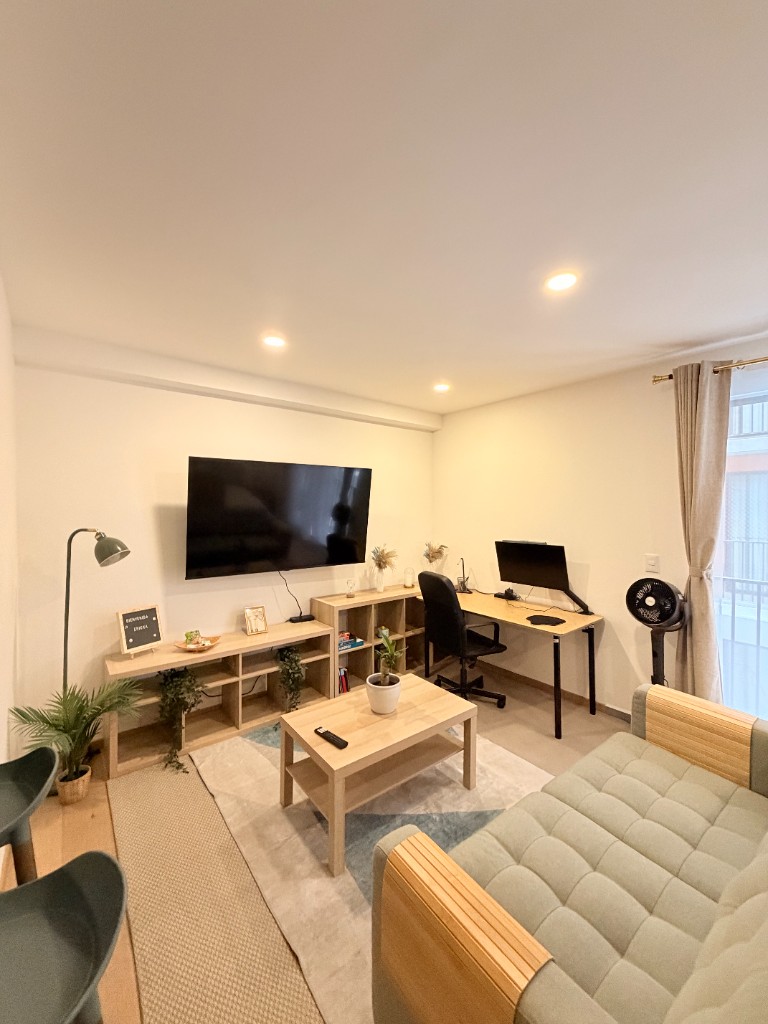
- StayWork: direct furnished apartments in Narvarte and Roma Norte (month-to-month, no fiador required; recommended for remote workers and first-timers)
- Airbnb: monthly listings, usually furnished, variable quality and higher fees
- Inmuebles24, Vivanuncios: Mexican rental platforms, mostly unfurnished traditional leases with fiador/guarantor requirements
Neighborhoods for first-timers with jobs:
- Narvarte: quiet, strong value, close to hospitals and office corridors. Best if you want low stress. See what furnished monthly apartments in Narvarte look like and what they cost.
- Roma Norte: walkable, café-dense, social. Best if you want energy and don’t mind noise.
- Condesa: between the two. If you’re torn between the famous pair, the Roma Norte vs Condesa monthly stay comparison compares their prices and noise.
- Del Valle: Narvarte’s quieter, slightly pricier neighbor. The Del Valle monthly cost and routine breakdown covers what a month there costs.
For the full map, including areas to skip as a first-timer, read the best neighborhoods in Mexico City for remote workers in 2026 .
Questions to ask when touring:
- Is the Wi-Fi truly fast? Ask them to run a speed test (you want 50+ Mbps for video calls)
- What about utilities? Is internet included or separate?
- Lease flexibility: can you go month-to-month, or are they pushing a 6-month minimum?
- Move-in: when can you get keys? Is there a deposit? How long to get it back?
- For traditional leases: do they require a fiador (local property-owning guarantor)? Most foreigners can’t provide one; here’s how to rent in Mexico without a fiador .
Day 5–7: Lock in your base
By the end of week 1, aim to have your next month’s housing signed. With a home base in place, the background anxiety of perpetual hunting goes away.
Get these in writing:
- Move-in date
- Monthly rent amount and currency
- What’s included (internet, utilities, furniture, cleaning)
- Deposit amount and refund timeline
- Cancellation terms (month-to-month flexibility is worth real money early on)
- Landlord or operator contact + emergency number
Week 2–3: Set up your life
Day 8–10: Bank account and tax ID (RFC)
If you’ll be paid in Mexico, get a local bank account.
BBVA and Santander are generally the fastest banks for newcomers. Bring:
- Passport and immigration document (resident card or the paperwork your status provides)
- Proof of address (your lease or booking confirmation usually works)
- Employment letter (shows you’re serious)
- A small initial deposit
Also get your RFC (Registro Federal de Contribuyentes), Mexico’s tax ID. Your employer needs it for payroll, and banks ask for it. The SAT (Mexico’s tax authority) issues it, and your employer’s HR team usually walks new foreign hires through the appointment. Our CURP and RFC guide for foreigners covers the documents and the order to do things in.
Day 10–14: Settle at work
Spend your first week at the new job on onboarding; exploring can wait.
- Meet your team in person
- Get office access, desk setup, laptop configured
- Test your real commute time (is it really 30 minutes, or 45 in traffic?)
- Ask colleagues where they eat lunch, where they live, and what they do after work
Day 14–21: Explore your neighborhood seriously
Now you’re in your real apartment. Spend a week learning the neighborhood the way a resident would:
- Identify your favorite café for morning coffee
- Find a gym or yoga studio if you exercise
- Locate the nearest pharmacy, supermarket, and taco stand
- Walk part of your commute if possible (builds a sense of safety and routine)
- Identify a well-lit Uber pickup spot for late nights
- If you work remotely some days, scout cafés or a coworking space
Day 21–30: Get into a rhythm
By the end of week 4, you should no longer feel disoriented. You know:
- How to get to work (and how long it takes)
- Where to buy groceries and eat well
- Where your apartment sits in the city (via landmarks, not just the pin)
- Who your coworkers are and where they hang out
- How to use the Metro, Metrobús, and Uber without stress
Moving to Mexico City for work: monthly budget in MXN
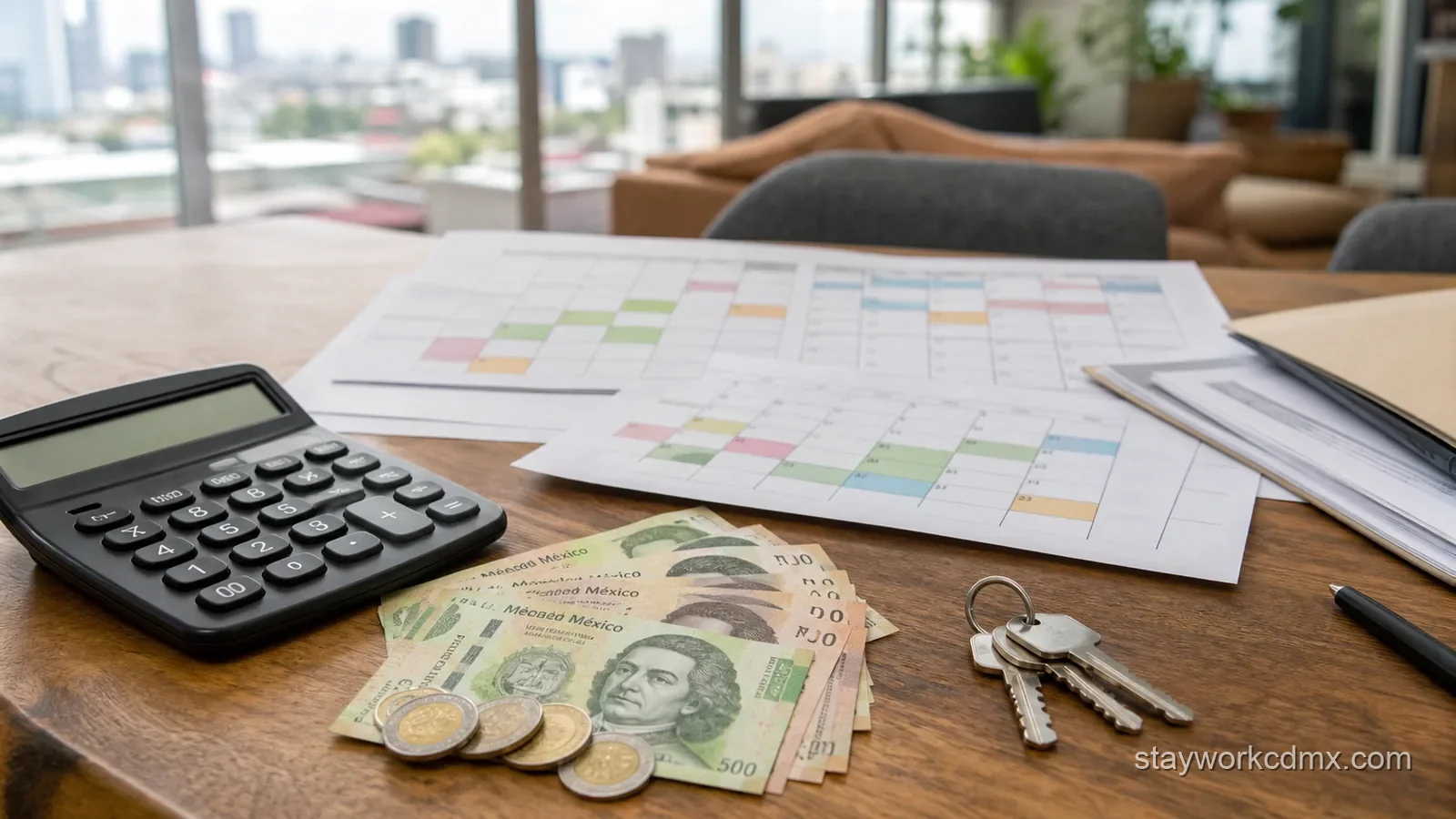
Most relocation budgets online are quoted in dollars and drift out of date. Here is a realistic budget in pesos, from the first month onward, for a single professional in a central neighborhood, using real 2026 furnished-rental rates:
| Item | Monthly (MXN) | Notes |
|---|---|---|
| Furnished 1BR, Narvarte (utilities + Wi-Fi included) | $22,000–$32,000 | Roma Norte runs $28,000–$40,000 |
| Groceries | $3,000–$5,000 | Cooking most meals; Chedraui/Walmart nearby |
| Eating out (3–4× per week) | $3,000–$6,000 | Tacos to sit-down restaurants |
| Transport (Metro + Uber/Didi) | $1,000–$2,000 | Metro is $5 MXN per ride |
| Phone (prepaid data) | $200–$500 | Telcel or AT&T prepaid |
| Gym or fitness | $600–$1,500 | Neighborhood gyms; boutique studios cost more |
| Entertainment and misc. | $2,000–$4,000 | First months trend higher |
| Monthly total | ~$32,000–$50,000 MXN | Single professional, central CDMX |
Three budget notes for the first month:
- Setup costs front-load: deposit, first rent, SIM, and stocking a kitchen mean month 1 runs 30–50% over your steady-state number, so bring a one-month buffer.
- Furnished monthly rentals flatten the curve. Utilities, Wi-Fi, and furniture are in the rent, and there’s no fiador, no 12-month commitment, and no buying a mattress in week 1. The full price picture is in what a furnished apartment costs per month in Mexico City .
- Costs run well below equivalent US cities, typically 30–50% lower for housing, food, and entertainment, but only if you rent like a local professional instead of paying nightly-platform rates for months on end.
Practical essentials before you arrive
Document yourself
- Carry a color copy of your passport for daily use; keep the original in your apartment safe
- Photograph all important documents (passport, visa, employment letter) and store them in encrypted cloud storage
- Keep credit cards and bank info separate from passwords
Money and banking
- Bring some USD or a working debit card for the first days; ATMs at bank branches (not standalone machines) give the best rates
- Open a Wise account before you leave; it has low fees for USD → MXN transfers from your home accounts
- See our guide on opening a bank account in Mexico as a foreigner if your employer doesn’t walk you through it
Insurance and healthcare
- Check whether your job includes health insurance (formal Mexican employment includes IMSS; many employers add private major-medical coverage)
- If not, get expat health insurance that covers Mexico (roughly $100–$200 USD/month depending on age and coverage)
- Register with your home country’s embassy or consulate so they can reach you if anything goes wrong
Tech and connectivity
- Confirm your phone is unlocked and will work in Mexico (most modern phones do)
- Download Google Maps offline for your neighborhood
- Install Uber, Didi, Google Translate, and WhatsApp before you land
Common pitfalls: what to avoid
❌ Don’t sign a 12-month lease in week 1
You don’t know yet whether you’ll like this job, this neighborhood, or Mexico. Month-to-month flexibility is worth more than a 10% rent discount. Start furnished and flexible; commit later.
❌ Don’t ignore air quality season
During the dry season, roughly November through May, Mexico City can get hazy, with the worst ozone days in early spring. It’s not a reason to cancel a relocation, but if you have asthma or respiratory issues, plan for it: an air purifier helps, and so does a bedroom that doesn’t face a major avenue.
❌ Don’t underestimate the need for exercise and routine
Mexico City is chaotic, and a gym, yoga studio, or running route keeps you sane. Find one by week 2, not week 6.
❌ Don’t rely on rush-hour Metro for early or critical commutes
If you start at 6am or have a can’t-miss meeting, take Uber or Didi. Rush-hour Metro crowds are brutal, and you’ll arrive stressed. A ride costs roughly $80–$150 MXN depending on distance, which is worth it for your sanity while you’re learning the city.
❌ Don’t lose your passport
Keep the actual passport in your apartment, not in your daily backpack. Carry a copy for routine ID checks.
Where to live: neighborhoods compared
| Neighborhood | Furnished 1BR (MXN/month) | Vibe | Best for |
|---|---|---|---|
| Narvarte | $22,000–$32,000 | Quiet, residential, parks | Remote work, sleep priority, value |
| Del Valle | $24,000–$34,000 | Residential, leafy, calm | Families, quiet-seekers |
| Roma Norte | $28,000–$40,000 | Walkable, cafés, social | Social life, café culture |
| Condesa | $30,000–$44,000 | Parks, balanced energy | Couples, park runners |
| Polanco | $38,000–$55,000 | Premium, corporate | High salaries, corporate jobs |
Our pick for first-timers is Narvarte or Condesa. Both are livable from day 1, low pressure, and good value. Upgrade or relocate later once you know whether you want more nightlife or a shorter office commute; that’s what month-to-month housing is for.
30-day action summary
| Timing | Action |
|---|---|
| Before arrival | Visa application, employer confirmation, temporary housing booked |
| Day 1–2 | Arrive, get SIM card, rest |
| Day 3–7 | Tour apartments, lock in your base |
| Day 8–14 | Bank account, RFC, start job, meet coworkers |
| Day 15–30 | Explore neighborhood, find routines, establish rhythm |
By day 30 you’re no longer a tourist: you know where to eat, how to get to work, and what your weekends feel like.
Related guides
- Furnished apartments in Mexico City : find your home base
- Narvarte for remote workers: complete neighborhood guide : the full case for our first-timer pick
- Best neighborhoods for remote workers in 2026 : the whole map compared
- Corporate housing in Mexico City : if your company is paying
Questions about your move? Contact us. We’ve housed hundreds of first-timers, so we know the chaos and can help.