If you are staying 30+ nights in Mexico City, the real question is not:
“Which option has the lowest nightly rate?”
The better question is:
“Which option gives me the lowest all-in monthly cost with the least daily friction?”
For most remote workers, relocating professionals, couples, medical-adjacent travelers, and long-stay visitors, the answer is usually clear: a monthly furnished apartment in Mexico City is the stronger value than a hotel.
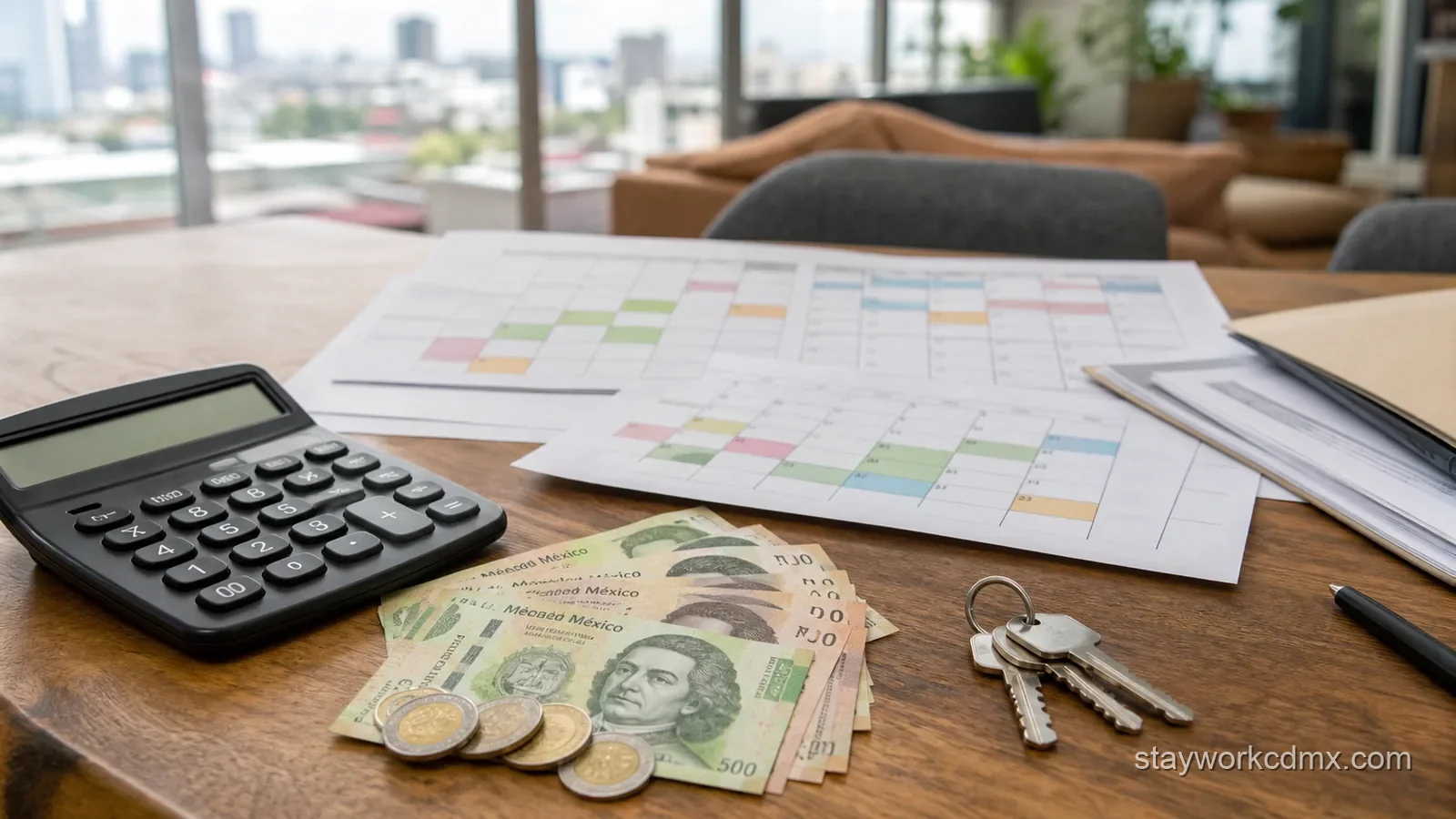
Hotels can be convenient for a few nights. But over a full month, the real cost expands beyond the room rate. Taxes, restaurant meals, laundry, workspace, tips, and small convenience purchases can turn a “reasonable” hotel rate into an expensive monthly setup.
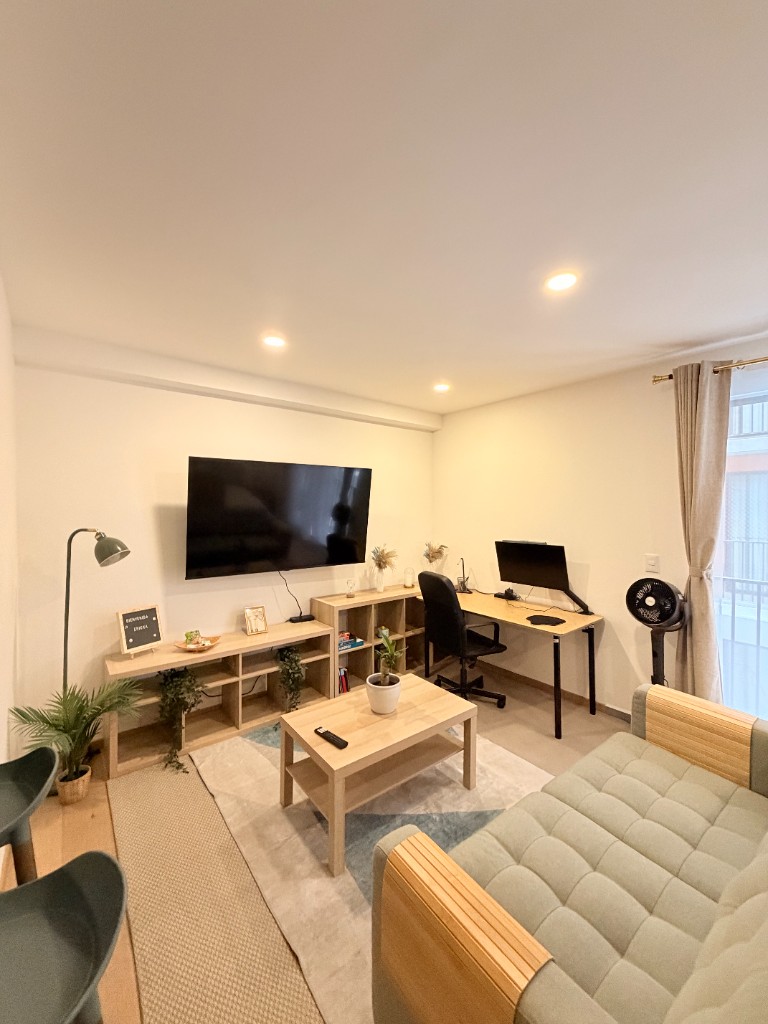
A furnished apartment works differently. You get a livable space, kitchen, Wi-Fi, storage, privacy, and a routine that feels closer to normal life.
Quick Answer
Quick answer
For a 30-night stay in Mexico City, a monthly furnished apartment is usually cheaper than a hotel once you compare total monthly cost.
Hotels still make sense for short, service-heavy trips. But if your stay is work-based, relocation-based, medical-adjacent, or routine-based, the apartment path is usually the better financial and practical decision.
Start with furnished apartments in Mexico City , then use Book Direct when your dates are ready.
30-Night Cost Breakdown: Monthly Furnished Apartment vs Hotel in Mexico City
Use the table below as a practical planning benchmark for central CDMX neighborhoods such as Roma Norte, Condesa, Juárez, Reforma, Narvarte, Napoles, Escandón, Del Valle, and Polanco.
30-night planning ranges in Mexico City (USD)
| Cost category (30 nights) | Monthly furnished apartment | Hotel |
|---|---|---|
| Base lodging | 1,200-2,700 | 2,100-5,400 |
| Taxes and mandatory booking fees | 120-320 | 340-1,050 |
| Food and beverages | 450-900 | 750-1,500 |
| Laundry | 0-120 | 120-450 |
| Workspace overflow (coworking/cafes) | 0-180 | 80-250 |
| Local transport (routine-dependent) | 120-260 | 160-340 |
| Estimated 30-night total | 1,890-4,480 | 3,550-8,990 |
The headline difference is simple:
A monthly furnished apartment can often save hundreds or thousands of dollars over 30 nights compared with a hotel.
The savings usually do not come from one single line item. They come from the combination of lower lodging cost, kitchen access, reduced laundry spend, fewer paid workarounds, and better day-to-day efficiency.

For monthly stays
Book a furnished monthly apartment in Mexico City
Ready to lock in a 30-night stay with better total value?
Compare furnished apartments in Mexico City , then continue on Book Direct to confirm dates and terms.
Why Hotels Get Expensive Over 30 Nights
A hotel room can look affordable when you compare one night.
For example:
$120 per night x 30 nights = $3,600 before extras
That number is not the real monthly cost.
Once you add taxes, meals, laundry, workspace spending, tips, and convenience purchases, the actual monthly total can move much higher.
This is the core mistake many long-stay guests make: they compare a hotel nightly rate against an apartment monthly rate without calculating the full living cost.
For 3 nights, that difference may not matter.
For 30 nights, it matters a lot.

The Real Cost Difference Is Not Just Rent
A furnished apartment does not only replace a hotel room. It replaces several hotel-related expenses.
1. Kitchen access lowers daily food spend
In a hotel, you often end up eating out or ordering delivery every day.
In a furnished apartment, you can still enjoy restaurants, but you can also prepare breakfast, coffee, snacks, simple lunches, and light dinners at home.
That flexibility can reduce food spend significantly over a full month.
Typical 30-night food behavior comparison (USD)
| Food pattern | Furnished apartment | Hotel |
|---|---|---|
| Coffee and breakfast | Lower with groceries | Usually higher |
| Lunch | Mixed home/restaurant | Usually outside |
| Dinner | Mixed home/restaurant | Usually outside |
| Snacks and drinks | Stored at home | Convenience purchases |
| Estimated 30-night food total | 450-900 | 750-1,500 |
Even if you do not cook much, having a refrigerator, coffee setup, and basic kitchen changes the economics of a month-long stay.
2. Laundry becomes cheaper and easier
Hotel laundry is convenient, but it is rarely optimized for monthly living.
For a 30-night stay, laundry becomes routine. You may need clothes washed weekly, workout items cleaned, bedding refreshed, and towels managed.
A furnished apartment may offer in-unit laundry, building laundry, or easy access to local wash-and-fold services. That usually makes laundry cheaper and less annoying than relying on hotel service.
3. Workspace costs are lower
A hotel room may have a desk, but that does not always mean it is comfortable for real work.
For remote workers, founders, consultants, and relocating professionals, workspace details matter:
- desk size
- chair comfort
- call privacy
- Wi-Fi quality
- noise level
- lighting
- separation between bed and work area
If the hotel room is uncomfortable, you may start paying for cafes, coworking, or meeting spaces. That becomes another hidden monthly cost.
A good furnished apartment gives you a better base for work and routine.
4. More space reduces convenience spending
Small hotel rooms create friction.
You have less storage, less privacy, less room to work, less space to eat, and fewer ways to manage a normal routine.
That often leads to extra spending:
- more meals outside
- more cafe time
- more taxis
- more laundry service
- more convenience-store purchases
- more paid workspace
A furnished apartment gives you room to live, not just sleep.
Stay-Type Scenarios: Which Option Wins?
Solo remote worker
A furnished apartment usually wins.
You get a better work base, more privacy for calls, lower food spend, and a more stable routine. For a 30-night work stay, the apartment setup usually feels more sustainable than living out of a hotel room.
Couple staying 30+ nights
A furnished apartment wins by a wider margin.
Two people increase the cost of hotel-based meals, laundry, storage needs, and daily comfort. A one-bedroom furnished apartment usually gives couples a better monthly setup than a single hotel room.
Relocation month
A furnished apartment is usually the better landing base.
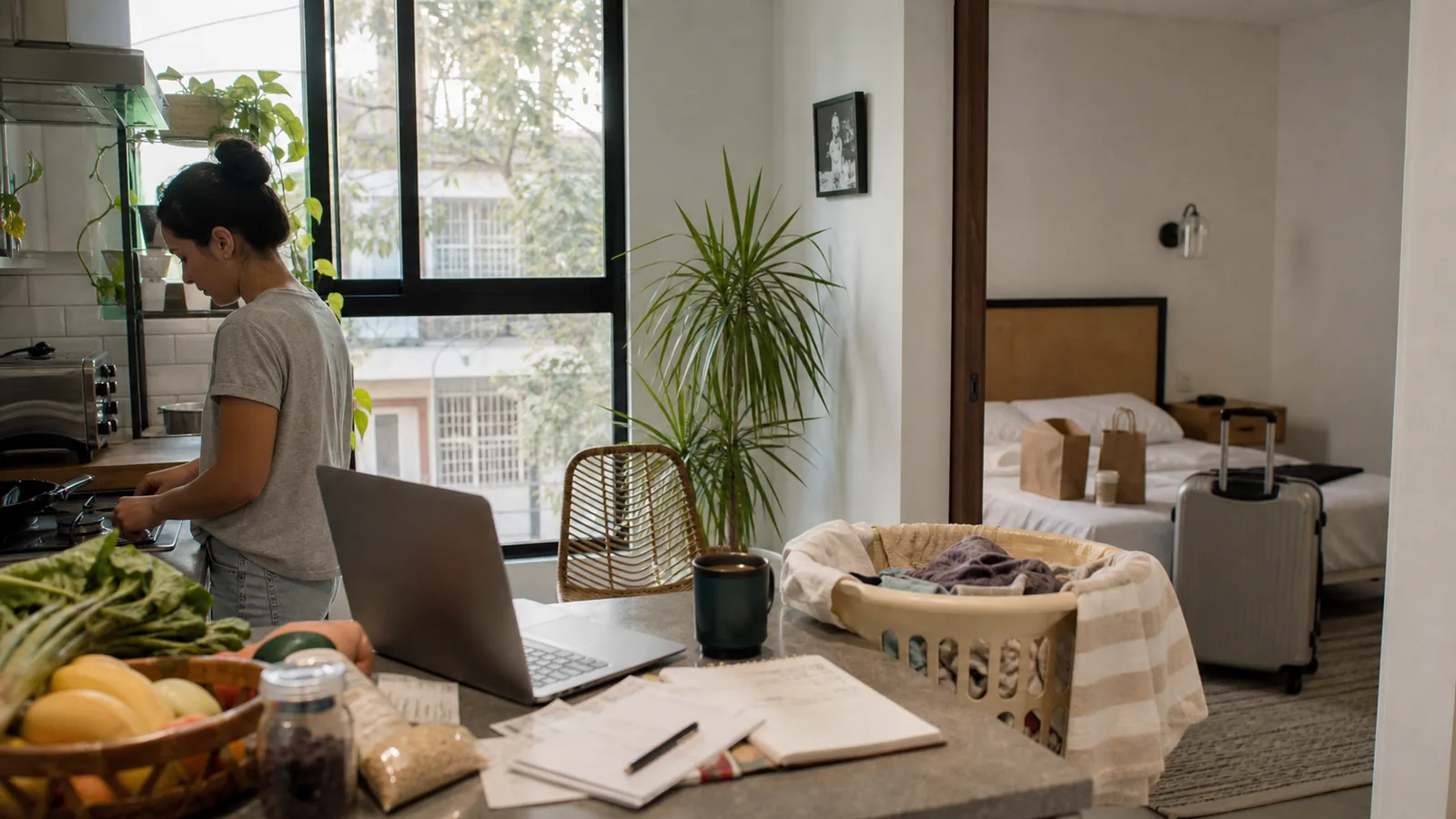
If you are moving to Mexico City, scouting neighborhoods, opening accounts, attending appointments, or searching for a longer-term lease, you need more than a bed. You need a temporary home base.
A furnished apartment gives you storage, routine, kitchen access, and flexibility while you settle in.
Medical-adjacent stay
A furnished apartment is usually better when the stay requires rest, controlled meals, laundry frequency, privacy, and a stable daily rhythm.
For this use case, see:
Short leisure stay
A hotel may be better.
If you are visiting Mexico City for 2-5 nights and want daily service, concierge help, breakfast, and a simple check-in experience, a hotel can be the right choice.
This article is not saying hotels are bad.
It is saying hotels usually become expensive when you use them as monthly housing.

Hotel vs Furnished Apartment: Best Choice by Length of Stay
Best option by stay length
| Stay length | Better default choice | Why |
|---|---|---|
| 1-6 nights | Hotel | Convenience, service, simple check-in |
| 7-14 nights | Depends | Compare location, fees, and kitchen value |
| 15-29 nights | Furnished apartment often wins | Food, laundry, and workspace costs start to matter |
| 30+ nights | Furnished apartment | Monthly cost efficiency and livability usually win |
The longer the stay, the more the apartment advantage grows.
The Tax and Fee Problem
Taxes and fees can change the real total at checkout.
In Mexico, accommodation bookings may include VAT and local lodging taxes depending on the booking type, property, and channel. Digital platforms and hotels may also show service charges, cleaning charges, or mandatory fees differently.
That is why the only number that matters is the all-in 30-night total.
Before booking, compare:
- nightly or monthly base price
- VAT or applicable taxes
- lodging or occupancy taxes
- cleaning fee
- service fee
- platform fee
- deposit rules
- cancellation terms
- included utilities
- included Wi-Fi
- included laundry access
- included cleaning frequency
Do not compare a hotel’s visible nightly rate against an apartment’s full monthly quote. Compare final totals.
Practical Example: 30 Nights in Roma Norte
Here is a realistic example for a work-based 30-night stay in Roma Norte.
Option 1: Hotel
Example hotel cost for 30 nights in Roma Norte (USD)
| Item | Estimated cost |
|---|---|
| Hotel room at 140/night | 4,200 |
| Taxes and mandatory fees | 700-1,000 |
| Restaurants, delivery, coffee, snacks | 1,000-1,500 |
| Laundry | 150-350 |
| Workspace overflow | 100-250 |
| Local transport | 180-340 |
| Estimated 30-night total | 6,330-7,640 |
Option 2: Furnished monthly apartment
Example furnished apartment cost for 30 nights in Roma Norte (USD)
| Item | Estimated cost |
|---|---|
| Furnished 1-bedroom monthly rental | 1,700-2,400 |
| Taxes, booking fees, or quote adjustments | 150-300 |
| Groceries, restaurants, coffee | 600-900 |
| Laundry | 0-80 |
| Workspace overflow | 0-120 |
| Local transport | 120-260 |
| Estimated 30-night total | 2,570-4,060 |
In this scenario, the furnished apartment can save roughly:
2,270-5,070 USD over 30 nights
That is the real reason 30-night guests should compare total monthly cost instead of nightly price.
Practical Booking Framework
Use this framework before paying for any 30-night stay in Mexico City.
Step 1: Get the all-in 30-night quote
Ask for the final total including taxes, fees, cleaning, and required charges.
Step 2: Add realistic food behavior
Do not assume you will cook every meal.
Use a mixed estimate: groceries plus restaurants.
Step 3: Add laundry
For a month-long stay, laundry is not optional. Add it to the comparison.
Step 4: Confirm remote-work suitability
Ask about:
- Wi-Fi speed or reliability
- desk
- chair
- natural light
- noise
- call privacy
Step 5: Compare cancellation and date-change terms
The cheaper option is not always better if the terms are too rigid.
Step 6: Choose lower total cost plus lower daily friction
The best option is not just the cheapest. It is the one that lets you live, work, sleep, eat, and move through the city with the least unnecessary friction.
Direct Booking vs Hotel Booking Site
For 30+ nights, direct booking can be especially useful because monthly stays often require more context than a normal nightly reservation.
A direct monthly quote may clarify:
- exact included dates
- monthly discount
- cleaning terms
- deposit or no-deposit policy
- Wi-Fi and workspace details
- check-in process
- utility expectations
- special timing requests
- invoice or corporate needs
If you already know your dates, use Book Direct to compare terms before relying only on a third-party platform.
For deeper comparison, read:
- Book Direct vs Airbnb for Monthly Apartments in CDMX
- Checklist before you book a monthly apartment in Mexico City
- Furnished short-term rentals in Mexico City
Best Neighborhoods for 30+ Night Apartment Stays
The best area depends on your routine, not just tourist popularity.
Roma Norte
Best for walkability, cafes, restaurants, parks, remote-work lifestyle, and central access.
See Roma Norte monthly stays .
Condesa
Best for parks, lifestyle, restaurants, and a softer residential feel.
Juárez and Reforma
Best for business access, central movement, and shorter commutes to offices or meetings.
Narvarte
Best for value, local rhythm, food, metro access, and a calmer monthly routine.
Napoles and Del Valle
Best for practical living, business access, and residential comfort.
Polanco
Best for premium stays, corporate travel, dining, shopping, and embassies.
For most 30-night guests, the best choice is not necessarily the most famous neighborhood. It is the neighborhood that reduces your daily transport, food, and work friction.
Sources and Assumptions
This guide uses practical planning ranges, not fixed offers.
Final booking totals depend on:
- dates
- neighborhood
- unit type
- hotel category
- booking platform
- direct quote terms
- taxes and fees shown at checkout
- cancellation policy
- cleaning frequency
- laundry access
- exchange rate
- seasonal demand
Accommodation in Mexico may be subject to VAT and local lodging taxes depending on the booking type and channel. Mexico City platform bookings may include VAT and lodging tax, while hotels and OTAs may display taxes and fees differently at checkout.
Use this guide as a decision framework, then confirm the final quote before payment.

Verdict
For a 30-night stay in Mexico City, a monthly furnished apartment is usually the better financial choice.
Hotels still make sense for short stays, service-heavy trips, and travelers who prioritize daily housekeeping or loyalty programs.
But if your stay is 30+ nights and you care about total cost, comfort, kitchen access, workspace, laundry, and routine, the apartment option is usually stronger.
The booking decision is simple:
For a few nights, book a hotel.
For a full month, book a furnished apartment.
Start with Mexico City monthly rentals , then continue via Book Direct once your dates are clear.
FAQ
Is a monthly furnished apartment cheaper than a hotel in Mexico City for 30 nights?
Yes, in most real-world cases. A furnished apartment usually lowers the total monthly cost through kitchen access, lower laundry spend, more usable space, and fewer daily workarounds.
Are taxes and fees really that different?
They can be. Taxes, lodging fees, service charges, cleaning fees, and platform fees may be displayed differently depending on whether you book a hotel, apartment, OTA, or direct stay. Always compare the final all-in 30-night total.
Should I choose a hotel if I want flexibility?
Sometimes. Hotels can be better for short stays, service-first travel, and guests who want standardized check-in or daily housekeeping. For 30-night stays focused on value and routine, furnished apartments are usually stronger.
What should I verify before paying?
Verify the all-in 30-night total, cancellation terms, included fees, cleaning schedule, laundry access, workspace setup, Wi-Fi suitability, and whether utilities are included.
What is the fastest next step?
Shortlist your dates, compare real totals, then book through Book Direct once the terms are clear.