Booking a monthly apartment in Mexico City, meaning any furnished stay of thirty-plus nights, only stays pleasant if you treat it like a small relocation instead of a weekend with a nicer minibar.
At StayWork we see the same friction points recurring by day ten to fourteen: Wi‑Fi that is “fast enough on paper” but unstable on uploads, workspaces that fail on ergonomics, building access that works at noon but strains after midnight arrivals from AICM, and neighborhoods that sparkle on Saturdays but grate when you’re trying to protect deep-focus blocks Tuesday through Thursday.
If you are comparing operators and listings, including our furnished apartments in Mexico City in Roma Norte and Narvarte, paste the question blocks below straight into WhatsApp before you wire money.
If week one logistics still feel fuzzy, skim first week in Mexico City as a remote worker alongside this checklist so errands, jet lag, and meetings do not collide on the same afternoons.
Connectivity: speed is not stability
Mexico City broadband is broadly strong compared with many LATAM hubs, yet a shared MDU connection is still the hidden problem.
Ask the operator for specifics:
- Whether the ISP serves your unit independently versus a building-wide reseller.
- A recent Mbps range for downstream and upstream, if you routinely screen-share.
- Whether the contracted plan caps monthly data (rare, but painful when you hit it).
- Whether there is Ethernet near the desk for backup when Wi‑Fi slows during peak evenings.
Assume you will occasionally need a Plan B inside the same neighborhood. Roma Norte stacks laptop-friendly cafés along Álvaro Obregón and its side streets; Narvarte is quieter, but pairs well with a coworking day pass or the calmer café corners near Metro Eugenia. Mention your Plan B to the operator so they know you intend to live real Mondays there.
Also ask when the modem/router was rebooted last. Chronic latency spikes rarely fix themselves.
Desk reality: ergonomics accumulate
Pictures of a walnut table beside a succulent are meaningless if the chair folds your hips for eight hours.
Before paying, insist on photos (or precise model names) showing:
- Seat-height adjustment and lumbar support good enough for forty-plus-hour weeks.
- Natural light versus backlighting on camera. Glare from floor-to-ceiling glazing in Insurgentes-side towers is real.
- Whether secondary monitor mounts are allowed, or create friction with property rules.
If housekeeping rotates mid-month, clarify whether cleaners move cables or reposition monitors. It happens oddly often.
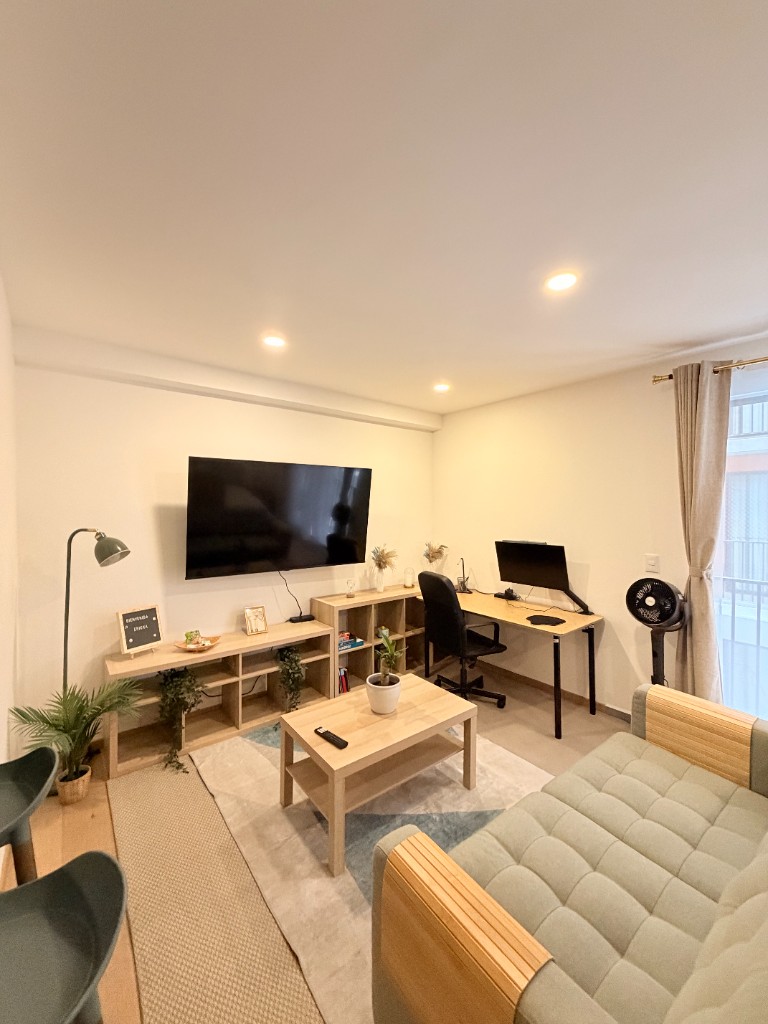
For strong remote-work setups, we steer serious monthly guests toward Roma inventory that explicitly documents monitor arms and desks. Narvarte guests often put quiet first, but they still deserve a spine-friendly chair instead of improvised dining seating.
Water, kitchens, elevators, nighttime access
CDMX punch-list items outsiders forget:
Drinking water
Tap water is not for drinking, and filtered pitchers only go so far. Most buildings run on five-gallon garrafón delivery. Confirm who handles it: does the operator stock them, does the concierge receive deliveries, or do you WhatsApp a distributor yourself and wait at the gate?
Kitchen depth
Monthly guests eat very differently from travelers who brunch daily. Probe burner count, cookware depth, and ventilation (weak hoods punish stir-fries), and decide whether you would rather be near Mercado La Romita or the hypermarkets nearer Parque Delta in Narvarte.
Elevators & portón
Ask how portero (doorman) coverage works overnight. Delayed flights into Felipe Ángeles or Benito Juárez sometimes land you at the building gate after the security handoff, so get the escalation phone numbers before you are hauling luggage at 1 a.m.
Noise follows predictable patterns: balconies on arterial Insurgentes Sur trade walkability for bus roar until late; quieter Narvarte side streets still get occasional stray fireworks during holidays, so ask about local fiesta calendars touching your block.
Laundry economics
On a monthly stay, laundry is a weekly chore, so the setup matters more than it would on vacation.
Clarify whether machines are truly in-unit (and vented versus condenser dryers), shared coin machines on a roof, staff-only, or an external lavandería drop-off billed per kilo (typically $80–$120 MXN per load with 24-hour turnaround). Ask who supplies detergent over a month.
If housekeeping includes mid-stay sheet swaps, ask how often, and flag any allergies or sensitivity to scented detergents up front. A small annoyance like that gets worse across thirty nights.
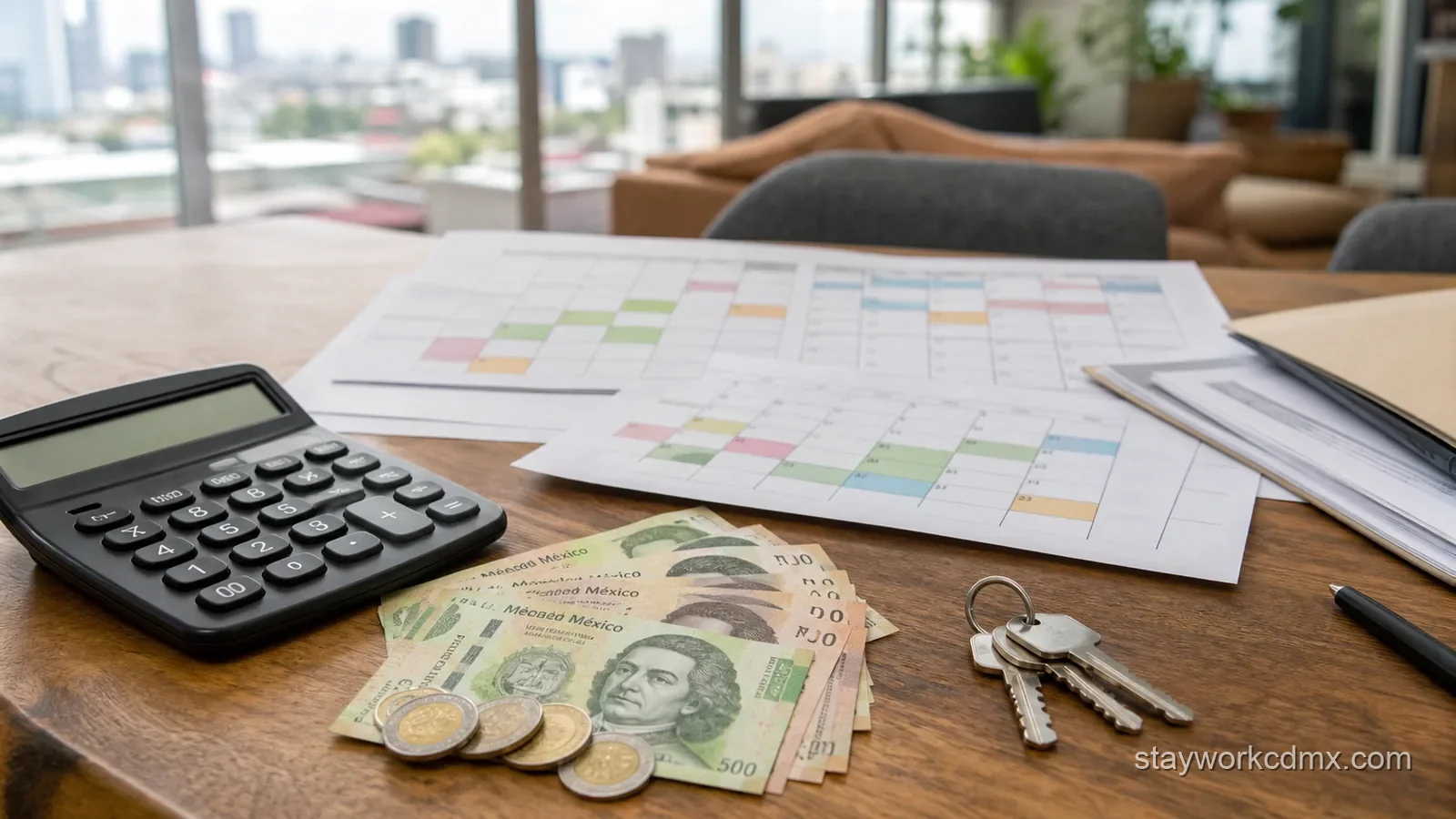
Money, invoicing, and cancellation math
Mexico’s CFDI electronic invoicing requirements matter when employers reimburse; not every boutique host issues compliant fiscal documents on short notice. If receipts matter, clarify RFC alignment, timelines, whether VAT is bundled, and any surcharge for CFDI issuance before you commit. Our corporate guests often bookmark corporate housing in Mexico City and CFDI basics once finance teams join the thread.
Deposits, holds, and cancellation terms — get them in writing
The headline rent is only half the money conversation. Before paying, pin down four things in the same written thread:
- The deposit model: traditional Mexican leases ask for one to two months’ deposit plus a fiador (a local property-owning guarantor most foreigners cannot produce). Serviced furnished operators usually replace all of that with a refundable damage hold on a card, so confirm the hold amount, when it is released, and what triggers a deduction. If a landlord starts asking for a fiador, read how to rent in Mexico without a fiador before signing anything.
- Payment method surcharges: card payments in Mexico often carry a 3–5% processing surcharge, and international wires have their own fees. Ask which methods are surcharge-free before comparing two quotes that look identical.
- The shortening penalty: monthly pricing assumes the full month. If a work change sends you home on day 19, does the rate recalculate to the nightly equivalent, do you forfeit a fixed amount, or is there a pro-rated exit? Any answer is workable if you know it up front.
- Extension terms: the cheapest month in Mexico City is usually the second one in the same apartment, with no turnover, re-cleaning, or new search. Ask up front whether extensions re-price and how much notice the calendar needs.
Neighborhood fit: Roma Norte versus Narvarte for repeated weekdays
Roma Norte rewards guests who want walkable errands, a spontaneous café swap after 5 p.m. calls, coworking backup options, and Metro Insurgentes or Metro Sevilla access that gets you to Juárez or Centro quickly off-peak.
Narvarte rewards guests who want residential calm, quieter nights away from nightclub clusters, practical grocery routines around Metro Eugenia, Metro Nativitas, and Parque Delta shopping, and faster access to the hospital corridors to the south for family stays near medical care. The Narvarte guide for remote workers maps its cafés, gyms, and quiet blocks in detail.
Neither is objectively better. Mismatches happen when people plan only for brunch density, or only for tranquility, without checking the realistic commute to any office they occasionally visit in person.
If you are still torn, read Roma Norte vs Narvarte for a month , or see the ranked list of best neighborhoods in Mexico City for remote workers in 2026 if these two are not your whole shortlist. If your shortlist is really Roma Norte against its greener neighbor, the Roma Norte vs Condesa monthly-stay comparison settles that pairing block by block.
Copy-paste prompts that surface honest answers
Most listing copy stays vague until you ask precise questions. These prompts force specifics:
- “Show me traceroute jitter from the apartment during 7–9 p.m.; I screen-share Mondays.”
- “Send a photo measuring chair seat height versus desk underside; I average eight-hour calls.”
- “Explain building noise policy if neighbor renovates weekdays; typical CDMX obra windows?”
- “Who restores hot water mid-month if boiler fails; superintendent timeline?”
- “Does my rental include garrafón refills weekly or do I WhatsApp distributors directly?”
An operator who dodges mechanical questions is usually telling you how they will handle a mid-stay problem. One who answers them in detail usually runs a stay that holds up past week two.
Pair those prompts with practical lifestyle checks: dogs on neighboring roof terraces at night, weekend smoke from rooftop grills, Friday-night noise near Álvaro Obregón versus the quieter tree-lined streets around Orizaba, and street noise if you are high up in a tower near Insurgentes or Reforma.
Red flags seasoned monthly guests reconsider immediately
Treat these as warning signs, not automatic dealbreakers, and slow down to ask more questions when you see them:
- Ambiguous utilities: “included” in the listing, but no stated electricity cap or metering rules in writing.
- Hosts insisting “you rarely need Ethernet” despite marketing the building’s fiber.
- Desks wedged beside beds without clearance for the chair to recline: posture killers disguised as “design.”
- Building access that depends on a single WhatsApp contact who goes quiet past midnight, despite international arrival times.
- Repeated guest reviews mentioning week-two regrets. One weekend complaint means little; a pattern of mid-stay exhaustion is worth taking seriously.
Guests booking longer corporate placements should also check the calendar for Mexican holidays, national-team match days, parades and mega-concerts near their block, and, in older Roma and Condesa stock, seismic retrofit works. Retrofitting scaffolding can blanket a block for months, changing both noise and sidewalk flow.
What a monthly apartment in Mexico City costs — pricing anchors in MXN
Sticker monthly rates mislead unless you put every quote on the same denominator:
- Use 31-night arithmetic, not “a month equals four weeks” folklore.
- Platform service fees (roughly 14–16% on nightly-priced bookings) distort comparisons against direct arrangements, so compute the real nightly equivalent of each quote.
- Mid-stay extension discounts sometimes beat a fresh checkout-and-rebook cycle, so ask early.
Within those rules, these are realistic 2026 reference bands for serviced furnished stays (Wi-Fi, utilities, and linens handled) in the neighborhoods monthly guests shortlist:
| Neighborhood | Private room + bath (monthly) | Full 1BR (monthly) | Character |
|---|---|---|---|
| Narvarte | $9,000–$17,000 MXN | $22,000–$32,000 MXN | Residential value, strong transit |
| Del Valle | $10,000–$16,000 MXN | $24,000–$34,000 MXN | Quiet, family-residential |
| Roma Norte | $12,000–$20,000 MXN | $28,000–$40,000 MXN | Café culture, walkability premium |
| Condesa | $13,000–$22,000 MXN | $30,000–$44,000 MXN | Parks, expat demand |
| Polanco | $15,000–$25,000 MXN | $38,000–$55,000 MXN | Corporate premium |
Rates inside each band still swing with furnishing tier, desk quality, doorman depth, parking, and season, so treat the table as a sanity check on quotes, not a promise. A quote far below the band usually means a hidden weakness (shared internet, no real desk, lavandería-only laundry); one far above it should come with visible justification.
Whatever the band, giving up workspace quality to save three hundred pesos a night costs you more in lost productivity than it saves in rent.
For deeper per-neighborhood budgets, see the Del Valle monthly cost and routine breakdown , the furnished apartments in Narvarte page for live Narvarte inventory, and Roma Norte furnished apartments for what the Roma premium buys.
After you reserve
Keep one WhatsApp/email thread with:
- Numeric door codes with effective dates.
- Wi‑Fi SSID/password plus modem location photo.
- Emergency escalation order (neighbor noise, leakage, blackout).
- Screenshots of amenity commitments.
If something differs materially on arrival, photograph it before unpacking for easier disputes and faster host corrections.
Picture day eighteen, the third Monday of occupancy: would the ergonomics, errands, and nights still hold up? That imagined checkpoint filters out romantic weekend optimism better than spreadsheets.
Cover pets and allergies in writing: confirm whether pet rent exists, which common areas allow dogs, and whether dander-sensitive roommates share HVAC paths in the building. In older stock, also ask about earthquake prep, so you know how gas shutoffs, stairwell lighting, and aftershock communication work if you are on a high floor for a month.
To compare flexible nightly stays with a committed month, read furnished short-term rentals versus monthly framing and the flexible rental apartments overview .
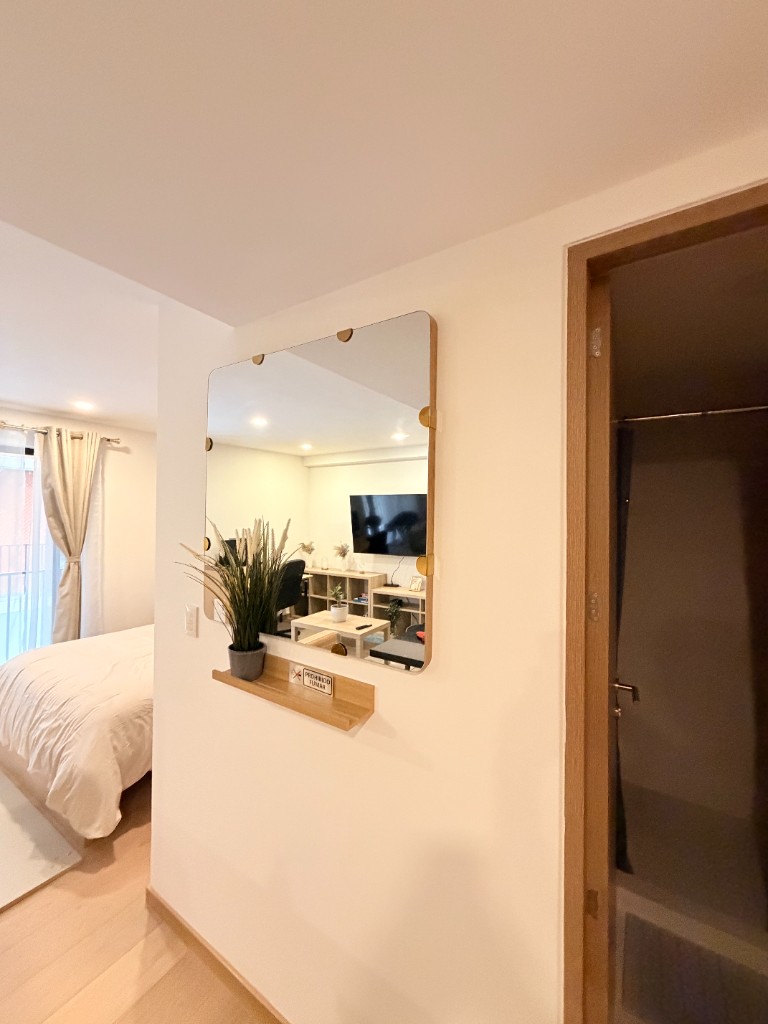
We set up our Roma and Narvarte units for real monthly living: a workable desk, stable internet, and nights quiet enough for deep work. Browse our furnished apartments in Mexico City or start from digital nomad apartments in CDMX for workspace-first comparisons, send us your detailed fit questions directly, and use Book Direct when your dates are ready to lock.