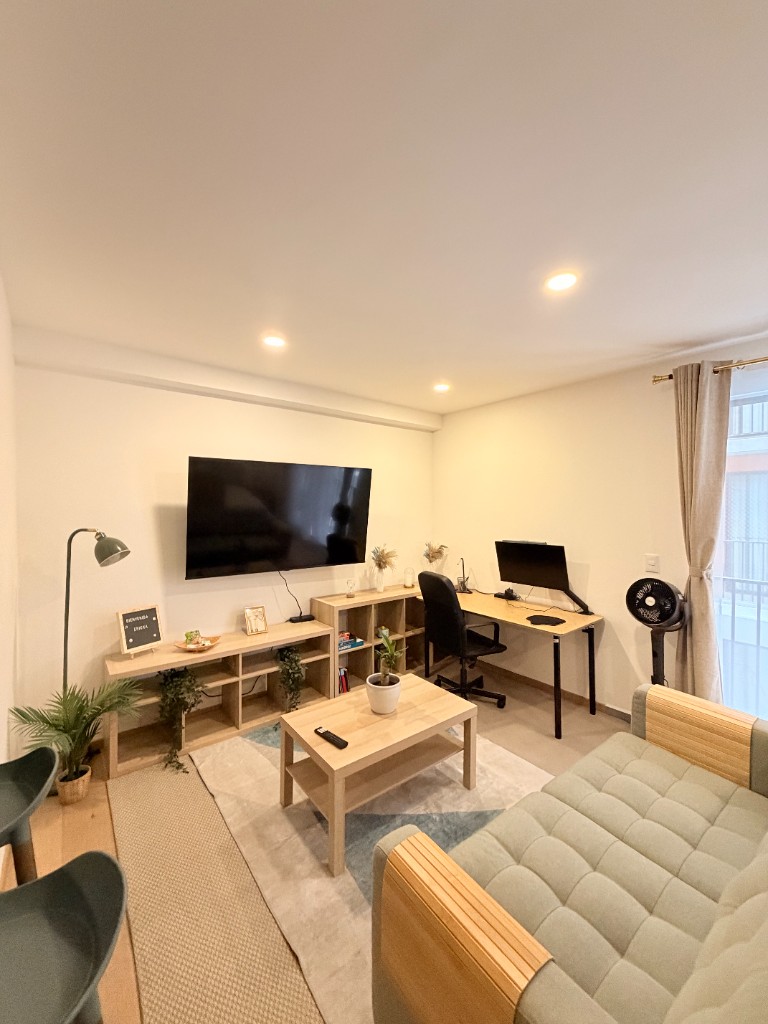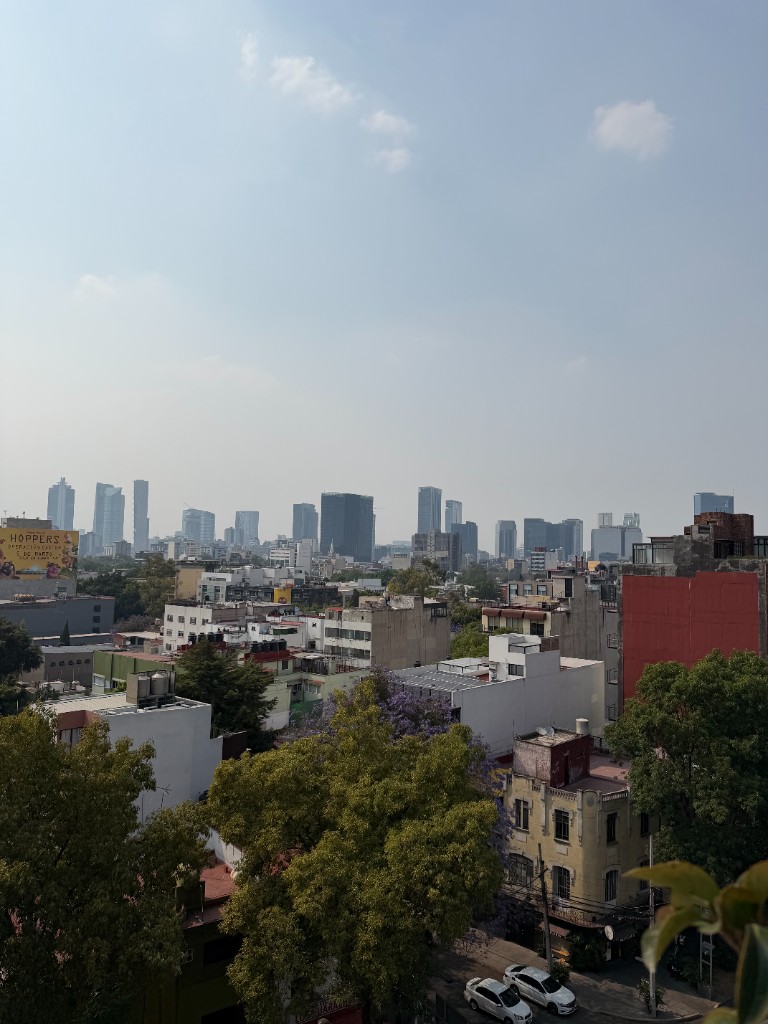
We’ve hosted over 300 guests in Mexico City vacation rentals, and almost none of them arrived certain about where to stay. CDMX is enormous, with nearly nine million people spread across dozens of colonias, and the difference between a great trip and a frustrating one often comes down to picking the right neighborhood and the right kind of place before you land.
Start here if you’re weighing a Mexico City vacation rental against a hotel, trying to decode neighborhoods you’ve only seen on a map, or wondering what “furnished apartment” gets you here. The deeper guides are linked throughout.
What a vacation rental in CDMX gets you (versus a hotel)
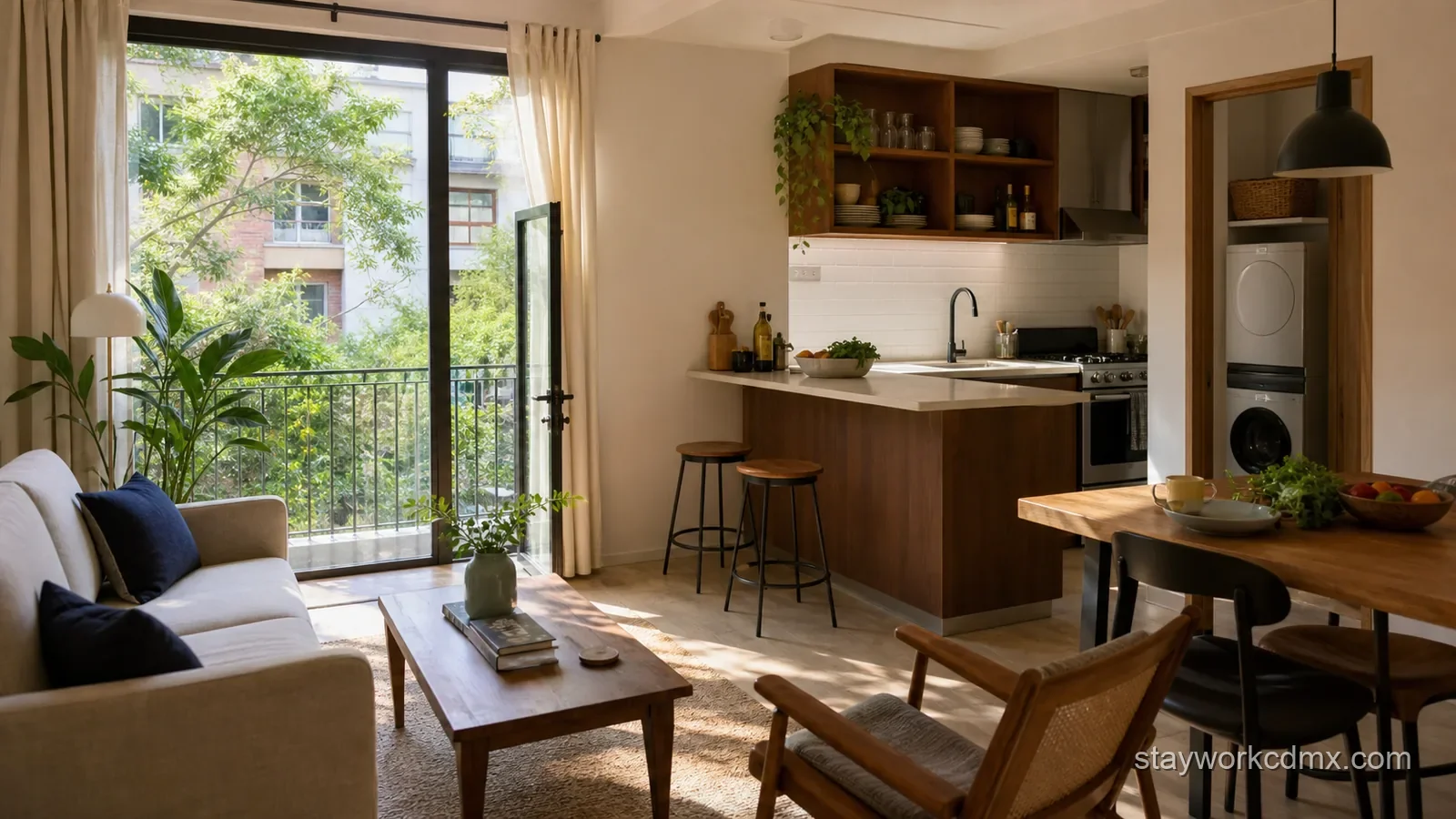
A vacation rental in Mexico City is a private, furnished apartment or house you book for a set number of nights, with the whole place to yourself. Compared to a hotel, the trade is roughly this:
- More space and privacy: a living room, a real bedroom (or several), and usually a balcony or terrace instead of one room and a hallway
- A kitchen, for coffee at your own pace, groceries from Mercado Medellín or La Comer, and dinner in on the nights you don’t want a fourth restaurant meal
- Laundry in the unit or the building, which matters a lot past three or four nights
- A real neighborhood: you live on a residential street and shop where locals shop, which is most of why people come to CDMX in the first place
You give up daily housekeeping, a front desk, and the zero-thought simplicity of a hotel on a very short trip. For the full breakdown of when each one wins, read vacation rental vs hotel in Mexico City . If your stay stretches toward a few weeks or a month, the economics shift again toward furnished short-term rentals .
The best neighborhoods for Mexico City vacation rentals, at a glance
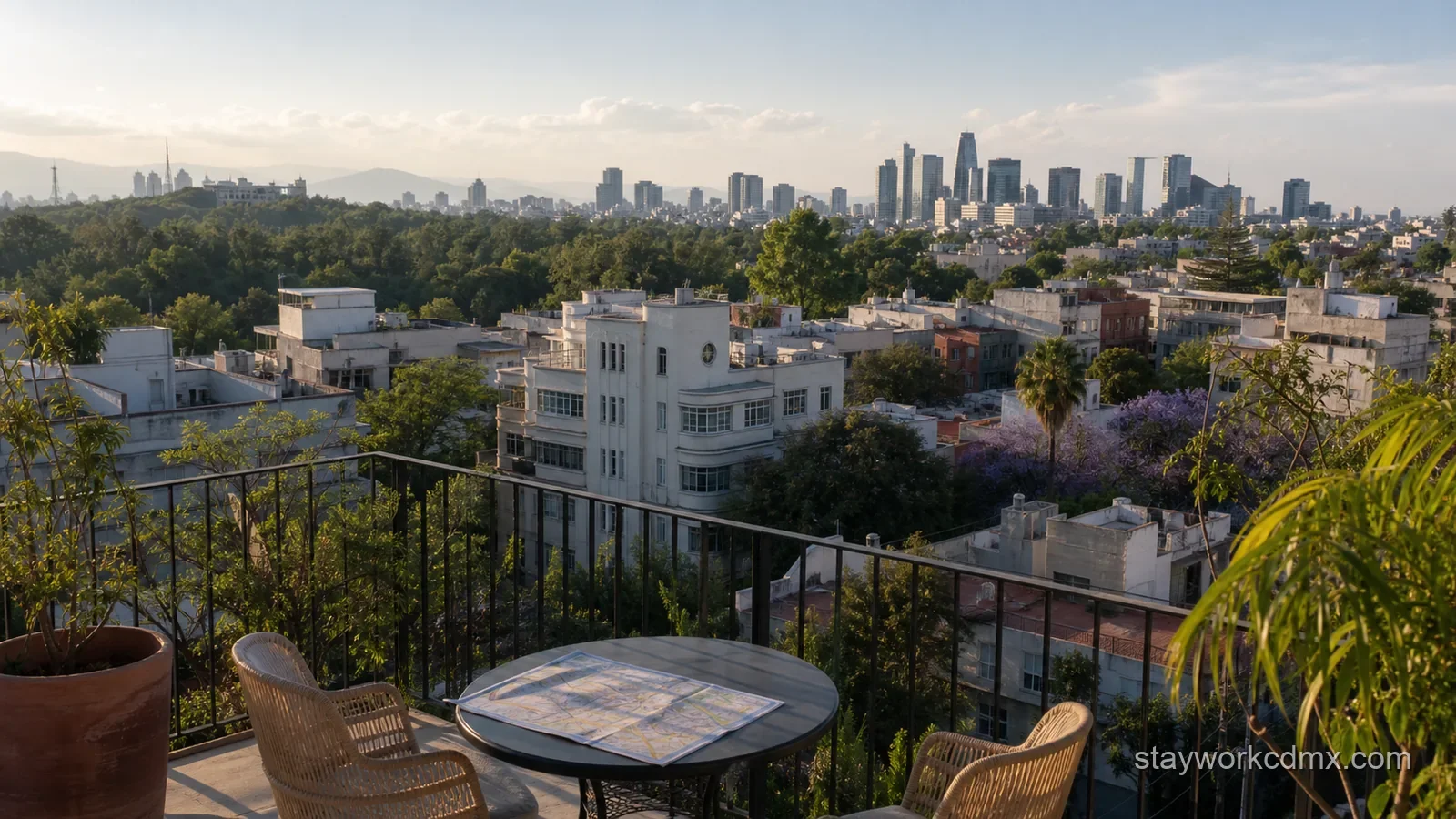
Most of the Mexico City vacation rentals worth booking cluster in five or six central areas, summarized below. Full profiles, safety notes, and price tiers are in best neighborhoods for vacation rentals in Mexico City .
| Neighborhood | Best for | Vibe | Price tier |
|---|---|---|---|
| Roma Norte | First-timers, food, walkability | Leafy, café-dense, social | Mid–high |
| Condesa | Couples, parks, easy nights | Calm, green, residential-chic | Mid–high |
| Polanco | Upscale stays, luxury shopping | Polished, quiet, expensive | High |
| Coyoacán | Families, culture, slower pace | Colonial, artsy, village-like | Mid |
| Centro Histórico | History, budget, transit hub | Grand, busy, historic | Low–mid |
Roma Norte and Condesa are the safest bets for a first trip: walkable, full of restaurants and cafés, and close to Reforma and Chapultepec. Polanco is for travelers who want polish and don’t mind paying for it. Coyoacán suits families and repeat visitors who want cobblestones and calm over nightlife. Centro Histórico is unbeatable for history and price but louder and more crowded.
For longer visits, Narvarte deserves a mention even though it rarely makes tourist lists. It’s a residential area just south of Roma with strong food, real markets, and noticeably lower prices. It suits daily life better than sightseeing, which is why it shows up constantly in our monthly-stay guides. The Narvarte remote workers guide walks through what a working visit there looks like day to day: cafés, transit, and a full weekly routine.
How long people actually stay
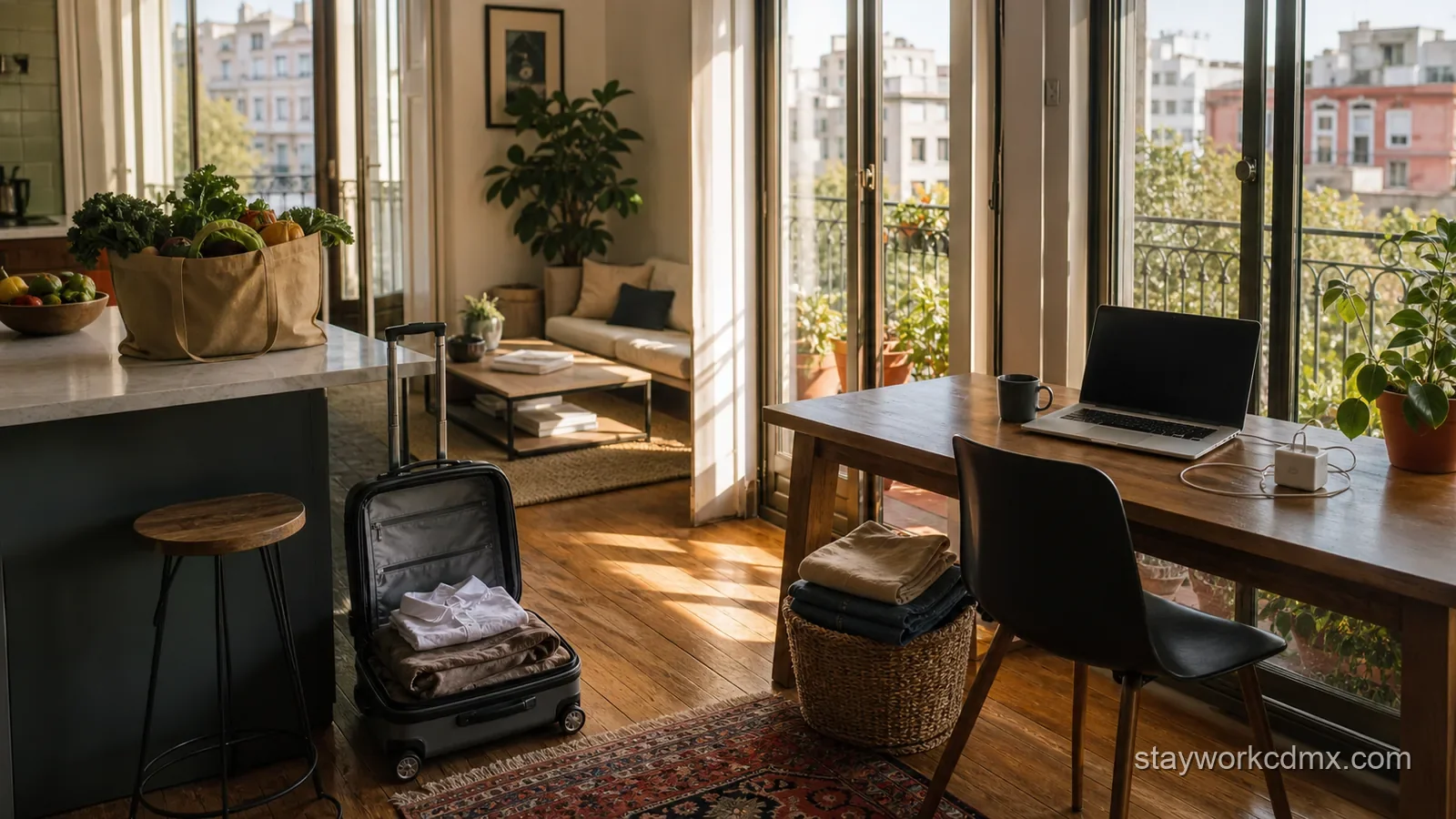
There’s no single “right” length, but the pattern we see is consistent:
- 2–4 nights: a long weekend of food, museums, and a day trip to Teotihuacán. A hotel or a rental both work, and convenience decides it.
- 5–10 nights: a proper vacation. A rental with a kitchen and laundry starts paying off, and you settle into a neighborhood instead of touring it.
- 2–4 weeks: a workation or an extended visit. Wi-Fi quality, a real desk, and grocery access become the deciding factors.
- 30+ nights: functionally a monthly-living decision, where total cost and neighborhood fit outrank everything. That’s when to compare Mexico City rentals monthly directly.
Knowing your bucket up front saves money, because the wrong format for your length is the most common way guests overpay.
What to check before you book
The listing photos are the easy part. Before you pay, confirm the details that shape the stay. Our full walkthrough is in how to book a vacation rental in Mexico City ; here is the short list:
- Exact location: get the nearest cross streets, not just “Roma Norte.” A unit on Avenida Insurgentes is a different trip from one on a quiet side street.
- What’s included: utilities, internet, cleaning fee, and taxes. Ask for the all-in total, not the nightly rate.
- Wi-Fi: if you’re working, ask for a recent speed test. Central CDMX residential connections commonly run 100–500 Mbps, and under 50 means shaky video calls.
- Recent reviews: look for mentions of noise, check-in, hot water, and how fast the host responds to problems.
- Check-in logistics: many flights from the US and Canada land at AICM between 8 and 11pm, so confirm the arrival works after dark.
- Group fit: real beds for everyone, not a sofa bed counted as a “bedroom.”
Seasonality and pricing
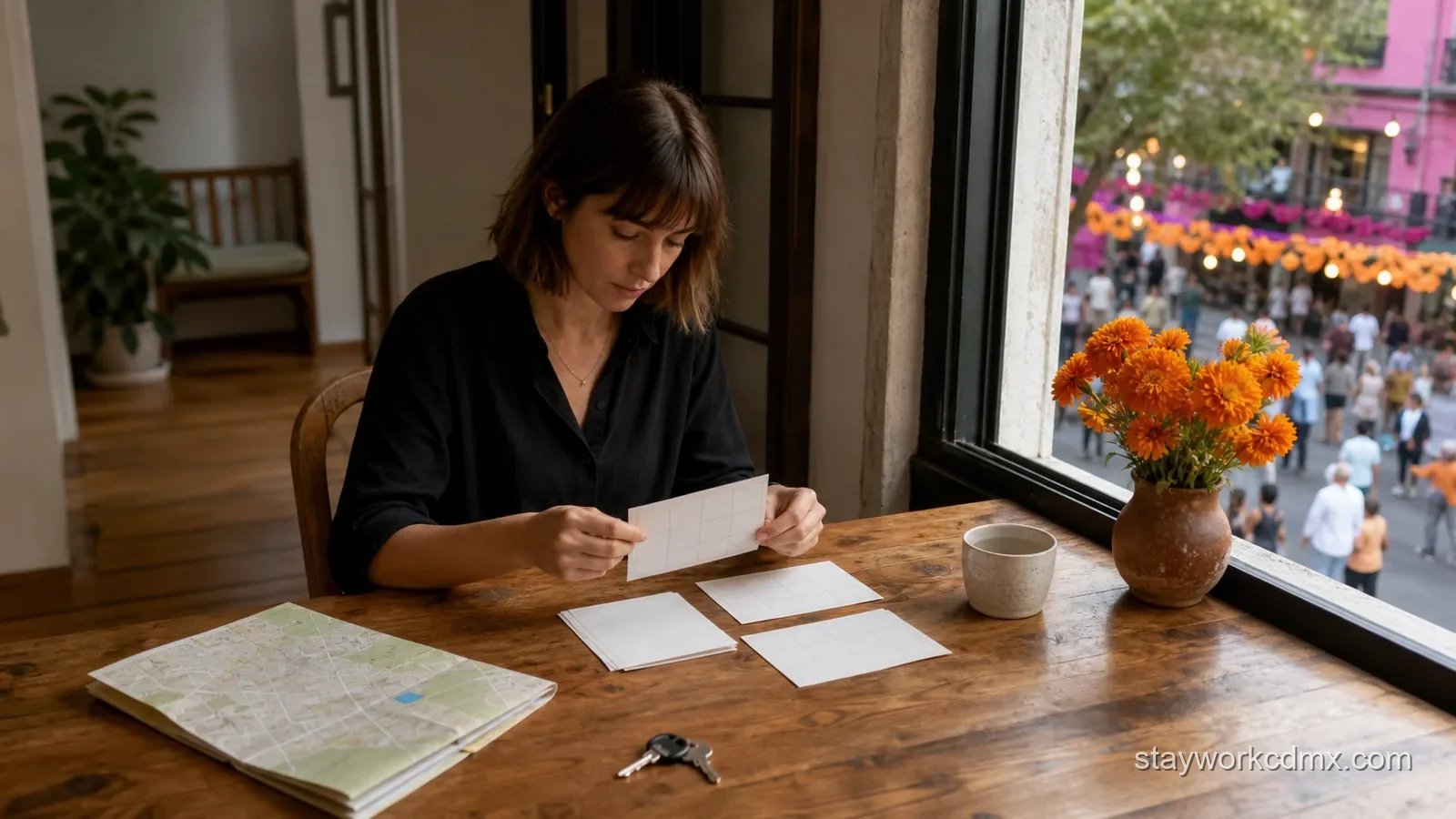
CDMX has a real high and low season, and it moves prices more than most visitors expect:
- Peak: mid-March to April (Semana Santa), late October to early November (Day of the Dead), and December. Book well ahead; rates climb and the best units go first.
- Shoulder: May–June and September, with good weather, better availability, and softer prices.
- The 2026 wildcard: the World Cup pulls demand and pricing far above normal in its match windows. If your dates overlap, read Estadio Azteca World Cup 2026: where to stay and book early, because this is the one window where waiting really costs you.
Here’s roughly what well-reviewed one-bedroom units run per night in mid-2026, outside peak windows:
| Neighborhood | 1BR nightly range | Peak-week behavior |
|---|---|---|
| Centro Histórico | $800–$1,500 MXN | Moderate spikes |
| Coyoacán | $1,000–$1,900 MXN | Spikes around Day of the Dead |
| Narvarte / Del Valle | $1,100–$2,000 MXN | Mildest spikes — residential demand |
| Roma Norte | $1,400–$2,600 MXN | Strong spikes, books out first |
| Condesa | $1,500–$2,800 MXN | Strong spikes |
| Polanco | $2,200–$4,500 MXN | Premium year-round |
Two-bedroom units generally run 40–70% above these figures. Weekly stays typically earn a 10–20% discount off nightly rates. At 30+ nights, pricing shifts to flat monthly furnished-apartment rates (roughly $22,000–$46,000 MXN for a central one-bedroom), which work out far cheaper per night. For a detailed monthly cost model, see furnished monthly apartment cost in Mexico City 2026 .
Safety and booking-direct basics
Central Mexico City is a normal big city: the tourist-heavy neighborhoods above are safe and walkable, and standard urban awareness covers most of it. Confirm the exact address before you arrive, favor listings with a track record of recent reviews, and use registered taxis, Uber, or DiDi at night rather than street cabs. Before you book, drop the listing’s pin into Street View and “walk” the block. Two minutes of that tells you more about noise, lighting, and street life than any listing description, and it catches the classic mislabel: an apartment marketed as “Roma” that sits across Avenida Cuauhtémoc in a much less walkable colonia.
The big platforms are fine for discovery, but their guest fees stack up, and direct communication with a real host beats a chatbot when something breaks at 10pm. Where a host offers a legitimate direct option with written terms, it’s often cheaper and gives you a human contact for the whole stay. We break down the trade-offs in how to book a vacation rental in Mexico City .
Traveling as a group or family

Families and groups are where vacation rentals decisively beat hotels: one apartment with a kitchen and a living room costs far less than three hotel rooms and keeps everyone together. The catch is matching the layout to the group: enough real beds, a second bathroom for larger parties, and a neighborhood that suits kids or grandparents. Start with family vacation rentals in Mexico City for the layout and neighborhood specifics.
When a vacation rental becomes a monthly stay
We see this constantly: guests book ten nights as a vacation, extend once, extend again, and realize halfway through that they’re living here now. If there’s any chance your trip stretches past four weeks, plan for that from the start, because the monthly market works differently and favors different neighborhoods.
The best neighborhoods for nightly stays and for monthly value aren’t the same list. Roma Norte and Condesa dominate short visits, and Roma Norte monthly stays still make sense for guests who want café culture as a daily routine. Residential areas that barely register with tourists, like Narvarte and Del Valle, win on price per month, apartment size, and everyday calm. Narvarte furnished monthly apartments typically run $6,000–$10,000 MXN per month below Roma equivalents, and the Del Valle monthly cost and routine guide shows what a full, comfortable month there costs.
If you’re weighing the two famous names against each other for a longer base, the Roma Norte vs Condesa monthly stay comparison settles it block by block. For the complete work-oriented ranking, see the best neighborhoods in Mexico City for remote workers in 2026 .
A realistic monthly budget, if the trip turns into a stay
Because so many vacation guests end up pricing a month, here is what 30 days of living here costs one person in 2026, rent and everything else included (at roughly 17.5 MXN per USD):
| Monthly expense | Narvarte / Del Valle | Roma Norte / Condesa |
|---|---|---|
| Furnished 1BR (utilities + Wi-Fi included) | $22,000–$34,000 MXN | $28,000–$46,000 MXN |
| Groceries and markets | $3,000–$4,500 MXN | $3,500–$5,500 MXN |
| Restaurants and cafés | $4,000–$8,000 MXN | $6,000–$12,000 MXN |
| Metro, Metrobús, Uber/DiDi | $1,000–$2,000 MXN | $800–$1,800 MXN |
| Coworking or café-working | $0–$3,500 MXN | $0–$4,500 MXN |
| Phone data and extras | $500–$1,500 MXN | $500–$1,500 MXN |
| Realistic all-in month | $30,500–$53,500 MXN | $38,800–$71,300 MXN |
Rent is the biggest variable: the residential colonias save you $6,000–$12,000 MXN a month on the apartment alone, while everything else barely moves. Food is the other place budgets stretch. A Roma Norte base makes the $400-peso dinner the default, while Narvarte’s fondas and taquerías keep a great food month under half that. The Del Valle monthly cost and routine breakdown shows one of these budgets played out day by day.
Where StayWork fits
StayWork CDMX runs furnished stays in central neighborhoods, mainly Roma Norte and Narvarte, for guests who want more than a hotel room: real desks, fast Wi-Fi, self check-in for late airport arrivals, and in-unit laundry. Across 300+ guests we hold a 4.66-star average, and most of our bookings run from a handful of nights up to a full month.
If you’re ready to pick a place, start with these guides:
Related reading
- Choosing an area: best neighborhoods for vacation rentals in Mexico City
- Rental or hotel: vacation rental vs hotel in Mexico City
- The booking process: how to book a vacation rental in Mexico City
- Traveling with family: family vacation rentals in Mexico City
- Staying a few weeks or more: furnished short-term rentals in Mexico City
- Staying a month or longer: short term rentals in Mexico City