For a long stay, transport is not a sightseeing detail. It is part of the apartment. A neighborhood can look central on a map and still be a poor fit if the station has stairs, the last four blocks are difficult with luggage, the building has no lift, or your repeated route requires two crowded transfers every morning.
This guide compares transport and practical accessibility for eight neighborhoods that appear repeatedly in StayWork’s long-stay research: Roma Norte, Condesa, Narvarte, Roma Sur, Escandón, San Rafael, Santa María la Ribera and Del Valle. Read it alongside the Mexico City monthly rentals hub and the Mexico City neighborhood guide ; once you know which corridor fits, each section points to the right long-stay page.
The research uses official Metro, Metrobús and Ecobici information checked in July 2026, plus the physical layout of the stations and the apartment-to-station decisions a 30+ night guest has to make. It does not promise that a specific street, station elevator or building entrance will be working on your arrival day. Use the live links and ask the operator for the exact unit before paying.
Quick answer
Which Mexico City neighborhood is easiest for a long stay?
There is no universal winner. Choose by the journey you repeat:
- Roma Norte: best if you want many errands and social plans within a walk, plus Metro Line 1 and Insurgentes access.
- Condesa: best for parks, walking and Line 9/Insurgentes connections, but hills, crowds and busy corners matter.
- Narvarte: best for a practical south-central grid, Line 3 and Line 2/3 Metrobús corridors, and apartment-first routines.
- Roma Sur: best middle ground for Centro Médico, Hospital General, Mercado Medellín and walking north to Roma Norte.
- Escandón: best bridge between Tacubaya, Condesa, Roma and Line 9, with a block-sensitive last mile.
- San Rafael: best for north-central access to San Cosme, Reforma, Buenavista and Centro, provided the exact block works.
- Santa María la Ribera: best for San Cosme, Normal, Buenavista and central-north errands at a more local pace.
- Del Valle: best for south-central work routes, Line 3, Insurgentes and a residential month where the apartment does more of the work.
For a wheelchair, walker, older traveler, heavy luggage or a medical schedule, do not choose on station name alone. Confirm the accessible route, elevator status, sidewalk condition, building lift, bathroom layout and the final 300 metres from the station.
The answer in one table
Transport and accessibility fit for 30+ night stays in eight CDMX neighborhoods
| Neighborhood | Main public-transport spine | Long-stay strength | Accessibility and friction check |
|---|---|---|---|
| Roma Norte | Metro Insurgentes, Sevilla, Cuauhtémoc; Metrobús Insurgentes | Many daily needs are walkable; strong central connections | Busy crossings, uneven sidewalks and station stairs; confirm the exact entrance and building lift |
| Condesa | Metro Patriotismo, Chilpancingo, Sevilla; Metrobús Insurgentes/Line 2 | Parks, cafés and errands close together | Tree roots, curb cuts and weekend crowds; slopes and station access vary by block |
| Narvarte | Metro Etiopía, Eugenia, División del Norte; Metrobús Line 2/3 corridors | Practical routes to Centro Médico, Del Valle and Coyoacán | Wide avenues and long crossings; use the accessible station list, not a pin radius |
| Roma Sur | Metro Chilpancingo, Hospital General, Centro Médico, Etiopía | Strong medical and central-south network; walkable to Roma Norte | Hospital-area traffic, crowded platforms and mixed sidewalks; test the route at shift change |
| Escandón | Metro Patriotismo/Chilpancingo; Metrobús Escandón/Patriotismo | Bridge to Roma, Condesa, Tacubaya and central routes | Avenue crossings and block variation; a short map distance can be a difficult last mile |
| San Rafael | Metro San Cosme/Revolución/Normal; Buenavista connections | North-central access and local daily errands | Older buildings, stairs and variable sidewalks; confirm elevator and late-return route |
| Santa María la Ribera | Metro San Cosme/Normal; Buenavista and Line B nearby | Local routine with central-north transit and lower daily friction | Historic streets, uneven paving and station distance; check luggage route in daylight |
| Del Valle | Metro Etiopía/Eugenia/División del Norte/Zapata; Insurgentes | Residential productivity and south-central reach | Broad avenues, long blocks and building access; last-mile route often decides the fit |
Treat the table as a starting map; it does not guarantee mobility. A ground-floor apartment five blocks from a suitable station can beat a higher-floor apartment advertised as “next to Metro” if the building has no lift or the station entrance is on the wrong side of a major avenue.
What “accessible” has to mean for a long stay
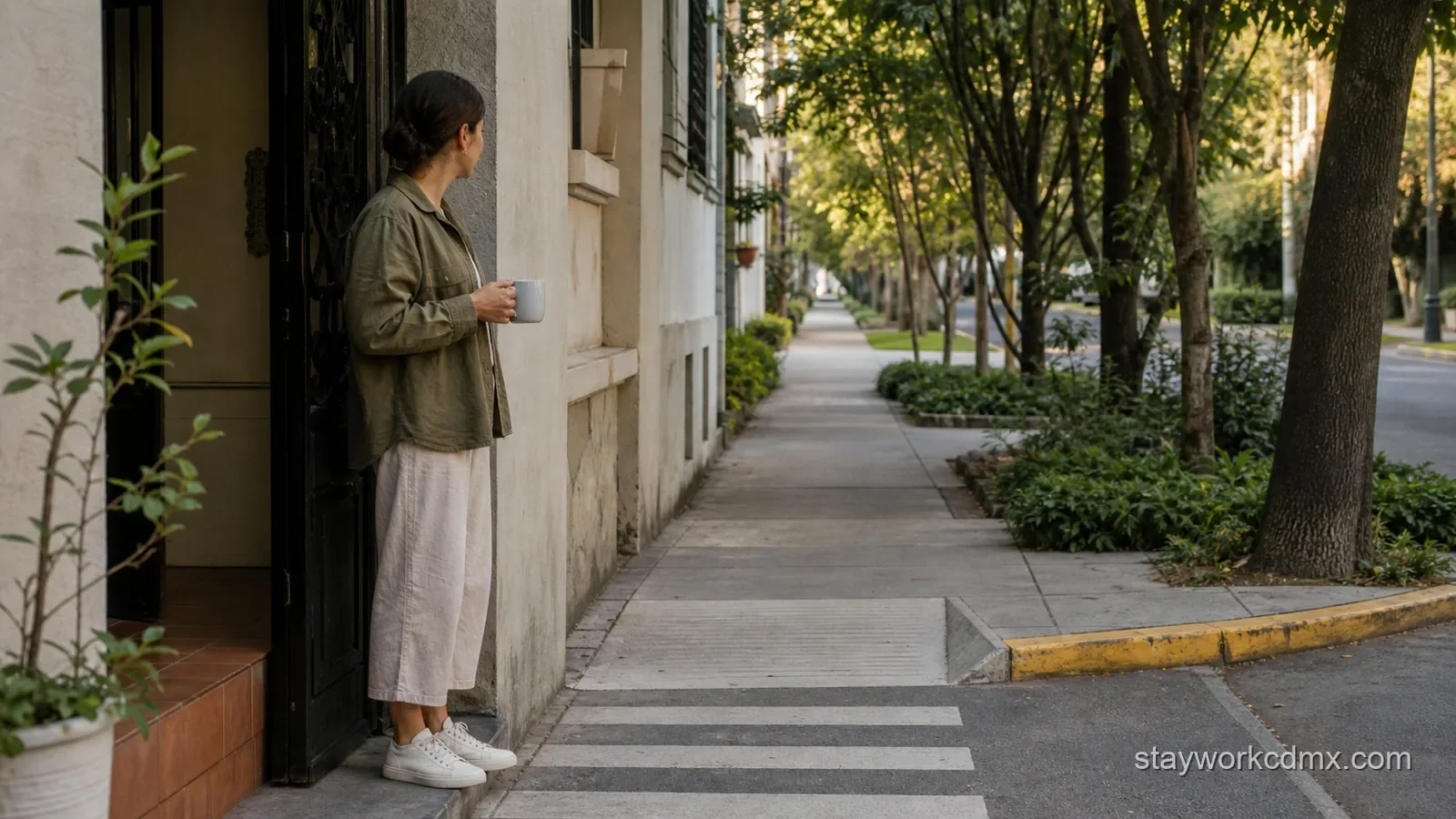
People use accessible to mean several different things. For a month, separate the decisions:
Network accessibility
Can you reach the places you repeat without an exhausting chain of transfers? Check the route from the apartment to work, hospital, school, airport connection, supermarket and the person you may need to visit. A route with one additional transfer may be better if it avoids stairs or a long exposed crossing.
Station accessibility
The Metro accessibility page publishes the equipment list and status for elevators, escalators and stair lifts. It is updated, but equipment can be out of service and an accessible entrance may be on a different street from the nearest entrance. Confirm the station, line, direction and equipment immediately before travelling.
Metro service is inexpensive, at MXN 5 per trip on the official station information, but not every station is step-free. The Eugenia station page , for example, documents the Line 3 corridor and the exits toward both Vértiz Narvarte and Del Valle. Use station pages to understand the network and the accessibility list to verify equipment.
Street accessibility
The last 300 metres can matter more than the train. Ask whether the route has curb cuts, tactile paving, tree roots, steep ramps, market congestion, construction, parked cars or a wide avenue without a convenient crossing. For a long stay, walk the route in Google Maps Street View and ask the host for a recent daylight video from the building entrance to the nearest practical station.
Apartment accessibility
Confirm the building entrance, number of steps, elevator door width, bathroom threshold, shower entry, bed height, kitchen clearance and the place where luggage can be left. “Elevator building” does not necessarily mean step-free from the sidewalk. A doorman may help with bags, but that does not make the building accessible.
Current fares and connections that shape a monthly budget
Metro
The Metro is the cheapest backbone for central and south-central routes. The official pages list a MXN 5 single ride and typical service from early morning until midnight, with weekend schedules varying by day. Use the live Metro network and station pages for current service, closures and exits. At MXN 5, 44 weekday rides cost only MXN 220; add weekend journeys, transfers and rideshares for a realistic monthly line.
Metrobús
The official Metrobús payment page lists MXN 6 per trip, with free transfers between Lines 1–7 within the stated two-hour, same-direction rules. The airport service on Line 4 is listed at MXN 30. Metrobús can help wheelchair users and guests with luggage because many stops are at street level, but boarding, crowding, platform space and the exact stop design still vary. Check the route and station staff guidance before treating a line as fully step-free.
Ecobici
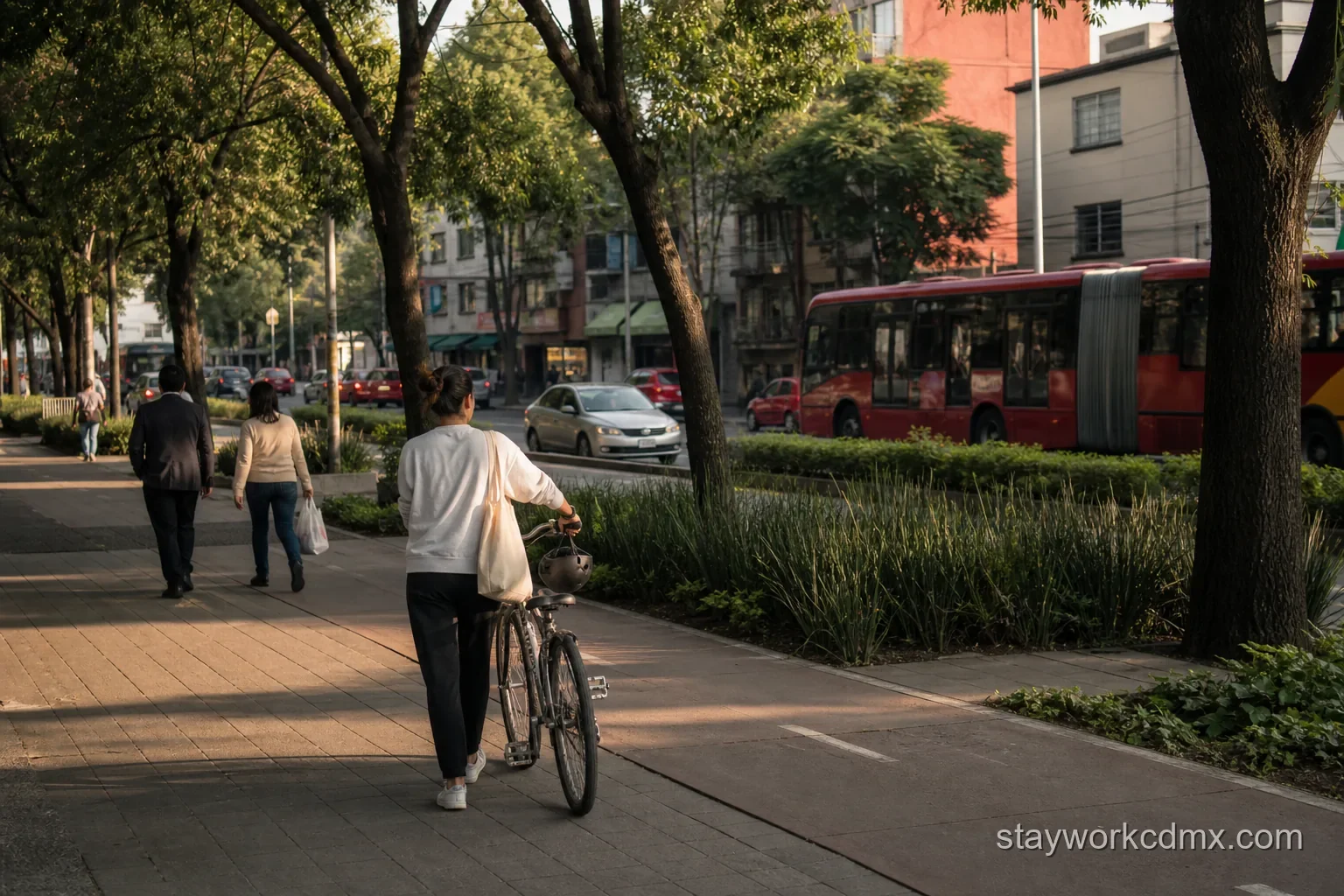
Ecobici is useful for a 5–20 minute last-mile trip when walking is uncomfortable or the route is safer by protected cycle lane. The foreign-user tariff page lists a one-day pass at MXN 278, a three-day pass at MXN 555, a weekly pass at MXN 1,110 and an annual pass at MXN 2,220, with trips of up to 45 minutes included. For a 30-night stay, test a short pass before committing; bicycle availability, docking and traffic conditions vary by station.
Taxis and rideshares
Keep a rideshare reserve for rain, luggage, late returns, mobility fatigue and a station outage. A long-stay budget should not assume public transport will be comfortable every day. Compare the cost of one strategic ride with the cost of choosing an apartment that forces a ride twice daily.
Neighborhood-by-neighborhood transport research
Roma Norte: the walking-first central base
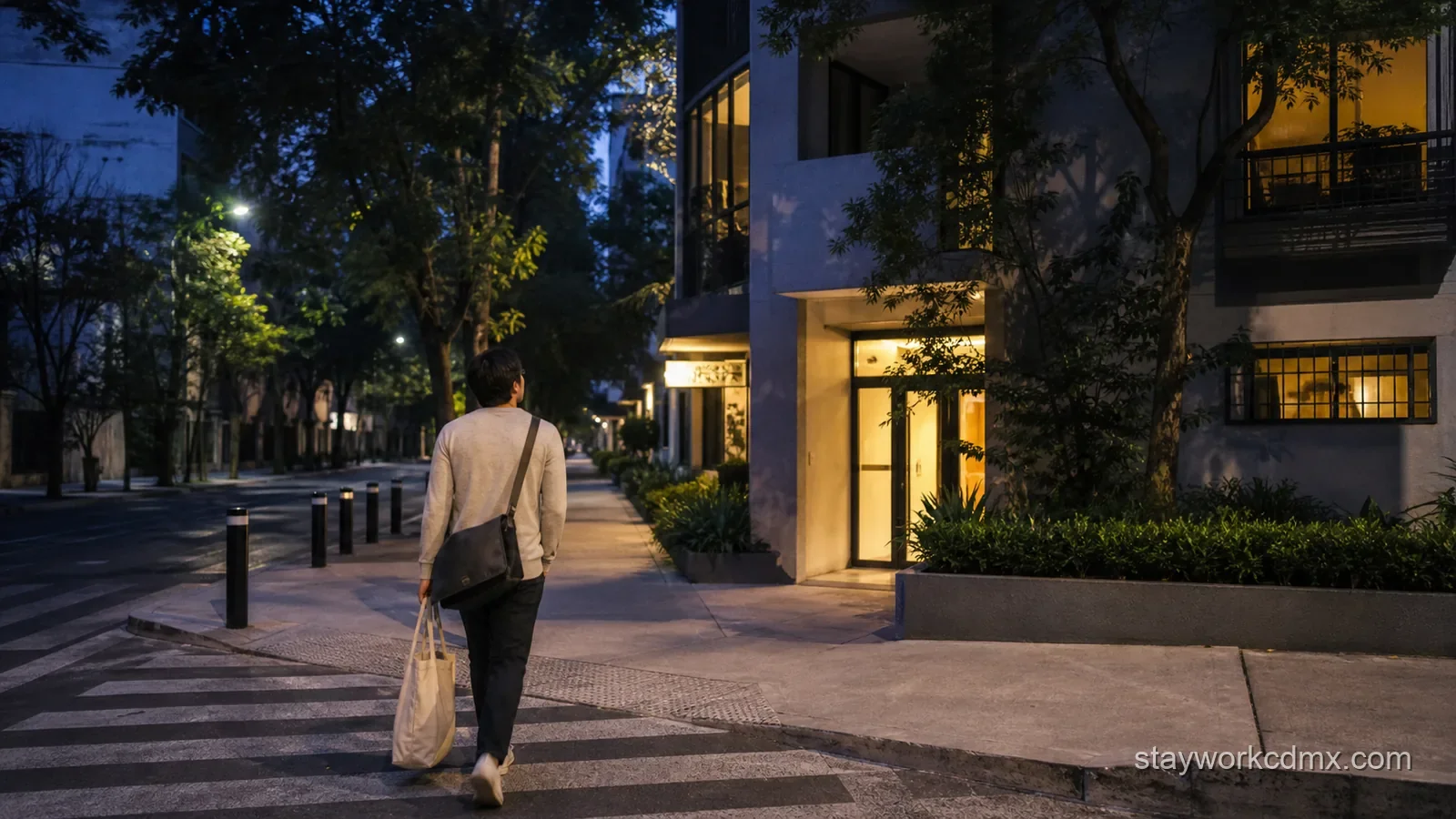
Roma Norte is the easiest neighborhood in this group for a visitor whose daily needs are spread across cafés, restaurants, groceries, pharmacies, gyms and informal meetings. Metro Insurgentes, Sevilla and Cuauhtémoc connect the east-west and north-south network, while Metrobús on Insurgentes gives you a visible corridor toward Reforma, Centro and the south.
The long-stay advantage is redundancy: if one café is full, another is nearby; if a walk feels too long, there is often a station or a short rideshare. The friction is just as real: popular corridors have uneven sidewalks, traffic crossings, delivery vehicles, construction and weekend crowds. A listing near Avenida Álvaro Obregón is a different place to come and go from than a quieter interior street near the Roma Norte/Sur border.
For a 30+ night stay, start with Roma Norte apartments or Roma Norte monthly stays . Ask whether the apartment is closer to Insurgentes or Sevilla, whether the bedroom is above a busy route, and whether the building lift reaches the sidewalk without stairs. Roma Norte works best when you can walk most ordinary errands and use Metro for the journeys that cross the city.
Condesa: parks and short walks, with a block-sensitive last mile
Condesa’s transport value comes from a compact walking grid connected to Patriotismo, Chilpancingo, Sevilla and Insurgentes. A remote worker may walk to a park or café, use Line 9 for Roma, Centro Médico or Tacubaya, and take Metrobús for Reforma or the north-south Insurgentes route.
In Condesa the accessibility problem is the street itself: tree roots, narrow sidewalks, curb cuts blocked by cars, restaurant furniture and weekend foot traffic can make a short distance slower than the map suggests. Ask for the exact route to the station. If you use a cane, walker or rolling luggage, a quieter flat block can be more useful than the address closest to Parque México.
Use Condesa for food and local routines for the neighborhood texture, then compare Roma Norte vs. Condesa for remote work before booking a longer stay. Condesa is strongest for guests who can walk most days and use transport selectively.
Narvarte: the practical medical and south-central grid
Narvarte is a strong long-stay base when the route points toward Centro Médico, Hospital General, Del Valle, Coyoacán or the southern university corridor. Etiopía/Plaza de la Transparencia, Eugenia and División del Norte on Line 3 give the neighborhood a predictable north-south spine. Metrobús and major avenues add options, but wide crossings can make a short walk feel long.
The main accessibility decision is which station to use. Do not search “near Metro” and assume the nearest pin is the best one; compare the exact station entrance, lift status, platform direction and final block. For a medical rotation or a month with repeated early starts, an apartment with a slightly longer but flatter route can be more useful than one that looks closer on the map.
Start with the Narvarte remote-worker guide or Narvarte furnished apartments . The neighborhood is especially good when you want apartment-first living and a transport network that serves work routes more than tourism.
Roma Sur: a central-south bridge
Roma Sur’s mix of stations is unusually useful for long stays. Chilpancingo on Line 9 serves the Roma/Condesa side; Hospital General and Centro Médico on Line 3/9 connect the medical corridor; Etiopía and Eugenia extend the south-central route. The official Hospital General station page lists the Line 3 sequence, fare and connections to Metrobús and the Eje 2 Sur trolleybus.
That redundancy matters for a guest with a hospital, university or office route. For a guest with mobility constraints, the crowded transfer and the walk around large avenues matter just as much, so test the route at shift change instead of a quiet Sunday hour. Ask the apartment operator whether a taxi can reach the building entrance without a narrow one-way street or a long luggage carry.
Roma Sur is often a better long-stay compromise than Roma Norte when you need access to the social area but want an apartment-first base. See Roma Sur monthly cost and routine and Roma Norte vs. Roma Sur for the stay decision.
Escandón: the bridge between corridors
Escandón sits between Condesa, Roma, Tacubaya and the south-central routes. Patriotismo and Chilpancingo on Line 9, plus Metrobús stations around Escandón and Patriotismo, make it useful for guests who move in more than one direction. The location is central, but a broad avenue, a sloped crossing or a building on the wrong side of the corridor can still change the daily experience.
For a long stay, map the apartment to the station at the exact time you will leave. Check whether the walk has a safe crossing, whether the building entrance is visible after dark, and whether a taxi can stop without blocking traffic. Escandón works well for guests who value a local routine, use transport deliberately and do not expect every destination to be a five-minute walk.
Read Escandón I monthly cost and routine and the Escandón remote-worker guide before choosing a unit.
San Rafael: north-central reach and older-building checks
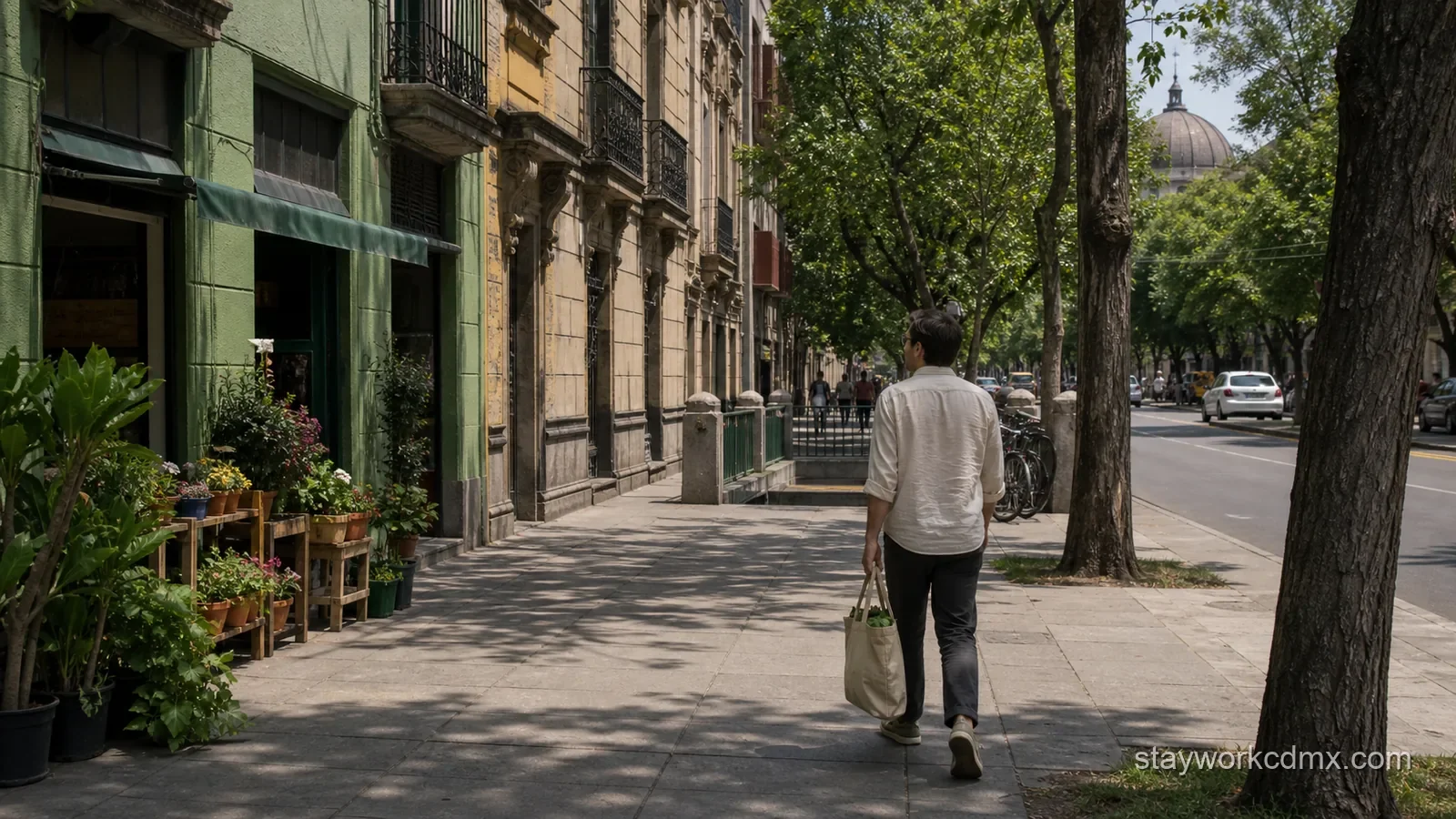
San Rafael’s useful anchors are San Cosme, Revolución and, depending on the block, Normal and Buenavista. Line 2 makes north-central movement toward Centro and Tacuba straightforward; Buenavista adds Line B and suburban rail connections. It is a strong neighborhood for someone moving between Reforma, Juárez, Centro, Santa María la Ribera and other central destinations.
Accessibility here depends more on the building than in newer apartment zones. Ask about stairs at the entrance, elevator reliability, the street surface, the route home after dark and the width of the lobby. The distance between San Cosme and Revolución is short on the network, but the better station depends on the exact address and the direction of travel.
Use San Rafael monthly cost and routine and San Rafael furnished apartments to combine route planning with the apartment test; San Rafael rewards guests who do both before booking.
Santa María la Ribera: local routine with central-north access
Santa María la Ribera connects through San Cosme, Normal and the Buenavista area. It is a practical choice for guests whose month points north or central, and for people who enjoy walking to markets, the Alameda and local shops rather than paying for a ride every time they leave home.
The accessibility questions come from historic streets and older buildings: a route may include uneven paving, a high curb, market activity or an entrance with steps. Ask the host to describe the route from the exact building to the station. If you arrive with luggage, test the route in daylight and keep a taxi option in reserve for the first day.
The Santa María la Ribera cost and routine guide is the best companion for rent, groceries and work setup; the Santa María food guide adds local errands and market context.
Del Valle: residential productivity and longer blocks
Del Valle is not the most tourist-facing neighborhood in the set, but it is often a strong long-stay base for a professional who needs a quiet apartment, groceries and south-central reach. Eugenia, Etiopía, División del Norte and Zapata on Line 3, plus Insurgentes and Metrobús corridors, give you options toward Centro Médico, Roma Sur, Coyoacán and the central business areas.
Del Valle’s friction is distance: wide avenues, long blocks and residential sections where the last mile can be more important than the station itself. A unit that is technically close to Eugenia may still require several crossings, a long sidewalk and a building with no lift. For a walker or wheelchair user, ask for a measured route and a current video; for a remote worker, ask whether the apartment’s workspace means you can avoid unnecessary trips.
Start with Del Valle monthly cost and routine and the Mexico City neighborhood comparison . Del Valle is strongest when the month is organized around work, errands and a few planned trips rather than constant nightlife access.
Long-stay route patterns that actually help
Remote worker with mostly home-based days
Choose the apartment first. You need one reliable route to groceries, one backup café or coworking option, and a simple airport or late-night plan. Roma Norte and Condesa give you more outside options; Narvarte, Del Valle, Santa María and Escandón can reduce the daily cost of those options if the desk and Wi-Fi are strong.
Medical resident, patient family or rotating staff
Prioritize the exact hospital entrance, shift time and a route that works at 06:00 or 22:00. Roma Sur and Narvarte usually make the Centro Médico/Hospital General corridor easiest; Del Valle can work for specialist routes; Santa María and San Rafael can work when the hospital is central or north of the corridor. Do not choose a neighborhood because it is “near the hospital” without checking the final street and building access.
Couple or two-person remote team
Transport helps when both people have different schedules. A second room matters if it saves one person from commuting to a café for calls. Check whether the apartment has two legitimate work surfaces, enough storage and a building entrance that works for deliveries and late returns. Roma Norte and Condesa are socially easy; Del Valle and Narvarte often make the apartment routine easier.
Wheelchair, walker, older traveler or heavy luggage
Treat the station, sidewalk and building as one system. Ask for a video from the taxi drop-off to the elevator, then from the elevator to the apartment. Confirm bathroom clearance, shower entry, bed height and whether the accessible station route is currently operating. When in doubt, choose a ground-floor or lift-served apartment and budget more rideshares rather than treating an unverified “near Metro” claim as a guarantee.
Booking checklist for an accessible long stay
Send these questions before you pay:
- What are the exact cross streets and the nearest practical station entrance?
- How many steps exist from the sidewalk, building entrance and lobby to the apartment?
- What are the elevator door width, cabin dimensions and reliability history?
- Can you send a current daylight video of the route from the building to the station?
- Are there curb cuts, steep ramps, construction, tree roots, market stalls or difficult crossings?
- Which station elevator or stair lift is currently listed as functioning on the official Metro page?
- Can a taxi or rideshare stop at the entrance with luggage or mobility equipment?
- Is the bathroom step-free, and can the shower, bed and kitchen work for the guest’s needs?
- What is the backup plan if a station elevator, escalator, Wi-Fi connection or building lift fails?
- What is the final monthly total, including cleaning, utilities, deposit, parking and any accessibility equipment?
Use the monthly apartment checklist to keep the answers in writing. Once the apartment and route pass, use Book Direct to verify dates and ask for unit-specific support.
Final recommendation
For long stays, choose a neighborhood by repeatable access; the number of attractions inside a search radius matters less. Roma Norte and Condesa are the easiest walking-first options. Narvarte and Roma Sur are strongest for the central-south and medical corridors. Escandón is the flexible bridge. San Rafael and Santa María la Ribera are useful north-central bases when the building and last mile work. Del Valle is the residential productivity choice when your routes point south and the apartment itself is strong.
Before you book, run a four-part test:
- Can you reach the places you repeat without exhausting transfers?
- Can you get from the station or taxi to the building safely and comfortably?
- Can the building and apartment support your mobility, luggage, sleep and work needs?
- Do you have a backup route for rain, outages, crowds and station equipment failures?
If the answer is yes, move to the relevant long-stay apartment options and compare exact units. If the answer is no, change the apartment or the neighborhood before you commit to 30 nights.
For monthly stays
Find a long-stay apartment with the right route
Sources and research note
- Mexico City Metro network , Metro accessibility equipment and status , Eugenia station , Hospital General station and station distance data : official route, fare, accessibility and station context, checked July 2026.
- Metrobús fares, transfers and airport access and Metrobús gratuidad : official payment and accessibility references.
- Ecobici foreign-user plans and tariffs : current reference for planning a cycling pass.
- StayWork’s monthly apartment cost guide , neighborhood guide and linked colony pages: long-stay context and unit-level checks.