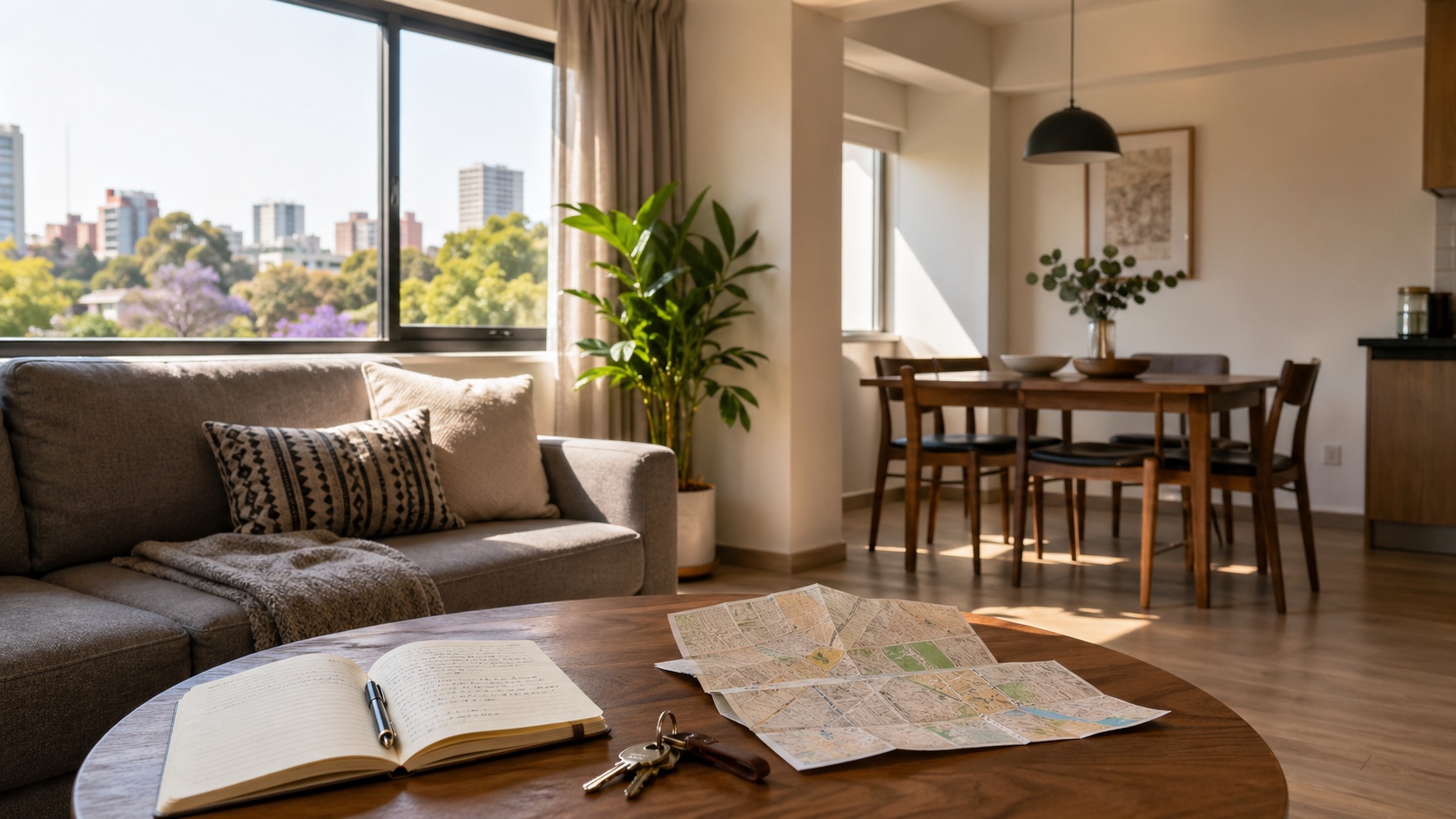
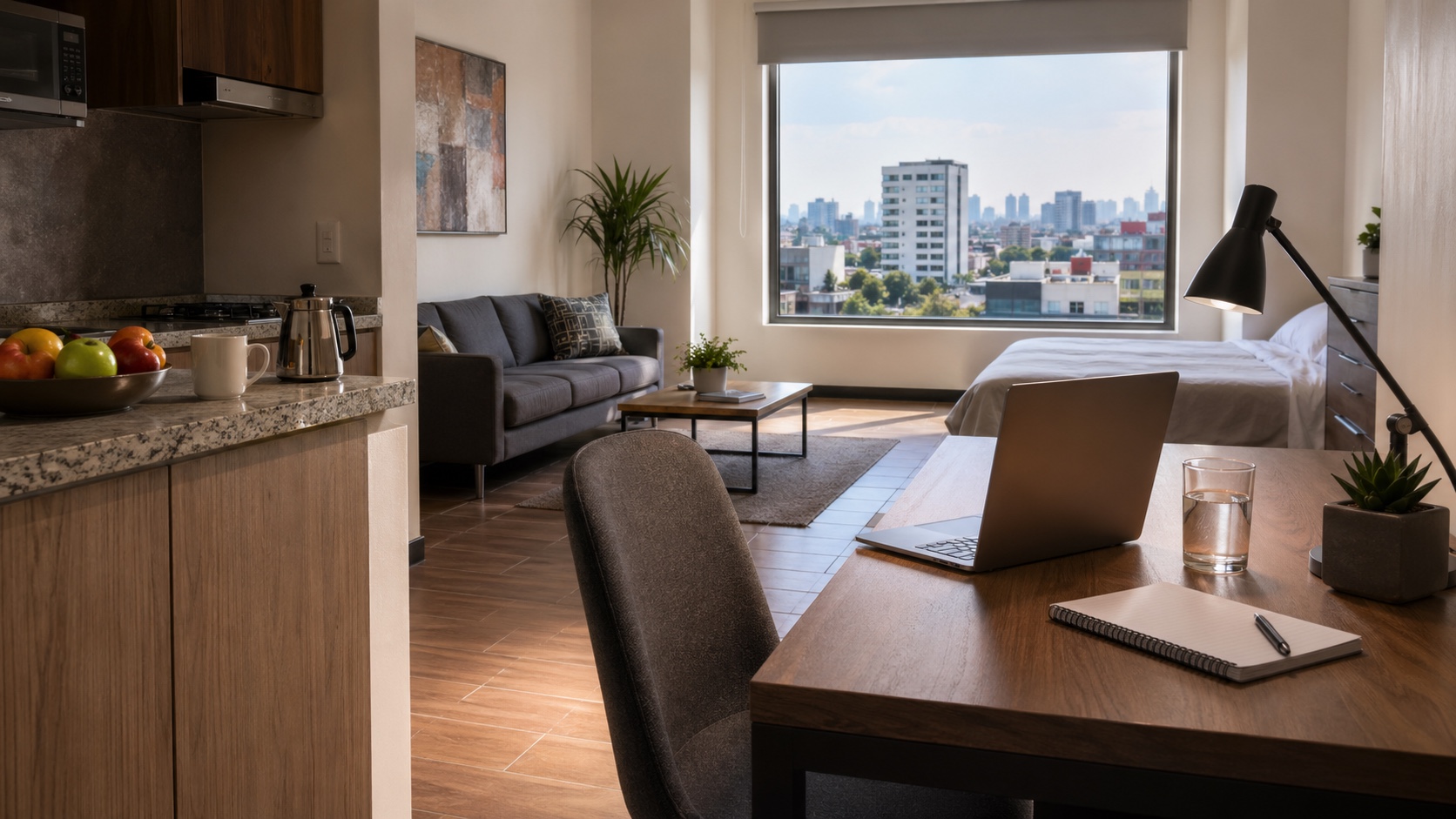
If you are searching for medical rotation housing in Mexico City, the real question is not only “which neighborhood is closest on Google Maps?” After two weeks, the better question is: where can you sleep, cook, do laundry, study, and repeat the hospital route without making every day harder than it needs to be?
For residents, fellows, medical students, interns, visiting clinicians, and hospital-adjacent teams, the central short list often becomes Narvarte, Doctores, and Roma Sur. All three can work. The difference is the kind of weekday routine each neighborhood supports for 30, 60, or 90 nights.
If you already know you need a furnished apartment near the central medical corridor, start with monthly apartments near hospitals in Narvarte and the broader hospital stays in Mexico City hub. If your search is tied to a longer clinical assignment or medical staff placement, also read long-stay housing near CDMX hospitals .
Spanish version: housing para rotacion medica en CDMX .
Quick Answer
Quick answer
For most 30+ night medical rotations in CDMX, Narvarte is usually the most balanced base: practical access to Centro Medico, Hospital General, Hospital Infantil, and central hospital corridors; a more residential rhythm; stronger kitchen, laundry, and rest routines; and furnished apartment formats that work for solo residents, two colleagues, or support families.
Doctores can win when your hospital, tower, or entrance is very close and the exact building is solid. Roma Sur works when you want a middle ground between Roma lifestyle and medical-corridor access, as long as the apartment is quiet and the route is realistic at your actual hours.
Do not book only by distance. Book by routine: hospital entrance, shift time, sleep, kitchen, laundry, desk, secure access, and flexibility if the medical calendar changes.
Narvarte vs Doctores vs Roma Sur at a Glance
Use this table as a first filter. The final decision depends on the exact address, hospital entrance, schedule, and available apartment.
Medical rotation housing comparison in CDMX
| Area | Best for | Main advantage | Risk to check |
|---|---|---|---|
| Narvarte | 30+ night rotations, residents, fellows, two colleagues, support families | Balance of hospital access, residential calm, daily services, and furnished apartment fit | Validate the exact route to the hospital at real shift hours |
| Doctores | Guests who need to be very close to Hospital General, Centro Medico, or another specific target | Potential proximity to hospitals and central transit | Highly block-dependent: building, noise, access, and late arrivals matter |
| Roma Sur | Students or residents who want Roma nearby without living in the busiest part of it | Compromise between local life, cafes, central routes, and relative Centro Medico access | Inventory varies; some blocks and avenues can be noisy |

What Changes When You Come for a Medical Rotation
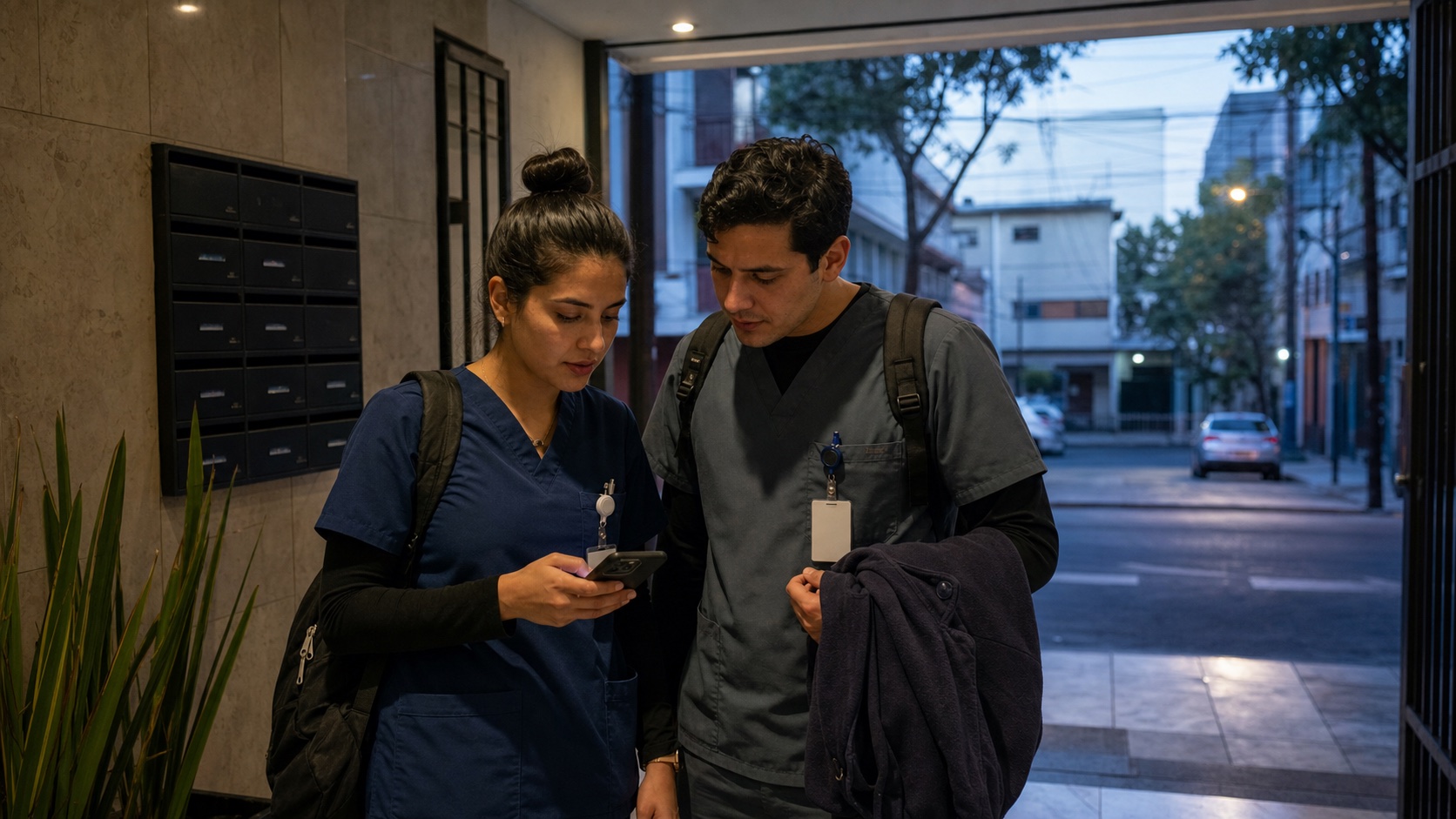
A rotation is not a normal Mexico City trip. You may leave before 6 AM, return after a long call, study, join an institutional call, wash scrubs, prepare simple food, or host a family member for a few nights.
That means the housing has to solve more than a bed:
- Repeatable route: not just “nearby,” but workable at your actual arrival and departure hours.
- Real rest: quiet bedroom, curtains, and ideally a protected bedroom orientation.
- Kitchen: stove, refrigerator, and basic tools so you are not dependent on eating out every day.
- Laundry: in-unit, in-building, or nearby laundry with a simple route.
- Work and study: usable desk, workable chair, stable Wi-Fi, and enough outlets.
- Secure access: clear entry if you arrive late or leave very early.
- Flexibility: rotations, calls, discharge dates, and clinical projects can move.
If you are comparing cost, do not look only at the nightly rate. A cheaper place can become expensive if you spend more on taxis, distant laundry, meals out, poor sleep, or mid-stay housing changes. For the broader setup comparison, read monthly furnished apartment vs hotel in Mexico City .
Narvarte: Best Balance for Most Rotations
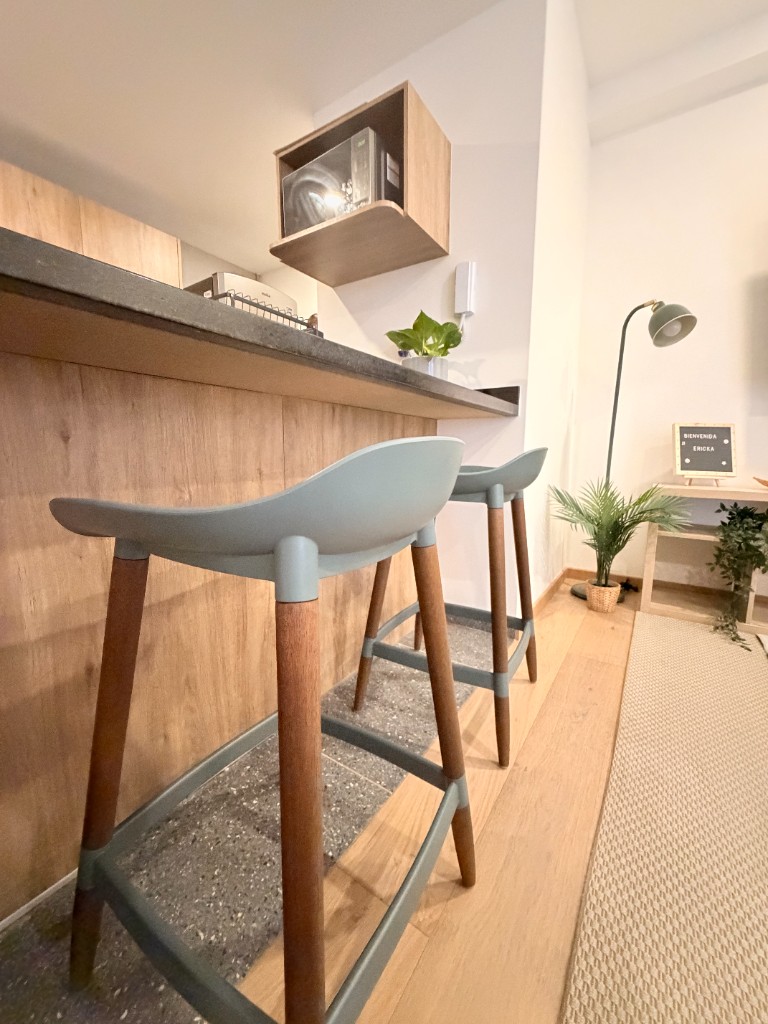
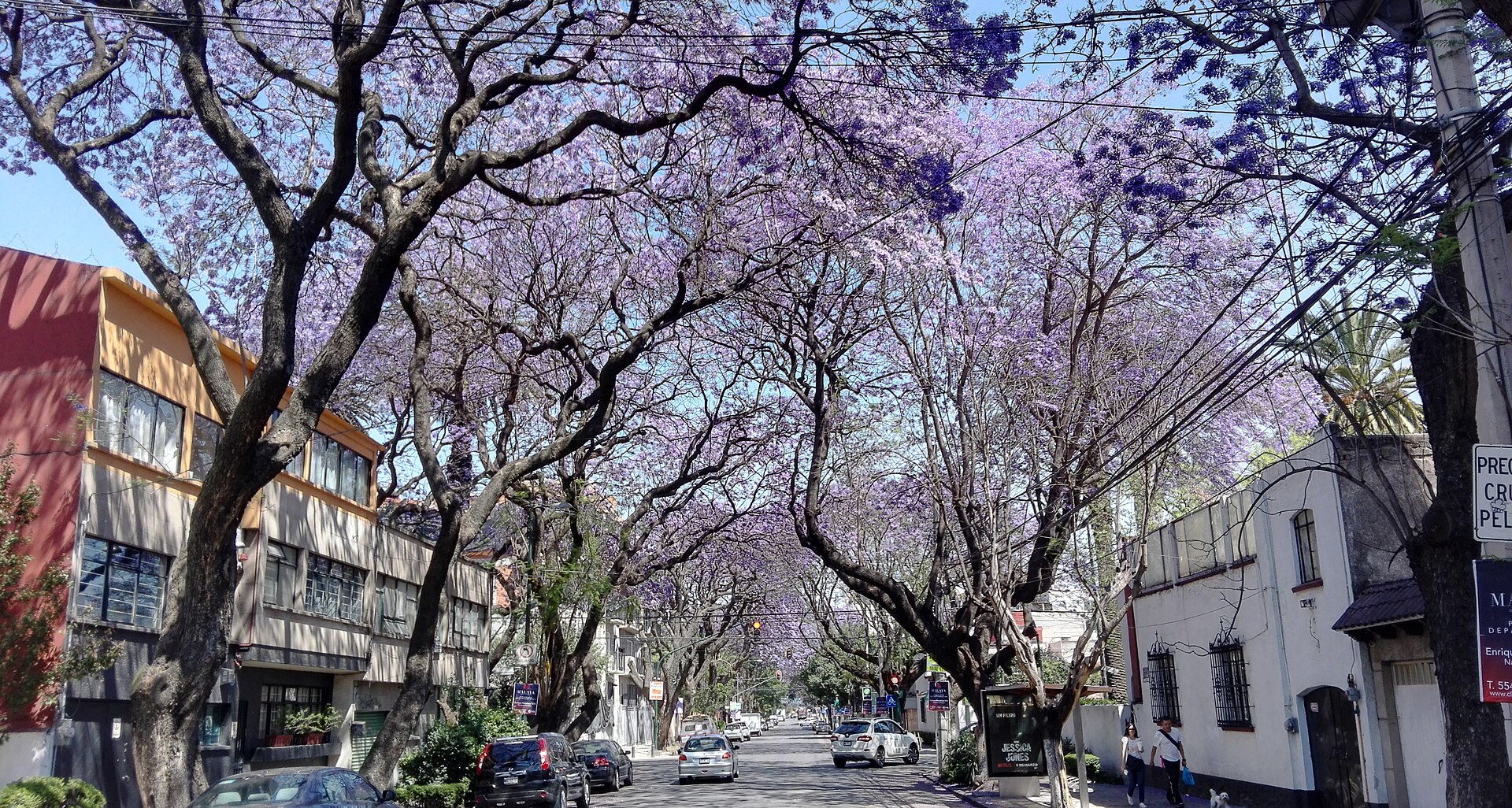
Narvarte works because it behaves more like a residential base than a visitor district. It has supermarkets, pharmacies, everyday food, Parque Delta, Metro, nearby Metrobús depending on the block, routes toward Centro Medico and Hospital General, and a calmer nighttime rhythm than nightlife-heavy areas.
For a medical rotation, its advantage is not only location. It is the whole stack:
- you can maintain a kitchen and laundry routine;
- there are options for solo residents, two colleagues, and family support stays;
- nights are often easier than on bar and restaurant corridors;
- monthly value is usually stronger than in visitor-heavy neighborhoods;
- you remain close enough to Roma, Condesa, Centro, and work areas when you need them.
Narvarte is especially strong if your stay is one to three months, if you need to recover between shifts, if you travel with another person, or if someone in the apartment will work remotely while you go to the hospital.
To move from comparison to inventory, open Narvarte hospital housing . For broader medical-stay context across the city, use hospital stays in Mexico City .
Doctores: Strong Proximity, But a Block-by-Block Decision
Doctores can look like the obvious answer if your hospital is inside or next to the neighborhood. For Hospital General de Mexico, some Centro Medico access points, clinics, and offices in the medical corridor, proximity can be valuable.
The issue is that Doctores cannot be evaluated as one uniform area. The experience changes by:
- exact block;
- building and access control;
- avenue, ambulance, workshop, or commercial noise;
- lighting and late arrival pattern;
- real distance to the hospital entrance you use;
- whether you can cook, do laundry, and study without friction.
Doctores may be the best choice if your routine is highly hospital-centered, your entrance is walkable, and you have verified the building, route, and access. But for 30+ nights, “closer” does not automatically mean “better.” An apartment ten minutes farther away in Narvarte can produce a better month if you sleep better, cook more easily, and avoid a difficult return route.
Roma Sur: Middle Ground if You Want Roma Without Roma Norte
Roma Sur works for guests who want part of the Roma experience while staying closer to the Narvarte edge and the Centro Medico corridor. For medical students or residents who want cafes, restaurants, and some social life, it can be a reasonable compromise.
Its advantages:
- access to Roma without necessarily living in the busiest part of it;
- routes through Insurgentes, Viaducto, and nearby ejes;
- more street life than Narvarte on some blocks;
- a workable balance between hospital, study, and rest.
The tradeoffs are inventory, noise, and price. A well-oriented Roma Sur apartment can be excellent. An apartment on an avenue, near a noisy restaurant, or with a weak work chair can become difficult quickly.
Choose Roma Sur if the rotation does not require extremely early departures every day, if you want more walkable cafe and food options, and if the specific apartment is protected from noise.

How to Choose by Guest Type
Solo resident or fellow: prioritize sleep, hospital route, laundry, and desk. Narvarte is usually the first filter. A private-room setup may be enough if budget matters more than having the entire apartment.
Two residents or colleagues: look for two real bedrooms, privacy, a desk or work table, and clear visitor rules. Narvarte often works better than a hotel because it separates sleep, study, and cooking.
Medical student: if the rotation is intense, choose transport and sleep before social life. Roma Sur can work if you want more neighborhood energy, but confirm that the hospital route does not drain you every day.
Patient family supporting a rotation or treatment: prioritize kitchen, laundry, waiting space, simple routes, and calm evenings. Narvarte is often more practical than a hotel zone if the stay extends.
University, hospital, or medical vendor team: review invoicing, receipts, variable dates, capacity, Wi-Fi, and communication before payment. If an institution is involved, do not leave documentation questions until after booking.
Local Example: Rotation Near Centro Medico or Hospital General
Imagine a six-week rotation with early entries, several long days, and evening calls. On the map, Doctores may look closer. But the complete routine includes buying water, cooking simple meals, washing clothes, sleeping after call, studying, and maybe hosting a family member for a night.
In that case, compare like this:
- Mark the exact hospital entrance, not only the campus name.
- Test the route from Narvarte, Doctores, and Roma Sur at the real arrival time.
- Check whether the late return feels practical.
- Confirm whether the apartment has realistic kitchen and laundry access.
- Ask about Wi-Fi, desk, bedroom noise, and after-hours check-in.
- If the rotation can shift, confirm change policy before payment.
For a rotation tied to the central medical corridor, long-stay housing near CDMX hospitals explains how to think from the hospital entrance outward. For availability and commercial options, Narvarte hospital housing is the next step.
Booking Checklist
Before booking housing for a medical rotation in CDMX, confirm:
- hospital, tower, entrance, or service area you will use most often;
- likely arrival and departure hours;
- whether you will use Metro, Metrobús, Uber/DiDi, or walking;
- bed configuration and privacy;
- desk, chair, Wi-Fi, and outlets;
- kitchen, refrigerator, and cooking basics;
- laundry in-unit, in-building, or nearby;
- bedroom noise and orientation;
- early or late building access;
- change policy if the rotation extends or ends early;
- receipt, CFDI, or documentation if an institution is paying.
This article is lodging guidance, not medical advice or a commute promise. Validate routes, clinical constraints, and schedules with your hospital, school, program, or care team.
For monthly stays
Compare furnished housing near CDMX hospital corridors
Bottom Line
For most residents, fellows, and students on a medical rotation in Mexico City, Narvarte is the best starting point. It is not always the closest spot on the map, but it usually offers the strongest balance of hospital access, rest, daily services, monthly value, and furnished apartment fit.
Choose Doctores if exact proximity to your hospital matters more than everything else and you have verified the block, building, and access. Choose Roma Sur if you want a more Roma-adjacent daily life and your schedule can handle a little more movement.
When you move from research to booking, start with Narvarte hospital housing , compare the hospital stays in Mexico City hub, and use long-stay housing near CDMX hospitals if your priority is a longer stay for medical staff, family support, or a rotation.
FAQ
What is the best neighborhood for a medical rotation in Mexico City?
For many 30+ night rotations, Narvarte is the strongest starting point because it balances access to the central medical corridor, residential calm, kitchen and laundry routines, furnished apartment options, and better rest than more active zones. Doctores can win on exact proximity to certain hospitals, while Roma Sur works when you want a Roma-adjacent base with practical hospital access.
Is Doctores better if my hospital is there?
Doctores can be the most convenient option when the exact hospital entrance is clearly nearby and the building is well located. For a longer rotation, evaluate the exact block, noise, late-night access, building security, kitchen, laundry, and the real route at shift hours before choosing it.
Does Roma Sur work for medical students or residents?
Yes. Roma Sur can work for students, residents, and fellows who want to stay near the Roma area while keeping reasonable access to the Centro Medico corridor. The key is confirming that the apartment is quiet and that the hospital route does not depend on a difficult avenue at peak hours.
What should I confirm before booking housing for a medical rotation?
Confirm the exact hospital entrance, commute hours, bedroom noise, Wi-Fi, desk, kitchen, laundry, off-hours building access, change policy if the rotation shifts, and whether you need a receipt, CFDI, or institutional documentation.
Is a furnished apartment or hotel better for a rotation?
For a few days, a hotel can be simpler. For 30+ nights, a furnished apartment usually works better because it supports cooking, laundry, privacy, studying or remote work, and a repeatable on-call routine without depending on daily hotel services.