“Is Mexico City safe?” is the question almost every long-stay guest asks first, and it’s the wrong question. Mexico City safety is neighborhood-dependent, not city-wide. A monthly stay in Roma Norte feels nothing like the headlines, and where you base yourself matters far more than the city’s overall reputation. This guide goes neighborhood by neighborhood, for someone living here for weeks rather than a tourist on a day trip.
If you already know you want a calm, walkable base, the furnished apartments in Mexico City hub focuses on exactly these neighborhoods, and the Condesa vs Roma vs Polanco comparison goes deeper on the trade-offs. Español: ¿Es segura la Ciudad de México para una estancia mensual?
Why “is CDMX safe” has no single answer
Mexico City is enormous: more than 20 million people across dozens of very different areas. Aggregate crime statistics blend neighborhoods that have nothing in common, the same way a single “is New York safe” number would blend Midtown with its roughest outer blocks. The neighborhoods where remote workers and long-stay guests base themselves are a small, central, well-served slice of the city, and daily life there is calm.
Two other things distort the picture from abroad. Most international headlines about violence in Mexico describe regions hundreds of kilometers from the capital, and the city itself has a heavy security presence in its central boroughs. The risks that do exist for visitors (phone snatching, pickpocketing on crowded transit, card skimming at sketchy ATMs) are opportunistic and largely avoidable with habits. The useful question is whether a particular neighborhood is right for a monthly stay.
Is Mexico City safe for a monthly stay? Why a month is different from a week
A monthly stay tilts the safety odds in your favor, and first-time visitors consistently underestimate this. Tourists fall into the riskiest patterns by default: unfamiliar streets, phones out for navigation, cash-heavy days, taxis hailed at the curb, and one crowded attraction after another. A monthly guest sheds almost all of that within the first week.
By day ten you know which streets you walk, which market you shop at, which café you start the day in, and which route gets you home after dinner. You stop navigating with your phone in your hand. Vendors and baristas start recognizing you, doormen know your face, and your routine runs through the same well-lit, well-trafficked corridor every day. The predictability that makes a monthly stay productive also makes it safer than a week of improvised tourism.
The neighborhoods below sit almost entirely inside the Cuauhtémoc and Benito Juárez boroughs, the central districts where the city concentrates its services, transit, and security presence. That’s why remote workers cluster there, and why the practical answer to “is Mexico City safe for a monthly stay” comes down to your base rather than citywide statistics.
The neighborhoods that work for a monthly stay
Roma Norte
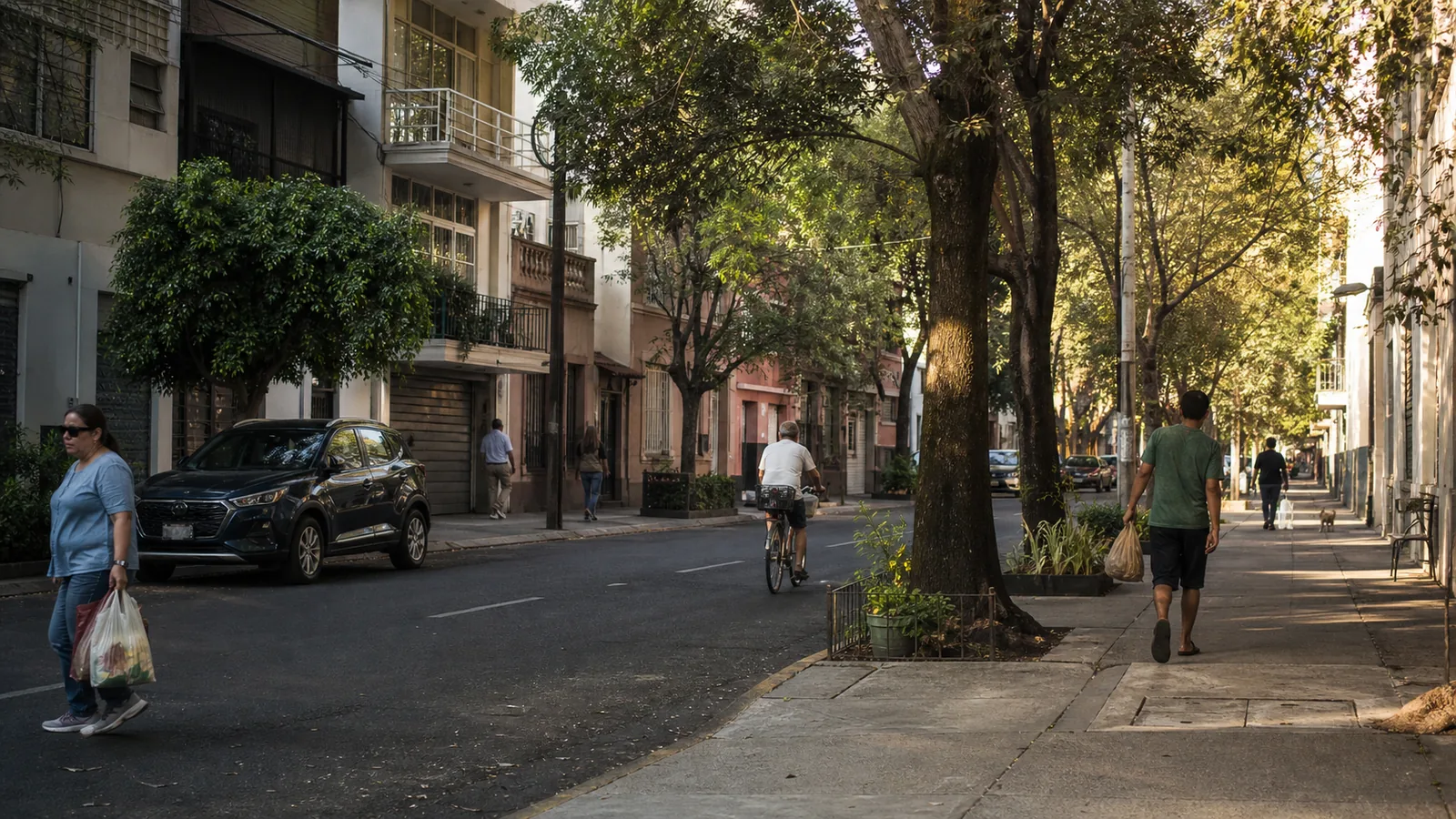
Roma Norte is the default for good reasons: tree-lined streets, specialty coffee on every corner, easy walking day and evening, and a dense mix of cafés, restaurants, and coworking. Main streets like Álvaro Obregón and Orizaba stay lively into the night, and that constant foot traffic is one of the most underrated safety features a neighborhood can have. It suits guests who want energy and a full street life within walking distance. If that’s you, Roma Norte monthly stays shows what a work-ready furnished base there looks like.
Condesa
Roma’s greener, calmer neighbor, with parks (Parque México, Parque España), a relaxed pace, and the same walkability. Evening dog walkers and runners keep the park loops busy until late. It fits if you want the Roma lifestyle a notch quieter, and the Roma Norte vs Condesa monthly comparison weighs the two for a 30-night stay.
Narvarte
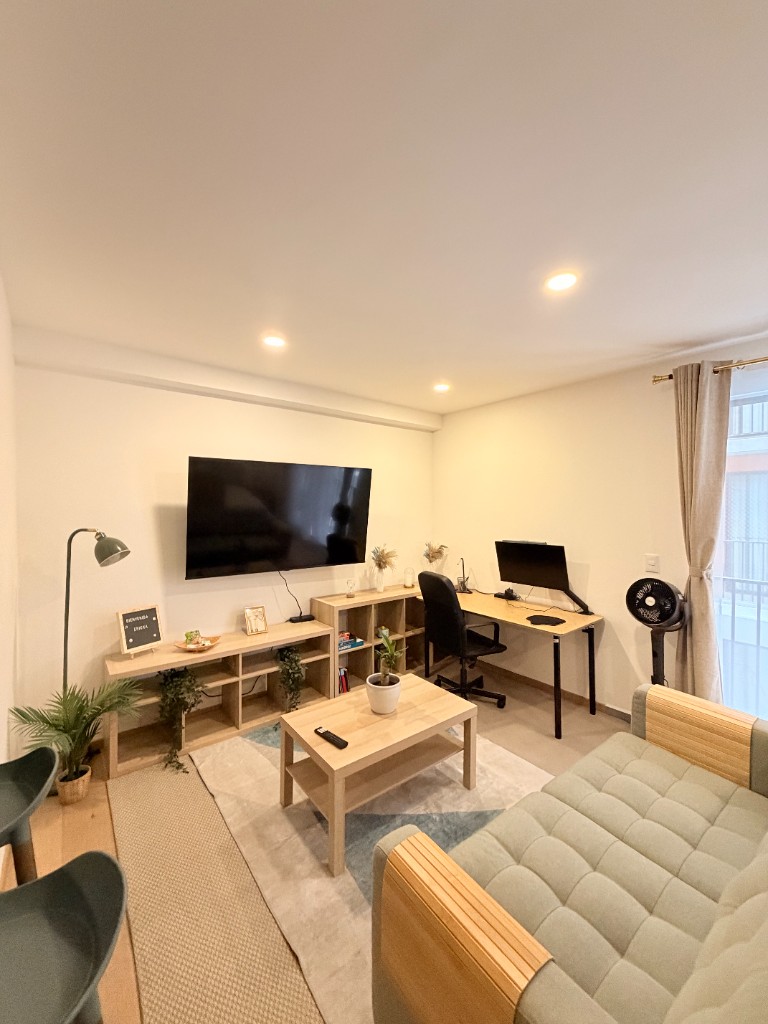
Quieter and residential, and the pick for a more settled monthly rhythm. Narvarte has a strong local market scene, everyday services, and a practical location near the Centro Médico hospital corridor, which is why it’s popular with medical staff and hospital-stay guests . It has less nightlife: the “risk profile” of a Tuesday night in Narvarte is a taquería closing at 11pm. The full Narvarte remote workers guide covers the blocks, cafés, and routine in detail, and Narvarte furnished monthly apartments shows real monthly-ready units.
Del Valle
Just south of Narvarte and even more residential, with wide avenues, parks, supermarkets, and a population of local families and professionals rather than visitors. There’s little to do at 1am, which is why evenings are so quiet. For a monthly stay built around work, gym, and groceries, it’s one of the lowest-friction bases in the city. The Del Valle monthly cost and routine guide maps a full month there with a budget.
Polanco
Upscale, orderly, and quiet, with a concentration of restaurants, offices, and embassies, plus the private security presence that comes with them. It costs more and feels less lived-in than Roma or Narvarte, but it’s a safe, low-friction base if polish is your priority.
Coyoacán
Further south, historic, and village-like. Beautiful for a slower stay, though it’s further from the central coworking cluster and a longer ride from most of the city’s remote-work infrastructure.
For a fuller ranking of these areas by work-life criteria as well as safety, see the best neighborhoods in Mexico City for remote workers in 2026 .
What a safe monthly base costs
Safety in CDMX correlates with centrality, and centrality costs money, though far less than most arriving guests expect. Typical furnished monthly rents in the neighborhoods above, as of mid-2026:
| Neighborhood | 1BR furnished (monthly) | Character |
|---|---|---|
| Narvarte | $22,000–$32,000 MXN | Residential, quiet nights, best value |
| Del Valle | $23,000–$34,000 MXN | Residential, larger units, calm |
| Roma Norte | $28,000–$42,000 MXN | Café culture, busy streets, walkable |
| Condesa | $30,000–$46,000 MXN | Parks, calm evenings, expat demand |
| Polanco | $40,000–$60,000 MXN | Upscale, private security, premium |
The “safety premium” between the best-value calm neighborhood (Narvarte) and the most famous one (Roma Norte) is real but modest: roughly $6,000–$10,000 MXN per month, which buys café density rather than extra safety. Going cheaper by moving to the periphery is a false economy. You might save $8,000 MXN in rent, then pay it back in long transit rides, less walkability, and exactly the kind of isolation that creates risk. That makes basing centrally the single biggest safety decision you make.
What daily life actually looks like
On a monthly stay in these areas, an ordinary day is unremarkable: coffee, work from the apartment or a café, groceries at a local market, dinner out, an evening walk on a main street. Laptops out in cafés are the norm in Roma and Condesa, and nobody looks twice. The friction points are the same as in any big city, and normal urban awareness handles them.
Women staying solo consistently report that the same neighborhood ranking works for them, with a few extra considerations around street harassment and late-night transit. The guide to the best Mexico City neighborhoods for women traveling solo covers those specifics.
Getting around safely
- Uber and Didi are the default. Both are cheap (most central rides run $60–$150 MXN), tracked, and cashless. Use them at night instead of street taxis; the Uber vs Didi guide covers which app wins when.
- The Metro and Metrobús are fine by day on the central lines, with the normal big-city caveat: rush hour is crowded, and crowded is where phones disappear. Keep your phone in a front pocket, and note that the first cars of Metro trains are reserved for women and children at peak times.
- Walking is the point of basing in Roma, Condesa, or Narvarte. Day and evening walks on main streets are routine, and the only adjustment after dark is preferring lit avenues over empty side streets.
- From the airport, use an authorized taxi stand or order an Uber from the terminal, and don’t accept rides offered in the arrivals hall.
Money, ATMs, and the scams worth knowing
For a central monthly stay, the realistic risk is small, avoidable losses rather than serious crime. The short list:
- Use ATMs inside bank branches or supermarkets, ideally by day. Skip standalone street ATMs, and always choose to be charged in pesos, not your home currency.
- Contactless payment is widely accepted in the central neighborhoods. Keep one card and a modest amount of cash on you rather than everything at once.
- The most common street crime in central CDMX is opportunistic phone snatching. Texting while walking near an intersection is the classic setup, so step to the side of the sidewalk instead.
- Overcharging is rare in established restaurants and cafés, but check the bill in tourist-heavy pockets of Centro. Tipping is 10–15%.
- If you’re booking a monthly rental, the real “safety” risk is an apartment scam: a listing that doesn’t exist or a bait-and-switch address. Book through platforms with recent reviews or a host with a verifiable track record, confirm the exact street address before paying, and video-tour the actual unit.
Simple habits that keep it uneventful
Four habits are enough:
- Use Uber or Didi late at night, not street taxis.
- Keep your phone out of sight when walking, especially at intersections.
- Stick to main, well-lit streets after dark; the central neighborhoods make this easy.
- Base yourself centrally. Staying far out to save money is the single choice that adds the most risk and hassle, and a central, walkable apartment removes it by default.
Constant vigilance isn’t on the list, which surprises people. After a week, most monthly guests report that Roma, Condesa, Narvarte, and Del Valle feel like living in a busy, friendly city, because that’s what they are.
A safe setup: what to sort out in your first 48 hours
Most of the friction a monthly guest runs into happens in the first two days, before the routine exists. Handle five things early and the rest of the month runs on rails:
- Get a local SIM or eSIM on arrival so maps, Uber, and WhatsApp work without hunting for Wi-Fi. The Mexico City SIM card guide covers the airport vs. convenience-store options and what a month of data costs.
- Set up both Uber and Didi before you need them, with a card attached, so a late night never turns into a street-taxi decision.
- Walk your block in daylight on day one: note the nearest pharmacy, supermarket, ATM inside a bank branch, and the lit route home from the closest main avenue.
- Confirm building access rules: night doorman hours, gate codes, and who to call if a code fails at 1 a.m. Ask at booking time as well as on arrival; the monthly apartment checklist has the exact questions to send a host before paying.
- Save the essentials in your phone: your exact address in Spanish, the building’s WhatsApp contact, and 911 (which works nationally, with English-capable operators in tourist-heavy areas).
This is the same setup a careful person does in any large city. In a central CDMX neighborhood, once it’s done, it’s done, and the rest of the month is groceries, work, and deciding where to eat. For a fuller landing sequence covering errands, jet lag, and first-week logistics, see the first week in Mexico City as a remote worker .
Areas long-stay guests skip
Tepito and the rougher fringes of the Centro/La Merced area are not places to apartment-hunt, and parts of Doctores are hit-and-miss block by block (though its border with Roma keeps improving). The far eastern and northern peripheries add long commutes on top of higher incident rates. None of this affects a central monthly stay: these areas are nowhere near the neighborhoods above, and a remote worker’s routine has no reason to pass through them.
The base is the decision
Safety in Mexico City comes down to one choice you make before you arrive: where you stay. A furnished apartment in Roma Norte, Condesa, Narvarte, or Del Valle puts you in a walkable, central, well-served pocket of the city where a monthly stay is calm. Get that right and the rest is ordinary big-city common sense.
For a vetted base in these neighborhoods, browse Mexico City rentals monthly or, for a quieter residential stay, furnished apartments in Narvarte . You can check the live calendar and send a message before you commit.