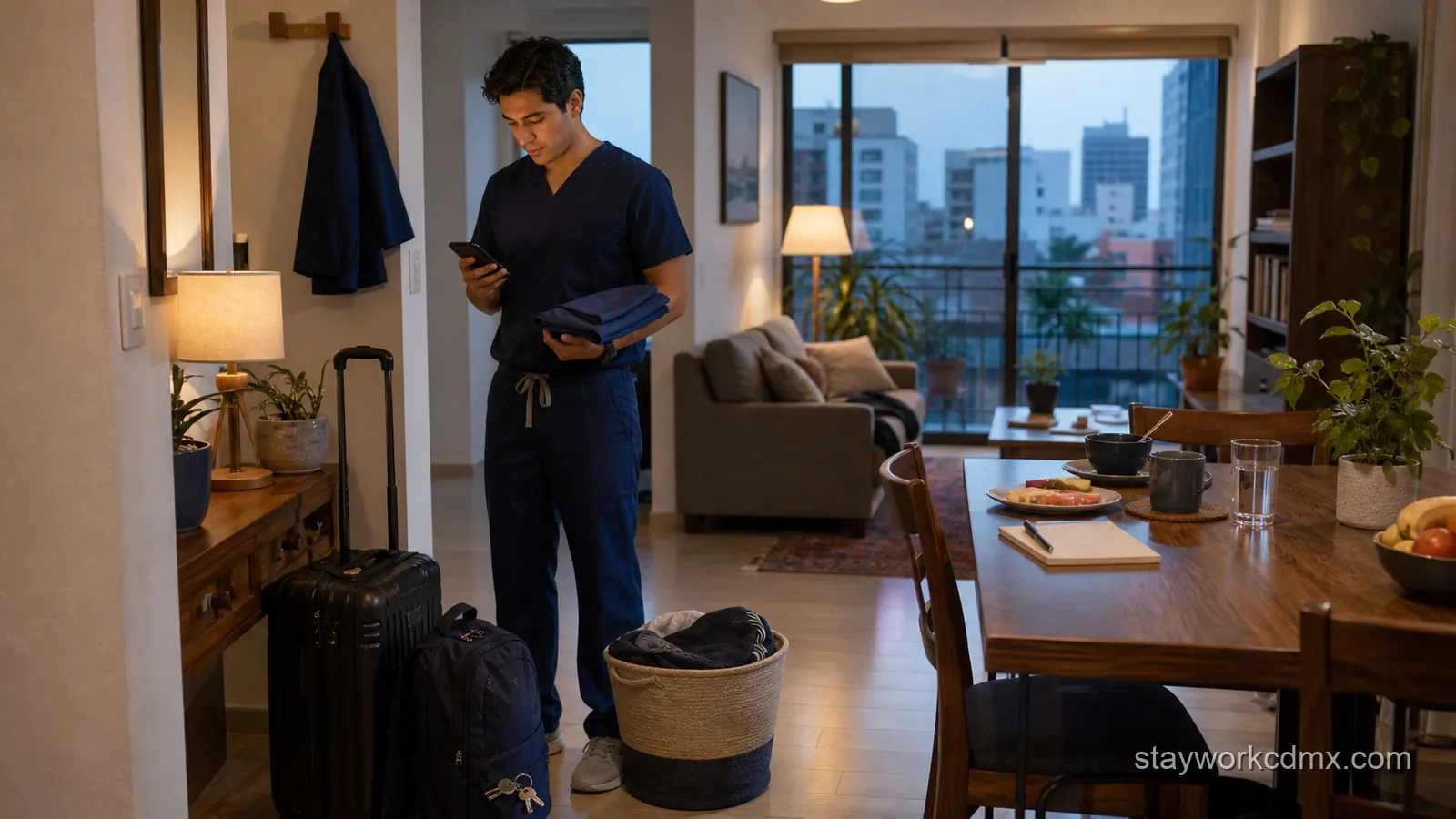
You’re a resident or fellow rotating through a hospital in Mexico City for 3–12 months, possibly your first time training outside your home country. You’re excited and nervous, and you have no idea where to live, because hospital resident housing in Mexico City is rarely handled well by default.
Coordinators may hand you a list of apartments (often expensive, inconvenient, or both) because that’s simpler for them than researching what suits a resident’s schedule. The polished place on the official list isn’t necessarily where you want to sleep after a 24-hour shift.
This guide covers where residents actually live, what’s realistic budget-wise in 2026 pesos, and how to survive month one.
Where residents actually live: hospital resident housing by neighborhood
Most residents share a furnished apartment and spend $16,000–$22,500 MXN per person per month on rent.
Hospitals pay residents in pesos or a modest USD stipend, and Mexican training budgets don’t include US-style housing allowances. Solo living in a furnished one-bedroom costs roughly $22,000–$32,000 MXN per month in Narvarte and more elsewhere. Splitting a two-bedroom brings that down to a level a stipend can sustain, with money left over.
Narvarte: the resident favorite
Narvarte is where residents cluster, and the reasons are practical:
- Centro Médico is 12–20 minutes away by car or Metro. Almost every major rotation sends you to the central medical corridor at some point, and west Narvarte is walking distance from the Siglo XXI complex.
- A furnished 2-bedroom runs $32,000–$45,000 MXN per month, or $16,000–$22,500 MXN each when shared.
- It’s quiet enough for real sleep after night shifts: the residential blocks have no bar district, and weeknights wind down by 10–11 p.m.
- Other residents live here, so you see familiar faces, compare notes, and have people around who understand the grind.
- Supermarkets, gyms, and pharmacies are within walking distance, plus Metro Línea 3 (Etiopía, Eugenia) and two Metrobús corridors.
Browse actual inventory on the Book Direct page, or read the full Narvarte guide for neighborhood context.
Roma Norte: if you want walkability and social life
Roma Norte is tempting: it’s walkable and full of young professionals and other internationals. The trade-offs:
- Cost: $36,000–$50,000 MXN per month for a furnished 2-bedroom, or $18,000–$25,000 MXN each when split. Higher than Narvarte, still far cheaper than equivalent US cities.
- Commute: 20 minutes to Centro Médico is typical; Hospital General and Hospital Infantil add a few minutes depending on your exact block.
- Noise: weekend bars and weeknight restaurant crowds. If you’re sound-sensitive during recovery sleep, take this seriously.
- Community: you will not feel isolated, with cafés, coworking, and social plans at your door.
Pick Roma Norte if you want to socialize on evenings and weekends and you’re comfortable paying a premium for walkability. See Roma Norte monthly stays for available units, or the Roma Norte hub for the neighborhood overview.
Condesa: quieter than Roma, less touristy
- Cost: $34,000–$46,000 MXN per month for a furnished 2-bedroom, or $17,000–$23,000 MXN each when shared.
- Vibe: Parque México and Parque España at the center, with a mix of families, professionals, and young people. Less party-driven than Roma Norte.
- Commute: 20–30 minutes to Centro Médico, manageable but the longest of the central options.
Pick Condesa if you want walkability with more peace than Roma. If you’re weighing those two against each other, the Roma Norte vs Condesa monthly stay comparison breaks down the trade-offs block by block.
Del Valle: the quiet-budget sleeper
Directly south of Narvarte, Del Valle has a similar residential calm, with slightly larger apartments and tree-lined streets. Commutes to Centro Médico run 15–25 minutes. Rent sits close to Narvarte’s range, sometimes a touch higher for newer buildings. If a disciplined budget and quiet nights matter more than being at the center of anything, the Del Valle monthly cost and routine breakdown shows what a realistic month there looks like.
What a resident’s month actually costs (2026 MXN)
| Line item | Shared 2BR (Narvarte) | Solo 1BR (Narvarte) |
|---|---|---|
| Rent (your share) | $16,000–$22,500 MXN | $22,000–$32,000 MXN |
| Utilities + Wi-Fi (if not included) | $0–$1,500 MXN | $0–$1,500 MXN |
| Groceries | $3,500–$5,000 MXN | $3,500–$5,000 MXN |
| Eating out / hospital-area lunches | $2,000–$4,000 MXN | $2,000–$4,000 MXN |
| Transit (Metro card + occasional Uber) | $800–$1,500 MXN | $800–$1,500 MXN |
| Phone + misc | $1,000–$1,800 MXN | $1,000–$1,800 MXN |
| Realistic total | $24,000–$31,000 MXN | $30,000–$45,000 MXN |
Most furnished monthly stays include utilities and Wi-Fi in the quote, but confirm that in writing. A Metro ride is $5 MXN flat, which is why the transit line stays small even with daily commutes.
Stipends vary widely. Some programs pay the peso equivalent of $1,400–$1,500 USD per month (roughly $25,000–$27,000 MXN), others more or less, and most offer no housing allowance. After taxes, count on keeping about 70% of the stated figure. Going by the table, sharing housing in Narvarte is sustainable on a stipend; solo living in Roma Norte usually is not.
Commute from apartment to hospital: real times
Centro Médico Nacional Siglo XXI (the most common rotation destination):
From Narvarte:
- By car or Uber: 12–20 minutes depending on traffic; short rides run roughly $60–$90 MXN.
- By Metro: walk to Etiopía or Eugenia (Línea 3), ride two or three stops to Centro Médico station, and walk to your building entrance. About 20–25 minutes door to door.
- On foot: from west Narvarte blocks near Avenida Cuauhtémoc, the complex is a 10–15 minute walk.
From Roma Norte:
- By car: 15–25 minutes.
- By Metro/Metrobús: Metrobús Línea 1 south plus a short transfer, or a direct ride to Centro Médico station via Línea 9 from nearby stations. Plan 25–30 minutes.
From Condesa:
- By car: 20–30 minutes.
- By Metro: similar to Roma Norte, 25–35 minutes.
Don’t obsess over a 5-minute difference; any of these neighborhoods gets you there. These commute habits matter more:
- Don’t drive solo. Uber, Didi, or Metrobús beat parking stress near the hospital every time.
- Map the exact address. Route from the apartment’s front door to the hospital entrance you’ll use, not from neighborhood pin to neighborhood pin.
- Do a dry run. Take the commute yourself before day one and arrive 20 minutes early for your first shift.
Hospital General de México and Hospital Infantil
Rotating at Hospital General de México or Hospital Infantil de México Federico Gómez instead of Centro Médico changes less than you’d think: both sit in Colonia Doctores, on the same central medical corridor, within a few blocks of each other.
- From Narvarte: 10–20 minutes by car; Metrobús Línea 3 serves the Hospital General stop directly.
- From Roma Norte/Condesa: 15–30 minutes depending on traffic.
If you’ll rotate between hospitals, Narvarte remains the smart base because it’s roughly equidistant from the whole corridor. Roma and Condesa add about 10 minutes to some routes but stay reasonable. For living even closer to the hospitals, see the Doctores hospital housing guide .
Handling the first month
Week 1: don’t stress — just sleep and show up
You’ve moved to a country where you may not speak the language perfectly, you don’t know the hospital yet, and you’re adjusting to elevation (CDMX sits at 2,240 m / 7,350 ft, and the mild altitude effect is real). Week-one priority: arrive on time and sleep 8 hours, every day. Exploring, optimizing, and hunting for the best café can wait.
Week 1 checklist:
- Arrive at the apartment; test Wi-Fi and utilities
- Walk to the hospital entrance once, so you’re not lost on day one
- Find a supermarket (Soriana, Chedraui, Walmart Express, or a neighborhood market)
- Get a local SIM (~$200–$500 MXN for a month of generous data)
- Sleep
Weeks 2–3: establish basic routines
Now you have your bearings.
- Find a gym or yoga studio now instead of waiting until week six, when you’re already worn down.
- Pick your café or lunch spot somewhere between apartment and hospital.
- Connect with other residents. Ask people at the hospital where they live, and join the resident WhatsApp group if one exists.
- Open a bank account, which you’ll need for payroll. Ask HR for guidance; BBVA or Santander can usually set you up quickly with a passport and an employment letter.
- Get your RFC (Mexican tax ID) if your program requires it. HR can guide you, or start the process online via SAT.
Week 4 onward: adjust and iterate
By week four you’re settled. Now optimize: batch-cook on your day off, learn when you naturally crash and wake, find the quiet café for studying, and lock in the weekly rhythm that makes months two through twelve feel sustainable.
Mental health during rotations: the unspoken part
Medical training is brutal, and more so in a foreign country.
What to expect:
- Isolation creeps in fast. Week one you’re excited. By week three you realize you haven’t had a real conversation outside the hospital.
- Night shifts wreck sleep. You’ll sleep at odd hours, struggle with sunlight, and feel off for weeks.
- Homesickness hits unpredictably: a food or a street corner, and suddenly you miss home hard.
- Burnout arrives faster in a foreign setting. You can’t decompress by driving to a familiar place, and everything is new and effortful.
Prevention (non-negotiable):
- Find an English-speaking therapist in Mexico City through an online platform or local referral, and show up.
- Exercise at least three times a week: gym, yoga, or running laps at Parque Delta or Parque España. Treat it as medicine.
- Schedule friend time like work rounds (Tuesday coworking, Friday dinner, Sunday language exchange) and treat it as unmissable.
- Video-call your family every week, no exceptions.
- Take weekend trips to Teotihuacán, Xochimilco, or Puebla. You’re in Mexico, so see it.
Warning signs you need support include sleeping 10+ hours on days off, not leaving the apartment on non-work days, a week of nothing but delivery food, or recurring thoughts of “I can’t do this.” If any of these sound familiar, tell someone: your program director, another resident, or a therapist. The thoughts are real but not permanent.
The furnished apartment advantage for residents
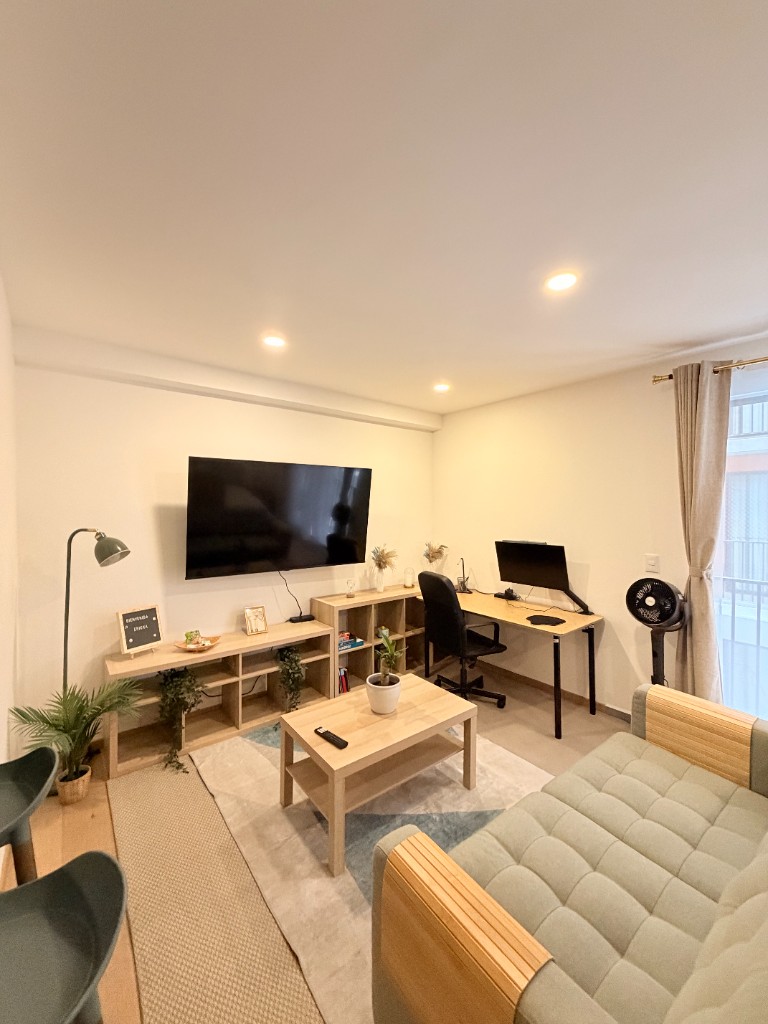
For a rotation, a furnished apartment is the practical default:
- Kitchen: you cook. Hospital cafeterias and takeout for every meal drain both money and health.
- Laundry: in-unit or in-building. Scrubs, towels, and basics rotate constantly, and hand-washing in a sink is not a plan.
- Space: your own real bedroom. Two residents sharing need two actual sleeping rooms, not a sofa presented as one.
- Wi-Fi: already installed and fast, so you don’t wait weeks for an installation appointment.
- Flexibility: monthly terms. If your rotation ends early or extends, you’re not locked into a 12-month lease, and you skip the fiador (local guarantor) requirement that traditional leases impose on foreigners.
Learn more about furnished apartments for medical residents .
First-month checklist for medical residents
Before you arrive:
- Confirm the apartment address and written terms with your program or provider
- Ask a resident who’s done the rotation: “Where did you live? Would you do it again?”
- Save the hospital contact list (attending, coordinator, HR)
Days 1–7:
- Test apartment Wi-Fi and utilities
- Walk the route to the hospital (dry run)
- Get a phone SIM
- Locate the nearest supermarket and pharmacy
- Sleep 8 hours every night
Weeks 2–3:
- Join a gym or studio
- Find a café or lunch spot near the hospital
- Open a bank account (passport + employment letter)
- Start the RFC process if required
- Connect with other residents
Week 4+:
- Learn a grocery-and-cooking rhythm
- Protect a weekly therapy or support-group slot
- Plan a weekend trip
- Lock in the exercise routine
Next steps
To find housing, contact us with:
- Your rotation hospital and expected arrival/departure dates
- Your co-resident’s name if you’re splitting an apartment (coordinate together)
- Preferred neighborhood: Narvarte for quiet value, Roma Norte for social life, Condesa for balance, Del Valle for maximum calm
- Your budget comfort level in MXN
We’ll match you with available furnished apartments and coordinate your move-in.
Related reading:
- Hospital housing in Mexico City : the full hospital-stay guide
- Furnished monthly apartments in Narvarte : the resident-favorite inventory
- Furnished apartments in Mexico City : citywide options
- Moving to CDMX for work : first-month logistics
- Narvarte hospital housing : Narvarte specifics for medical stays
You’re about to do something hard. Find a good apartment, lean on other residents, and take care of your mental health. Rotations are brutal but survivable, and Mexico City is an incredible place to do one.