You’re planning a move to Mexico City, and the first real decision in the apartment hunt is furnished vs unfurnished apartments in Mexico City. Each option has costs you see (rent, deposits) and costs you don’t (furniture buying, setup headaches, hidden commutes to logistics). This guide compares the 2026 trade-offs with cost examples, then covers neighborhoods and how to decide.
TL;DR: Furnished works for moves under 6 months or if you hate logistics. Unfurnished wins if you’re staying put for 12+ months and want the lower monthly cost.
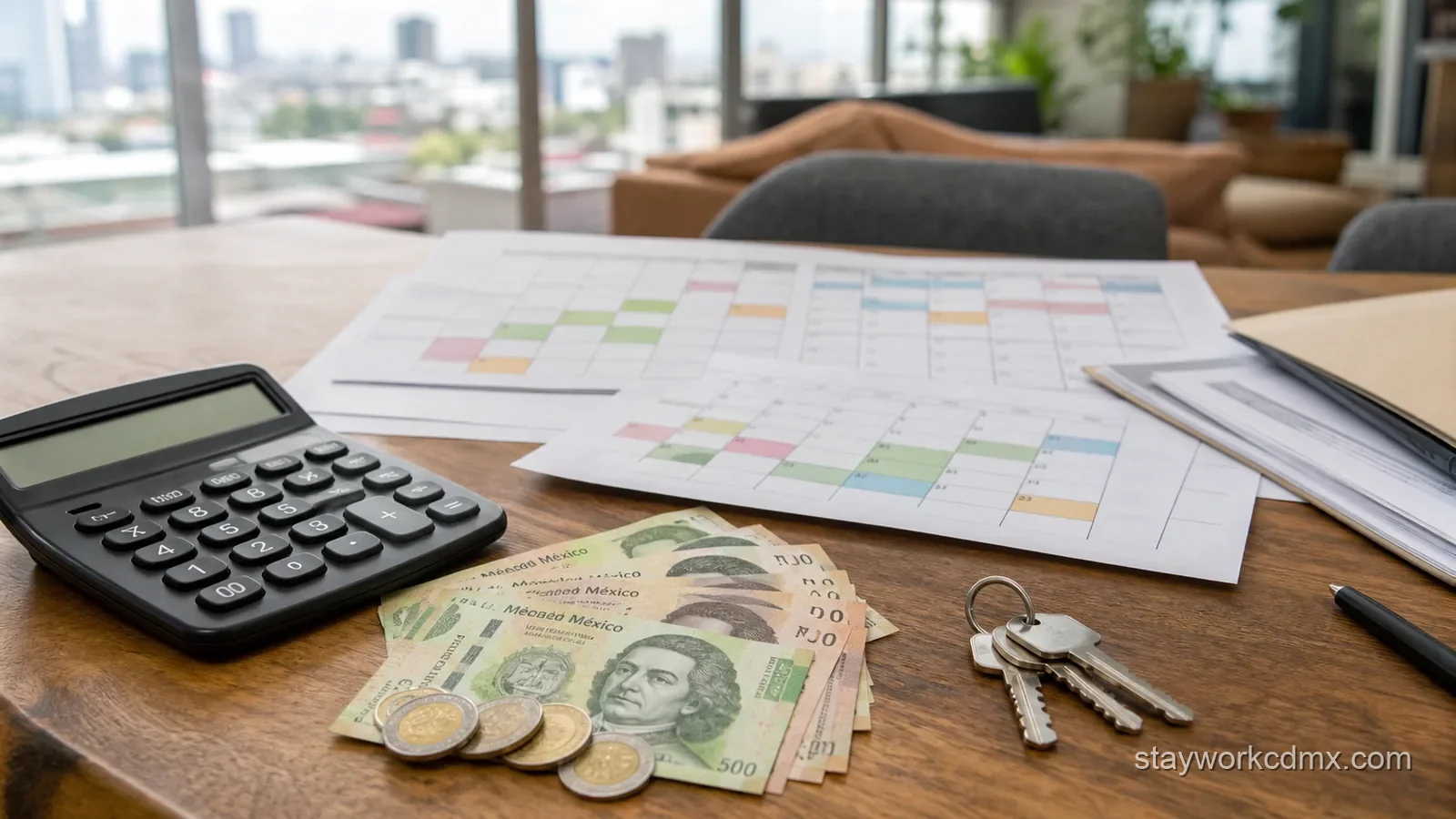
Prices below are in USD at the mid-2026 reference rate of roughly 18 MXN per USD, and the MXN table further down converts the main figures. For 2026 pricing ranges by neighborhood, see the companion guide on furnished apartment cost per month in Mexico City .
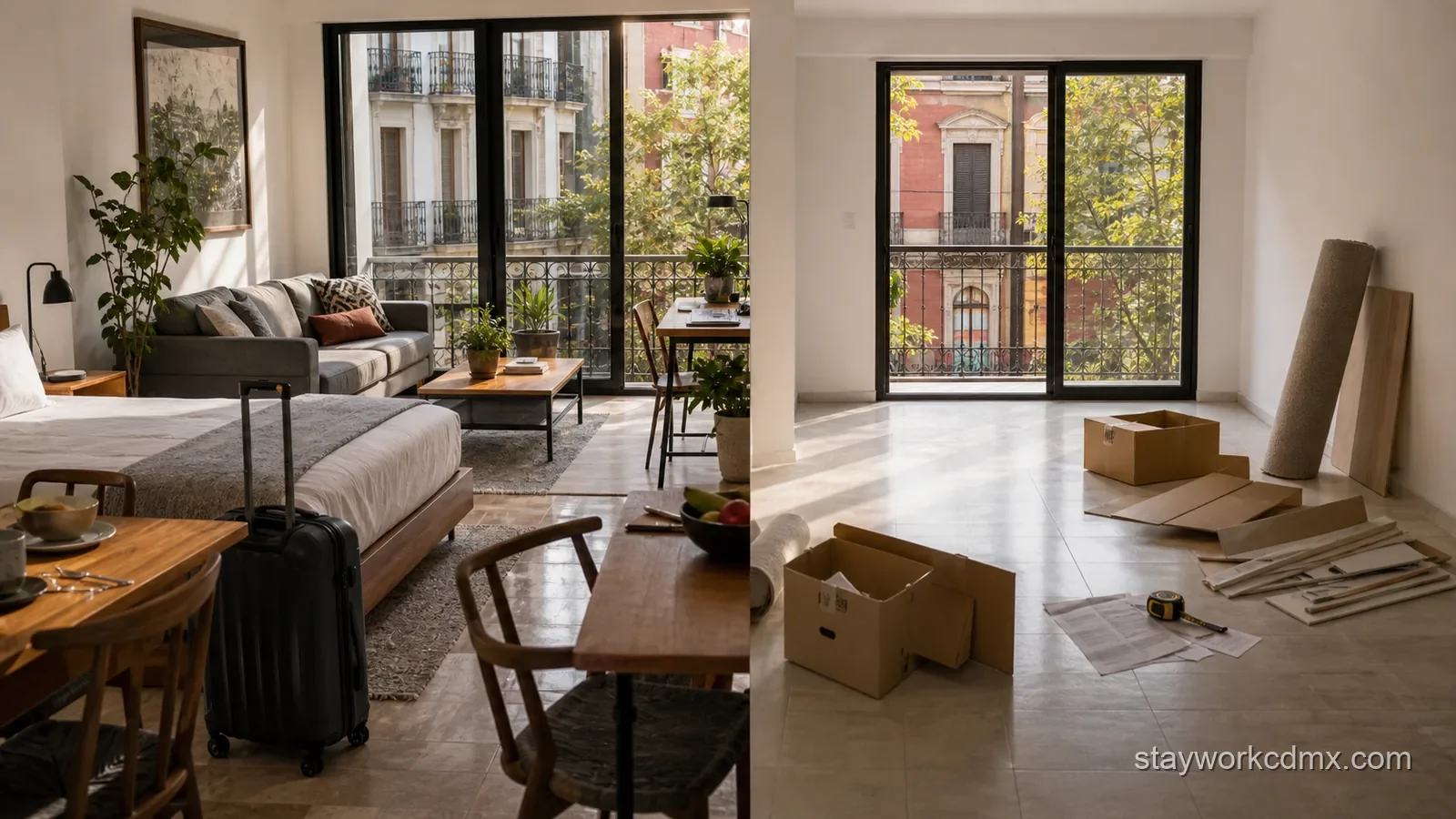
Furnished apartments: the case for convenience
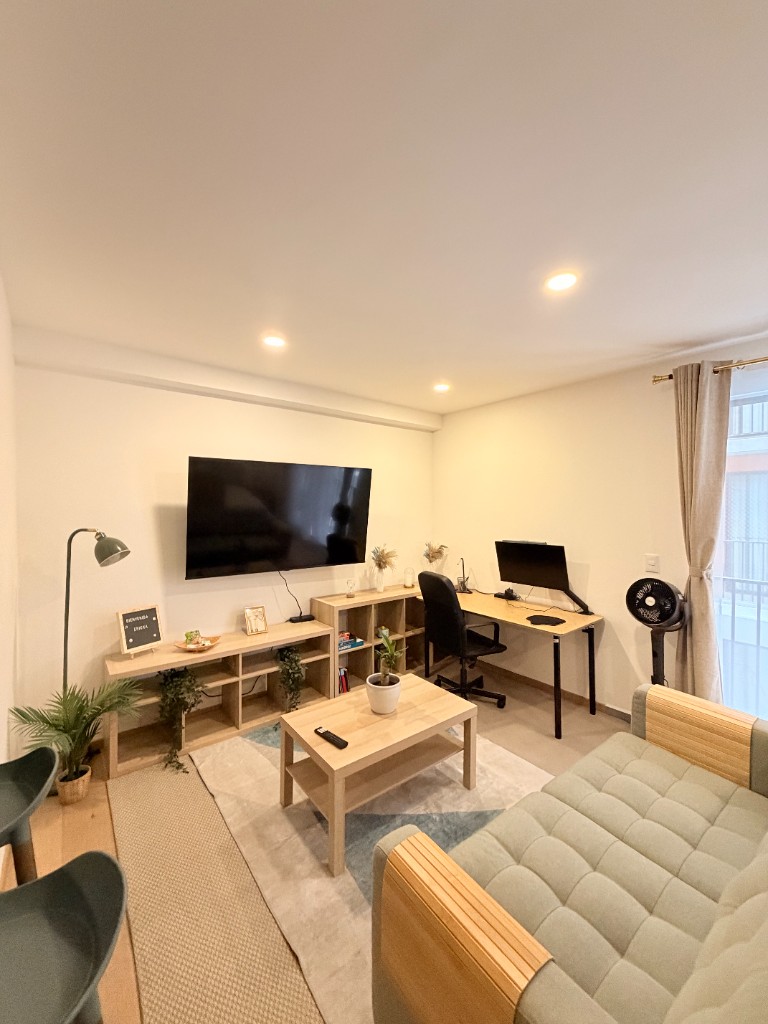
What you get
- Furniture: beds, kitchen table, couch, desk already there
- Kitchen: stove, fridge, dishes, cookware, usually one set of pots
- Linens: sheets and pillows (usually one set)
- Utilities: internet usually included, sometimes water/electricity
- Move-in: you arrive, unpack clothes, and live. No IKEA runs.
Furnished costs: real examples
Narvarte 2BR, 3-month stay:
- Monthly rent: $1,600
- Deposit (refundable): $1,600
- Total cash outlay: $1,600 (upfront deposit) + $4,800 (3 months rent) = $6,400
- Utilities: ~$100/month included
Total investment: $6,400 cash
Furnished advantages
#1: Speed. You arrive and live immediately, so week 1 isn’t spent on a floor mattress waiting for pots before you can cook.
#2: Logistics disappear. Skipping furniture shopping, assembly, and disposal at move-out saves 20 hours of planning and delivery coordination.
#3: Lease flexibility. Most furnished apartments are month-to-month. If your job, relationship, or family plans change, you leave at month 3 instead of month 12 with no lease-breaking penalty.
#4: No furniture risk. You don’t own the furniture, so you don’t worry about damage or shipping when you leave. A damage deposit might apply, but it’s the landlord’s problem long-term.
#5: Perfect for short moves. If you’re staying 3 months, 6 months, or “maybe a year,” furnished eliminates the uncertainty tax.
Furnished disadvantages
#1: Higher monthly cost. Landlords charge a premium for the furniture. Same apartment: $1,200 unfurnished, $1,600 furnished. That’s $400/month or $4,800/year extra.
#2: Furniture quality varies wildly. Some furnished units have IKEA-grade basics; others have old couches that smell. You see photos, but photos lie. Video tours help, though not always.
#3: Limited customization. You can’t rearrange much or add your own style. Some people don’t care; creatives hate it.
#4: Smaller kitchens. Furnished apartments often have minimal kitchens: one small stove, half-size fridge. If you cook seriously, that’s a daily frustration.
#5: Less incentive for landlord to maintain. Furnished units wear faster (renters cycle frequently). Landlords sometimes cheap out on maintenance because the unit turns over anyway.
Unfurnished apartments: the case for control
What you get
- Empty space: walls, floor, kitchen fixtures (sink, maybe stove), nothing else
- Sometimes: built-in closets or shelving
- Utilities: you set up and pay for water, electricity, gas, and internet
Unfurnished costs: real examples
Same Narvarte 2BR, 1-year stay:
- Monthly rent: $1,200
- Deposit (refundable): $1,200
- Furniture needed:
- 2 beds + mattresses: $600
- Kitchen table + chairs: $300
- Living room couch: $400
- Desk: $150
- Lamps, shelving, decor: $300
- Total: ~$1,750
- Delivery fees: $200 (for multiple stores)
- Internet setup: $50
Total first-month investment: $1,200 (deposit) + $1,200 (rent) + $2,000 (furniture + delivery) = $4,400
Year-long cost: $1,200 × 12 = $14,400 + $2,000 (furniture one-time) = $16,400
Unfurnished advantages
#1: Lower monthly rent. $1,200 vs $1,600 = $400/month saved. Over 12 months that is $4,800 in rent, which nets roughly $2,800 after a $2,000 furniture setup.
#2: Your furniture, your style. You pick the aesthetic (minimalist, cozy, modern, eclectic), and your home feels like your home.
#3: Better kitchens. Unfurnished usually has a real kitchen: full-size stove, proper fridge, counter space. Cook whatever you want.
#4: You stay longer and care more. Tenants who own their furniture tend to maintain apartments better because they want to keep their stuff nice.
#5: Flexibility to upgrade. The furniture is yours, so you can swap out an uncomfortable bed or a worn-out couch.
Unfurnished disadvantages
#1: Upfront logistics nightmare. You need furniture immediately, so you hunt deals on IKEA, Facebook Marketplace, or a rental company, then coordinate delivery and assembly. Budget 40–60 hours of your first month.
#2: Delivery costs and waits. IKEA delivery: $50–100 per trip. Facebook Marketplace: negotiating pickup with strangers. Delivery dates slip, and you’re sleeping on a mattress on the floor for a week.
#3: Lease commitment. Most unfurnished apartments require a 12-month minimum. If your job or relationship changes, you either break the lease (expensive penalty) or sublet (complicated).
#4: Furniture cost is real money. Even buying used on Facebook, you’re looking at $2,000–3,000 for a basic setup, cash you could have spent on travel, entertainment, or savings.
#5: Disposal problem. At the end you have furniture to deal with: sell it (time-consuming), donate it to a local charity or bazar that accepts furniture, or pay someone to haul it. Hotels and furnished landlords don’t have this problem.
#6: Security and stability. Unfurnished requires knowing you’ll stay, and if you’re uncertain, that’s a risk.
Furnished vs unfurnished cost comparison: 3 scenarios
Scenario 1: 3-month stay (expat assignment)
| Cost | Furnished | Unfurnished |
|---|---|---|
| Rent | $1,600 × 3 = $4,800 | $1,200 × 3 = $3,600 |
| Furniture | $0 | $2,000 (unused if you leave) |
| Setup time | 2 hours | 40+ hours |
| Deposit lost risk | Low (get back $1,600) | Medium (plus $2k furniture to sell) |
| Total cost | $6,400 | $7,600 |
| Recommendation | Furnished wins | Too expensive |
Scenario 2: 6-month stay (trial period)
| Cost | Furnished | Unfurnished |
|---|---|---|
| Rent | $1,600 × 6 = $9,600 | $1,200 × 6 = $7,200 |
| Furniture | $0 | $2,000 (resell for ~$800) |
| Setup time | 2 hours | 40 hours |
| Total cost | $9,600 | $8,400 |
| Recommendation | Slight edge to Furnished — the $1,200 gap barely covers 40 hours of setup plus resale hassle | Possible if you’ll resell |
Scenario 3: 12-month stay (commitment move)
| Cost | Furnished | Unfurnished |
|---|---|---|
| Rent | $1,600 × 12 = $19,200 | $1,200 × 12 = $14,400 |
| Furniture | $0 | $2,000 (keep or resell) |
| Setup time | 2 hours | 40 hours (upfront) |
| Total cost | $19,200 | $16,400 |
| Recommendation | Unfurnished wins | Save $2,800 |
The same numbers in MXN
Most landlords and furnished operators in Mexico City quote in pesos, so here are the main figures converted at roughly 18 MXN per USD:
| Item | USD | Approx. MXN |
|---|---|---|
| Furnished 2BR rent (Narvarte example) | $1,600/mo | ~$29,000 MXN/mo |
| Unfurnished 2BR rent (same unit class) | $1,200/mo | ~$21,500 MXN/mo |
| Monthly furnished premium | $400/mo | ~$7,200 MXN/mo |
| Basic furniture setup (one-time) | $2,000 | ~$36,000 MXN |
| 3-month furnished total | $6,400 | ~$115,000 MXN |
| 12-month unfurnished total | $16,400 | ~$295,000 MXN |
Unfurnished leases are almost always denominated in MXN with annual adjustment clauses, so over a year a weakening peso lowers your USD cost and a strengthening one raises it. Furnished monthly stays are often priced in USD or USD-equivalent to remove that variable, which makes them easier to budget from abroad even when the headline number is higher.
What about a 6–9 month stay?
In this awkward middle, furnished pricing loses its edge after month six, but a 12-month unfurnished lease overshoots your dates, and most landlords won’t write a 9-month contract with a fiador process for a foreigner. In practice the best answers are to negotiate a furnished rate for a committed 6+ month block (operators discount for certainty), or start furnished for 1–2 months and use that time to hunt an unfurnished deal in person. You’ll negotiate better standing in the apartment than from another country.
Which one should you choose?
Choose furnished if:
- You’re staying <6 months
- You hate logistics and furniture shopping (pay the premium for peace)
- You’re uncertain about staying past 3 months (flexibility matters more than cost)
- You don’t cook much (don’t care about kitchen quality)
- You’re relocating from abroad (easier than international furniture shipping)
- Your company is paying for housing anyway (cost is less relevant)
Choose unfurnished if:
- You’re staying 12+ months
- You cook and want a real kitchen
- You want to personalize your space
- You’re willing to spend 40 hours on logistics upfront
- You’re cost-conscious (save $400–500/month)
- You enjoy furniture hunting and decorating
The hidden costs you might miss
Furnished: what’s NOT included?
- Second set of linens: budget $100 for extras (you want to wash one while using another)
- Cooking basics: most furnished units have pots and pans, but check. Budget $100 if you need to buy
- Towels: usually 1–2 sets included. Add $50 for more
- Hangers and storage: closets are often bare. Add $50–100
- Cleaning supplies: not included. Budget $20/month
Hidden cost total: ~$200–300 upfront, then $20–30/month
Unfurnished: what’s NOT included?
- Furniture assembly time: 40+ hours of your first month
- Delivery fees: $50–150 per store, which adds up fast
- Duplicate furniture you don’t need: you buy, then realize you don’t have space
- Damage to furniture: moving scratches and everyday wear. Resale value drops 40–50%
- Waste and disposal: you pay to haul away broken furniture or an old mattress
Hidden cost total: 40+ hours of time, $200–400 in delivery, 30–50% loss on resale
The practical middle ground
Option: Buy used furniture first month, sell it on the way out
If you’re staying 6–12 months and like flexibility:
- Rent unfurnished
- Buy used furniture on Facebook Marketplace, Vivanuncios, or OLX ($1,200–1,600 total)
- Live for 6–12 months
- Resell used furniture for $400–700
- Net cost: ~$800–1,400 in furniture (plus 20 hours of hassle)
Result: you get 70% of the benefits of unfurnished (your furniture, your style, real kitchen) at 60% of the cost, with less commitment than a 12-month lease.
This works if you’re comfortable with secondhand furniture and willing to hunt deals.
Real talk: what moves most people?
- 3-month corporate assignment: furnished, no question.
- 6-month trial move: furnished, unless you’re sure you’ll stay.
- Moving with a partner long-term: unfurnished, you’re committing.
- Solo digital nomad, staying flexible: furnished, you want no strings.
- Long-term (12+ months), know you’re staying: unfurnished, save money.
- Moving your family: unfurnished, you want to build your space.
Neighborhoods: furnished vs unfurnished availability and value
Here is how furnished vs unfurnished supply breaks down across Mexico City’s main central neighborhoods. (Still choosing an area? Start with the best neighborhoods in Mexico City for remote workers in 2026 and come back once you have a shortlist.)
Narvarte has the best supply of professionally managed furnished monthly apartments at mid-range prices. It is quieter than Roma Norte, close to hospitals and Parque Delta, and consistently cheaper for the same size unit. For remote workers who want productivity and value, Narvarte is the default starting point. Read the full Narvarte remote workers guide for neighborhood-level detail on cafés, coworking, and transit.
Roma Norte has the widest furnished apartment selection in Mexico City: studios, 1BRs, and 2BRs from budget to premium. The trade-off is price: Roma Norte furnished apartments typically cost 25–40% more than equivalent units in Narvarte. For a first Mexico City stay or a shorter visit where location matters most, the premium can be worth it. The Roma Norte vs Condesa monthly stay comparison helps narrow down which one fits your routine, and the Roma Norte furnished apartments page shows what an operated furnished month there includes.
Condesa sits between Roma Norte and Del Valle in price and character. It attracts couples and families more than solo remote workers because of its parks and quieter pace. Furnished supply is good; unfurnished leases are common and accessible.
Del Valle has solid furnished apartment supply at prices below Narvarte on the quieter end. It is popular with people returning to CDMX for a second or third stay who already know the city. The Del Valle monthly cost guide has real budget breakdowns.
Unfurnished apartments are available in all these neighborhoods through Inmuebles24, Vivanuncios, and Facebook Marketplace. Foreign renters without a fiador struggle with these because most landlords want a Mexican guarantor with local property. If you are in that situation, furnished serviced stays sidestep the process entirely.
Furnished apartments are easier to find in:
- Narvarte (largest StayWork hub, best value)
- Roma Norte (highest selection, widest price range)
- Condesa (couples and expat-focused inventory)
- Del Valle (quieter, often more space per peso)
Unfurnished apartments are equally available everywhere:
- Inmuebles24, Vivanuncios, Facebook Marketplace, Lamudi
- Harder to navigate for foreigners (Spanish required, fiador often needed)
- Better local deals if you have a local contact helping
Related guides
- Furnished apartments in Mexico City : browse available furnished options
- Furnished apartment cost per month in Mexico City : 2026 price ranges by neighborhood and format
- Moving to CDMX for work checklist : full relocation checklist
- Narvarte furnished monthly apartments : best value neighborhood for first-timers
- Corporate housing in Mexico City : if your company is covering it
Final verdict
Most people arriving in Mexico City for the first time should rent furnished for 3–6 months. A 1 to 3 month furnished apartment covers that trial window with no fiador and no utility contracts, and the flexibility and zero logistics are worth the $400/month premium. Once you know you’re staying and where you want to live, then you can negotiate an unfurnished lease or hunt for better value.
Furnished buys you time to figure out if Mexico City is really home, and that’s worth money.