Mexico City roundup blogs — including thorough planners such as Get Lost in Mexico City — excel at cataloguing everything worth seeing. But your first week in Mexico City as a remote worker needs a narrower frame: what to anchor this week so Zoom still feels professional while you calibrate a city that rewards repetition more than any checklist admits.
StayWork hosts remote-work guests across Roma Norte and Narvarte every week. The recurring week-one failure modes are rarely “missed museums” — they are:
- stacked evening plans colliding with US-timezone calls,
- dehydration masquerading as mysterious fatigue,
- experimental rideshare routes attempted five minutes before stand-ups,
- ignoring timed tickets until Casa Azul sells out,
- attempting Metro mastery on day one instead of locking in one calm spine.
If the monthly-neighborhood question still feels abstract, start with Mexico City monthly rentals or digital nomad apartments in CDMX , then use where to stay for 30+ day stays to pressure-test the area before you extend. Once logistics are planned and the first week feels real, book direct to lock dates.
Quick picks if you only control three evenings
- One structured outing — a slow Centro Histórico loop plus a snack (details below).
- One neighbourhood hang — a Roma or Condesa café block without a rigid itinerary.
- One icon — a castle viewpoint, a museum half-day, or a taco crawl that matches your energy honestly.
Everything else can wait until you know which Metro exit still confuses you on Tuesday morning.
The first forty-eight hours: a boring sequence that works
Remote workers often try to “win” their first two days by maximizing culture per hour. The move that actually protects Monday is blander: stabilize sleep, food, and building access before you optimize for stories.
Hours zero to six: bags down, water in your body, something warm in your stomach, then a twenty-minute silent walk around your block — you are calibrating sound, dogs, and traffic, not performing tourism.
Day one morning: one errand for breakfast supplies and bottled water; one pass at mobile data (local SIM or eSIM) if your job cannot ride on café Wi-Fi alone; one written confirmation of door codes and any portón rules in WhatsApp, so midnight arrivals do not turn into improv.
Day one afternoon: a Centro or Roma loop at the pace of someone who must still be professional on Thursday — not the pace of someone “catching up” to a bucket list.
Day two: run your Metro spine once in daylight for practice, then resist the mezcal victory lap if Wednesday already has a board meeting.
This sequencing feels slow. It is the same sequencing that keeps Tuesday from feeling like a hangover with a calendar attached.
Three clocks that fight quietly
Your employer’s time zone, any Mexico-local meetings, and your circadian debt after altitude and dry air all negotiate without a project manager. When in doubt, protect local sleep and let FOMO wait — CDMX is built for return visits; it does not require you to compress the entire capital into one jet-lagged workweek.
What the first week in Mexico City actually costs (2026 MXN)
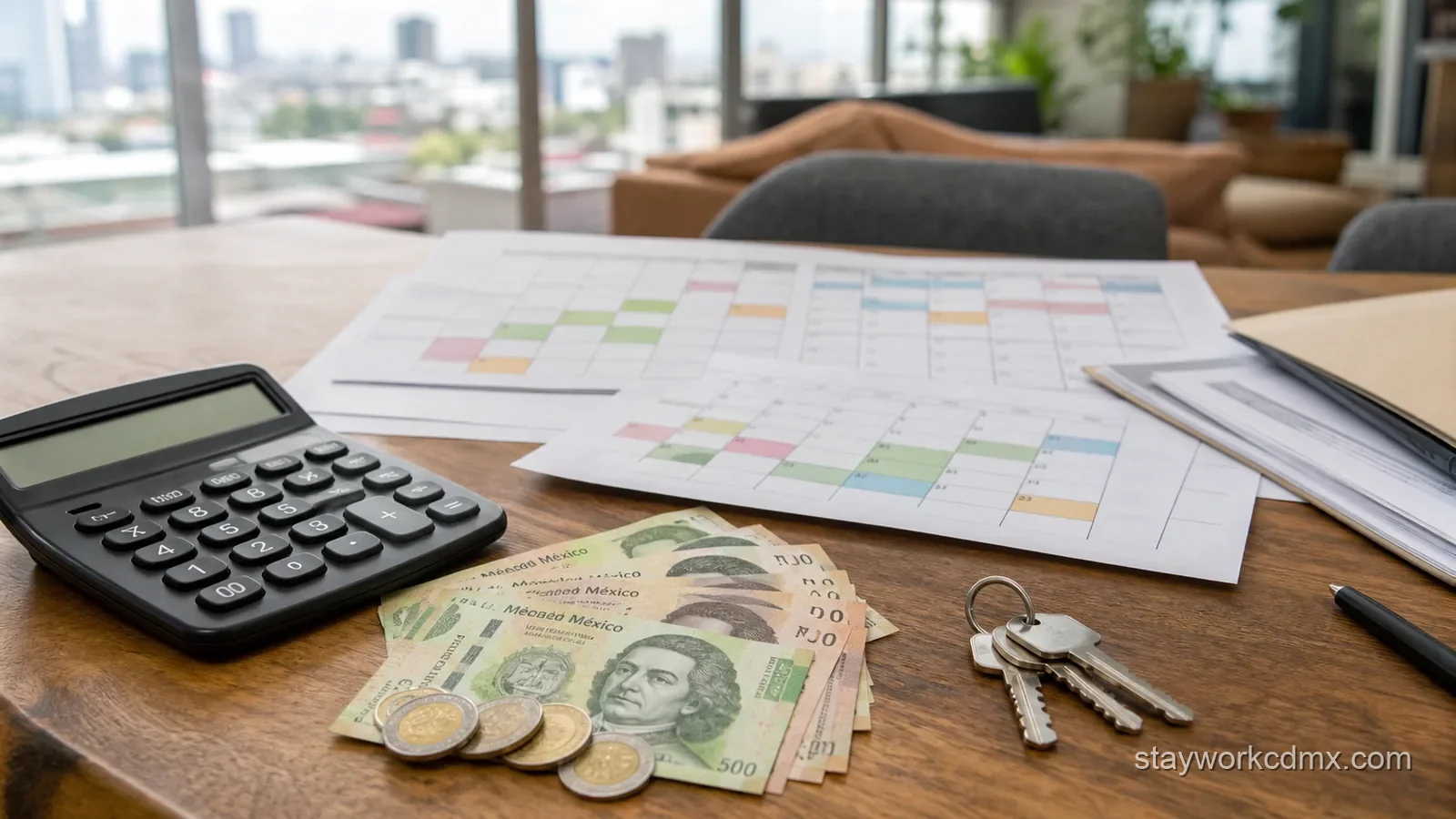
Accommodation aside, week-one setup in Mexico City is cheap relative to the anxiety it generates. Realistic numbers:
| Setup item | Typical cost (MXN) |
|---|---|
| Airport transfer (authorized taxi or Uber, AICM to Roma/Narvarte) | $300–$500 |
| Local SIM or eSIM with ample data | $200–$500 |
| Metro card + first week of rides ($5 MXN per ride) | $100–$200 |
| First grocery + bottled-water run | $800–$1,200 |
| Café workdays (2–3 sessions with coffee + snack) | $300–$600 |
| Meals out (5–8 casual meals) | $700–$1,500 |
| Laundry drop-off (per load, washed and folded) | $80–$150 |
| Realistic week-one total (excluding rent) | $2,500–$4,500 |
For the full-month picture — rent bands by neighborhood, groceries, coworking, and gym — see the cost of living in CDMX for digital nomads . The short version: a furnished one-bedroom runs roughly $22,000–$32,000 MXN per month in Narvarte and $28,000–$42,000 MXN in Roma Norte or Condesa, and daily costs scale with the same gap.
1. Ground yourself in Centro without sprinting
The historic core teaches spatial awareness better than any Instagram checklist.
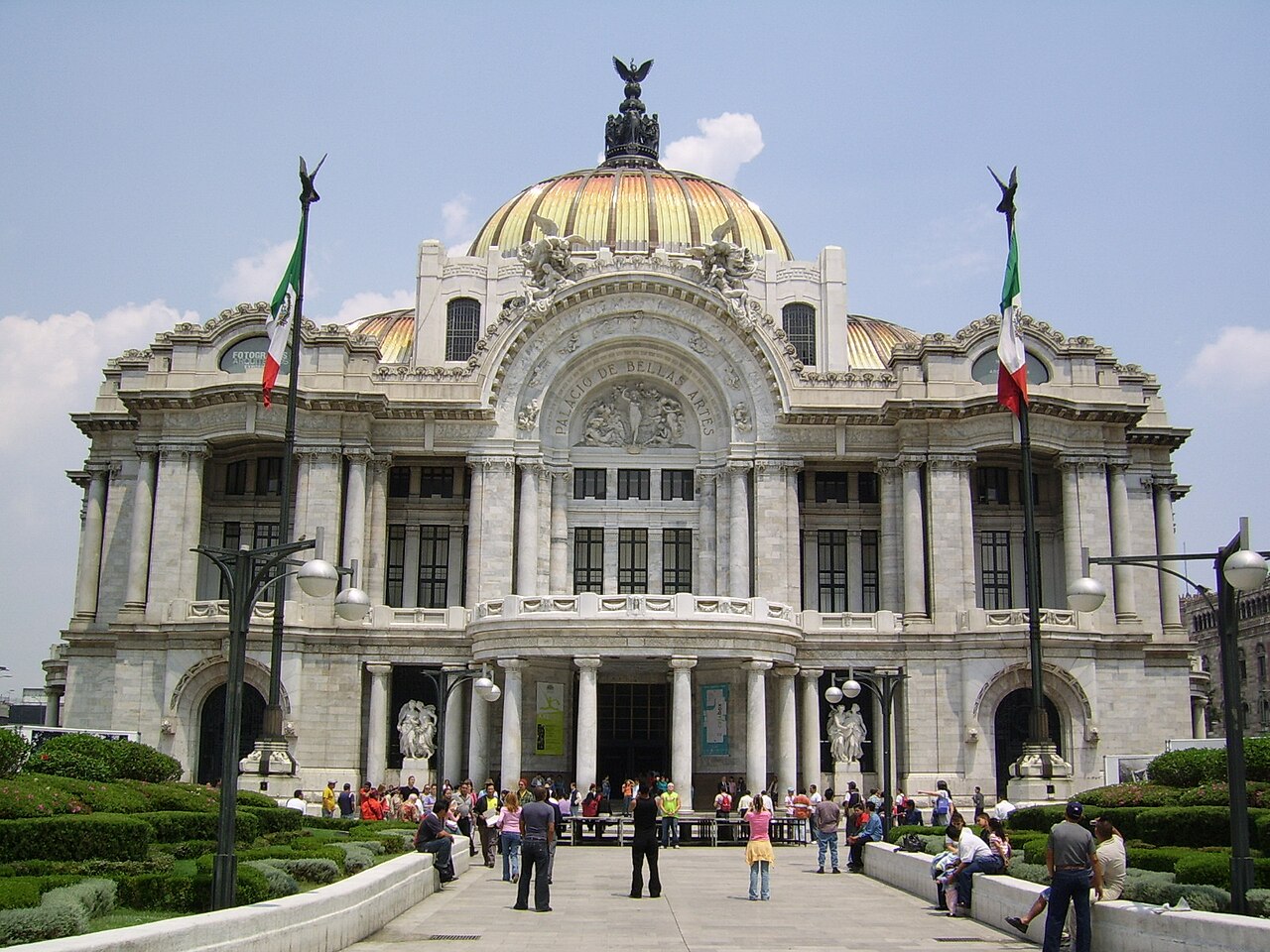
An honest first pass: Zócalo orientation → breathing room in the cathedral plaza → a drift toward the Bellas Artes corridor without insisting on every interior today.

StayWork tip: deep interiors (Bellas Artes exhibitions, the Palacio Postal’s elaborate halls) suit light-calendar mornings — ticket lines and security queues inject friction unpredictably, right before video calls.
Street-level observation still trains your brain: how rideshare pins behave near Alameda, where informal markets crowd the sidewalks, and when afternoon light turns the stone facades photographically blinding.
Cash, cards, and small bills
Keep small MXN notes for street snacks, musicians, and water vendors. Card coverage improves every year, yet cash friction remains surprisingly sticky in week one — especially when batteries die or networks hiccup.
2. Learn one Metro habit you will repeat on autopilot
The system is enormous; treat week one like learning one chord, not the entire song.
Pick a spine you will reuse:
- maybe Línea 1 between Insurgentes and Pino Suárez, depending on your lodging,
- maybe Línea 3 through Etiopía and Centro Médico if you’re based in Narvarte,
- maybe Línea 7 toward Auditorio when the Chapultepec edge matters.
Run it once off-peak midweek — patience on, headphones low, situational awareness high.
Buy or reload a Metro card early: fumbling coins at a turnstile while your laptop backpack snags the bars annoys everyone behind you, including future-you.
Note exit letters as you go — a “Salida D” sticky note in your phone beats improvising exits five minutes before a call. And avoid trying a brand-new transfer ten minutes before a video meeting unless you genuinely enjoy adrenaline.
3. Reserve what sells out — even if spontaneity is your personality
Certain CDMX staples punish procrastination:
Casa Azul (Frida Kahlo)
Timed tickets evaporate many weekends. If Casa Azul matters to you emotionally, reserve early rather than debating it after jet lag.
Lucha Libre (Arena México)
Seating improves with a few days of lookahead — Arena México evenings cluster visitors predictably, and the seats you actually want rarely appear last minute.
Teotihuacán extras
Sunrise balloons photograph beautifully and punish sleep schedules mercilessly. If Monday’s calendar refuses to bend, reconcile that trade consciously.
Pair pyramid ambition with the sleep guardrails inside a weekend CDMX itinerary when Monday is a workday .
Prefer spontaneity? Swap toward mercado mornings in Roma or Narvarte, lake pacing in Chapultepec, and café blocks using coffee shops for remote work in Roma Norte .
Half-day anchors that reward patience
If you genuinely have one free weekday morning before meetings pile up, the Museo Nacional de Antropología rewards picking one pavilion and leaving while you still remember names — museum fatigue stacks like pyramid stairs.
If you prefer skyline drama over museum halls, Chapultepec Castle viewpoints pair well with a calm café cooldown near Metro Auditorio — wide sidewalks and slower pacing before you dive back into Roma’s narrower grids.
Both outings remain optional in week one. Protecting Tuesday–Thursday cognition pays compound interest longer than any single gallery hallway.
4. Protect deep-work blocks Tuesday–Thursday
Treat Monday-to-Thursday nights as optional exploration layers — the taco stalls and mezcalerías will still exist in week four.
Batch groceries and water deliberately: mild headaches at altitude routinely trace back to dehydration, not melodrama.
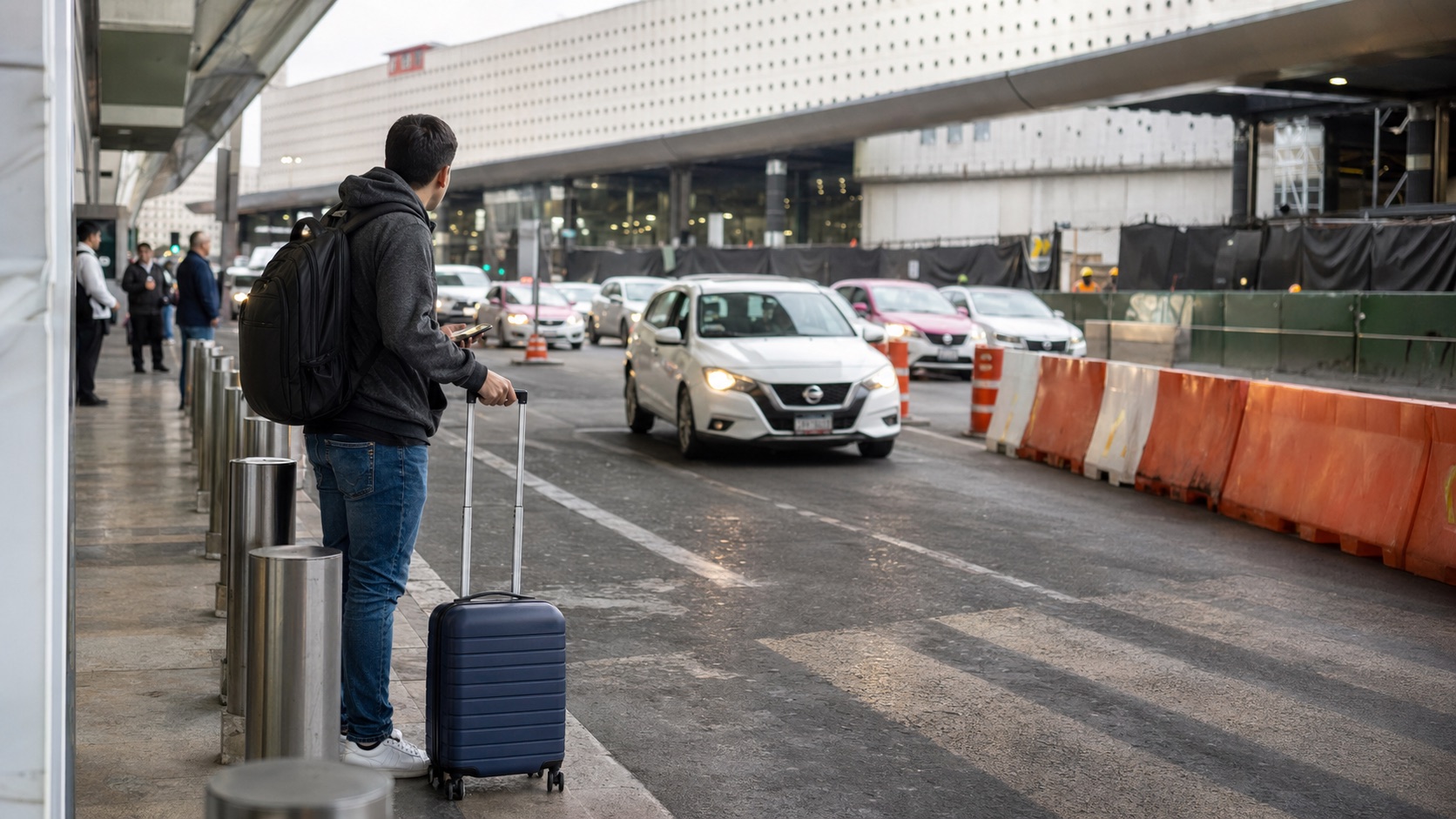
Airport arrival discipline seeds the whole week — start with our Mexico City airport transportation guide until you land on one repeated corridor between AICM/AIFA and your temporary base.
Water, groceries, and boring wins
Dehydration at altitude often masquerades as fatigue — keep water visible at your temporary desk, not forgotten in the fridge between calls.
Memorize one grocery rhythm near your base: a mercado morning for fruit, a supermarket run for staples, a corner store for predictable midnight snacks. Familiar routes buy back work minutes.
Roma guests often zigzag between speciality shops and mercados; Narvarte guests tend to prefer the larger retail clusters near Parque Delta and steady transit spines. Neither is morally superior — predictability is the win. If Narvarte’s calmer, cheaper rhythm sounds like your speed, the Narvarte guide for remote workers maps its cafés, gyms, and workable routines in detail.
If your building leans on garrafón deliveries, confirm how five-gallon water arrives before your first dry-throat crisis on a Sunday.
Scout a laundry drop-off before midweek panic. Small domestic logistics become expensive when they collide with meetings.
SIM cards and rideshare rhythms
Buying a SIM early saves tethering improvisation before client calls — budget an hour of paperwork once rather than begging hotspots midweek.
Skim StayWork’s notes on Uber vs DiDi in CDMX early, so rainy-day surge pricing stays boring instead of theatrical.
5. Friday neighbourhood anchor ritual
Finish Friday by repeating the micro-rituals that train your brain to treat this city as a base, not a sprint:
- a café within walking distance of your temporary flat,
- a bakery or fruit vendor memorised,
- a park-bench stroll without earbuds.
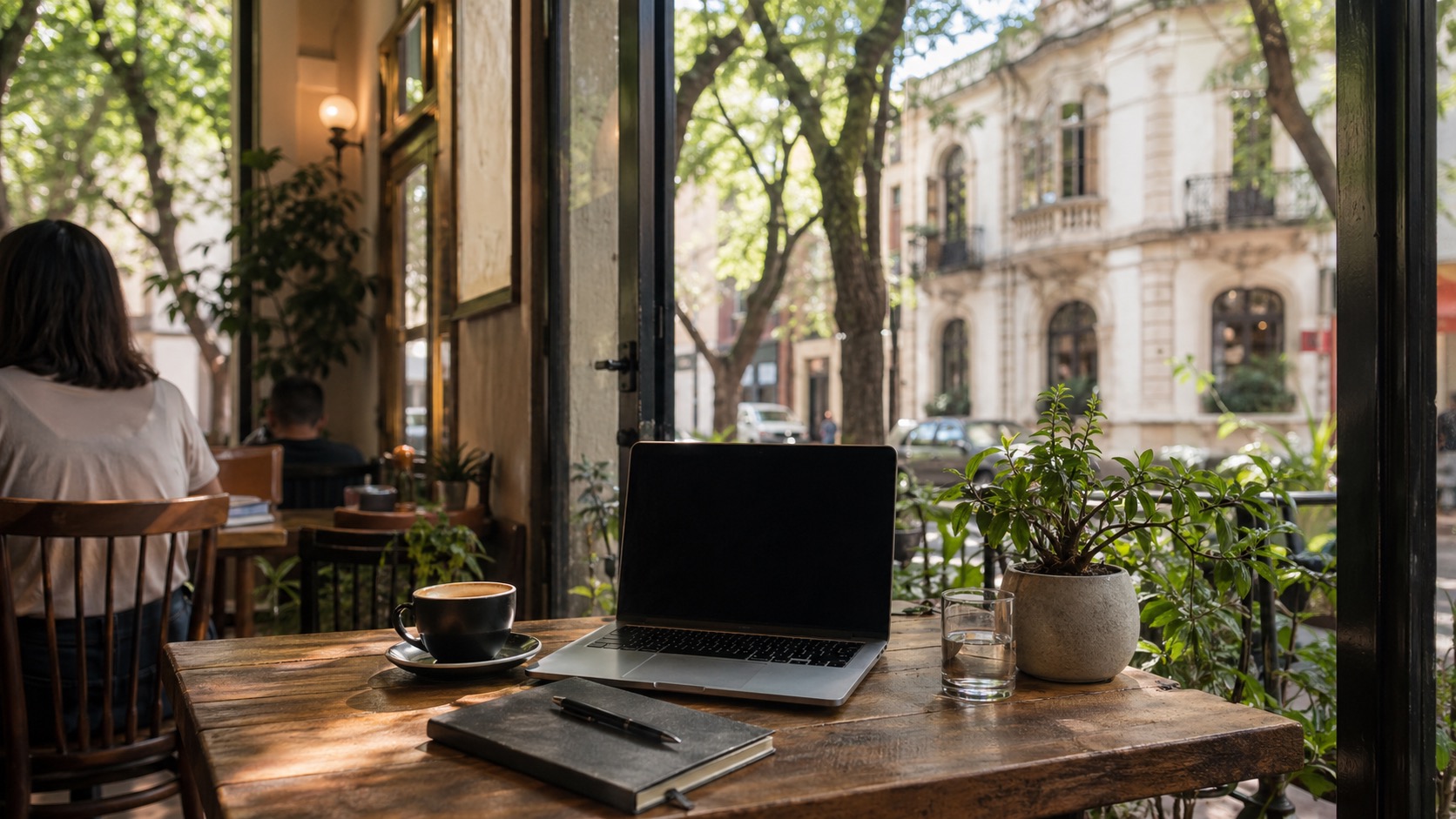
If that Friday routine already feels like the deciding factor, it’s time to compare neighborhoods properly. The ranked guide to the best neighborhoods in Mexico City for remote workers in 2026 covers the full field; the Roma Norte vs Condesa monthly stay comparison settles the classic café-district question; and the Del Valle monthly cost and routine breakdown makes the case for the quiet-value option most first-timers overlook.
Phones, pockets, and street habits (without catastrophising)
Mexico City requires the same urban hygiene as any large metro: zip phone pockets on crowded Metro cars, keep laptop bags in front of you on packed platforms, and photograph your IMEI and device serials once, so a police report is not a philosophical exercise if something walks away.
This is not a morality lecture about safety — it is a work-continuity point. Losing a phone on day three turns week one into an IT-ticket storm that outlasts any memory of street tacos.
Most guests never have an incident. The ones who do usually trace it to inattention at a turnstile or a phone left on a table during a photo — fixable habits that cost less than anxiety spirals.
6. Bridge into month two deliberately
If week one felt professionally survivable, graduate to the mechanical fit questions in the monthly apartment checklist — upload speeds, chair quality, laundry economics, and CFDI realities before your employer’s finance team joins the thread.
If you’re leaning toward the quieter-value path, browse the actual furnished monthly apartments in Narvarte ; if the café-district energy won, start with Roma Norte monthly stays .
Solo travellers can pair the emotional framing with a month in Mexico City as a solo remote worker , so loneliness versus overstimulation stays explicit instead of becoming a surprise on day twelve.
When your dates stop being theoretical, use Book Direct to compare live StayWork availability and direct-stay context before you commit to the next month.
When week one wobbles anyway
A loud Thursday night does not automatically mean you chose the wrong neighbourhood — construction, local fiestas, and club proximity produce spikes everywhere. Note whether the noise pattern repeats before you rewrite your housing spreadsheet emotionally.
One messy rideshare route does not indict an entire transport strategy — skim Uber vs DiDi in CDMX once, pick a default, then stop improvising before meetings.
Recover with pedestrian resets: fifteen quiet minutes on an Alameda bench or under the Parque México trees buys cognition back more cheaply than doom-scrolling listings.
Related guides
A short series for remote workers landing in CDMX: Roma & Condesa Sunday walk · Weekend in Mexico City when Monday is a workday . Spanish edition: Primera semana en CDMX .
Image credits
- Palacio de Bellas Artes exterior: Alex Covarrubias, Palacio de las Bellas Artes (Mexico City) , CC BY 2.5.
- Airport and Roma café photos: StayWork blog library (
/images/blog/…).