The official FIFA match schedule says World Cup 2026 runs from June 11 to July 19, 2026, and Mexico City Stadium hosts the opening match on Thursday, June 11. Locals still know the venue as Estadio Azteca, so this article uses both names.
FIFA’s Mexico fixture page also lists Mexico opening there against South Africa, then playing Korea Republic in Guadalajara on Thursday, June 18, and Czechia back at Mexico City Stadium on Wednesday, June 24. The schedule lists Mexico City Stadium for Round of 32 Match 79 on Tuesday, June 30 and Round of 16 Match 92 later in the tournament, so the stadium is a real planning constraint.
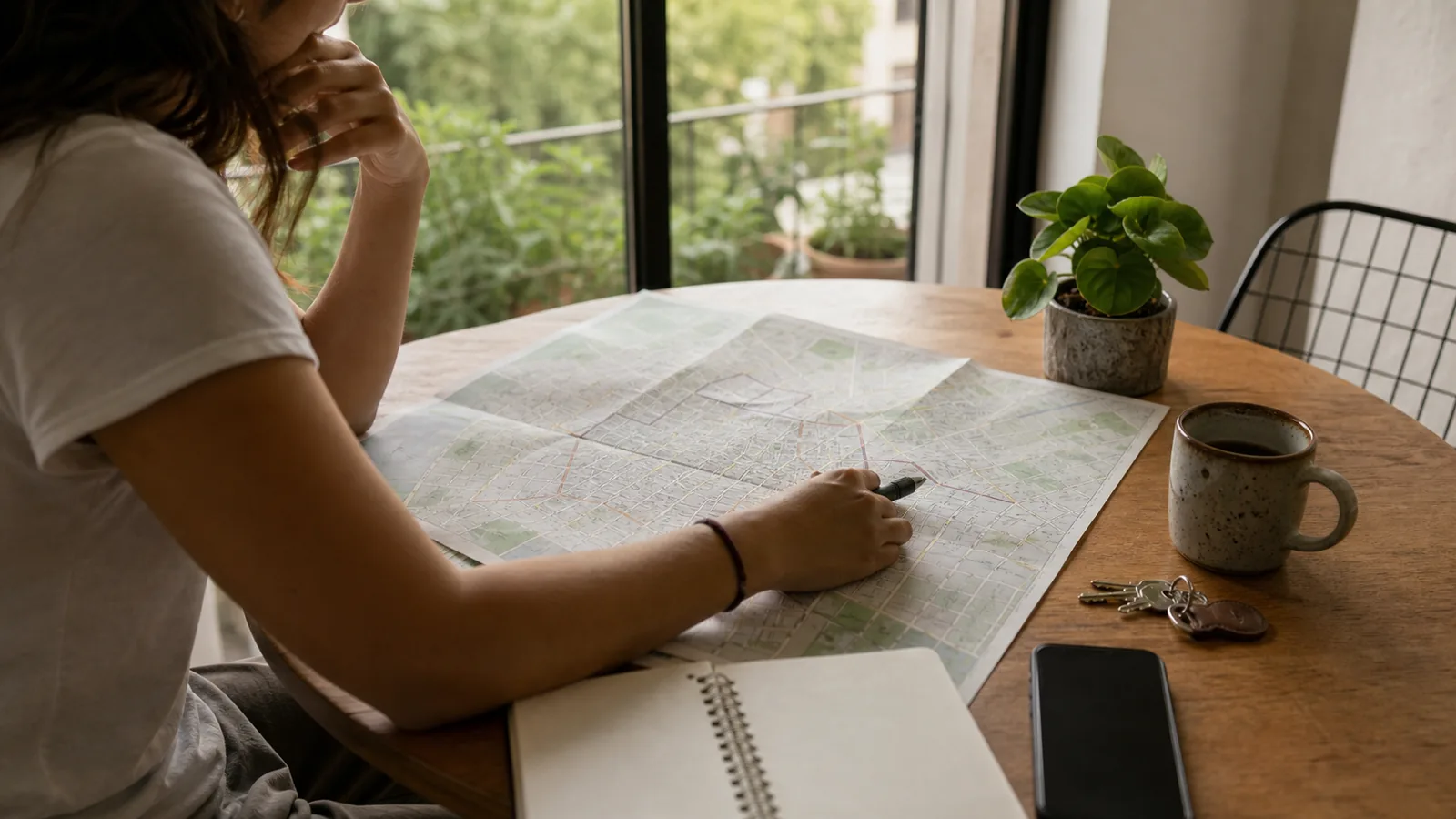
The mistake is choosing your whole Mexico City stay only around the stadium pin. If you are coming for one match, or even two, the best place to stay near Estadio Azteca is not always near Estadio Azteca. Stadium proximity helps on match day, but a central base usually works better for the rest of the trip: food, safety perception, work calls, errands, nightlife, museums, airport movement, and late-night options.
If this is your first World Cup planning pass, start with our broader guide to what to expect in Mexico City before the 2026 World Cup . Then use this article to choose the base neighborhood for the Estadio Azteca part of the trip.
Quick Answer
Quick answer
For most visitors attending a World Cup match at Estadio Azteca, the strongest CDMX base is central, not stadium-adjacent.
Choose:
- Narvarte if you want the best practical compromise: calmer, more local, easier south-side access, and good value for longer stays.
- Roma Norte or Condesa if you want the best full-trip experience: restaurants, cafes, nightlife, walkability, and stronger furnished inventory.
- Polanco or Reforma if your trip is premium, corporate, hotel-heavy, or museum-focused, and you accept more match-day route friction.
- Coyoacan, Tlalpan, or the stadium area only if match-day proximity matters more than central daily life.
The simple rule: stay near the stadium for the match; stay central for the trip.
If your trip is longer than a match weekend, compare World Cup 2026 Mexico City accommodation options: apartment vs hotel vs Airbnb before you choose only by stadium distance.
The Main Tradeoff: Stadium Proximity vs Full-Trip Quality
The stadium-area logic is simple: you want to avoid a long trip across the city on match day. With a tournament crowd, that instinct is reasonable. Traffic may be heavy, rideshare pickup points may be restricted, and the last kilometer around the stadium can be slower than the map suggests.
But World Cup trips are rarely only the match. You still need breakfast, groceries, safe-feeling walks, late dinners, recovery days, work calls, airport logistics, and plans when the city is busy, and the central neighborhoods usually handle those better.
Where to stay for Estadio Azteca World Cup 2026 matches
| Base area | Match-day advantage | Daily-life advantage | Main tradeoff |
|---|---|---|---|
| Stadium area / Santa Ursula | Shortest final approach | Simple if the trip is match-only | Limited visitor infrastructure and weaker non-match routine |
| Coyoacan / Tlalpan | Southern base with more local character | Better than stadium-adjacent for eating and walking | Still less central for first-time CDMX plans |
| Narvarte | Practical middle ground south of Roma | Quiet, value, errands, apartment-first routine | Less instant nightlife and tourist energy |
| Roma Norte / Condesa | Best all-around visitor base | Restaurants, cafes, parks, furnished stays | Longer planned movement to the stadium |
| Polanco / Reforma | Premium hotels, museums, business polish | Strong for corporate or luxury travel | More cross-city friction on match day |
If you are comparing neighborhoods beyond the stadium question, start with the citywide hub for Mexico City neighborhoods for monthly stays . The World Cup changes demand and traffic, but it does not change what makes a neighborhood livable for a week or a month.
Staying Near Estadio Azteca: When It Makes Sense
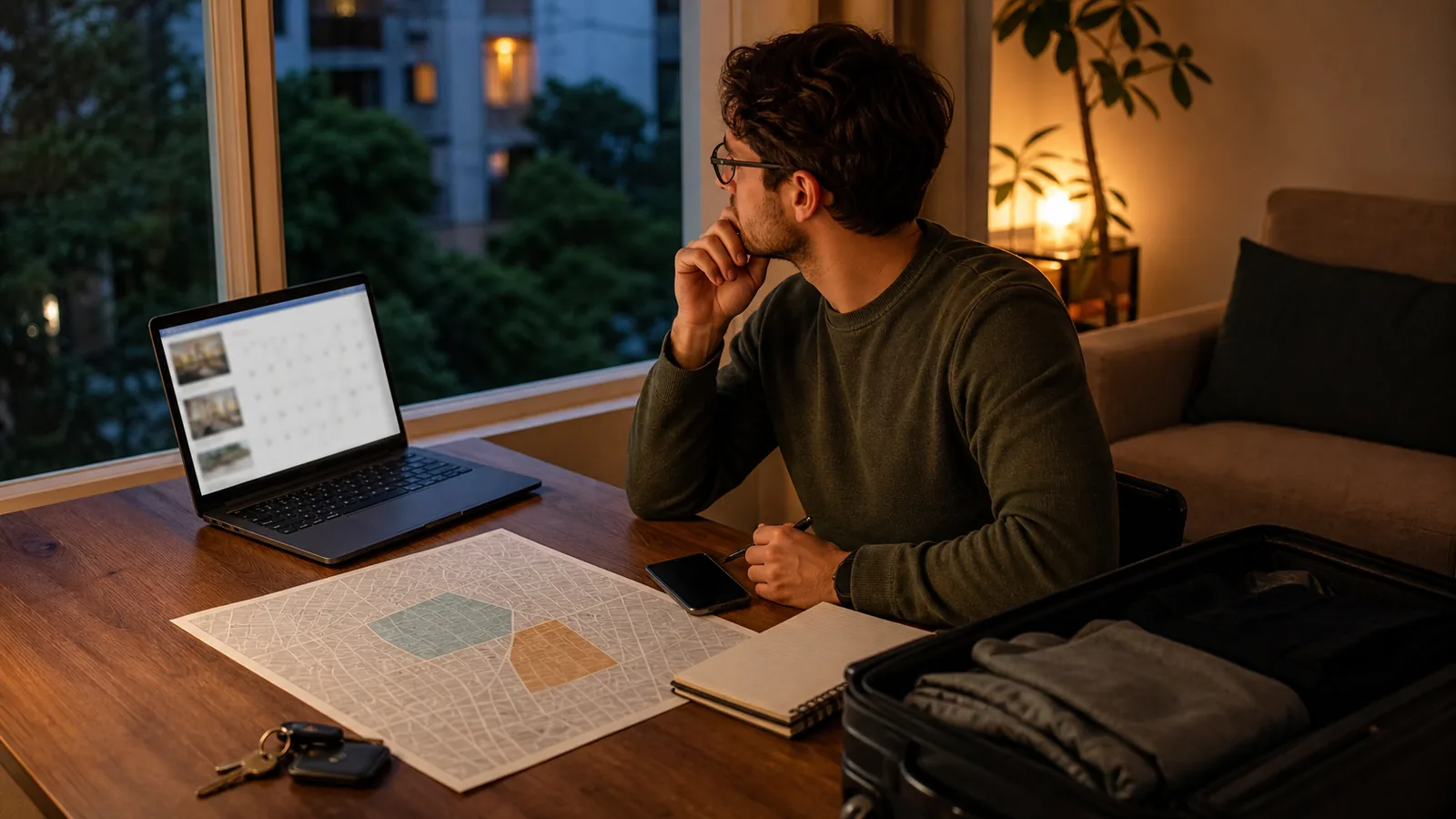
Staying near Estadio Azteca can make sense if your trip is short and built around the match, with few daily-life expectations. If you fly in, attend a match, and leave soon after, proximity has value. It may also work for guests who dislike long transfers, are traveling with older family members, or have accessibility needs that make the final approach more important.
The weak point is everything outside the match window. The immediate stadium area is not where most first-time visitors want to spend their full Mexico City trip. You will likely have fewer walkable restaurants, polished furnished apartments, and cafe-work options, and less of the CDMX experience people usually come for.
Coyoacan and Tlalpan are better southern alternatives than staying right by the stadium, with more neighborhood character, plazas, food, and local routine. They still place you farther from Roma, Condesa, Polanco, Reforma, and many first-trip plans. Choose the south if the match is the main reason for the trip, and a central base if the city is.
Narvarte: The Practical Middle Ground
Narvarte is the neighborhood I would put on more shortlists than most visitors expect. It sits south of Roma and Condesa, feels calmer and more residential, and is usually more practical for apartment-first stays. You get groceries, taquerias, pharmacies, and local restaurants, with better value and less pressure to pay for the famous-name neighborhood. For World Cup guests, Narvarte can reduce some southbound friction without giving up central Mexico City entirely.
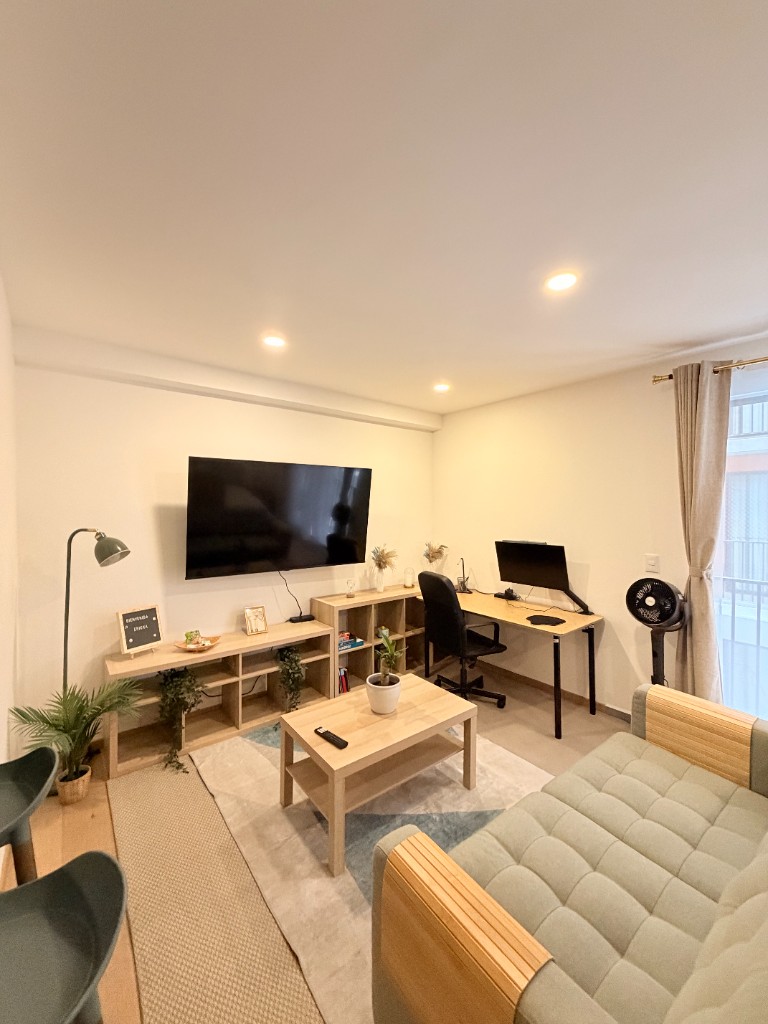
That matters especially on longer stays. If your World Cup trip is also a remote-work stay, family visit, scouting trip, or multi-week base, Narvarte can feel more livable than the stadium area and less expensive than Roma or Condesa. Start with our main Narvarte furnished stays page if you want a quieter apartment-first base.
Narvarte is not the best fit if you want every night to happen outside your front door; Roma Norte and Condesa are stronger for that. If you want a practical base with an easier match-day route than Polanco or far-west CDMX, put Narvarte on your shortlist.
Roma Norte and Condesa: Best for the Full CDMX Trip
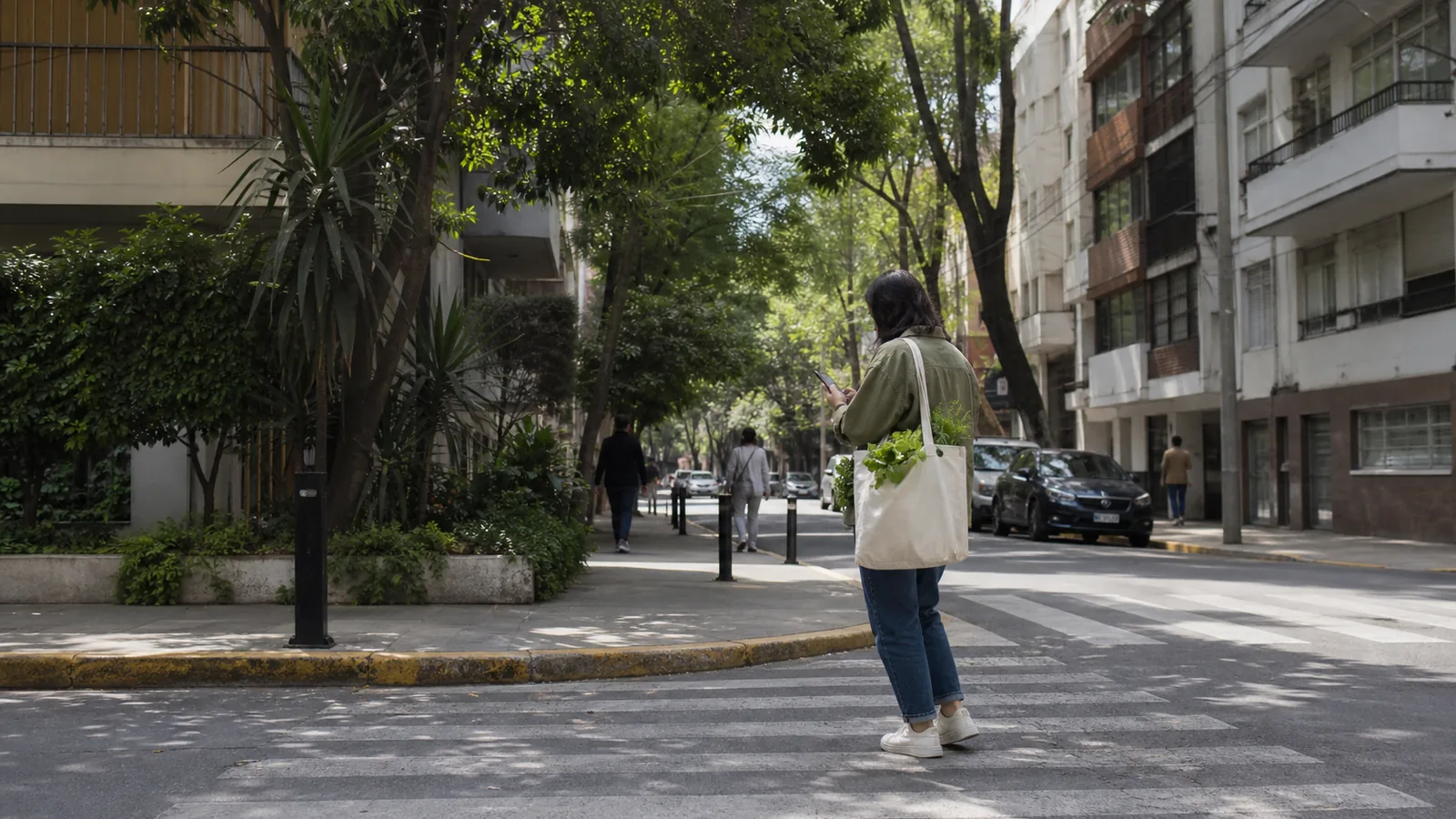
Roma Norte and Condesa are still the easiest recommendation for many first-time visitors. They are not closest to Estadio Azteca, but they are better for the other 90% of the trip.
Roma Norte has the densest mix of restaurants, cafes, bars, galleries, and furnished apartments. It is the better choice if you want energy, social plans, coffee shops, and a neighborhood that makes the trip feel full without planning every hour. If you already know you want that base, compare Roma Norte apartments before you book.
Condesa is greener and calmer. It works well for couples, park routines, lighter nightlife, and visitors who want a softer residential feel while staying close to Roma’s restaurants. If you are comparing the better-known visitor neighborhoods, our Polanco vs Condesa vs Roma Norte guide sorts out the full-trip tradeoffs.
The match-day problem is manageable if you accept it early: leave with time, do not stack important plans right before kickoff, and do not assume a car will glide through the final approach. From a central base, you plan around match day and let the neighborhood handle the rest of the trip.
Polanco and Reforma: Premium Base, Longer Stadium Friction
Polanco and Reforma can work for World Cup visitors, for different reasons. Polanco is strongest when the trip is premium, corporate, or hotel-led, with high-end restaurants, museums, security-forward buildings, shopping, and a polished environment. Reforma is useful if your trip revolves around hotels, business meetings, Chapultepec, Centro access, or a more formal corridor.
Neither is the obvious match-day choice for Estadio Azteca. You are adding a bigger cross-city trip, and it can be sensitive to traffic, protests, closures, and tournament demand. If you choose Polanco or Reforma, do it because the full trip justifies the base, not for stadium convenience.
Airport timing needs the same care. If you are moving through AICM during the tournament window, read the CDMX airport transportation guide before you assume a normal arrival or departure buffer.
Match-Day Transport: Plan the Route, Not Just the Distance
The map distance to Estadio Azteca is only part of the decision, and the match-day route matters more.
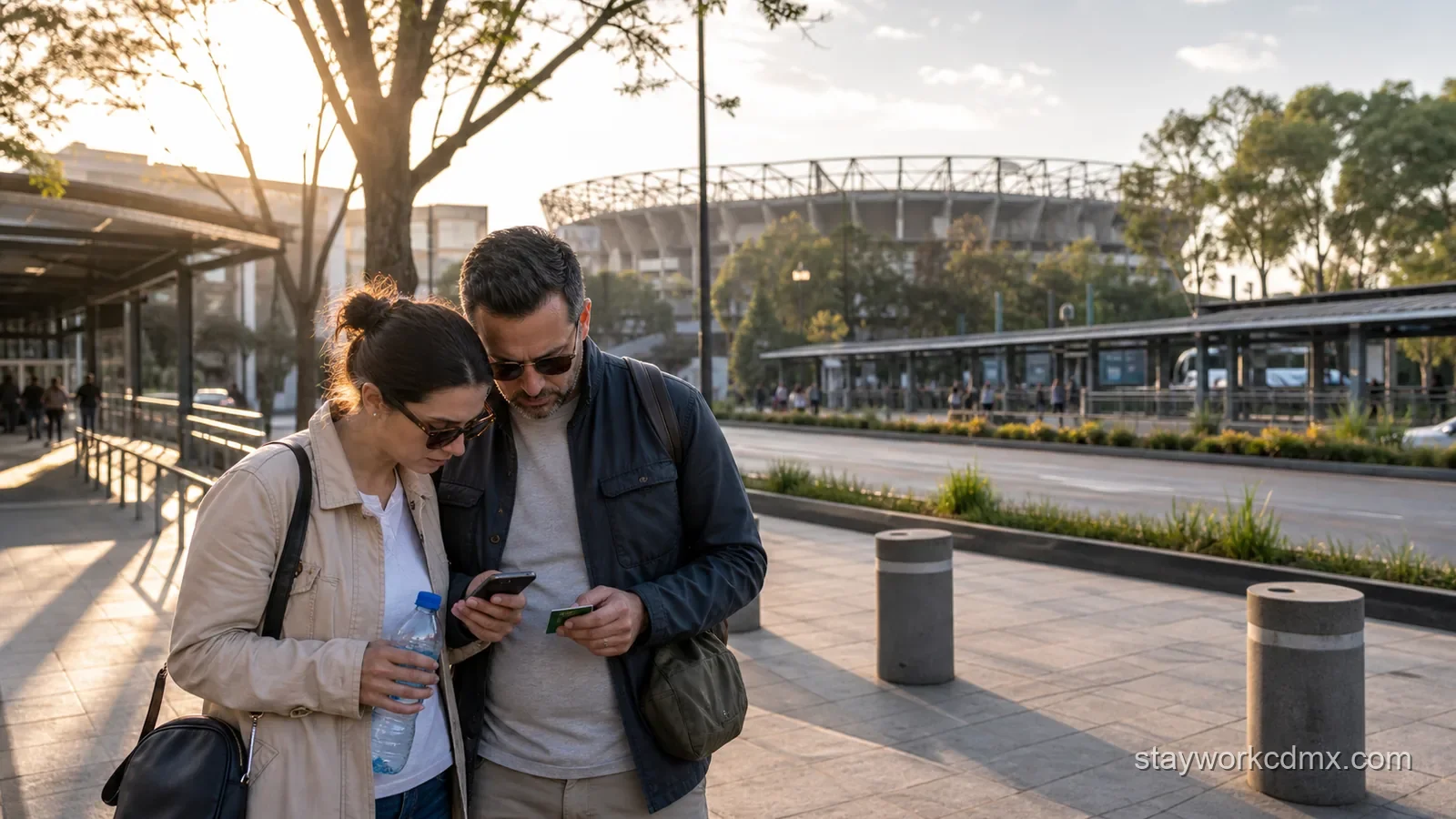
Do not build the plan around one perfect rideshare. Around major events, cars can be affected by traffic management, street closures, demand spikes, pickup zones, and walking detours. A rideshare may still be useful, especially for part of the route, but do not make it your only plan.
Transit can work better when streets are blocked, but do not invent a route from memory or old blog posts. Check official event guidance, current transit notices, and your map app on the day. If you are weighing car apps for normal city movement, use our Uber vs Didi in CDMX guide for the everyday tradeoffs, then adjust for the event.
A match-day checklist:
- Leave earlier than a normal map estimate suggests.
- Keep your return plan flexible.
- Expect the final approach and exit to involve walking.
- Avoid scheduling a flight, work call, or prepaid dinner too close to the match.
- Confirm your apartment access works if you return late.
- Carry enough phone battery for maps, tickets, and messaging.
Cost and Long-Stay Practicality
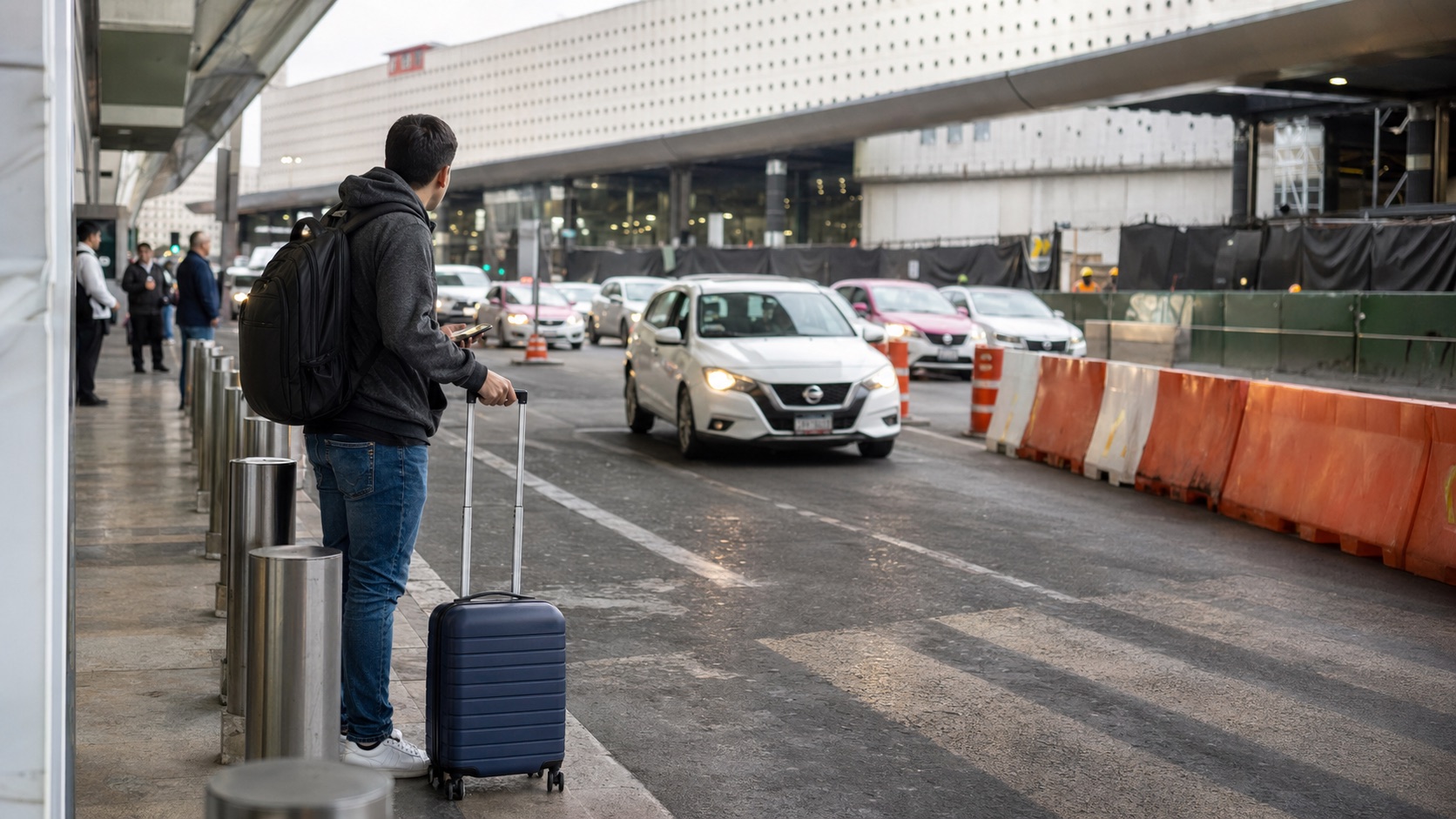
World Cup demand changes the booking environment, but it does not make every expensive booking a good one. For a short match trip, paying a premium for the perfect location may be rational. For a 30-night stay, the math changes. You need a real desk, reliable Wi-Fi, laundry, kitchen basics, grocery access, bedroom quiet, and a host who can answer practical questions. A stadium-adjacent room that looks convenient for one night can become a weak monthly base.
That is why remote workers and longer-stay guests should look past the neighborhood name and compare actual apartments. Start with where to stay in Mexico City monthly if you are still choosing the base, then compare Mexico City monthly rentals when the trip starts to look like 30+ nights.
For World Cup 2026 there is a related question: where to stay if you care about the tournament atmosphere more than one stadium route. We cover that broader decision in World Cup 2026 Mexico City: where to stay .
Final Recommendation
If you are attending one match at Estadio Azteca, stay central unless you have a specific reason not to. For most visitors, that means Roma Norte, Condesa, or Narvarte. Roma Norte is the best full-trip base if you want restaurants, cafes, social energy, and the easiest first-time CDMX experience. Condesa is better if you want parks and a calmer rhythm. Narvarte is the practical compromise if you want a quieter apartment-first stay with easier south-side access.
Stay near the stadium if the match is nearly the whole trip. Stay in Polanco or Reforma if premium hotels, corporate meetings, or museums matter more than match-day efficiency. Otherwise, choose the neighborhood that will make your non-match days work, then treat Estadio Azteca as a planned route.
For monthly stays
Book a World Cup-ready CDMX base
If your dates are firm, book direct with StayWork CDMX and confirm which Roma Norte or Narvarte apartment fits your match schedule.
FAQ
Should I stay near Estadio Azteca or in Roma Norte?
Stay near Estadio Azteca if the match is the main purpose of a very short trip. Stay in Roma Norte if you want the stronger full-trip base: restaurants, cafes, nightlife, walkability, furnished apartments, and easier first-time CDMX routines.
Is Narvarte a good base for Estadio Azteca World Cup matches?
Yes, Narvarte can be a strong compromise. It is calmer and more practical than Roma or Condesa for apartment-first stays, while still feeling more central and livable than the immediate stadium area.
Is Condesa practical for a World Cup match at Estadio Azteca?
Condesa is practical if you leave early and plan the route. It is not the closest neighborhood, but it is a better daily base for parks, restaurants, walking, and recovery days.
Should I rely on Uber or Didi after a World Cup match?
Do not rely on one rideshare pickup as your entire plan. Demand, traffic, closures, and pickup rules can change around major events. Have a transit or walking-plus-rideshare backup and check day-of guidance.
Where should remote workers stay during World Cup 2026 in CDMX?
Remote workers should usually choose Roma Norte, Condesa, or Narvarte before the stadium area. The apartment, desk, Wi-Fi, kitchen, laundry, and quiet nights matter more over a work stay than saving time on one match-day transfer.