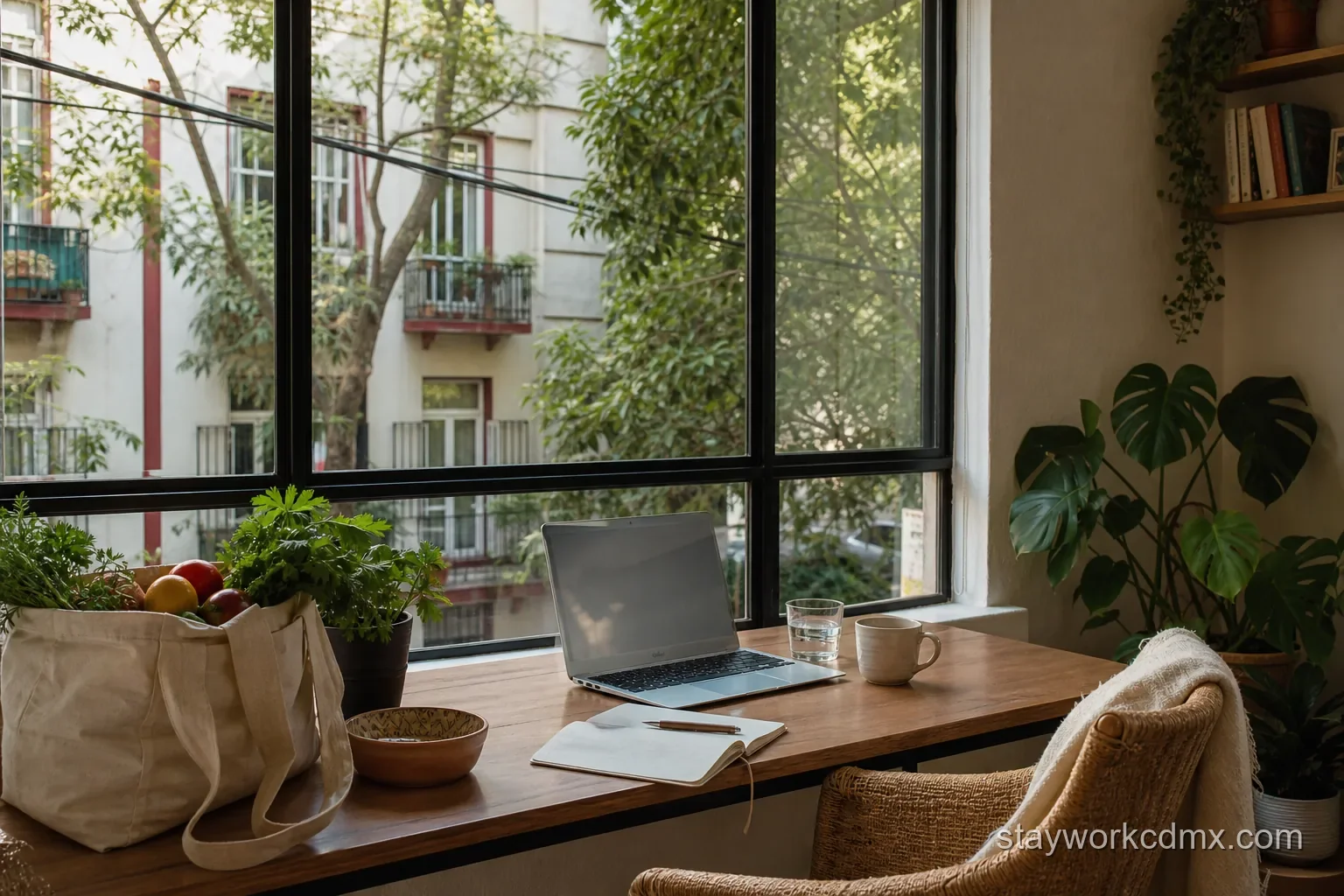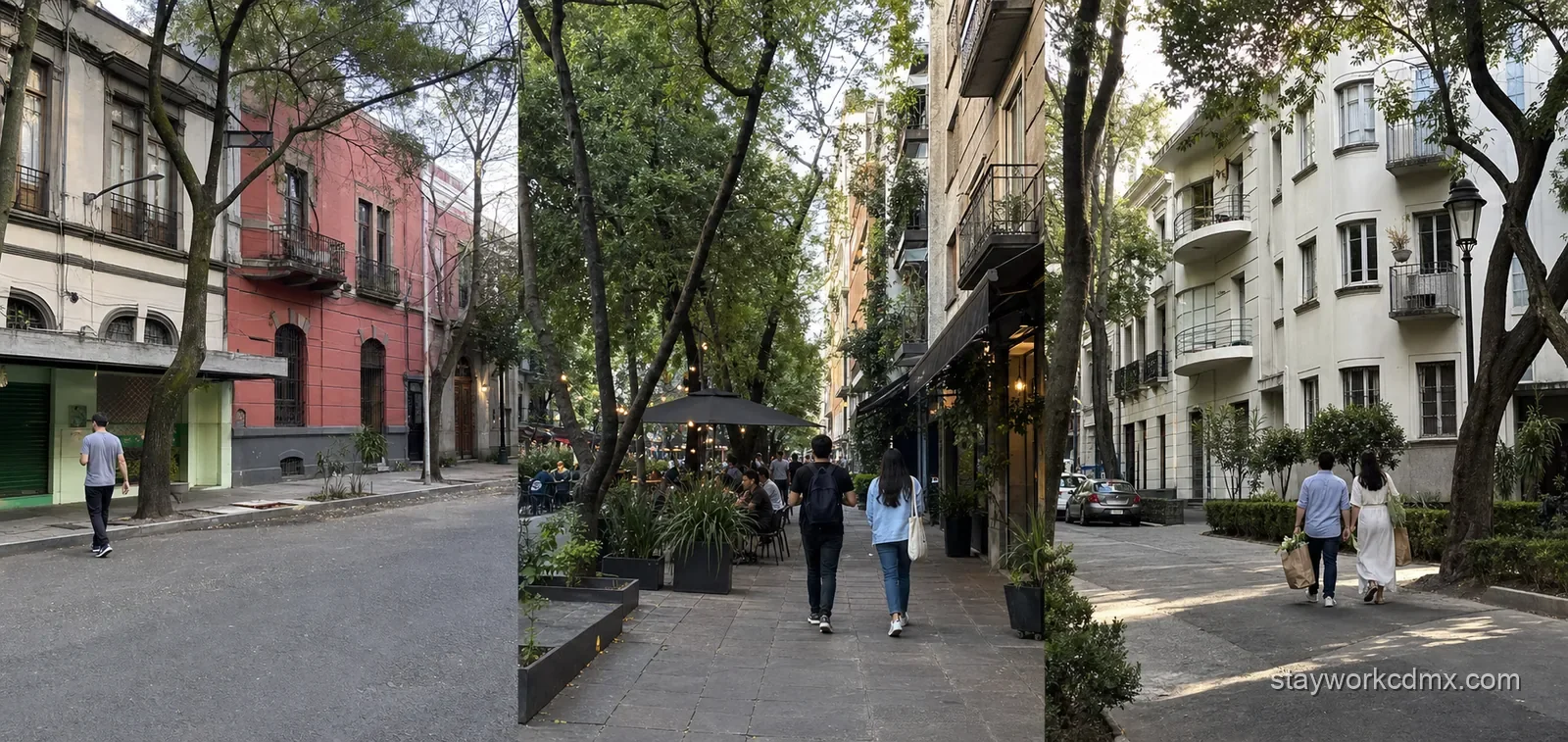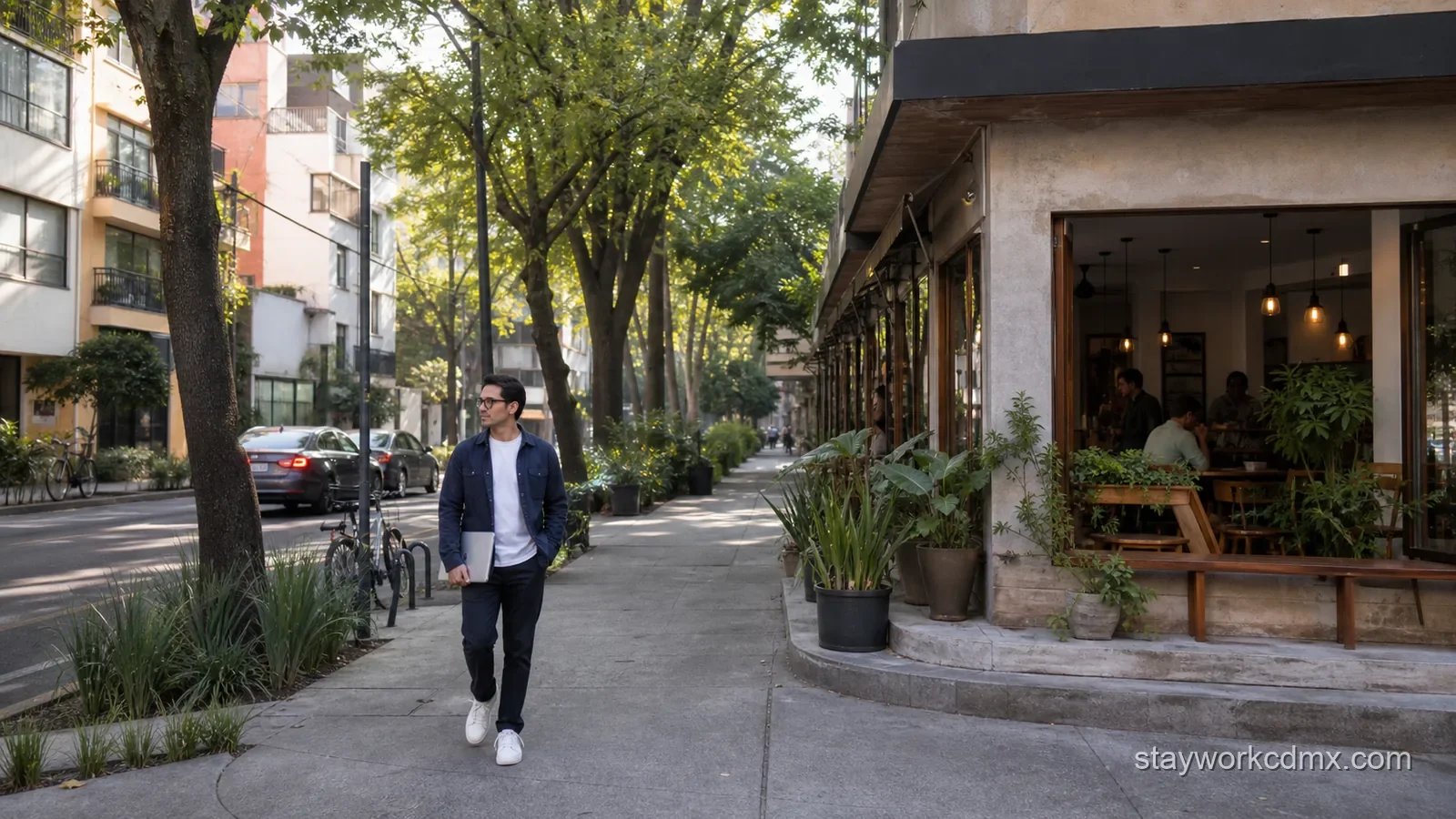
Escandón is a bridge neighborhood. It sits between Condesa, Roma, Tacubaya and the south-central network, so transport can point in several directions. That flexibility helps on a 30+ night stay, but it also means the exact block matters: a large avenue, a difficult crossing or an apartment above a noisy route can erase the benefit of being “central.”
Use this guide with Escandón I monthly cost and routine and the Escandón remote-worker guide before booking a furnished apartment.
Quick answer
Is Escandón good for a long-stay commute?
The answer in one table
Escandón transport and accessibility fit
| Pattern | Escandón strength | Check before booking |
|---|---|---|
| Roma/Condesa | Line 9 and walking connections | Avenue crossings and busy corners |
| Tacubaya/Reforma | Metro connections and rideshare access | Direction, transfer time and late return |
| Medical corridor | Chilpancingo/Centro Médico connection | Shift-time crowding and station exit |
| Airport day | Central position and planned taxi | Elevator, luggage and curbside drop-off |
| Mobility needs | Several route choices | Sidewalk slope, curb cuts and building steps |
Line 9, Metrobús and the bridge effect
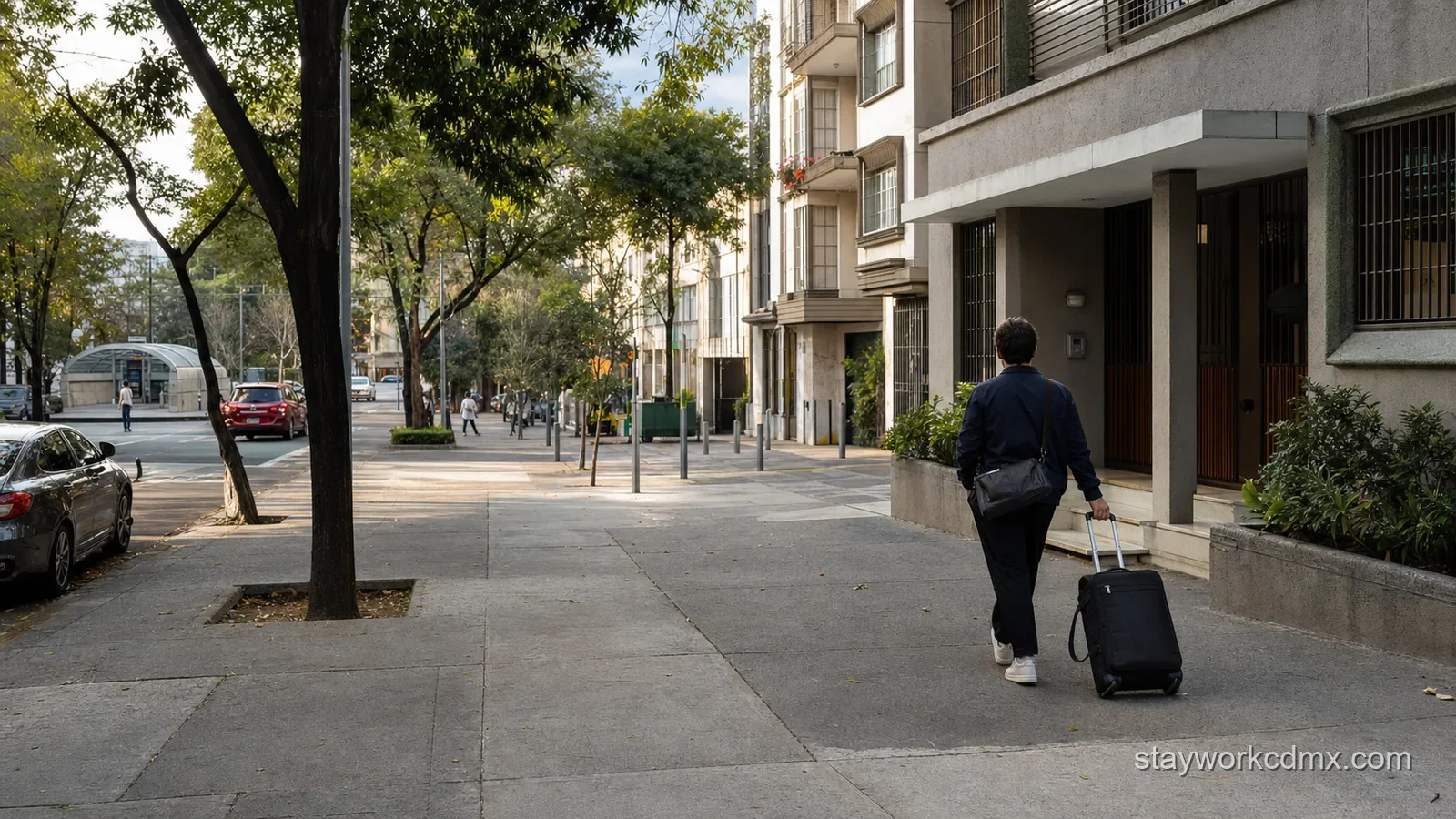
Line 9’s Patriotismo, Chilpancingo and Centro Médico stations are useful for moving between east and west central CDMX. Metrobús Line 2 is another surface corridor; the official fare is MXN 6 with transfers governed by the payment rules . Metro fare is MXN 5.
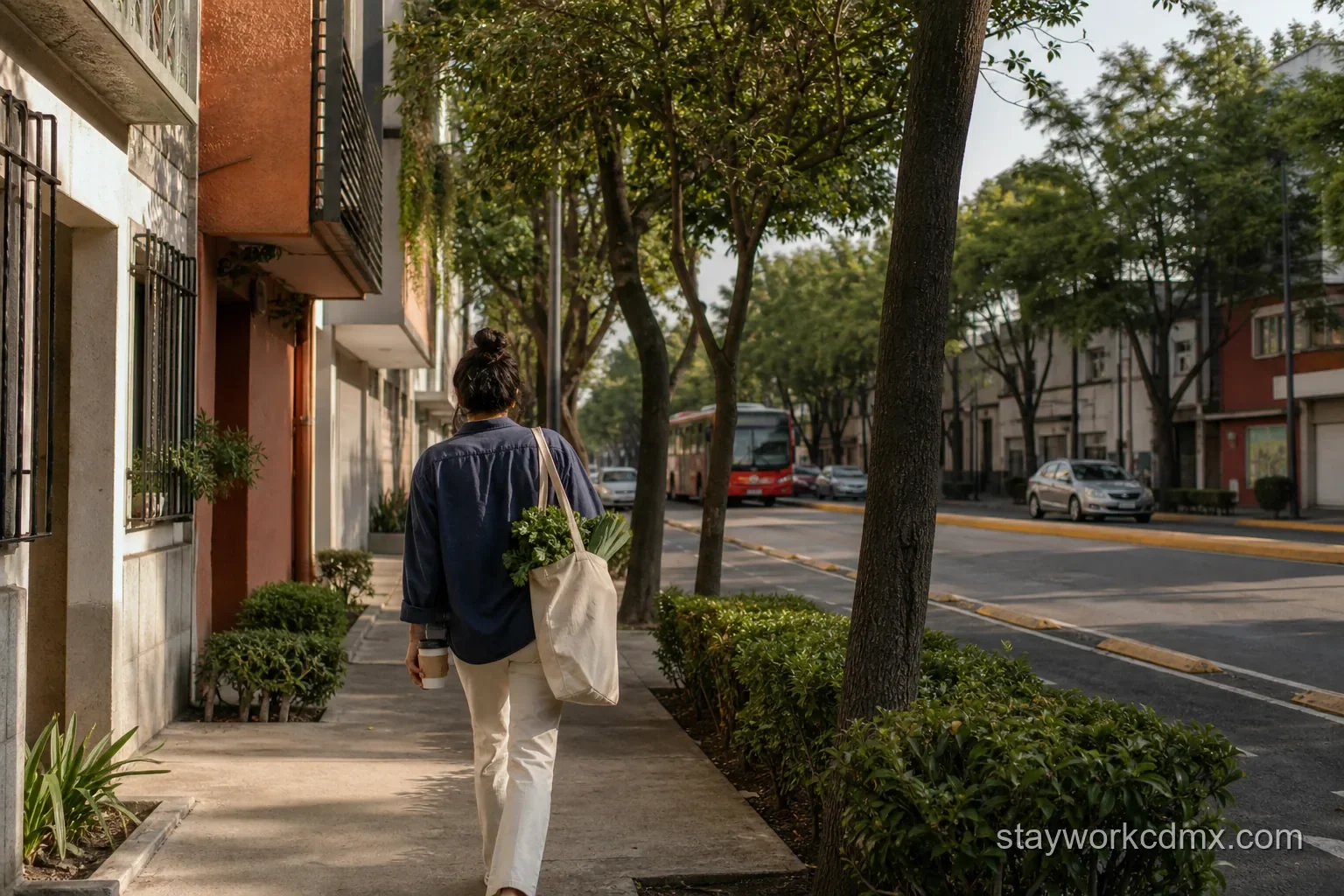
The bridge effect helps most when you do not have a single commute. A remote worker can walk to Roma or Condesa, take Line 9 toward Centro Médico, or use a taxi toward Tacubaya when carrying bags. For a long stay, budget a few rideshares for rain and late returns rather than assuming every route will be pleasant on foot.
Accessibility and the last block
Check the official Metro accessibility equipment list for Patriotismo, Chilpancingo and any transfer station you rely on. Equipment status changes, and an elevator may be at a different entrance from the one a maps app suggests.
Escandón’s streets vary sharply. Ask for a daylight video from the building to the station, including crossings, parked cars and any slope. Confirm steps from sidewalk to lobby, elevator reliability, bathroom access and whether a taxi can stop at the door. “Five minutes from Patriotismo” is not enough evidence.
Long-stay route patterns
Escandón fits an experienced city traveler who wants a local apartment base with several central directions. It also suits professionals with meetings in Roma, Reforma and Centro Médico, couples with different schedules and guests who want to walk to Condesa without sleeping on its busiest streets. If your route is almost entirely south-central, compare Narvarte or Del Valle; if your routine is all cafés and nightlife, compare Roma Norte.
A practical week
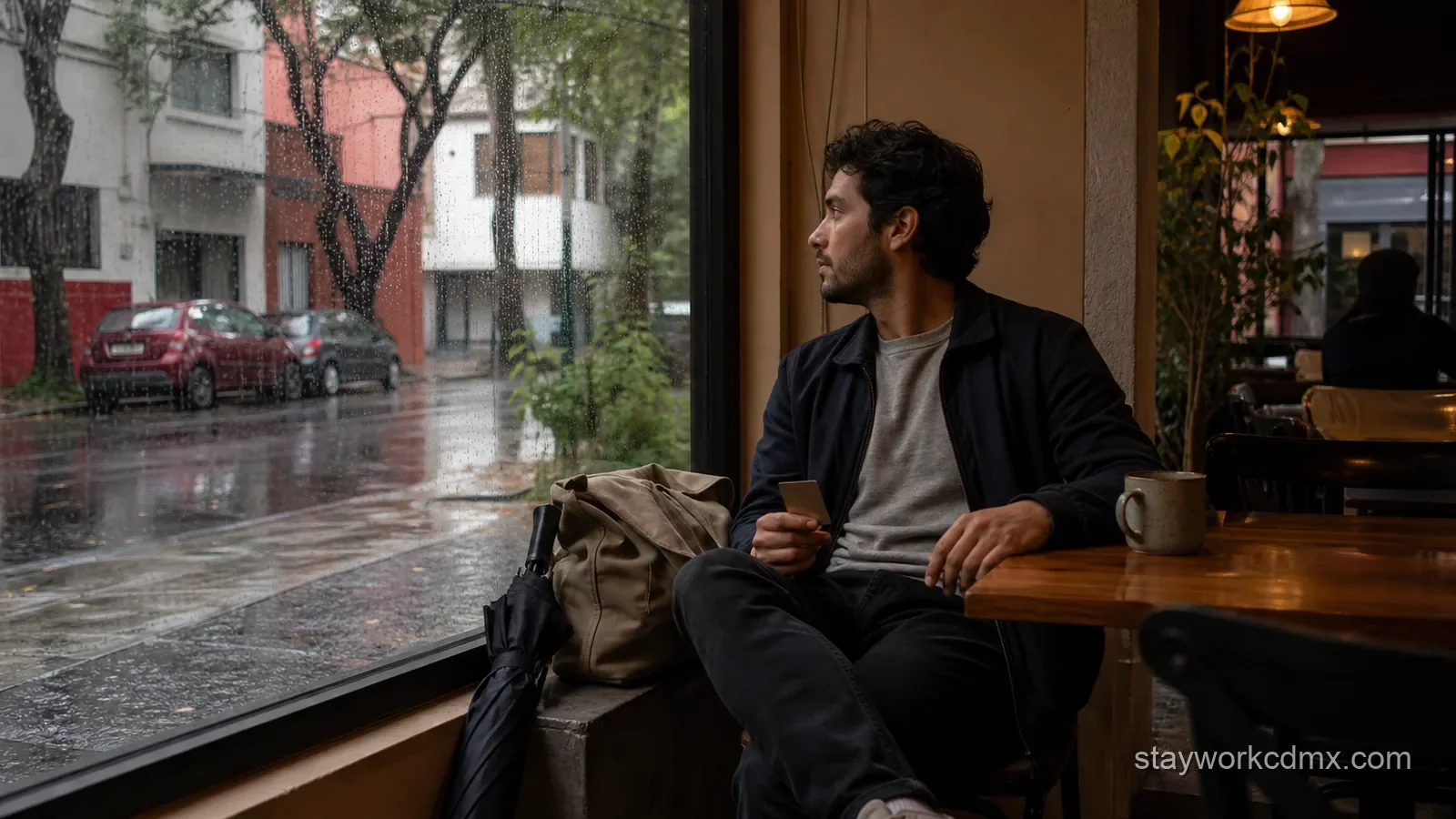
Monday tests the station, desk, Wi-Fi and grocery loop. Tuesday uses the apartment for calls and a short walk to Roma. Wednesday tests the real meeting route at peak hour. Thursday uses Metrobús or Line 9 for a planned outing. Friday chooses the easiest route home. Saturday combines market errands and one longer trip. Sunday prepares the apartment and backup hotspot.
Booking checklist
- Which station entrance and direction are practical from the exact address?
- Is the final block flat and clear with luggage or a walker?
- Is the station elevator currently listed as functioning?
- Can a taxi stop at the building entrance?
- Does the bedroom face an avenue, bar, school or construction site?
- Is the building lift reliable and wide enough for bags?
- What happens if the station lift, building lift or Wi-Fi fails?
- What is the final all-in monthly amount?
Use the monthly apartment checklist and confirm dates on Book Direct .
Three route tests before choosing the block
For the Roma/Condesa test, walk from the apartment to the nearest practical route toward Roma Norte or Condesa. Notice the avenue crossing, curb condition and whether the sidewalk stays usable. A five-minute map estimate can become fifteen minutes with a stroller, walker, suitcase or heavy groceries.
For the Tacubaya test, try the route toward Tacubaya at the hour you would use it. Check station transfers, lighting and whether the building is easy to find on the return. Escandón’s bridge position is useful only if the return route feels predictable.
For the workday test, work from the apartment during a call-heavy morning, then take one short rideshare or transit trip. If the room is noisy or the desk poor, daily café and taxi spending will swallow the transport advantage.
A realistic mobility budget
Metro and Metrobús fares are low, but cheap transport is only part of Escandón’s value. Budget a normal public-transit line, a rain and luggage reserve, and occasional mobility rides. A 30-night guest may take dozens of short trips; a single difficult crossing repeated twice daily can cost more in time and fatigue than a modest rent premium for a better block.
The apartment should also cut unnecessary trips. Confirm a real kitchen, laundry, water access, reliable Wi-Fi and a desk with a supportive chair. A good unit lets you walk for food and use Line 9 for planned meetings instead of travelling because the apartment cannot support the workday.
Accessibility protocol
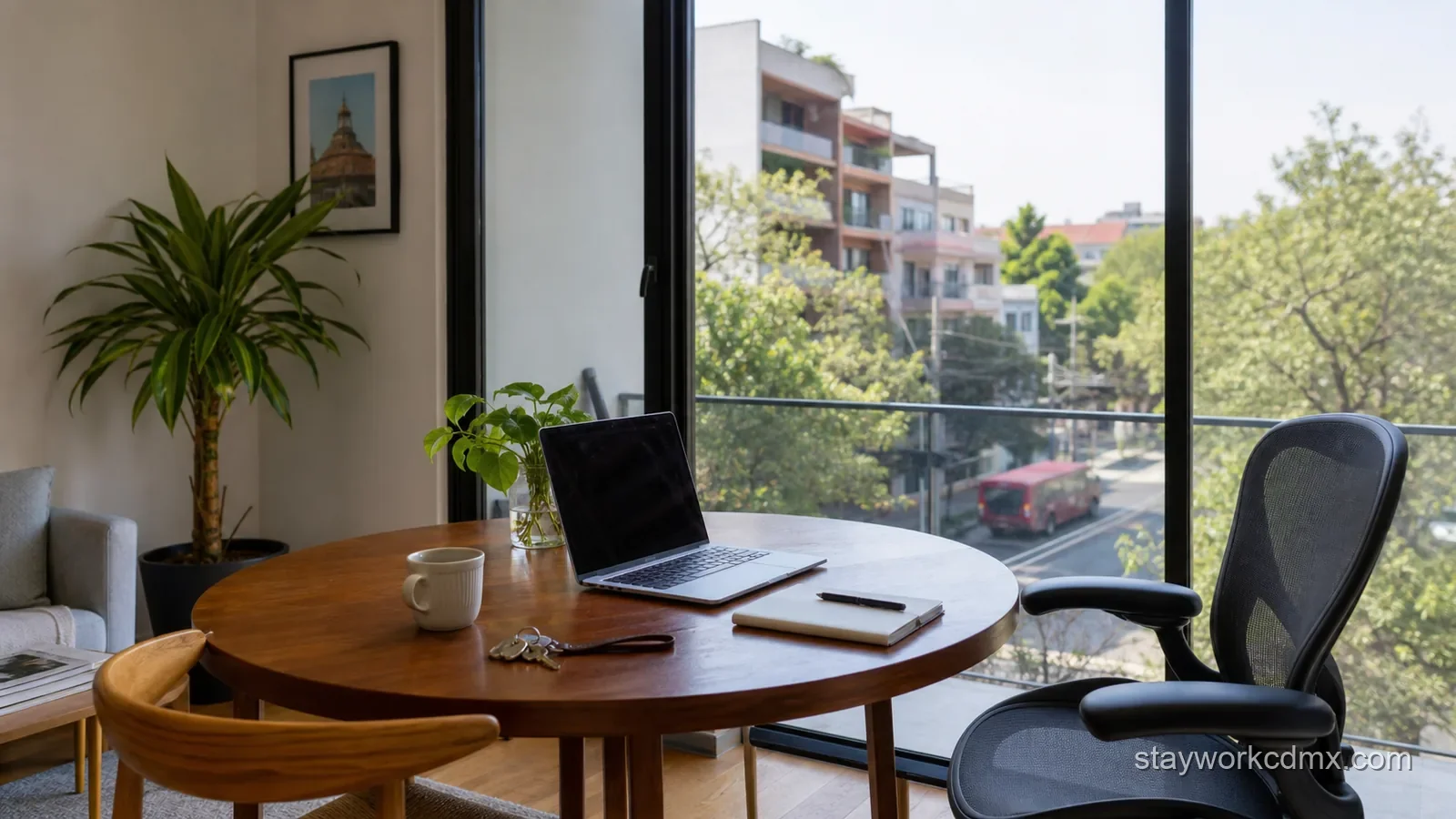
Check the Metro equipment list for Patriotismo, Chilpancingo and any transfer station. On arrival, test the route at morning rush and after dark. Photograph the best crossing, the building entrance and the station exit. Save the host’s maintenance contact and a taxi pickup point.
Inside the unit, test every door, the lift, the bathroom threshold and the path from bed to desk. If you need a mobility aid, ask for exact dimensions and a current video. An operator who knows the block can often recommend a less busy station entrance or a taxi route that a generic maps pin misses.
Who should choose Escandón?
Escandón fits an experienced city traveler, a remote worker with several central meeting points and a couple who wants Roma/Condesa access without living on the busiest corridor. Narvarte or Del Valle may be easier for a fixed south-central commute; San Rafael or Santa María may be better for Reforma and north-central routines.
Escandón route planning for a full month
Before booking, draw a small triangle: apartment, work destination and the route you use after dark. Add a fourth point for groceries or the market. Test the triangle at morning rush, early evening and a rainy forecast. The same block can feel simple in daylight and awkward when traffic, delivery vehicles and curbside parking remove the clear path.
For a professional who moves between Roma, Reforma and Centro Médico, the best apartment is not always the one closest to Patriotismo; it may be the one with a reliable lift, a taxi stopping point and a quieter bedroom that saves extra travel. For a guest with mobility needs, ask for exact measurements and a current route video from the curb to the apartment.
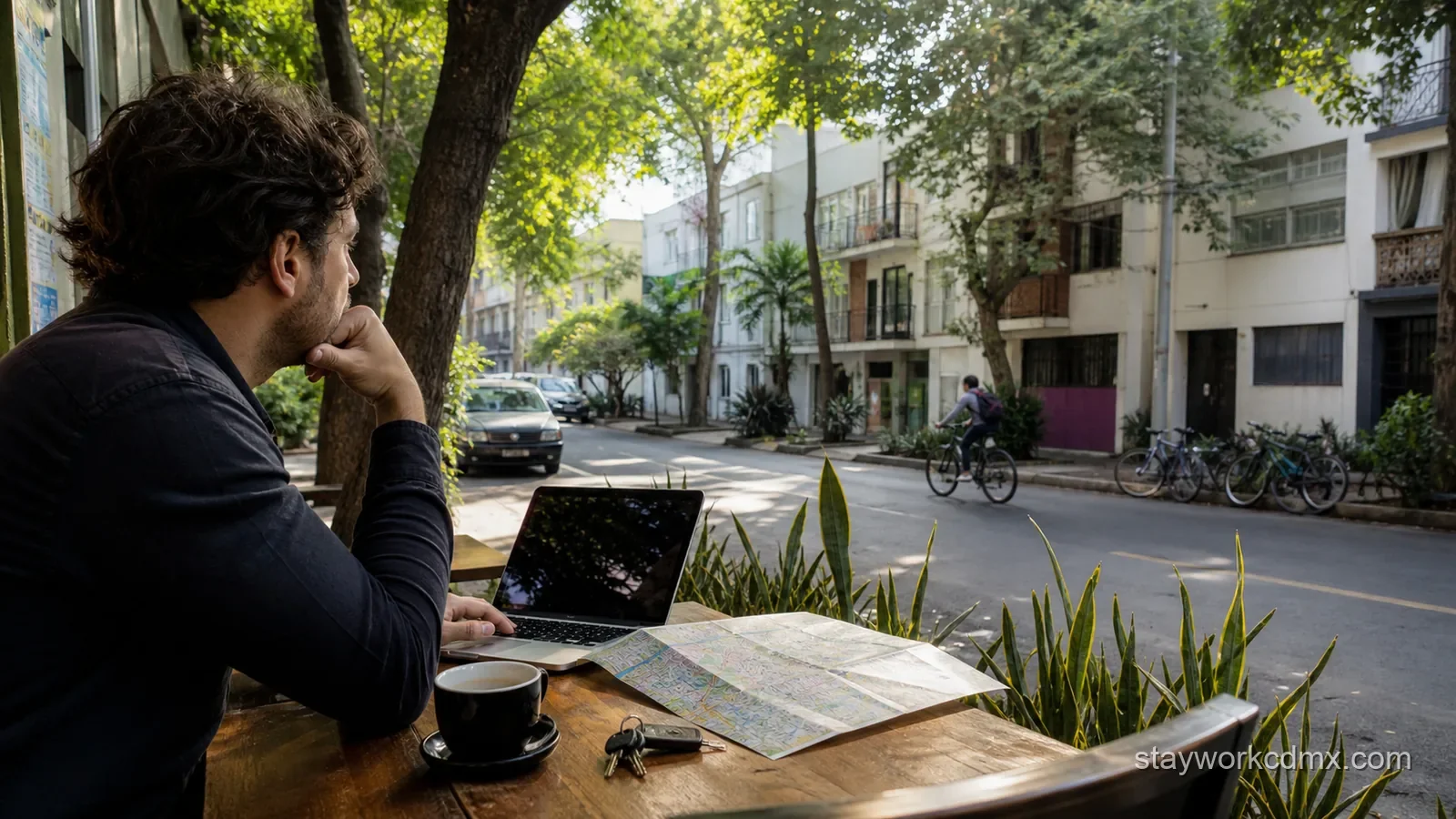
Use the first week as a trial. Take Line 9 once, Metrobús once and a direct rideshare once. Compare stairs, crowding, time and physical effort. Then choose the default route and keep the others as backups. A long stay gets easier when the backup is decided before a problem happens.
Keep an Escandón route card
Save the apartment pin, the station entrance, the easiest avenue crossing and the taxi pickup point. Record the route at the actual work hour and after dark. If a crossing is blocked by traffic or a sidewalk becomes narrow, note the alternate rather than assuming you will remember it when tired.
Ask the operator who handles building access, lift repairs and urgent maintenance. For a 30+ night guest, a reliable contact is worth as much as a station map. The best unit is one where the route, the entrance and the support plan are clear before arrival.
The monthly mobility reserve
Keep a reserve for a direct ride when rain, luggage, fatigue or a station outage makes the normal route unreasonable. Escandón’s value comes from several transport directions, but each direction still has a final crossing and a building entrance. One well-timed ride can protect a workday better than a cheaper apartment that forces repeated taxis.
During the first ten days, record the route you actually use, not the one you imagined from the map. Note station stairs, platform crowding, lighting, curb ramps and the location where a driver can stop. Share the route card with anyone travelling with you, particularly couples with different schedules and guests arriving with equipment.
Then decide whether Escandón’s bridge position is helping. If most trips are south-central, Narvarte or Del Valle may reduce effort. If most are Reforma and Centro, San Rafael or Santa María may be simpler. A cluster comparison is useful only when it follows real journeys.
When the route changes
Rain, avenue traffic, construction and station maintenance can change an Escandón route. Save the alternate station, a second crossing, the taxi pin and the apartment contact offline. If you depend on a lift or step-free path, check its status before leaving and leave time for the alternate entrance. Escandón suits guests who know their default and backup route; its flexibility is a long-stay asset only after it has been tested in real conditions.
A seven-day route diary
Monday tests Patriotismo or Chilpancingo and the grocery loop. Tuesday protects apartment calls and walks toward Roma. Wednesday takes the real meeting route at peak hour. Thursday tests Metrobús or the Tacubaya connection. Friday chooses the easiest route home. Saturday combines errands and a planned outing. Sunday checks the week’s station status, weather and building contact. The diary keeps Escandón flexible without making every trip experimental.
What makes the last mile manageable
Measure Escandón from the building door to the curb, from curb to station and from the station exit to the destination. A major avenue, parked cars or a narrow sidewalk can add more effort than the train itself. Check curb ramps, lighting, rest points and whether a taxi can stop at the entrance. Ask for a current video when a guest uses a mobility aid or carries work equipment.
Keep the alternate station, taxi pin and building contact with the reservation. If the default route fails, a prepared backup protects the workday and prevents an expensive improvised trip.
Turn Escandón’s choice into a documented routine
Escandón points in several directions, and they help only when the guest knows which one matters on an ordinary workday. Walk from the apartment to the station, the closest grocery option and the after-dark route. Test the crossings with the same bag or equipment you will carry later. Write down where the sidewalk narrows, where a driver can stop and which station entrance avoids unnecessary stairs.
Keep one default and two backups. A default may be Patriotismo or Chilpancingo for a central meeting. The backups might be Metrobús for a different destination and a direct ride for rain, luggage or fatigue. Save the exact destination entrance, not only “Reforma” or “Centro Médico,” because those areas have more than one useful arrival point. Keep the route card offline with the host’s maintenance contact.
The apartment matters too. A calm bedroom, supportive desk, kitchen, laundry and reliable Wi-Fi prevent trips that happen only because the unit cannot support a workday. A lift and a clear path from curb to door can be worth more than a few minutes closer to Patriotismo. Ask for a route video and measurements before payment so the building does not undermine the neighborhood’s value.
At the end of the first week, compare each route’s time and effort. If one corridor is consistently noisy, crowded or awkward, use the alternate rather than forcing the original plan. Escandón works well for experienced long-stay guests who turn its many options into a simple routine.
Final verdict
Escandón is a strong multi-directional long-stay base when you evaluate the route from door to door. Its advantage is having several routes to choose from. Pick the apartment whose block, building and return route remain usable when the weather is bad and the workday is long.
For monthly stays
Plan an Escandón long stay
Sources and research note
- Metro accessibility , Metro network , Metrobús payment .
- StayWork’s Escandón monthly guide and remote-worker guide .