Escandón I can be a very good monthly base for a remote worker, but the value is not simply “Roma Norte for less.” What decides it is how much furnished rent buys you, how often you cook, whether your apartment has a real desk and reliable internet, how many rides you take after dark, and whether a normal weekday feels easy.
This guide models a realistic 30-day stay in Escandón I using July 2026 rental listings, official transport fares, current internet-provider prices, Google Maps review patterns and the geography around Mercado Escandón, Patriotismo, José Martí and the Eje 4 Sur corridor. Treat the numbers as planning bands: furnished inventory, exchange rates, deposits, utilities and dates can move the final total substantially.
A single remote worker should plan roughly MXN 30,000–38,000 for a comfortable month before flights and nightlife, assuming a furnished one-bedroom or compact two-bedroom, a mix of cooking and eating out, public transport, several café visits and occasional rideshares. A lean month can come in below that if you find a simple unit and cook often. A premium apartment with a separate office, terrace, parking or included services can take the month well above MXN 40,000.
If you are comparing neighbourhoods before booking, start with the Escandón remote workers guide , then use the Mexico City rentals monthly hub to compare the apartment itself as well as the postcode. If Escandón is only one of several candidates, the ranked best Mexico City neighborhoods for remote workers in 2026 compares it against Roma Norte, Narvarte, Del Valle and five other areas on noise, rent, transit and café depth. The Escandón food guide covers the daily meal rotation this article assumes.
Quick answer
For a comfortable 30-day month in Escandón I, plan around MXN 30,000–38,000 before flights and nightlife. That usually means a furnished one-bedroom or compact two-bedroom, a real work setup, groceries plus regular local meals, public transport, several café visits and occasional rideshares. You can spend less with a simpler unit and more cooking, or more when a separate office, terrace, parking, coworking and restaurant-heavy evenings matter.
The apartment choice changes the whole budget, so confirm the desk, chair, bedroom orientation, internet, laundry, included utilities and extension terms before comparing the rent headline.
The answer in one table
30-day Escandón I budget scenarios for one remote worker (MXN)
| Monthly category | Lean, apartment-first | Comfortable, balanced | Premium or social month |
|---|---|---|---|
| Furnished apartment | MXN 16,000–20,000 | MXN 20,000–30,000 | MXN 30,000–40,000+ |
| Groceries and market food | MXN 3,500–4,500 | MXN 4,500–6,500 | MXN 6,500–9,000 |
| Restaurants and delivery | MXN 1,500–3,000 | MXN 3,000–5,500 | MXN 6,000–10,000+ |
| Cafés and occasional coworking | MXN 500–1,500 | MXN 1,500–3,500 | MXN 3,500–6,500 |
| Public transport | MXN 250–600 | MXN 500–1,000 | MXN 1,000–2,000 |
| Rideshares and airport/late trips | MXN 300–900 | MXN 900–1,800 | MXN 1,800–3,500 |
| Mobile data and connectivity backup | MXN 150–500 | MXN 300–700 | MXN 500–1,200 |
| Estimated total before deposit | MXN 22,200–32,000 | MXN 30,700–48,000 | MXN 49,300–72,200+ |
The apartment line dominates the table. The food, transport and workday lines are where your choices show up. A guest who spends on a larger home office and cooks most evenings may spend less overall than someone in a cheaper unit who eats every meal out and works from cafés.
What current rent evidence says about Escandón I
Actual listings say more about rent than an invented neighbourhood average. In July 2026, current listing pages show several distinct bands:
- Houm lists a furnished 60 m², two-bedroom apartment at MXN 16,000/month with maintenance included . The listing includes a kitchen, a washing-machine connection and one parking space. It is a useful value reference, but it was also marked as heavily visited, a sign that inexpensive furnished inventory can move quickly.
- Doorvel shows a furnished 67 m², two-bedroom, two-bath apartment at MXN 23,500/month . The listing was published in March 2026 and updated in May, with a furnished living area, equipped kitchen, elevator and parking.
- Inmuebles24’s Escandón I results include a 45 m² furnished one-bedroom at MXN 19,000/month . The same results show two-bedroom options around MXN 27,000–28,000 and higher-end units around MXN 40,000 when they include more space, terrace, parking or a dedicated study.
- A BuscoInmueble listing shows a furnished two-bedroom at MXN 30,000 with maintenance and high-speed internet included . Included services reduce setup friction, but you still need to confirm the actual speed, router position, fair-use conditions and whether electricity or gas is also included.
These examples suggest a working range of MXN 16,000–30,000 for ordinary furnished one- and two-bedroom inventory, with a premium band above MXN 30,000 for more space, an office, outdoor space, parking, security or bundled services. A flexible, hotel-style 30-night stay is a different product. A local lease may require a deposit, a legal policy, an aval or a minimum term; a serviced apartment may cost more but include furniture, Wi-Fi, cleaning and a simpler arrival.
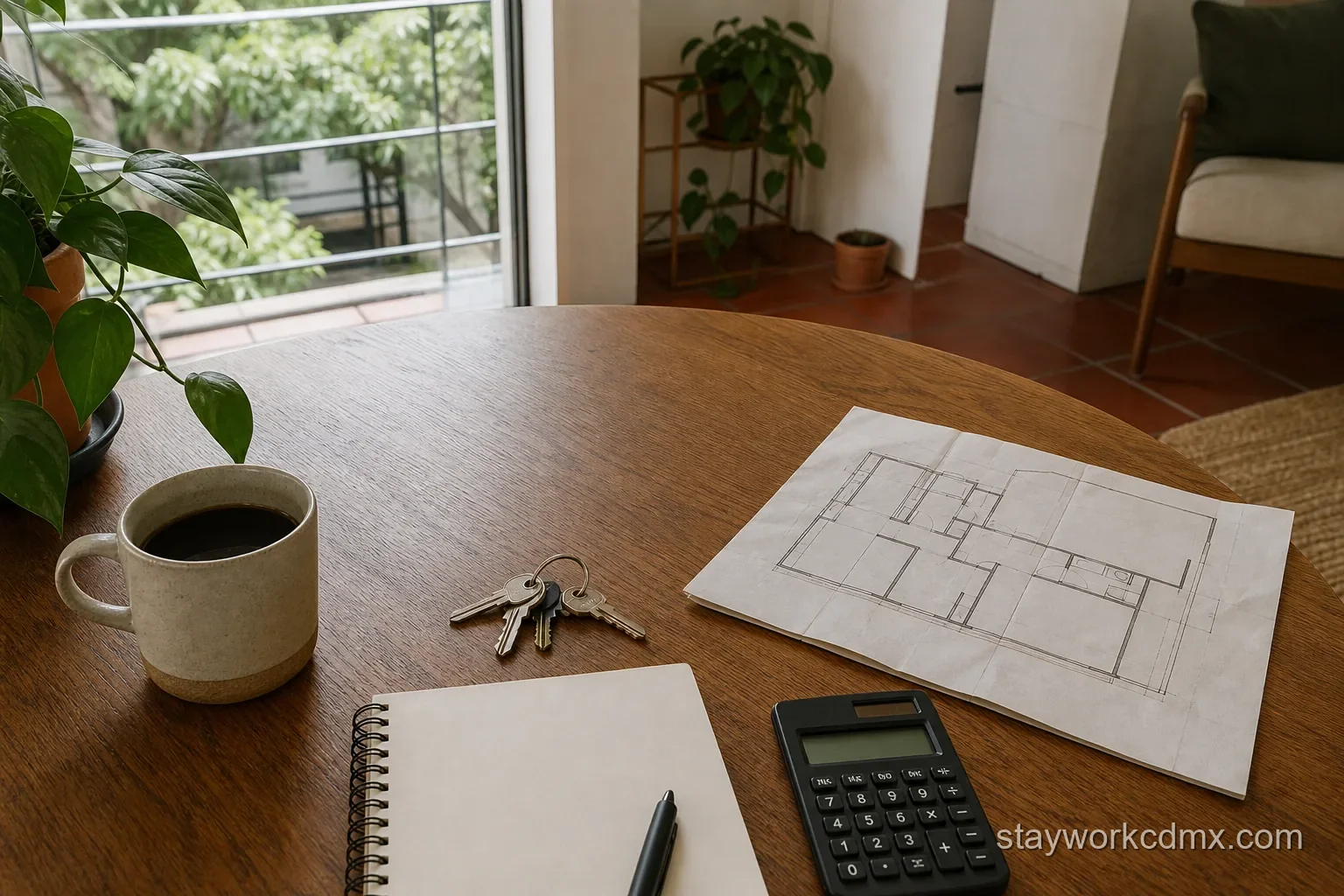
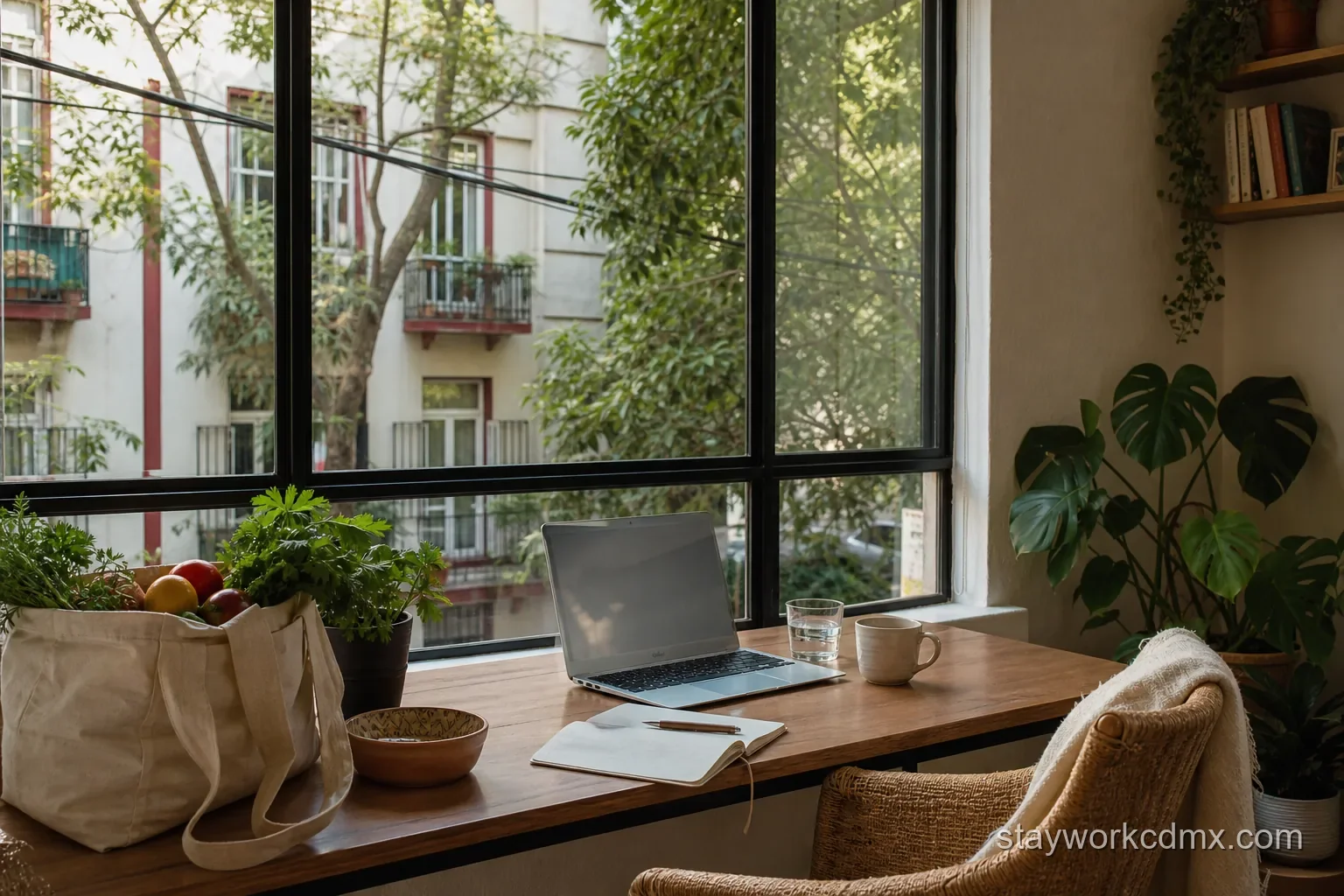
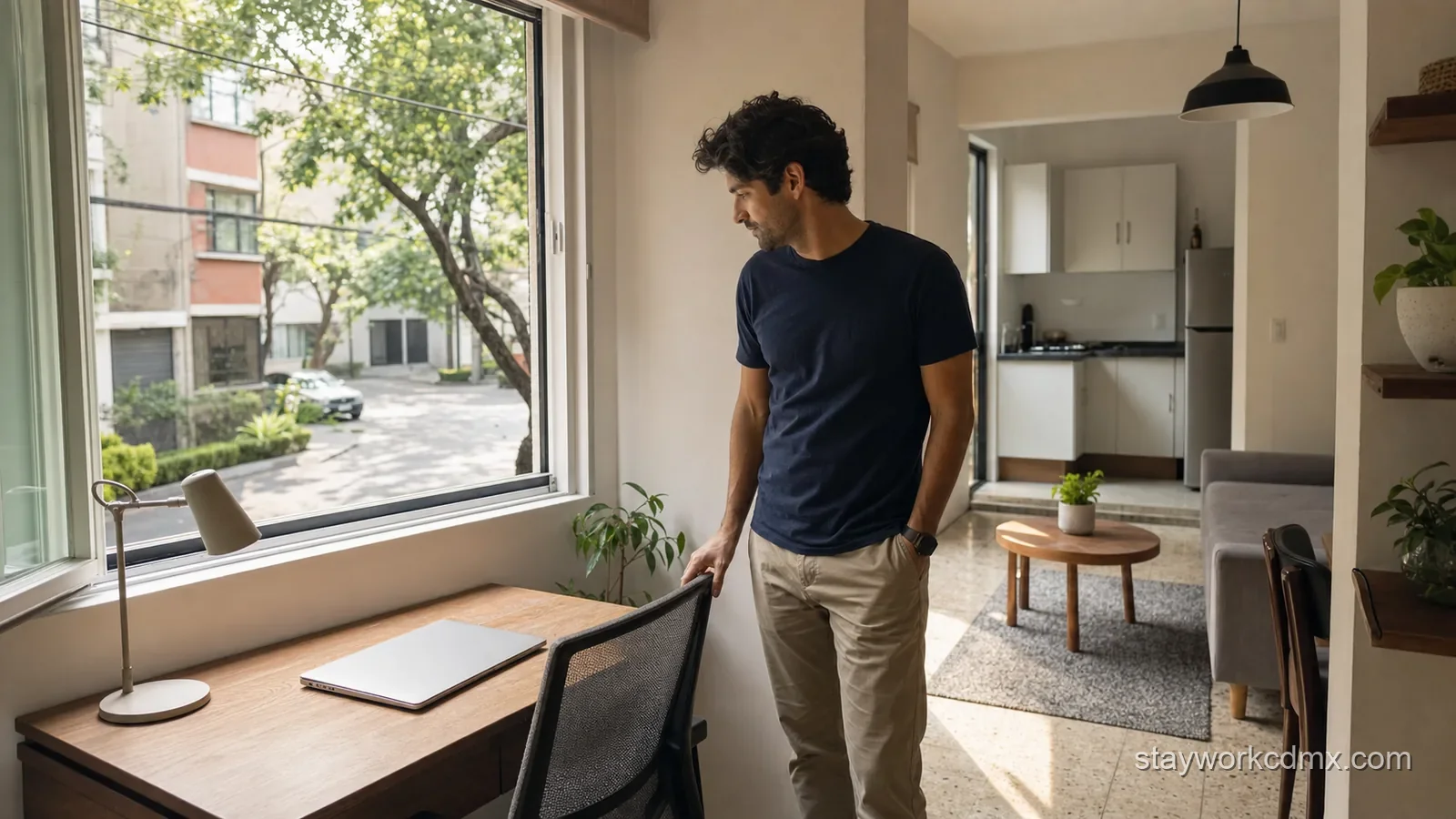
Editorial image created for StayWork CDMX to illustrate the rental-comparison decision; it does not show a specific listing, floor plan or price.
For a remote worker, the cheapest listing matters less than these questions:
- Is the desk a real desk with a supportive chair, or a dining table that photographs well?
- Does the bedroom face an interior courtyard or a traffic corridor?
- Is the Wi-Fi dedicated to the unit, and where is the router?
- Are utilities, maintenance, cleaning and internet included in the total?
- Can you extend for one month without restarting the entire process?
- What happens if the apartment’s internet or hot water fails during a workday?
The furnished monthly apartment cost guide gives the broader CDMX context. In Escandón, a unit at MXN 19,000 with a quiet interior bedroom and reliable work setup may be better value than a MXN 16,000 apartment on a loud avenue that pushes you into daily café or coworking spending.
Three realistic 30-day budgets
Scenario A: the lean apartment-first month — around MXN 22,000–32,000
This is a solo guest who finds a simple furnished unit around MXN 16,000–20,000, works mostly at home, cooks four or five times a week and treats cafés as occasional changes of scene. Groceries sit around MXN 3,500–4,500. Restaurants and delivery stay near MXN 1,500–3,000 because the market and comida corrida fill the gaps. Public transport does most of the work, with a few rideshares and one airport transfer.
This scenario is realistic if the apartment already includes internet and basic utilities, the guest is comfortable with a compact kitchen and the workday does not require a private meeting room. Do not expect luxury on a tiny budget: the trade-off is less space, fewer restaurant nights and more planning around laundry, groceries and the workday.
Scenario B: the comfortable balanced month — around MXN 31,000–48,000
This is the budget I would use for most professionals comparing Escandón seriously. It assumes MXN 20,000–30,000 for a furnished unit with a proper workspace, MXN 4,500–6,500 for groceries and market purchases, MXN 3,000–5,500 for restaurants, MXN 1,500–3,500 for cafés or occasional coworking, and a transport mix that includes public transit plus a few rideshares.
The comfortable version has enough margin for a slow Saturday breakfast, two or three good dinners, a delivery night, a replacement charger or SIM, and the occasional day when you do not want to cook. It also covers the hidden costs of remote work: a second coffee when a call runs long, laundry pickup, a taxi during a storm, or a day pass when the apartment needs maintenance.
Scenario C: the premium or social month — MXN 49,000–72,000+
This is a larger or higher-spec apartment, often with a second bedroom or office, plus frequent restaurant meals, specialty coffee, coworking days, rideshares and weekend plans. It might include a MXN 30,000–40,000 apartment, MXN 6,500–9,000 in groceries and market items, MXN 6,000–10,000 in restaurants and delivery, and MXN 3,500–6,500 in workday alternatives.
The premium scenario is a better month only if the extra money buys something you use: a separate office, quiet bedroom, elevator, washing machine, outdoor space or a host who can solve problems quickly. Paying for a postcode while still taking calls from the bed is poor value.
Food: how a remote worker actually eats for a month
Profeco’s current monitoring gives a national reference point. In early 2026, the government described the 24-product PACIC basket at about MXN 844.10, and the Profeco price tool explains that it tracks selected essential products across establishments. That basket is designed for comparison and household staples, so it does not represent a complete one-person month with coffee, fresh produce, protein variety, snacks, delivery and restaurant meals.
In Escandón, food comes from three layers:
The market layer
The official Mercado Escandón listing places the market at José Martí and Agricultura and gives a usual schedule of 08:00–18:00, seven days a week. It is useful for produce, tortillas, meat, prepared food and a quick decision when the apartment kitchen is not inspiring. Market spending is flexible: you can buy a small bag of vegetables and tortillas, or turn the visit into a full seafood or prepared-food lunch.
The neighbourhood supermarket layer
Google Maps and local directories show Bodega Aurrera Express on José Martí, Tiendas 3B on Progreso and smaller abarrotes around the residential streets. The local supermarket directory is a starting point, but always open the live listing because convenience-store names and opening hours change. Use these for water, eggs, milk, cleaning products, snacks and the ingredients you do not want to carry far.
The meal-out layer
In Escandón you can eat economically without eating badly: a weekday comida corrida, tacos at José Martí, market seafood, a panini or a simple café breakfast can substitute for delivery. The Escandón food guide maps these choices in detail, including the market, Comedor Escandón, Tacos Ruben’s, Furia Café, VIA SOL, Oppa and La Poblanita.
A balanced single-person food budget looks like this:
| Food pattern | Weekly planning band | What it assumes |
|---|---|---|
| Cook-first | MXN 850–1,150 | Market produce, supermarket staples, simple breakfasts and lunches |
| Balanced | MXN 1,150–1,650 | Cooking most breakfasts, several lunches at home, two or three meals out |
| Social | MXN 1,650–2,400+ | Frequent delivery, specialty coffee, dinners and weekend plans |
Treat these as models: a person who buys premium coffee beans and imported snacks can spend more on groceries than someone eating three local meals a day. The monthly apartment should have enough fridge space, a usable knife, a working stove and basic cookware; otherwise the “cheap cooking” assumption collapses.
Internet, mobile data and work infrastructure
If the apartment includes internet
Ask for a recent speed test from inside the apartment, not a provider’s advertised maximum. Ask whether the router sits inside the unit, whether the host has a backup plan, and whether the signal reaches the desk and bedroom. A 200 Mbps plan can still perform poorly if the router is behind concrete walls or shared by several units.
If you need to arrange a connection
For scale, Telmex’s July 2026 Infinitum page lists 120 Mbps at MXN 389/month, 150 Mbps at MXN 435, 250 Mbps at MXN 499 and 350 Mbps at MXN 599, with promotions subject to conditions. izzi’s current internet page shows promotional plans from MXN 429–599 depending on speed and contract terms. These are household products, with no guarantee that a short-term guest can install service in a furnished apartment.
For a 30-day stay, the sensible order is:
- Book a unit with internet already active and testable.
- Carry a phone hotspot or local SIM as a backup for urgent calls.
- Use a café or coworking day pass only as a planned backup, not as your primary office.
- Never assume a provider can install service before your first client call.
Telcel’s current pages also show prepaid and time-based data options, but the best plan depends on your unlocked phone, eSIM access and usage. A local data backup in the MXN 150–500 range is a prudent line in the budget; heavy hotspot use can cost more.
Café work versus a real workspace
Almanegra’s Escandón location at Prosperidad 37 is listed as open roughly 07:30–21:00, and local café guides describe it as Wi-Fi-friendly. The Google Maps review trail surfaced through Wanderlog shows praise for the coffee and friendly staff but also repeated comments about the small footprint and limited comfort. For a remote worker, that makes it good for a focused block but no replacement for an office.
For a proper desk outside the apartment, Estación San Miguel publishes a day pass of MXN 410 and unlimited coworking at MXN 3,640/month . It sits just beyond the Escandón core, so treat it as a nearby fallback. Noox also lists a monthly dedicated-desk plan at MXN 6,500 , but verify the current location, access hours and what “dedicated” includes before using it in a budget.
Choose a work-ready apartment first, then use cafés or coworking for variety. The reverse order is expensive and fragile.
Transport: Escandón is inexpensive when you use the network
The neighbourhood’s biggest practical advantage is its connection to the Eje 4 Sur and Line 9 corridors. The Metro’s official Patriotismo page lists a MXN 5 fare, weekday service from 05:00 to midnight, and the Line 9 stations from Tacubaya through Chilpancingo and Centro Médico. The same page identifies a south exit toward Escandón and a connection to Metrobús Line 2.
Metrobús Line 2 has stations at Patriotismo and Escandón. The official Metrobús fare page lists MXN 6 per ride, with free transfers between lines within the stated two-hour and same-direction conditions. That makes a normal workday commute cheap if you are heading toward Roma, Centro Médico, Tacubaya or a connection elsewhere.
For a simple model, 44 weekday metro rides at MXN 5 equal MXN 220; 44 Metrobús rides at MXN 6 equal MXN 264. Add weekends, occasional transfers and a few rideshares, and a realistic monthly transport line is MXN 500–1,800 for most solo remote workers. An airport ride, late-night trip or frequent cross-city meeting schedule can push it higher.
Ecobici is another option for short hops, but check the membership category carefully. The official Ecobici terms show temporary passes and different conditions for national and foreign users . Do not buy a national membership at a discount if you are a foreign visitor; the site warns that the membership can be cancelled. For a 30-day stay, walk first, use public transport for the longer corridor and reserve rideshares for rain, luggage and late returns.

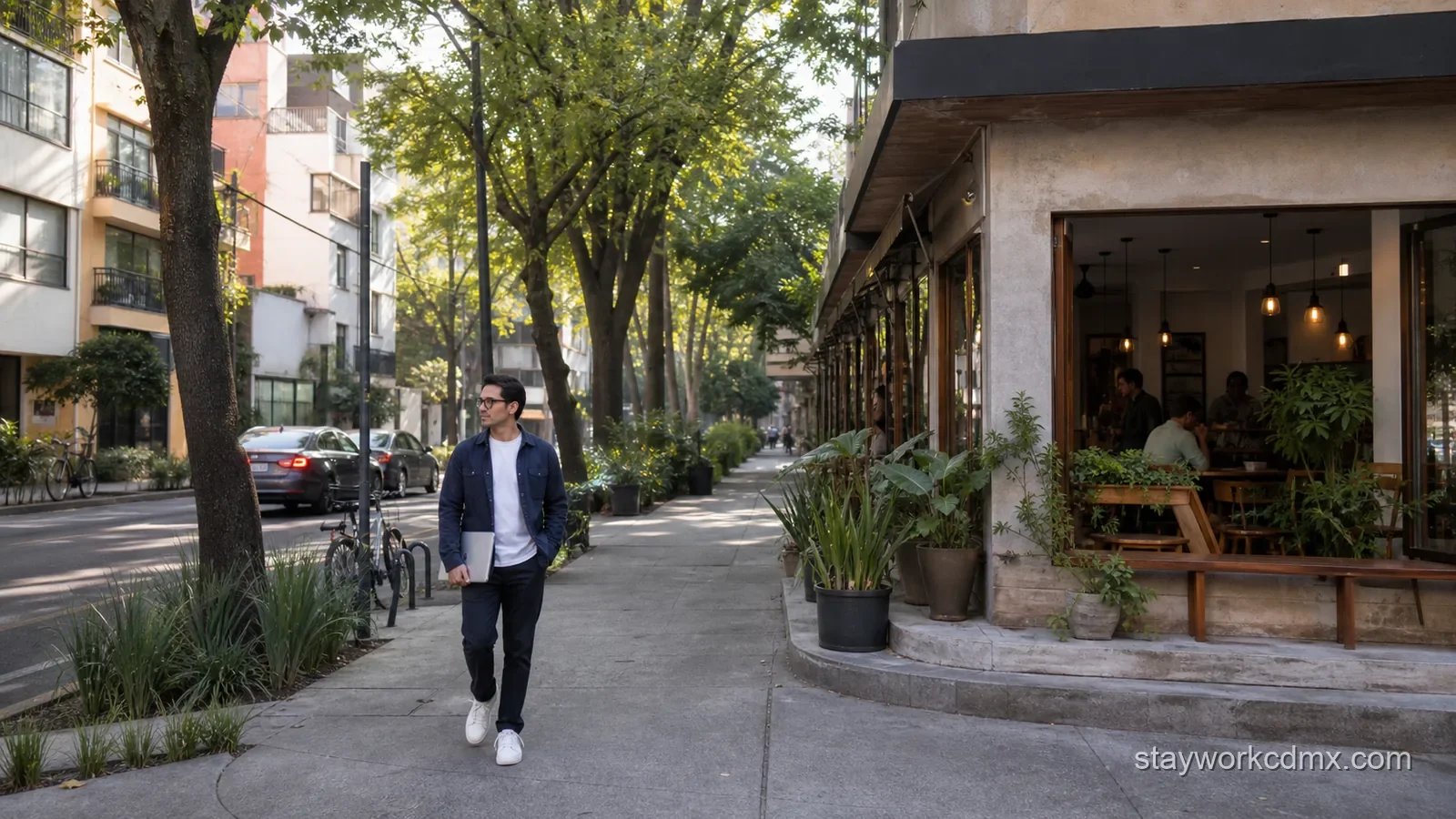
Editorial image created for StayWork CDMX to show the everyday market-to-transit rhythm; it is illustrative and does not identify a specific route or person.
A month in Escandón: the routine that makes the budget work
Monday: set up the week close to home
Pick up breakfast, water and two days of groceries at the market or a nearby shop. Test the apartment Wi-Fi at the desk, check the nearest laundry option and identify the quickest route to Patriotismo or the Metrobús. Work from home for the morning, then take a short walk through Jardín Morelos after lunch.
This is also the day to notice friction. Is the street louder than the listing suggested? Does the elevator stop working? Does the desk light create glare? A month is easier when you solve small problems in week one rather than accepting them as the price of travel.
Tuesday: a café block, not a café office
Work at the apartment for your important calls, then use Almanegra, Furia or another nearby café for a two-hour change of scene. Buy a proper drink and food, keep the setup compact and leave during the busy period. That is enough to break the visual loop without asking a small café to carry your entire workday.
If you have US or Canadian clients, the time zone works in your favour: a Mexico City morning can overlap with the East Coast workday, while the afternoon still leaves room for local errands. Use the working from Mexico City with US clients guide to plan calls around your actual team rather than a generic digital-nomad schedule.
Wednesday: market lunch and a work reset
Use Wednesday for a proper market lunch. Mercado Escandón is usually open during the day, and the official city profile places Jardín Morelos a short walk away. A market meal, a short park walk and an afternoon at the apartment are cheaper and often more restorative than a long rideshare to a famous restaurant.
For a remote worker, this is the middle-of-week reset: wash clothes, restock fruit, take a call from the quieter room and protect the evening. The month is still a workweek, with better food and more options.
Thursday: one planned social workday
Thursday is the right day to use a nearby coworking pass, meet another remote worker or schedule a client lunch. Estación San Miguel’s published prices show what a real backup costs; use the day pass only when you need a reliable desk, meeting room or change of environment. If the apartment is performing well, keep the money and work from home.
Dinner can be one of Escandón’s destination stops (VIA SOL, Oppa, Micheviche or La Poblanita) after checking the current listing. The Book Direct page is the next step if you are still comparing dates and need to ask about the desk, internet or building logistics before committing.
Friday: finish the workweek on foot
Friday should not require a cross-city itinerary. Finish calls at the apartment, walk to a local coffee or food stop, and choose a dinner that matches your energy. Tacos, a market snack, a burger or a small restaurant can all fit the budget if you do not turn every evening into a destination booking.
This is one of Escandón’s advantages over more polished corridors: you can decide in five minutes, spend little, walk home and still feel that you had an evening.
Saturday: errands, a longer walk and one indulgence
Saturday is the day to buy produce, do laundry, explore the market slowly and visit a restaurant you would not choose on a workday. Walk toward Condesa, San Miguel Chapultepec or Tacubaya if the weather is good, then return by public transport or rideshare depending on the time and your comfort.
Plan one indulgence rather than five: a long brunch, a specialty coffee flight, an ice cream route or a dinner with natural wine. This keeps the premium line visible and stops small card payments from erasing the monthly food budget.
Sunday: reset the apartment
The Sunday routine is the reason to choose a furnished apartment over a hotel. Cook something simple, check the coming week’s calendar, clean the desk, charge the hotspot and make a short grocery list. A calm Sunday afternoon can cost almost nothing and has more impact on Monday than another tourist attraction.
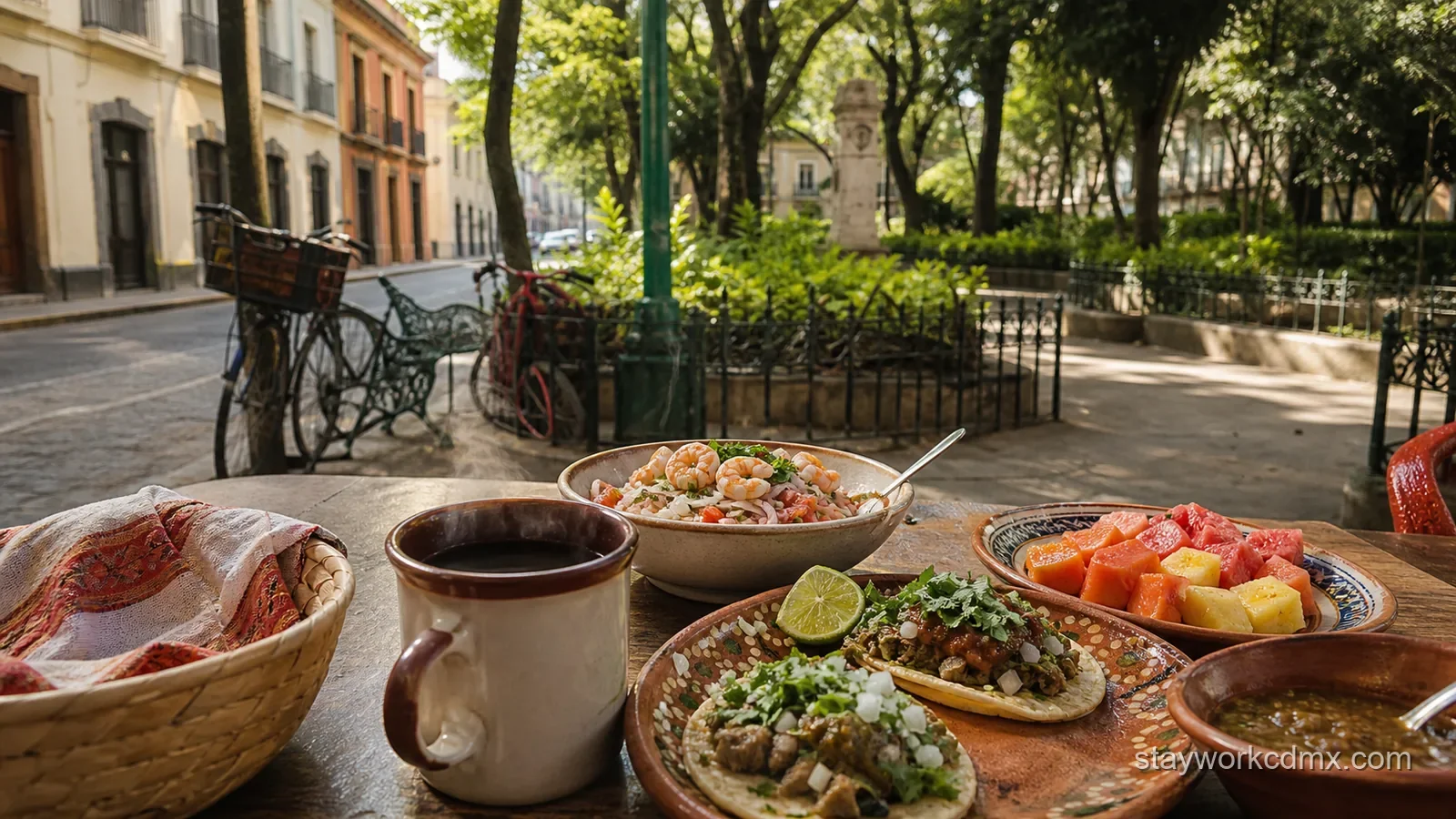
Editorial image created for StayWork CDMX to illustrate the transition from work to local life; it does not depict a specific building, café or resident.
What to ask before you book an Escandón apartment
Send a short, specific message. A host who can answer clearly is already reducing the risk of a difficult month.
Work setup
- What are the desk dimensions and chair type?
- Can you send a photo of the actual workspace, not a staged living-room image?
- What internet provider and plan are installed?
- Can you run a speed test from the desk and share upload speed and ping?
- Is there a second quiet place for a simultaneous call?
Noise and sleep
- Which direction does the bedroom face?
- Is the unit on José Martí, Revolución, Patriotismo, Eje 4 Sur or an interior street?
- Are there bars, schools, construction projects or commercial deliveries nearby?
- Are windows double-glazed, and does the building have a doorman or controlled entry?
Monthly logistics
- Is the 30-night price all-in?
- Are electricity, gas, water, internet, maintenance and cleaning included?
- Is the washing machine inside the unit or shared?
- What deposit, legal policy or documentation is required?
- Can the stay be extended if a project runs long?
Location reality
- How many minutes on foot to the nearest Metro or Metrobús stop from the exact entrance?
- Is the route comfortable at your actual return time?
- Where do you buy water, breakfast, medicine and basic groceries?
- Which entrance is used at night, and who helps if you lock yourself out?
Do not accept “fast Wi-Fi” or “quiet area” as complete answers. Ask for the evidence that matters to your workday.
Who should choose Escandón I for a monthly remote-work stay?
The apartment-first professional
Choose Escandón if your best work happens at home and you want the city available after you close the laptop. A furnished unit with a real desk, good Wi-Fi and a quiet bedroom can offer more value than paying Roma Norte prices for a lifestyle you use only on weekends.
The couple with two different schedules
Escandón can work well for two remote workers if the apartment has a second room or a real separation between desk and bedroom. Do not book a one-room unit based on a beautiful photograph if both people will be on calls at the same time. For couples, the extra MXN 4,000–10,000 for a second bedroom or office can be a productivity expense rather than a luxury.
The social nomad who wants a local base
Choose it if you want to reach Condesa and Roma easily but prefer a more ordinary neighbourhood when the workday ends. Budget for restaurants and rideshares honestly; the “local” advantage disappears if you spend every evening travelling elsewhere.
Who should choose Roma Norte or Narvarte instead
Roma Norte is easier if you want the densest café and coworking scene outside your door, a more visitor-facing first month and more restaurant redundancy. Narvarte may be better if your priority is quiet residential routine, hospitals, space or value. The Narvarte guide for remote workers profiles it in full, and the Del Valle monthly cost and routine breakdown runs this article’s 30-day exercise in the other value neighbourhood most guests shortlist alongside Escandón. Compare the Roma Norte vs. Roma Sur remote-worker guide and Roma Norte vs. Condesa monthly-stay guide before you decide.
The real Escandón calculation
Rent is only part of the number that matters most: the all-in cost of a productive month.
A MXN 19,000 apartment with included internet, an interior bedroom, a proper desk and a usable kitchen may produce a better month than a MXN 16,000 apartment that forces MXN 3,000 in coworking, MXN 2,000 in café spending and several rideshares because the work setup is weak. A MXN 28,000 two-bedroom with a separate office can be excellent for a couple; it can be wasteful for one person who rarely works from home.
Escandón’s value adds up: a market that handles ordinary food, low-cost Metro and Metrobús links, cafés for a short change of scene, restaurants for different budgets and a location close to several more expensive neighbourhoods. Its weakest point is that the exact building matters: streets, entrances, noise and internet vary enough that a neighbourhood promise cannot replace an apartment check.
If you want to test the fit against live inventory, use Book Direct with your dates, number of guests, work requirements and budget. You can also compare Roma Norte apartments if café density matters more, or read the digital nomad apartments in CDMX guide for a city-wide checklist.
Final verdict
For a solo remote worker, MXN 30,000–38,000 is a sensible planning target for a comfortable Escandón I month, including a mid-range furnished apartment, groceries, regular local meals, public transport, several cafés and a handful of rideshares. Below that, the stay is possible but requires more discipline and a better apartment search. Above that, the extra money should buy a real improvement: office separation, quieter sleep, terrace, parking, service reliability or more space.
The routine is equally important. Escandón works when Monday is practical, Tuesday has a café block, Wednesday includes the market, Thursday brings one social or coworking plan, Friday ends locally, Saturday carries one indulgence and Sunday resets the apartment. A month run that way is workable in its own right, not a compromise version of Mexico City.
Research note: prices and availability change. Rental examples were checked against current July 2026 listings from Houm , Doorvel , Inmuebles24 and BuscoInmueble . Transport and connectivity references include the Metro Patriotismo , Metrobús fares , Ecobici plans , Telmex , izzi , Mercado Escandón and Profeco’s price-monitoring guidance . Verify live listings, exact routes, current service terms and the apartment’s actual internet before paying.