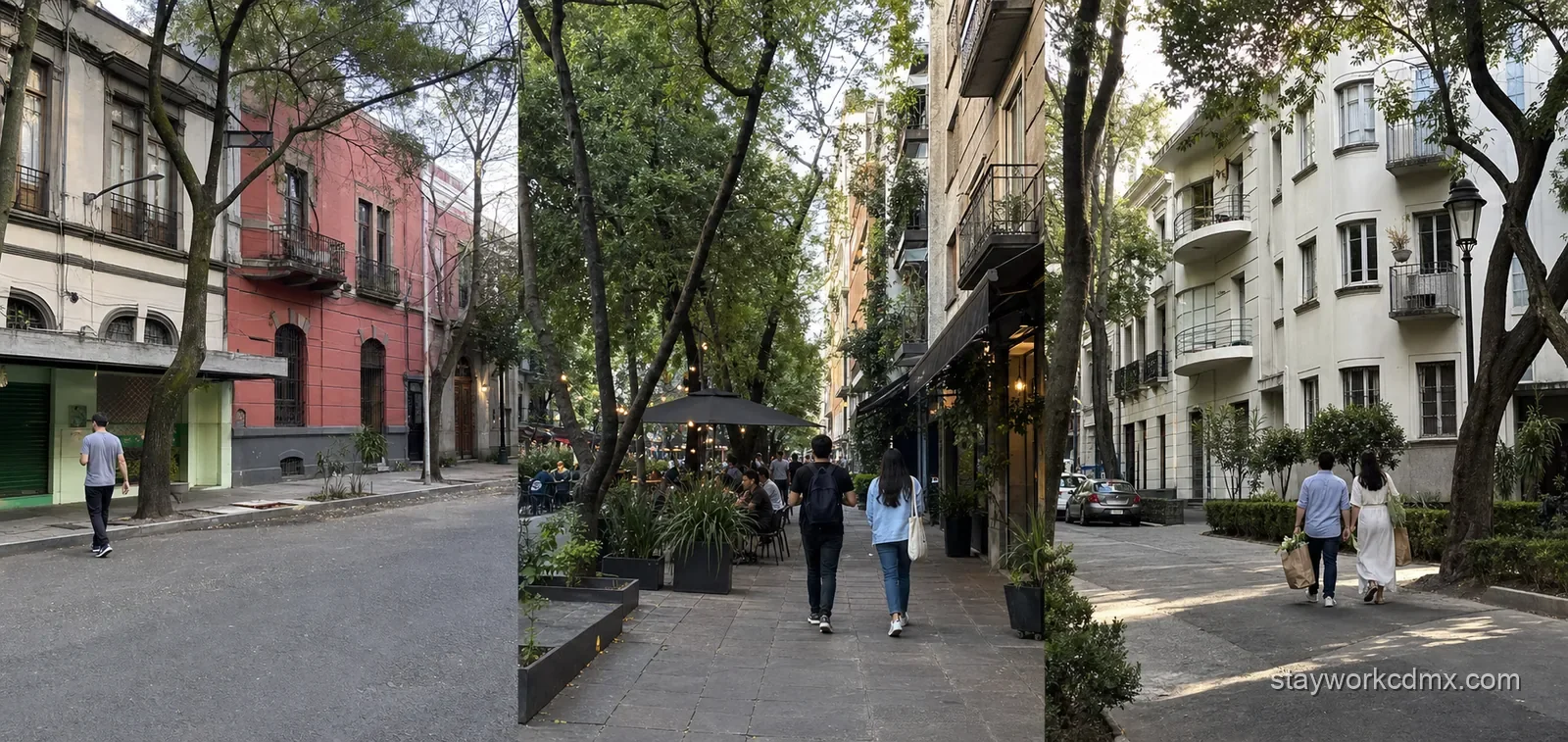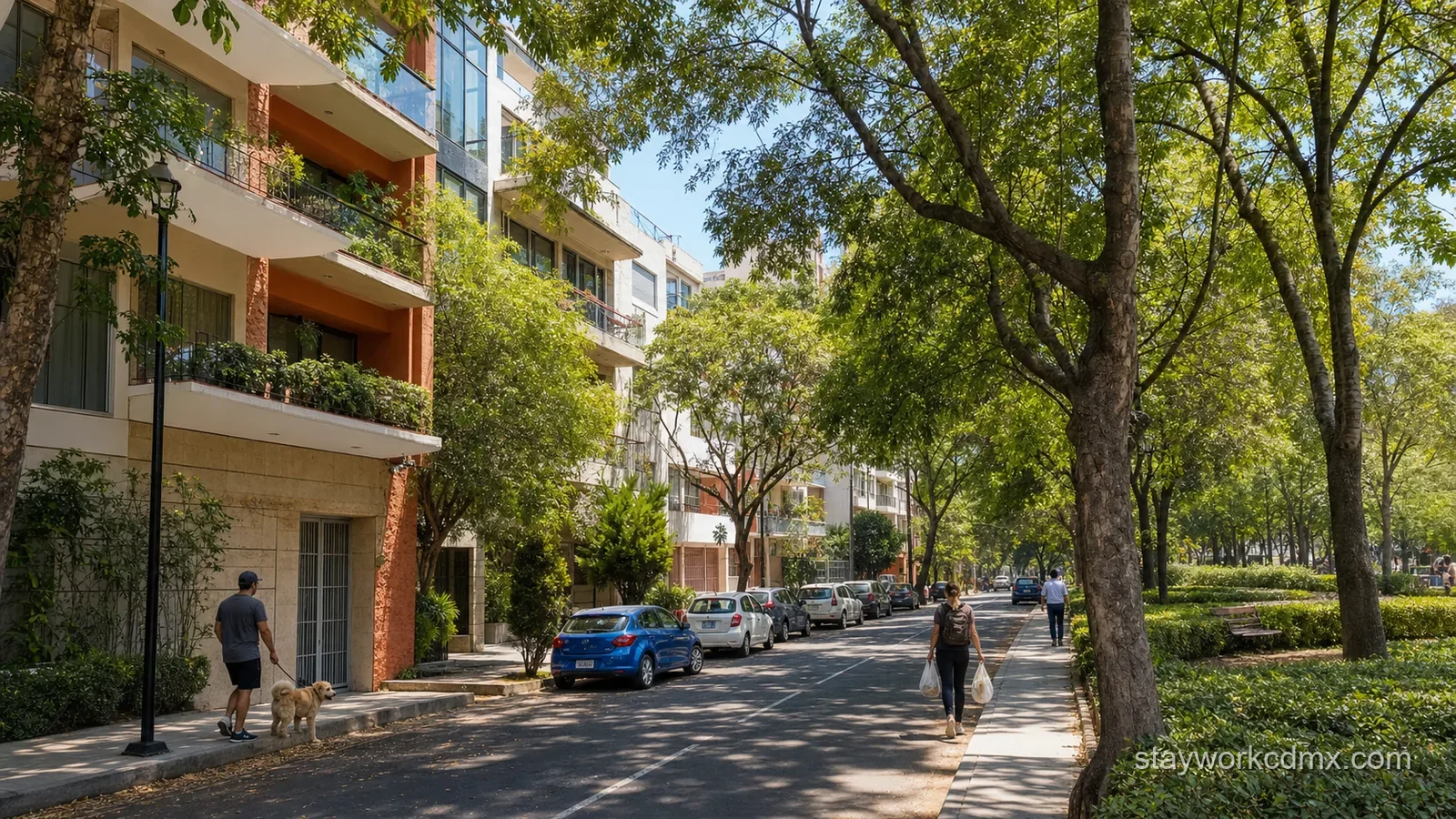
Del Valle is a transport choice for long stays where the apartment does more of the work. It is residential, practical and connected south-central, with Line 3 stations, Insurgentes and bus corridors. The trade-off is distance: broad avenues and long blocks mean the last mile can matter more than the station name.
Use this guide with Del Valle monthly cost and routine and the Mexico City neighborhood comparison .
Quick answer
Is Del Valle practical for long-stay transport?
The answer in one table
Del Valle transport and accessibility fit
| Need | Del Valle strength | Main check |
|---|---|---|
| Centro Médico/central south | Line 3 through Eugenia and Etiopía | Long crossings and exact station exit |
| Coyoacán/university routes | Line 3 toward Coyoacán and Viveros | Travel time and last-mile lighting |
| Walking errands | Parks, markets and services | Long blocks and curb condition |
| Mobility needs | Residential streets and taxis | Step-free building and station route |
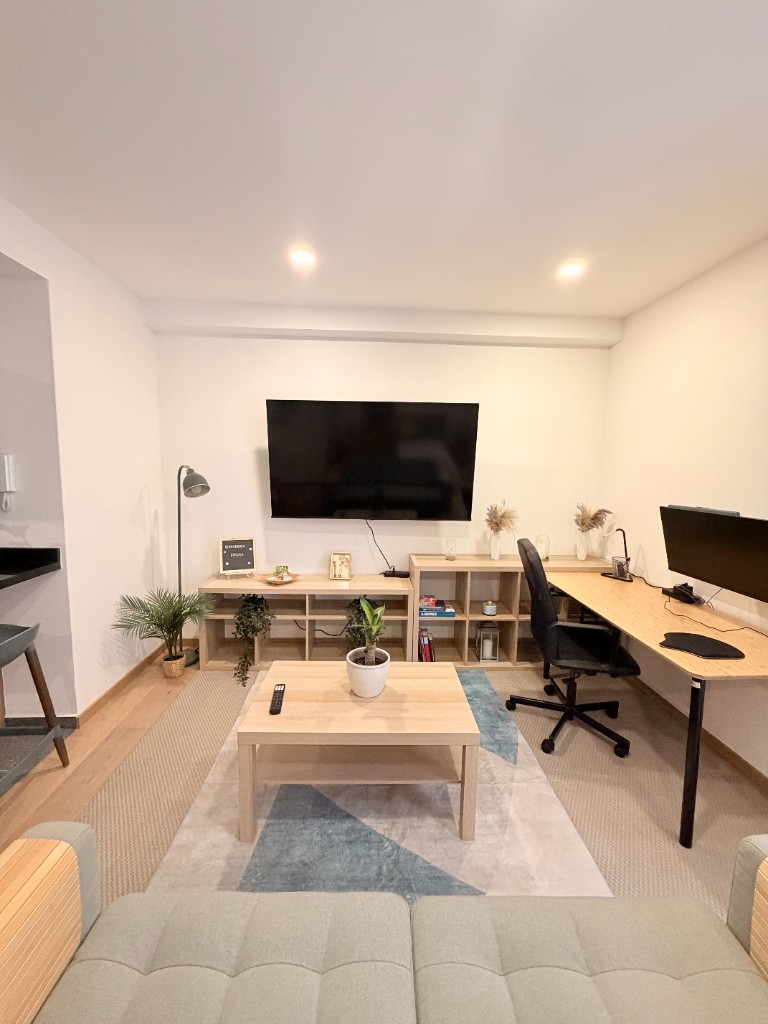
| Long-stay work | Quiet apartment-first routine | Desk, Wi-Fi, laundry and transport backup |
Line 3, Insurgentes and the last mile
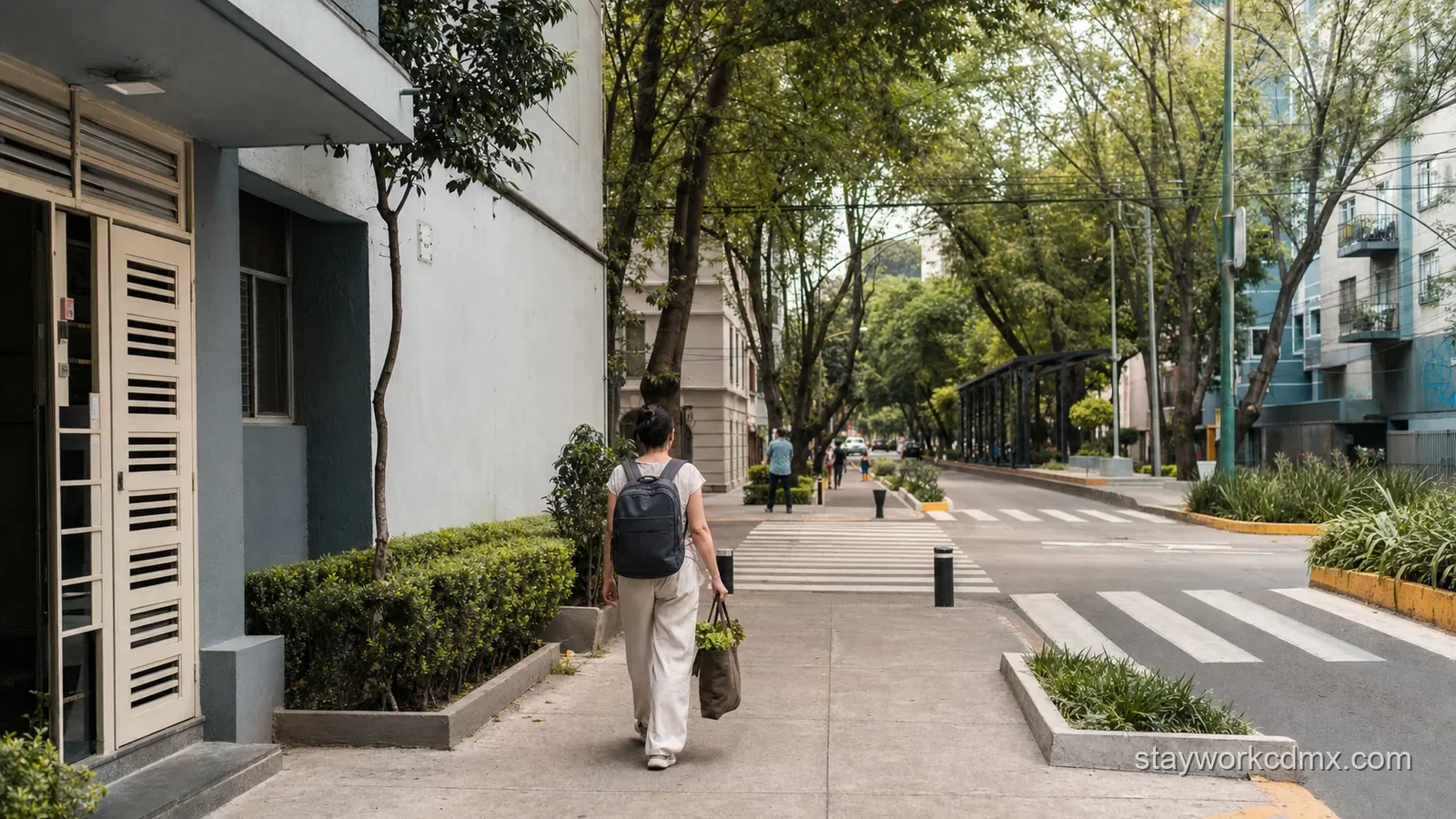
The official Eugenia station page lists the Line 3 sequence from Hospital General and Centro Médico through Etiopía, Eugenia, División del Norte, Zapata and Coyoacán. Metro is MXN 5. Metrobús is MXN 6 under the official payment rules .
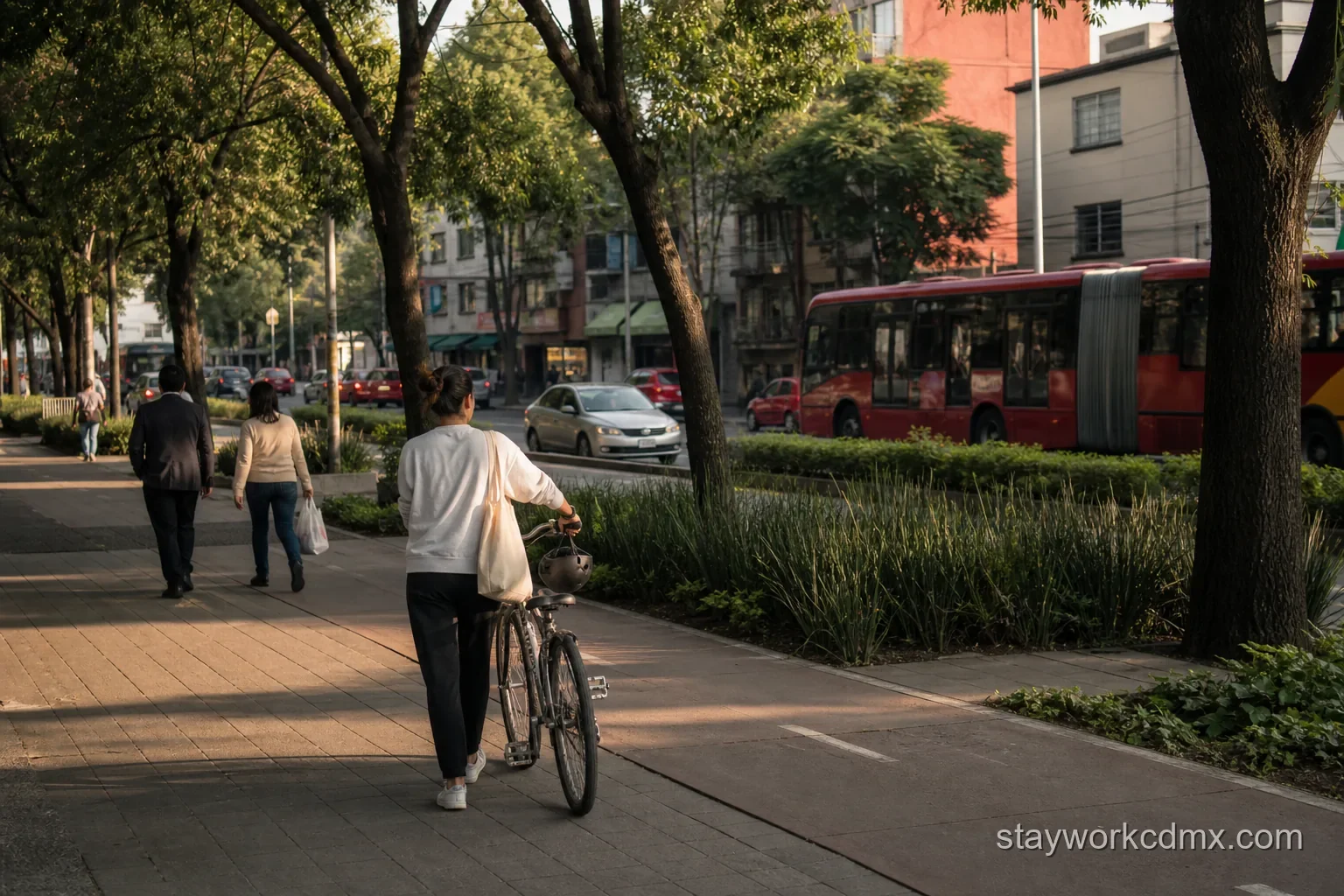
Del Valle works best when you group journeys. A remote worker can walk to the market, work at home and use Line 3 for two planned meetings. A guest who crosses the city daily may need a closer-to-station address or a rideshare reserve. Test the final 300 metres with groceries or luggage in mind.
Accessibility and building logistics
Check the current Metro accessibility list for Eugenia, Etiopía, División del Norte or Zapata. An accessible station entrance may not be the closest entrance on a map. At street level, inspect crossings, curb cuts, tree roots and construction.
Ask for a video from taxi drop-off to the apartment. Confirm lobby steps, lift dimensions, shower threshold, bed height and workspace. Del Valle’s larger apartments can be excellent for couples or mobility equipment, but only if the building supports the layout.
Long-stay route patterns
Del Valle suits remote workers, couples, medical visitors with south-central routes and guests who value calm evenings. If you need Roma Norte cafés daily, weigh the trade-offs in Roma Norte vs. Condesa for a monthly stay . If the apartment budget is tighter, start with the Narvarte remote-worker guide , but do not assume either neighborhood solves accessibility for every guest.
A practical week
Monday verifies the station and grocery route. Tuesday works from home and walks to a park. Wednesday tests the actual office or hospital trip. Thursday uses a café or coworking backup. Friday chooses a simple return route. Saturday handles market shopping and laundry. Sunday checks weather, station status and the coming week’s crossings.
Booking checklist
- Which Line 3 station and exit are practical from the address?
- How long is the actual flat walk from station to building?
- What is the current station lift or stair-lift status?
- Can a taxi stop at the entrance?
- Does the apartment have a step-free lobby, lift and bathroom?
- Is the workspace strong enough to reduce unnecessary commuting?
- What is the backup plan for rain, outages and late returns?
- What is the final monthly total including parking and utilities?
Use the monthly apartment checklist and Book Direct for live inventory.
Three route tests for a Del Valle apartment
For the station test, walk to Eugenia, Etiopía or División del Norte from the exact building, not the neighborhood center. Time it carrying a bag and note every wide crossing. A quiet interior street can beat a station-adjacent avenue if the route is flatter and safer.
For the workday test, make the trip to Centro Médico, Roma Sur or the office at your real departure time. Del Valle’s long blocks can add more minutes than expected, and after a late meeting a rideshare may be more sensible than a crowded transfer.
The apartment test checks whether the building lift, desk, kitchen and laundry let you stay home when you need to. Del Valle’s strongest transport advantage is that you do not have to travel for every coffee, meal or work block.
The real cost of the last mile
Metro fares are MXN 5 and Metrobús fares are MXN 6, but Del Valle’s last mile may involve a longer walk, a traffic island or a taxi in heavy rain. Keep a monthly rideshare reserve for weather, luggage, mobility fatigue and late returns. That reserve is often smaller than the cost of choosing a poorly located apartment and using taxis every day.
A realistic 30-night transport budget for one person looks like this:
| Line item | Monthly estimate (MXN) | Notes |
|---|---|---|
| Metro rides (~40 at MXN 5) | 200 | Two planned trips most weekdays |
| Metrobús rides (~10 at MXN 6) | 60 | Insurgentes corridor and errands |
| Rideshare reserve | 600–1,200 | Rain, luggage, late returns, fatigue |
| Airport transfers (2) | 250–500 | Arrival and departure with bags |
| Total | ≈ 1,100–1,960 | Assumes the apartment covers most workdays |
The Del Valle monthly cost guide covers the full monthly picture: rent bands, groceries and routine costs.
For couples, compare the cost of two separate commutes with the rent premium for a better-located, lift-served apartment. For a medical visitor, compare the time and fatigue of the exact hospital entrance rather than assuming Line 3 solves the entire route.
Accessibility protocol
Check the official Metro accessibility list for Eugenia, Etiopía, División del Norte and Zapata before important trips. On arrival, travel once at rush hour and once after dark. Note lift signage, platform access, staff support, lighting and the easiest crossing.
Ask the host for a route video from taxi drop-off to the apartment, plus lift and doorway measurements. Check bathroom clearance, shower threshold, bed height and workspace. A larger Del Valle apartment can be excellent for a walker, wheelchair or equipment only when the entrance and bathroom match the need.
Who should choose Del Valle?
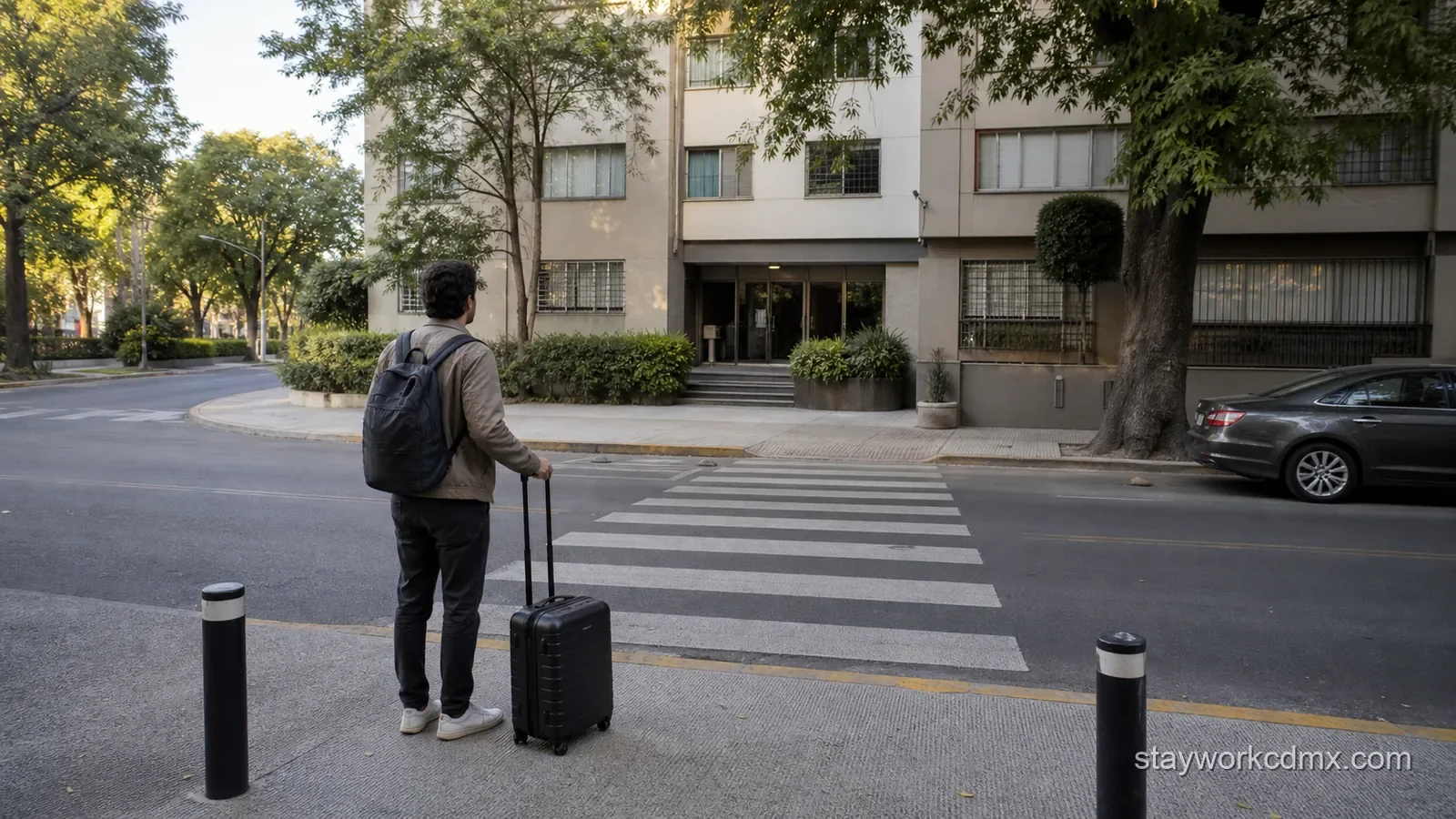
Choose Del Valle when the month prioritizes work, errands, parks and south-central routes. Choose Narvarte for a more informal medical-corridor base, Roma Sur for Roma access and Centro Médico, or Condesa/Roma Norte when walking to social options is the point of the stay. For a side-by-side look at how these bases compare on cost, noise and workability, see the best neighborhoods in Mexico City for remote workers .
Del Valle route planning for a full month
Build the route around the apartment rather than the station label. Mark the exact station entrance, the office or hospital door, the market, a pharmacy and the taxi pickup point. Test the routes with the bag or equipment you will carry. Del Valle’s long blocks and broad avenues can add more physical effort than a map suggests.
For a remote worker, a strong apartment setup is an accessibility feature because it reduces unnecessary trips, and two work surfaces can spare a couple separate café commutes. For a wheelchair user, walker or older guest, ask for a video from curb to lift and exact doorway measurements. A large apartment helps only if the entrance, bathroom and lift are usable.
Use the first week to compare Eugenia, Etiopía and División del Norte if more than one station is plausible. Notice platform access, lighting, traffic islands and the final sidewalk. Choose one default route and one backup, then keep rideshares for rain, luggage and fatigue rather than waiting until the route fails.
Keep the route evidence with the apartment details
Save the exact station entrance, office or hospital door, taxi pin and building contact. Test the route with the same bag or equipment you will use during the month and note the effort. Ask who handles lift repairs, Wi-Fi outages and urgent access problems. Del Valle’s long-stay value is its calm routine, and written backup plans protect it when a route or building changes.
The monthly mobility reserve
Budget for rain, airport luggage, late meetings, mobility fatigue and station outages. Del Valle’s public transport is inexpensive, but its broad avenues make a direct ride worthwhile on days when the last mile is hard. Keep a taxi pickup pin and a backup station in the booking file.
During week one, log the walk to Eugenia, Etiopía or División del Norte with the bag or equipment you will carry. Note the crossings, lighting, platform access and building lift. Ask the host who responds to maintenance and whether an accessibility issue can be solved quickly. A quiet apartment is not enough if its entrance is unusable.
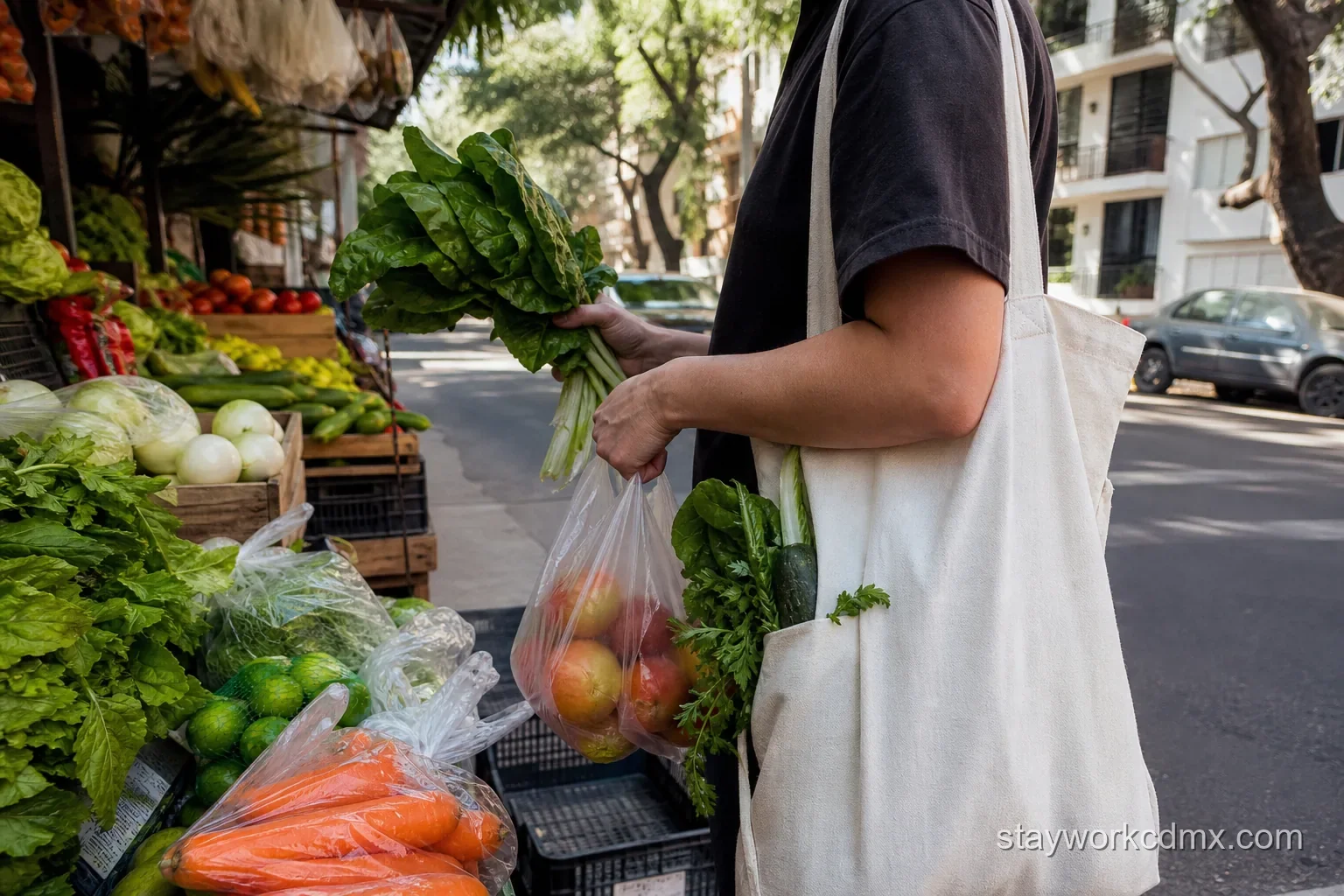
For a fixed south-central route, Del Valle can beat a more famous colony on effort and space. With daily Roma plans, compare Roma Sur or Roma Norte; with a medical rotation, compare Narvarte and the exact hospital entrance. Let the route drive the rent decision.
When the route changes
Rain, avenue traffic, construction and station maintenance can change a Del Valle route. Save an alternate station, a safe crossing, the taxi pin and the building contact offline. If you rely on a lift or step-free path, check the official status before leaving and add time for another entrance.
Del Valle’s apartment-first rhythm holds up when you know the default and backup routes, and that reliability is the transport advantage a long stay needs.
A seven-day route diary
Monday tests Eugenia, Etiopía or División del Norte and the market loop. Tuesday works from home and uses a nearby park for a reset. Wednesday takes the real office, hospital or university route. Thursday uses a café or coworking backup. Friday chooses the easiest return. Saturday handles groceries, laundry and one longer journey. Sunday checks station status, weather and the lift. The diary uses Del Valle’s calm as a productivity advantage, so the distance does not become a daily problem.
What makes the last mile manageable
Measure Del Valle in three pieces: building to curb, curb to station and station exit to office, hospital or errand. Long blocks, broad avenues and building steps can decide the month. Check curb ramps, lighting, rest points, the lift and the taxi stopping point. Ask for a current route video and exact doorway measurements for mobility equipment.
Keep the alternate station and building contact with the reservation. If the default route fails, a prepared backup protects the workday and keeps the apartment-first routine going.
Keep the route, address and taxi pickup pin offline. Long avenues are easier when you can make one clear decision without adding an unplanned crossing or transfer.
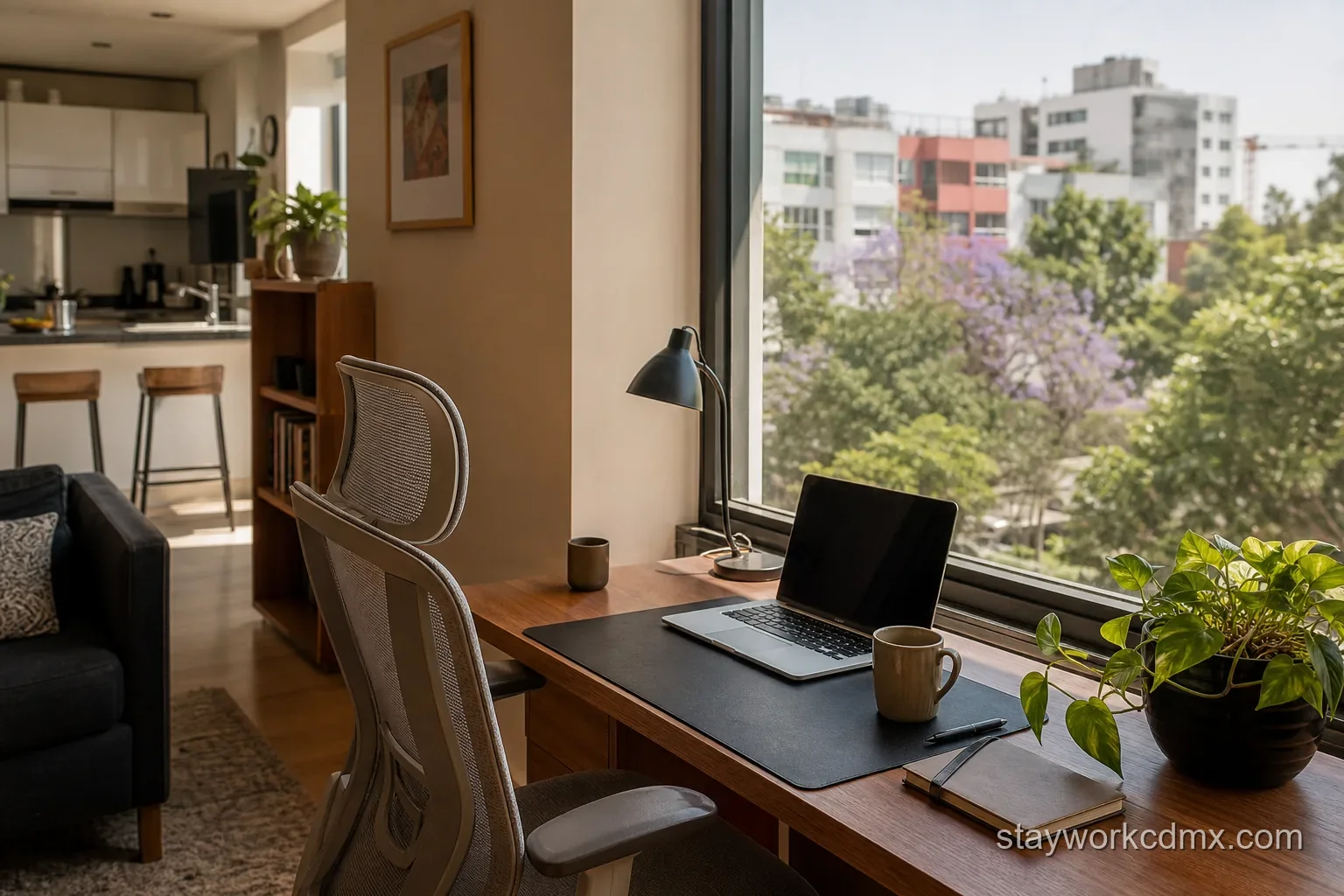
Save a nearby landmark and the building contact too. Clear instructions reduce the chance of being dropped on the wrong side of a large avenue, make first-day luggage handling easier, and give you a pin to share with a driver, partner or care provider. Small details like these keep a long avenue from becoming an avoidable arrival problem and protect a long stay.
Turn Del Valle’s apartment-first rhythm into a monthly plan
Del Valle rewards grouped journeys and a strong home base. On arrival, walk from the apartment to the station entrance, market, pharmacy and the taxi pickup point with the same bag or equipment you will use later. Measure the long blocks, avenue crossings and places where traffic islands or parked cars make the route harder. A quiet address only becomes accessible when the final block and building entrance work together.
Keep a default and a low-effort route. The default may use Eugenia, Etiopía, División del Norte or Zapata depending on the exact address. The low-effort version can be a direct ride when it rains, luggage is heavy or a workday ends late. Save the destination door and driver landmark, not only the neighborhood name. A small rideshare reserve is part of a realistic 30-night budget, especially for older guests or people carrying equipment.
The apartment is the main transport saving. A real desk, quiet bedroom, kitchen, laundry and stable Wi-Fi reduce the need for café work and unnecessary cross-city trips. For a couple, two work surfaces may cost less than two daily commutes. For a mobility-limited guest, a lift, bathroom clearance and a step-free route from curb to door matter more than an extra room.
Review the routine after the first week and adjust while the stay is flexible. If one station is consistently easier, make it the default; if the office route is too long, compare Narvarte or Roma Sur; if the building is not usable, ask about another unit. Del Valle’s calm becomes a long-stay advantage when the route evidence supports the apartment choice.
Final verdict
Del Valle is a residential productivity base with useful south-central transport, not a station-front neighborhood. Its accessibility depends on the last mile and building. Choose it when a quiet, work-ready apartment and grouped journeys matter more than tourist density.
For monthly stays
Plan a Del Valle long stay
Sources and research note
- Metro Eugenia , Metro accessibility , Metrobús payment .
- StayWork’s Del Valle monthly cost guide and neighborhood guide .