The cost of living in Mexico City for remote workers in 2026 runs between $1,200 and $3,500 USD per month. On its own that range is too wide to plan with, so this guide shows where you land in it and why.
Every cost category gets actual numbers: housing by neighborhood, food by strategy, transport by mode, coworking by tier, health insurance by situation, and the one-off costs nobody thinks about until they arrive. At the end are four complete monthly budgets (budget, mid-range, comfortable, and premium) to check your own plan against.
Exchange rates used throughout: 1 USD ≈ 17.5 MXN (mid-2026 average). All USD figures are approximate.
The Short Version: Monthly Budget by Lifestyle Tier
| Tier | Monthly Cost (USD) | Who It Fits |
|---|---|---|
| Budget | $1,200 – $1,600 | Narvarte or Escandón, cook most meals, metro/Metrobús, work from apartment |
| Mid-range | $1,800 – $2,500 | Roma Norte or Condesa, mix of cooking and eating out, occasional Uber, cafés for work |
| Comfortable | $2,500 – $3,500 | Roma Norte or Condesa, eat out regularly, gym, coworking membership, Uber most nights |
| Premium | $3,500 – $5,500+ | Polanco or premium Roma Norte, full services, regular restaurants, occasional weekend travel |
The ranges assume a furnished monthly apartment with utilities included and exclude flights in and out, visa fees, and large one-off purchases.
Housing: The Biggest Variable

Housing is the largest single cost for remote workers in CDMX and the one that moves your total budget most. The neighborhood you pick shifts your monthly spend by $400–$1,000+ before you make any other decision.
Furnished Monthly Apartments by Neighborhood (2026)
| Neighborhood | Studio / 1-bed (USD/month) | What’s Typically Included |
|---|---|---|
| Narvarte | $650 – $950 | Utilities, Wi-Fi, fully furnished |
| Escandón | $600 – $900 | Utilities, Wi-Fi; less available monthly stock |
| Roma Norte | $900 – $1,600 | Utilities, Wi-Fi, often workspace |
| Condesa | $1,000 – $1,800 | Utilities, Wi-Fi |
| Juárez | $800 – $1,300 | Utilities, Wi-Fi; confirm security per block |
| Polanco | $1,400 – $3,500 | Full services, gym, concierge |
These are direct-booked furnished monthly rates. Airbnb and similar platforms add a 14–20% service fee on top.
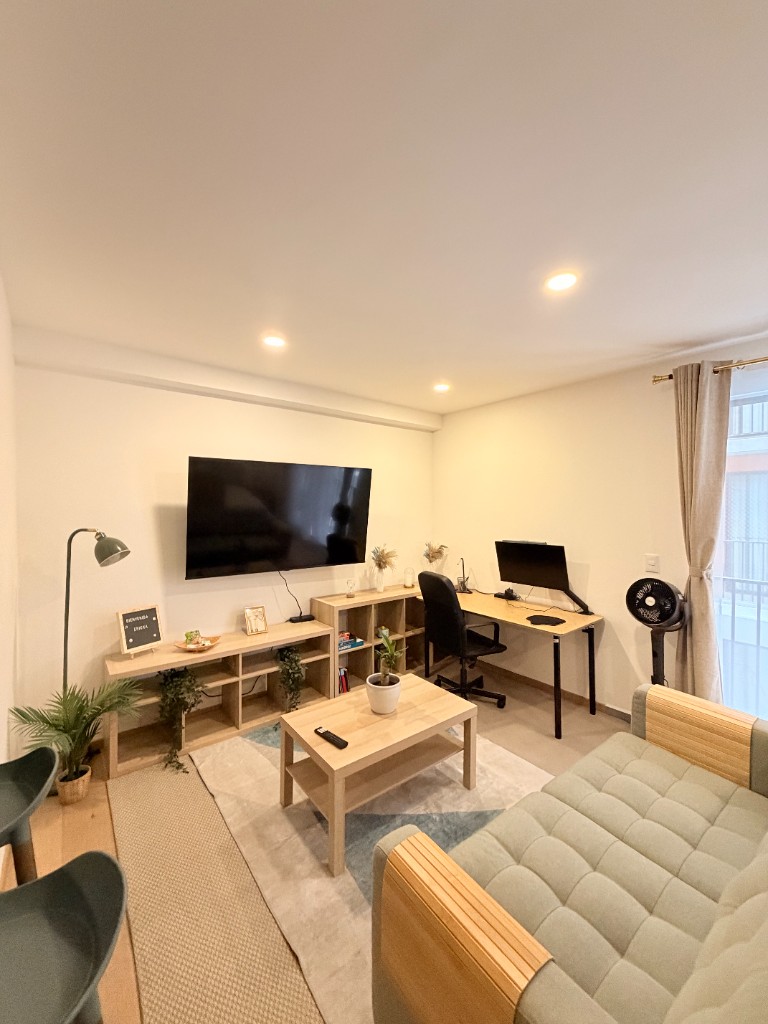
A quality furnished monthly apartment includes:
- Electricity, gas, and water (sometimes with a usage cap)
- Fiber internet (verify the speed; 100+ Mbps is common in Roma Norte and Condesa)
- Furniture, bedding, kitchenware
- Weekly or bi-weekly cleaning in premium options
You’ll pay separately for:
- Bottled water (garrafón): MXN 50–80 per delivery, roughly MXN 200–400/month (~$11–$23 USD)
- Laundry if not in-unit: MXN 60–100/kg at local lavanderías
- Parking: MXN 1,500–3,000/month in Roma Norte and Condesa if you have a car
Our apartments for rent in Mexico City monthly guide breaks down housing costs neighborhood by neighborhood, along with what each area offers remote workers. If you are torn between the two most-searched premium options, the Roma Norte vs Condesa monthly-stay comparison compares them on cost, noise, and lease terms. For direct-booked inventory from the two ends of the price table, browse Roma Norte furnished apartments and furnished monthly apartments in Narvarte .
Food: From $200 to $700+ Per Month Depending on How You Eat

Mexico City is one of the best cities in the world for eating well on a small budget, as long as you eat the way the city itself does.
Street Food and Fondas: The Budget Strategy
A comida corrida, the multi-course set lunch at a neighborhood fonda, runs MXN 80–150 ($4.50–$8.50 USD) and typically includes soup, a main dish, rice, beans, tortillas, and a drink. A remote worker who eats a comida corrida for lunch every weekday and cooks simple dinners at home can run a food budget of $250–$350/month.
Street food (tacos, tortas, quesadillas, tamales) costs MXN 20–50 per item ($1.15–$2.85 USD). An excellent taco dinner costs $3–6 USD.
Groceries: What to Expect
Mexico’s national statistics agency (INEGI) pegs the basic household food basket at roughly MXN 4,877/month (~$280 USD) for 2026. For a solo remote worker buying quality ingredients at a mix of supermarkets and local markets, a realistic monthly grocery budget is:
| Shopping Strategy | Monthly Cost (USD) |
|---|---|
| Local markets (mercados) + tianguis for produce | $170 – $230 |
| Mix of supermarket (Chedraui, La Comer, Walmart) and local | $230 – $350 |
| Primarily supermarket, imported goods, specialty items | $350 – $500 |
Typical grocery prices (mid-2026):
- Eggs (12): MXN 35–45 ($2–$2.60 USD)
- Chicken breast (1 kg): MXN 60–90 ($3.40–$5.15 USD)
- Tomatoes (1 kg): MXN 25–45 ($1.45–$2.60 USD)
- Avocados (each): MXN 12–25 ($0.70–$1.45 USD), much cheaper than abroad
- Craft beer (local, 355ml): MXN 35–55 ($2–$3.15 USD) at a supermarket
Restaurants and Eating Out
CDMX has excellent options at every price point:
| Setting | Cost Per Meal (USD) |
|---|---|
| Street taco / antojito | $1.50 – $4 |
| Comida corrida at a fonda | $4.50 – $8.50 |
| Casual sit-down restaurant | $8 – $18 per person |
| Mid-range restaurant (Roma Norte, Condesa) | $15 – $35 per person |
| Fine dining | $40 – $100+ per person |
A remote worker who regularly eats sit-down lunches and dinners (not fine dining) in Roma Norte or Condesa will spend $400–$600/month on food. Mixing in home cooking drops this to $300–$450.
Transport: Cheap If You Use the City’s Own Infrastructure
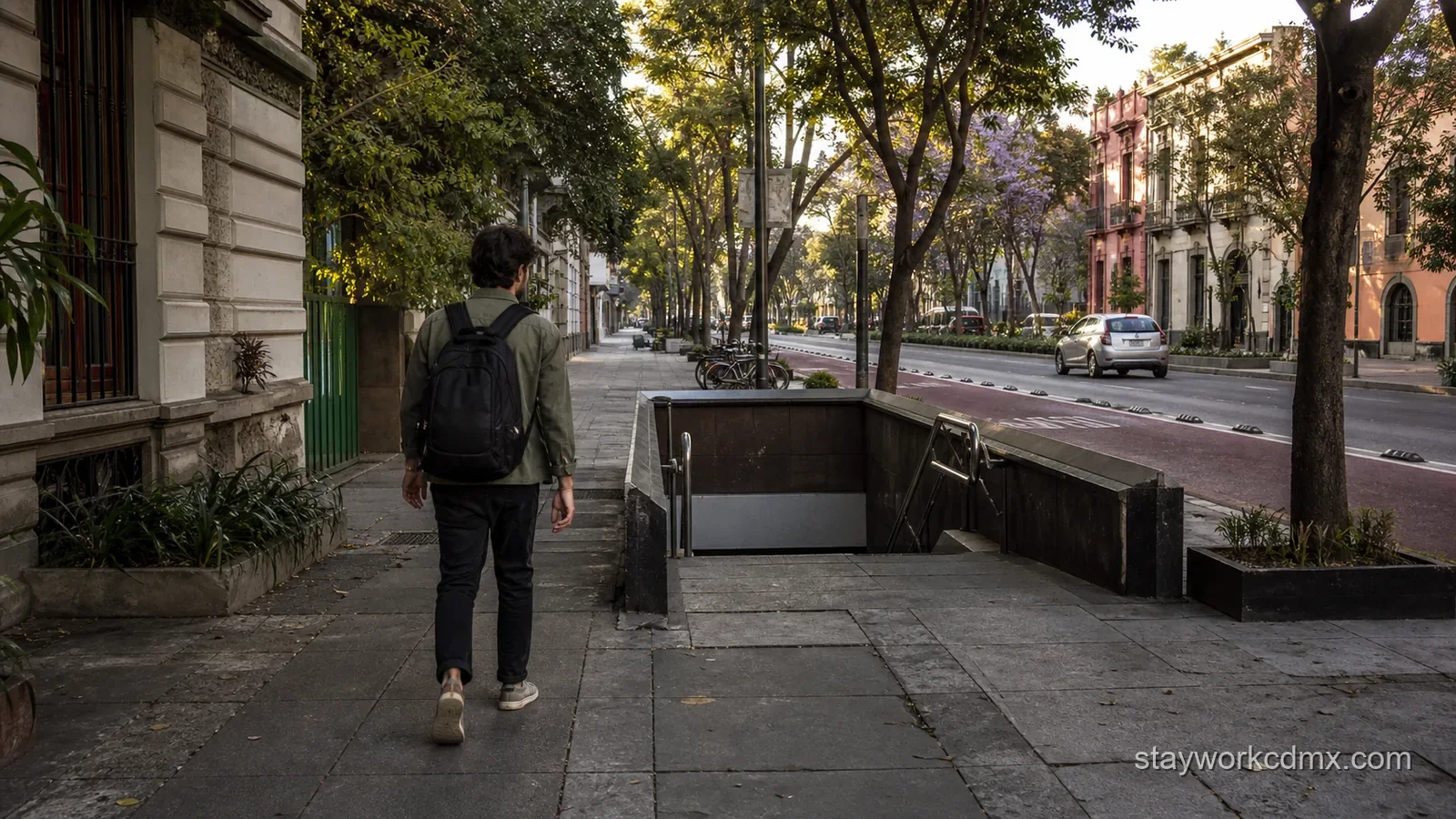
Mexico City’s public transit is extensive and cheap. For remote workers who work from home or nearby cafés, daily transport costs can be close to zero.
Public Transit
| Mode | Cost |
|---|---|
| Metro (single ride) | MXN 5 ($0.29 USD) |
| Metrobús (single ride) | MXN 6 ($0.35 USD) |
| Ecobici (bike share, annual pass) | MXN 621/year (~$35 USD) |
| Monthly transit card (metro + bus) | ~MXN 500 ($28 USD) for heavy users |
For remote workers in walkable neighborhoods (Roma Norte, Condesa, Narvarte), public transit plus the occasional Uber covers almost everything.
Ride-Hailing (Uber / Didi)
Uber and Didi are cheap and easy to find anywhere, and they are generally the recommended way to get around at night. A typical in-neighborhood ride runs MXN 70–150 ($4–$8.50 USD). Cross-city rides to the airport or Santa Fe run MXN 200–400 ($11–$23 USD) in normal traffic.
A remote worker using Uber or Didi 3–4 times per week for evenings and longer trips might spend MXN 1,200–2,000/month ($68–$114 USD) on ride-hailing. For details on fare expectations, surge pricing, and airport pickups, see our Uber vs Didi CDMX comparison .
A rough monthly transport budget:
- Minimal (walks + occasional public transit): $15–$30 USD
- Mixed (metro + Uber 2–3x/week): $50–$90 USD
- Comfort-oriented (Uber most trips): $120–$200 USD
Coworking: When Your Apartment Isn’t Enough

Remote workers who take video calls, do collaborative work, or just need a change of scene will need coworking access at some point during a month-long stay. These are CDMX coworking prices for 2026.
Day Passes
| Coworking Type | Day Pass (MXN) | Day Pass (USD) |
|---|---|---|
| Budget / independent (e.g., Homework) | MXN 180–250 | $10–$14 |
| Mid-range (Roma Norte / Condesa anchor spaces) | MXN 350–500 | $20–$28 |
| Premium (WeWork, Impact Hub) | MXN 500–650 | $28–$37 |
Monthly Memberships (Hot Desk)
| Tier | Monthly (MXN) | Monthly (USD) |
|---|---|---|
| Budget hot desk | MXN 2,500–3,500 | $143–$200 |
| Mid-range (Roma Norte / Condesa) | MXN 3,500–5,000 | $200–$285 |
| Premium / dedicated desk | MXN 5,000–9,000 | $285–$515 |
For a detailed comparison of CDMX coworking spaces by price, location, and amenities, see our coworking CDMX price comparison .
Many remote workers in CDMX work mainly from a furnished apartment with a good home workspace and buy coworking day passes 3–5 times per month when they need a change or have important calls. That costs $30–$150/month, much less than a monthly membership.
Internet: Already Bundled in Most Quality Furnished Apartments
Standalone fiber internet in Mexico City costs MXN 400–800/month ($23–$46 USD) for unlimited service at 200–500 Mbps. In practice, quality furnished monthly apartments bundle it in, so for most remote workers it adds $0.
Before you arrive, verify:
- Download and upload speed (ask for a Speedtest screenshot; you want 50+ Mbps upload for reliable video calls)
- Whether there’s a backup connection or nearby café as fallback
- Whether the router is close to where you’ll be working
If you’re staying in a setup without bundled internet, budget MXN 500–700/month for a fiber connection.
Health Insurance: The Cost Most People Underbudget
Mexico City has excellent private hospitals, among them ABC Medical Center, Hospital Español, and Hospital Médica Sur, and medical costs are far lower than in the US. A GP consultation at a private clinic runs MXN 500–1,200 ($28–$68 USD). Most specialists are MXN 800–2,000 ($46–$114 USD).
Remote workers staying 30–90 days should still have some form of health coverage:
| Coverage Type | Who It’s For | Monthly Cost (USD) |
|---|---|---|
| SafetyWing (Nomad Insurance) | Short stays, basic emergency coverage | $45 – $70 |
| Genki / Cigna Global | Comprehensive international coverage | $80 – $180 |
| Local private insurance (GNP, AXA Mexico) | Long-term Mexico residents (6+ months) | $100 – $250 |
| Voluntary IMSS enrollment | Long-term residents, full public system access | ~$50/month equivalent (annual fee) |
For most 30-to-90-day stays, the practical approach is a travel health insurance policy (SafetyWing or similar) plus paying out of pocket for primary care. CDMX private healthcare is cheap enough that a routine visit without insurance costs less than many US co-pays.
Gym and Fitness
| Option | Monthly Cost (MXN) | Monthly Cost (USD) |
|---|---|---|
| Local gym (neighborhood chain) | MXN 500–900 | $28–$52 |
| Sport City, Multisport, SmartFit | MXN 800–1,500 | $46–$86 |
| Boutique studio (yoga, CrossFit) | MXN 1,200–2,500 | $68–$143 |
| Premium gym or hotel gym access | MXN 2,000–4,000 | $114–$229 |
Many furnished apartment buildings in Roma Norte and Condesa include a gym, which removes this cost entirely. Confirm before booking if that matters to you.
One-Off and Occasional Costs
These don’t recur every month, but they still hit your budget over a 30–90-day stay:
| Cost | Estimated Amount |
|---|---|
| Airport transfer (AICM to Roma Norte, Uber) | MXN 200–350 ($11–$20 USD) |
| SIM card (Telcel 30-day plan, unlimited data) | MXN 200–350 ($11–$20 USD) |
| Bottled water (garrafón delivery, monthly) | MXN 200–400 ($11–$23 USD) |
| Museum and cultural entry fees | MXN 0–200/visit; many national museums are free |
| Language classes (Spanish, 1hr/week) | MXN 300–600/session ($17–$34 USD) |
| Weekend day trips (Teotihuacán, Tepoztlán) | MXN 400–1,500 ($23–$86 USD) including transport |
Complete Monthly Budget Examples

Budget: $1,300/month (Narvarte, cook-at-home, metro)
| Category | Monthly (USD) |
|---|---|
| Furnished 1-bed, Narvarte (direct-booked, utilities included) | $750 |
| Groceries + occasional comida corrida | $280 |
| Transit (metro + Ecobici) | $30 |
| Occasional Uber (4–6/month) | $35 |
| Health insurance (SafetyWing) | $55 |
| Entertainment / coffee / social | $80 |
| Miscellaneous | $70 |
| Total | ~$1,300 |
Mid-Range: $2,000/month (Roma Norte, eat out for lunch daily, work from cafés)
| Category | Monthly (USD) |
|---|---|
| Furnished 1-bed, Roma Norte (work-ready, utilities included) | $1,100 |
| Food (comida corrida + cooking + 2 restaurant dinners/week) | $380 |
| Transit (metro + Uber 3x/week evenings) | $80 |
| Café spend (2–3 coffees/workday, working from cafés) | $120 |
| Health insurance (SafetyWing) | $55 |
| Gym (building gym or neighborhood gym) | $50 |
| Entertainment / culture / social | $120 |
| Miscellaneous | $95 |
| Total | ~$2,000 |
Comfortable: $2,900/month (Roma Norte / Condesa, coworking, regular eating out)
| Category | Monthly (USD) |
|---|---|
| Furnished 1-bed, Roma Norte or Condesa | $1,400 |
| Food (eating out most meals, quality restaurants) | $600 |
| Transport (Uber most trips, few metro) | $150 |
| Coworking day passes (8–10/month) | $180 |
| Health insurance (Cigna Global or similar) | $130 |
| Gym membership (boutique or premium) | $110 |
| Entertainment / culture / social | $200 |
| Miscellaneous | $130 |
| Total | ~$2,900 |
Premium: $4,500/month (Polanco, full services, regular restaurants)
| Category | Monthly (USD) |
|---|---|
| Furnished 1-bed or 2-bed, Polanco (premium building) | $2,400 |
| Food (restaurants most meals, quality groceries) | $700 |
| Transport (primarily Uber / car service) | $250 |
| Coworking monthly membership (dedicated desk) | $350 |
| Health insurance (comprehensive international) | $180 |
| Gym (hotel gym or premium club included or separate) | $150 |
| Entertainment / fine dining / culture / travel | $350 |
| Miscellaneous | $120 |
| Total | ~$4,500 |
How CDMX Compares to Other Digital Nomad Cities
| City | Comfortable Monthly Budget (USD) | Comparable Neighborhood |
|---|---|---|
| Mexico City (CDMX) | $2,500 – $3,500 | Roma Norte / Condesa |
| Buenos Aires | $1,400 – $2,200 | Palermo |
| Medellín, Colombia | $1,500 – $2,200 | El Poblado |
| Lisbon, Portugal | $2,800 – $4,000 | Príncipe Real |
| Barcelona, Spain | $3,200 – $5,000 | Eixample |
| Bangkok, Thailand | $1,200 – $1,800 | Silom / Sukhumvit |
| New York City | $5,500 – $8,000+ | — |
CDMX sits in the global mid-tier: well below Barcelona and New York, in the same band as Lisbon, and above Buenos Aires, Medellín, and Bangkok. At those prices you still get world-class food, culture, and infrastructure.
For a deeper comparison of CDMX vs Buenos Aires across costs, safety, and lifestyle, see our CDMX vs Buenos Aires for digital nomads guide .
Tips for Keeping Costs Down Without Sacrificing Quality
Narvarte gives you 30–40% lower rent than Roma Norte for comparable quality. If you’ve already done Roma Norte and know the city, Narvarte is the obvious upgrade on value. Our Narvarte guide for remote workers covers it in depth, and our Mexico City neighborhoods guide compares all eight areas. Quiet, residential Del Valle is similar on price; the Del Valle monthly cost and routine breakdown itemizes what a full month there costs, line by line.
The comida corrida is the most efficient food spend in CDMX: MXN 100 for a full lunch at a fonda beats MXN 200–350 at a restaurant that looks similar on Google Maps. Find your neighborhood fonda in the first week.
Coworking day passes (3–5/month) cost less than a monthly membership if you’re working from your apartment most days. Only buy a membership if you’re spending more than 10 days/month in a coworking space.
The metro is safe and fast outside rush hours, and for daytime trips around the city it’s often faster than Uber in traffic. Save Uber for evenings and for when you have luggage.
World Cup match windows (June–July 2026) drive furnished apartment prices up 15–25% in Roma Norte and Condesa. If your stay overlaps with this period and budget is a priority, Narvarte prices are more stable.
Frequently Asked Questions
How much money do you need to live comfortably in Mexico City in 2026? A comfortable lifestyle in Roma Norte or Condesa (furnished apartment, eating out for most meals, regular Uber use, gym, and occasional coworking) runs $2,500–$3,500 USD/month. A tighter but very livable budget in Narvarte, cooking most meals, is doable at $1,300–$1,600/month.
Is Mexico City expensive compared to other Latin American cities? Mexico City is mid-range: more expensive than Medellín or Buenos Aires if you’re eating out regularly in Roma Norte, and much cheaper than any comparable lifestyle in Western Europe or the US.
Are utilities included in Mexico City furnished apartments? In quality monthly furnished apartments, yes: electricity, gas, water, and internet are typically bundled. A standalone utility setup adds MXN 1,000–2,400/month ($55–$140 USD). Always confirm what’s included and whether there are usage caps before booking.
Is Mexico City affordable on a $2,000/month budget? Yes, comfortably. $2,000/month pays for a mid-range lifestyle: a quality furnished 1-bedroom in Roma Norte or Narvarte (with utilities), daily lunches at fondas, regular groceries, transit, and a reasonable entertainment budget.
Do I need a car in Mexico City? No. With Uber, Didi, public transit, and walkable central neighborhoods, a car is an extra expense and a complication. Parking is expensive and traffic is heavy during rush hours.
How does the exchange rate affect the budget? At 17–18 MXN/USD (mid-2026), the budget numbers above apply. If the peso strengthens (fewer MXN per USD), your costs in USD rise; if it weakens, they drop. Most furnished apartments quote prices in USD or a USD equivalent to avoid exchange rate risk for both sides, which makes housing the most stable line item.
Book a Work-Ready Furnished Apartment in CDMX
StayWork CDMX rents direct-booked furnished apartments in Roma Norte and Narvarte with utilities, fast fiber internet, and a real workspace included. You pay no platform fees and know upfront what’s covered.
See current availability and pricing in Monthly rentals in Mexico City .
Questions before you book? Check the FAQ .