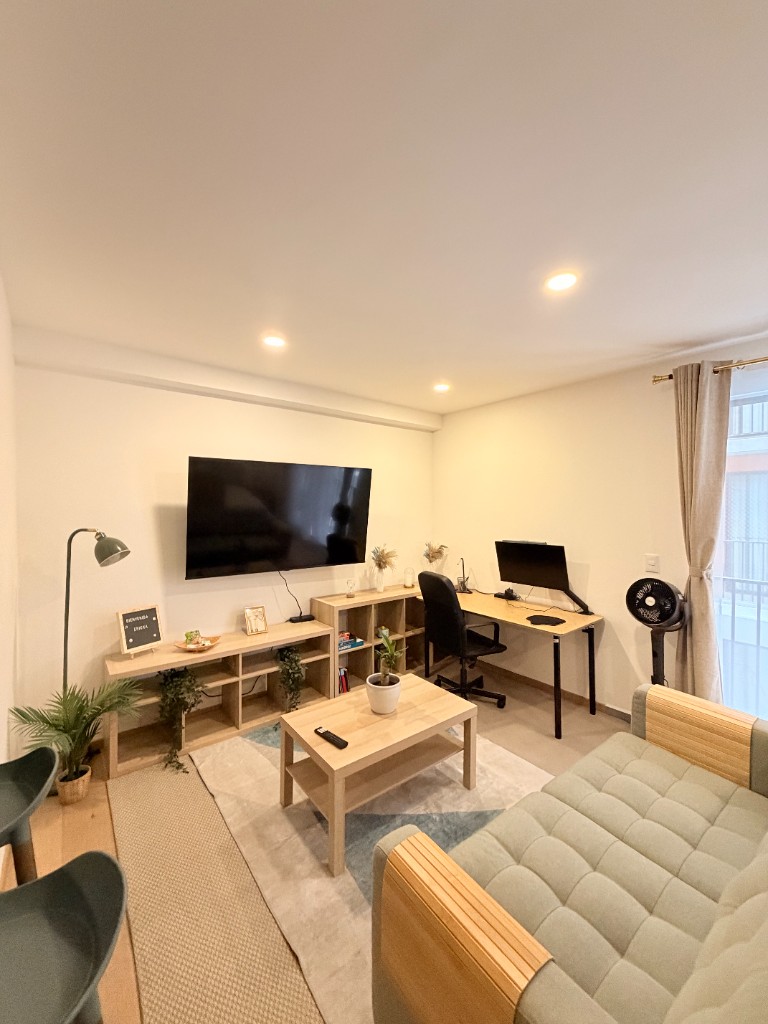
Corporate housing in Mexico City is not just “a nicer apartment for a business traveler.” For a company, the stay has to satisfy the guest, the manager, and often finance or procurement.
That means the right housing must handle the normal living details: workspace, Wi-Fi, kitchen, laundry, sleep, arrival, guest names, payment timing, and sometimes CFDI or company documentation.
This is the informational pillar for corporate and special stays. If you already need the commercial path, compare corporate housing in Mexico City or the broader Mexico City rentals monthly inventory after you understand the decision.
Quick Answer
Quick answer
For 2–7 nights, a hotel can be easiest for business travel.
For 30+ nights, corporate housing usually works better when the guest needs a kitchen, laundry, desk, privacy, written terms, invoice review, or a routine that survives more than a few days.
Choose the neighborhood by work pattern. Roma Norte fits executive and client-facing stays. Narvarte fits longer assignments, team housing, hospital-adjacent work, and quieter monthly routines.
Corporate Apartments in Mexico City vs Hotel vs Monthly Rental

These categories overlap, but they solve different problems.
| Option | Best for | Main advantage | Main risk |
|---|---|---|---|
| Hotel | Short business trips, daily service, loyalty programs | Simple arrival and service | Expensive and cramped over 30+ nights |
| Corporate housing | 30+ night work stays, relocation, teams | Furnished routine plus clearer work-trip terms | Requires availability and detail review |
| Furnished monthly apartment | Remote work, assignments, trial relocation | Kitchen, laundry, workspace, more privacy | Needs apartment-specific verification |
| Platform rental | Discovery and market scanning | Easy comparison | Long-stay fit can be unclear from photos |
The longer the stay, the more the apartment has to behave like a home and office. That is where corporate housing becomes different from a normal vacation rental.

What Companies Should Confirm First
Before looking at photos, define the business case:
- Is this an executive visit, project assignment, relocation, medical stay, or team stay?
- Is the stay 7 nights, 30 nights, 60 nights, or open-ended?
- Who is paying, and when does finance need documents?
- Does the guest need CFDI, invoice review, or company details on file?
- Does the apartment need to support remote work every weekday?
- Is the guest traveling alone, with family, or with colleagues?
- Are there early calls, night shifts, hospital routes, or client meetings?
This avoids a common mistake: choosing the prettiest listing before confirming whether it fits the actual work pattern.
Procurement, CFDI, and Written Terms

For many corporate stays, the hardest part is not the bed or the neighborhood. It is the paperwork.
Ask early about:
- company name and billing entity
- RFC and fiscal details if CFDI is required
- payment method and timing
- whether the stay crosses month-end
- guest names and arrival instructions
- deposit, refund, and cancellation terms
- whether a formal quote or written summary is needed before approval
If a Mexican entity needs a CFDI, solve that before payment. Month-end timing can create problems if the booking crosses fiscal periods or if the request arrives after checkout.
For the focused documentation spoke, read corporate housing and CFDI basics .

What Corporate Housing in Mexico City Costs (2026)
Most corporate housing decisions stall on the same question: what should this actually cost, and is the quote reasonable? Here are realistic 2026 benchmarks for furnished, work-ready units booked for 30+ nights.
| Neighborhood | Furnished 1BR / month | Furnished 2BR / month | Typical corporate use |
|---|---|---|---|
| Narvarte | $22,000–$32,000 MXN | $32,000–$45,000 MXN | Long assignments, team housing, hospital-adjacent work |
| Del Valle | $23,000–$34,000 MXN | $34,000–$48,000 MXN | Practical residential assignments, families |
| Juarez | $26,000–$38,000 MXN | $36,000–$52,000 MXN | Reforma office corridor, central meetings |
| Roma Norte | $28,000–$42,000 MXN | $40,000–$60,000 MXN | Executives, consultants, client-facing stays |
| Condesa | $30,000–$46,000 MXN | $44,000–$65,000 MXN | Relocation trials, longer stays with partners |
| Polanco | $40,000–$60,000 MXN | $58,000–$90,000 MXN | Premium and client-facing assignments |
At roughly 17.5 MXN per USD, that is about $1,250–$3,450 USD per month for a one-bedroom depending on neighborhood, with Polanco two-bedrooms reaching $5,100 USD.
The hotel comparison finance actually needs
The argument for corporate housing is rarely about comfort. It is about the arithmetic over 30 nights.
| Line item | Business hotel (30 nights) | Furnished corporate apartment (30 nights) |
|---|---|---|
| Room / rent | $75,000–$135,000 MXN ($2,500–$4,500/night) | $28,000–$46,000 MXN, central neighborhood |
| Utilities and Wi-Fi | Included | Included in a professional monthly rate |
| Breakfast and meals | $9,000–$18,000 MXN | $6,000–$11,000 MXN with a kitchen |
| Laundry | $3,000–$6,000 MXN at hotel rates | $300–$600 MXN at a local lavanderia |
| Workspace | Desk in a room, or a paid business centre | Dedicated desk in the unit |
| Estimated total | $87,000–$159,000 MXN | $34,300–$57,600 MXN |
The gap is typically $50,000–$100,000 MXN per guest per month. For a team of four on a three-month project, that is the difference between a housing line that survives procurement review and one that does not.
Hotels still win for stays under about a week, where daily service and simple booking outweigh everything else. The crossover is somewhere between 10 and 14 nights. Past 30, it is not close. The monthly furnished apartment vs hotel comparison works through the full math.
What moves a corporate quote
- Neighborhood. The single largest variable, worth $10,000–$25,000 MXN a month between Narvarte and Polanco.
- Unit size. A true second bedroom or a separate office costs more than a large studio, and for assignments with calls it is usually worth it.
- Building services. Elevator, 24/7 doorman, parking, and access control all price in, and several are non-negotiable for some corporate policies.
- Stay length. A genuine 30+ night rate should sit meaningfully below nightly pricing. If it does not, you are being quoted a tourist rate.
- Dates. Day of the Dead, mid-December to early January, Semana Santa, and the 2026 World Cup window all compress discounts.
- Booking channel. Platform service fees of 15–20% on a monthly booking add $5,000–$9,000 MXN and complicate invoicing, since the platform, not the property, issues the receipt.
That last point matters more for corporate stays than for leisure ones. If your company needs a CFDI from the entity providing the accommodation, a platform booking can make that difficult or impossible. See book direct vs Airbnb for monthly apartments in CDMX for the channel comparison, and the furnished monthly apartment cost guide for the full citywide price picture.
Neighborhoods for Corporate Housing
The best corporate neighborhood depends on the guest’s calendar.
Roma Norte
Roma Norte is strong for executives, founders, consultants, client-facing guests, and short-to-mid business stays where the neighborhood experience matters. It gives easy restaurants, cafes, coworking, informal meetings, and central walkability. For a guest who will host informal meetings or entertain clients, the neighborhood does real work that a hotel lobby does not.
The watchout is noise. For a guest with early calls or sleep-sensitive work, confirm bedroom orientation and block activity — the busier corridors stay lively into the night. Current inventory and monthly terms are on Roma Norte monthly stays , and if the shortlist includes Condesa, Roma Norte vs Condesa for a monthly stay resolves it.
Narvarte
Narvarte is strong for longer assignments, quieter routines, team stays, hospital-adjacent work, and guests who will use the apartment as the operating base. It is less flashy but often more repeatable for 30+ nights.
Three things make it work for corporate stays specifically. Rents run 20–30% below Roma Norte, which matters when a company is housing several people. Metro Lines 3 and 9 plus Metrobus on Cuauhtemoc give reliable access to Roma, Condesa, the Centro Medico hospital corridor, and the Reforma office spine. And the residential character means a guest working from the apartment four days a week is not fighting the neighborhood.
For the block-level detail, read the Narvarte remote workers guide . To compare live units and monthly terms, use Narvarte furnished monthly apartments . For the direct comparison, read corporate housing: Roma Norte vs Narvarte .
Polanco, Reforma, Del Valle, and Other Areas
Polanco fits premium and client-facing trips with higher budgets, and it is often the neighborhood a corporate travel policy defaults to. It is also the most expensive per square metre of anywhere on this list, so it should be a deliberate choice rather than a default.
Reforma and Juarez work for the office corridor and for guests with meetings clustered downtown. Del Valle fits practical residential assignments, especially where a guest wants more space or is travelling with family — the Del Valle monthly cost and routine guide covers what a month there actually looks like.
The right answer depends on meeting locations, budget, and whether the guest needs lifestyle, quiet, or commute reliability. For the full map with remote-work fit by neighborhood, use the best neighborhoods in Mexico City for remote workers 2026 .
Matching the neighborhood to the assignment
| Assignment type | Start with | Why |
|---|---|---|
| Executive or client-facing visit | Roma Norte, Polanco | Neighborhood does client-facing work; walkable meetings |
| 3–6 month project assignment | Narvarte, Del Valle | Cost per month over a long stay; quiet weekday routine |
| Team of 3+ on one project | Narvarte | Multiple units in budget; consistent standard |
| Hospital or medical rotation | Narvarte, Doctores-adjacent | Centro Medico access without a daily cross-city commute |
| Relocation trial with a partner | Condesa, Del Valle | Space, parks, and a neighborhood worth testing long-term |
| Reforma or downtown meetings | Juarez | Shortest reliable commute to the office corridor |
Special Stays That Behave Like Corporate Housing
Some stays are not technically corporate but still need the same planning:
- hospital rotations
- medical family support
- relocation scouting trips
- World Cup or event assignments
- training, research, vendor, or project work
- small teams arriving on staggered dates
These guests still need clear terms, reliable Wi-Fi, laundry, kitchen access, and a sensible route to the reason they are in CDMX.
Related spokes:
- World Cup 2026 Mexico City accommodation
- Hospital resident housing in Mexico City
- Monthly furnished apartment vs hotel in Mexico City
Team Relocation Checklist

Before choosing corporate housing for an employee or team, confirm:
- Exact date range and likely extension risk
- Guest count and sleeping arrangements
- Work setup expectations
- Commute targets and weekday schedule
- Neighborhood preference and noise tolerance
- Arrival time and check-in process
- Laundry and kitchen requirements
- Payment method and approval process
- CFDI, invoice, quote, or company documentation needs
- Support contact during the stay

Common Mistakes in Corporate Housing Bookings
These are the failures that show up repeatedly, and every one of them is avoidable at the quoting stage.
- Booking nightly for a 30-night stay. Nightly rates plus platform fees can double the housing line. Ask explicitly for a 30+ night rate.
- Leaving CFDI until after checkout. Fiscal documentation is far harder to produce retroactively, and some booking channels cannot issue it at all. Confirm the requirement, the entity, and the RFC before payment.
- Approving by photo. Listing photography tells you nothing about Wi-Fi speed, block noise, desk height, or whether the second bedroom is a real room. Ask for specifics in writing.
- Ignoring the extension. Project assignments slip. Ask what happens if the guest needs two extra weeks, and whether the unit can hold them, before you book the original 30 nights.
- Splitting a team across booking channels. Four guests booked four different ways means four invoices, four sets of terms, and no single support contact. Consolidate.
- Choosing on neighborhood prestige. Polanco is not automatically the right answer for a six-month engineering assignment. The commute and the weekday routine matter more than the postcode.
- Skipping the support question. Ask who the guest contacts on a Saturday when the water heater fails, and how fast that person responds. It is the difference between a minor issue and an escalation to HR.
- Not confirming what is included. Electricity, gas, water, internet, cleaning cadence, and final checkout charges should all be in the written quote. A rate that excludes them is not comparable to one that does not.
Bottom Line
Corporate housing in Mexico City works best when the apartment is selected around the work pattern, not only the neighborhood name.
Hotels are simple for short trips. Furnished apartments usually win for 30+ nights. The right corporate housing path is the one that gives the guest a stable routine and gives the company clear terms before payment.
FAQ
What is corporate housing in Mexico City?
It is furnished accommodation for work-related stays: relocations, assignments, consultants, executives, project teams, medical work, and other business travel that needs more than a hotel room.
Is corporate housing better than a hotel?
For short stays, not always. For 30+ nights, usually yes, because kitchen, laundry, workspace, privacy, and routine become more important than daily service.
Does corporate housing need CFDI?
Many company-paid stays need CFDI or documentation review. Confirm the company’s requirements, RFC details, payment path, and timing before booking.
Which neighborhood is best for corporate housing?
Roma Norte is strong for executive and client-facing stays. Narvarte is strong for longer, quieter, more operational assignments, and its 20–30% rent discount matters when housing several people. Polanco, Reforma, and Del Valle can also work depending on schedule and budget.
How much does corporate housing cost per month in Mexico City?
In 2026, a furnished one-bedroom suitable for a corporate stay runs roughly $22,000–$32,000 MXN in Narvarte, $28,000–$42,000 MXN in Roma Norte, and $40,000–$60,000 MXN in Polanco. Two-bedroom units run $32,000–$90,000 MXN depending on neighborhood. At about 17.5 MXN per USD, that is roughly $1,250–$3,450 USD for a one-bedroom.
Is corporate housing cheaper than a hotel for 30 nights?
Usually by a wide margin. A business hotel at $2,500–$4,500 MXN per night is $75,000–$135,000 MXN over 30 nights before meals and laundry. A comparable furnished apartment with utilities, Wi-Fi, kitchen, and laundry included lands at $28,000–$46,000 MXN in a central neighborhood. The crossover point is somewhere between 10 and 14 nights.
How far ahead should a company book?
Four to six weeks for a standard assignment. Three to four months for stays crossing Day of the Dead, mid-December to early January, or Semana Santa, and four to six months for the 2026 World Cup window. In practice the internal approval cycle, not availability, is usually the binding constraint — start the housing conversation as soon as the assignment is confirmed.
Can corporate housing handle a team arriving on staggered dates?
Yes, but plan it as one booking conversation rather than several. Confirm guest names, arrival dates, unit assignments, whether the units need to be in the same building, and a single billing path before any individual booking is placed. Splitting a team across channels creates invoice and support problems that are painful to unwind mid-stay.
What happens if the assignment gets extended?
Ask before you book the original stay. A professional monthly-stay provider can usually hold a unit for an extension if you flag the possibility early, but the same unit may already be committed if you ask on day 28. Extension risk is a normal part of project work and should be part of the first conversation.