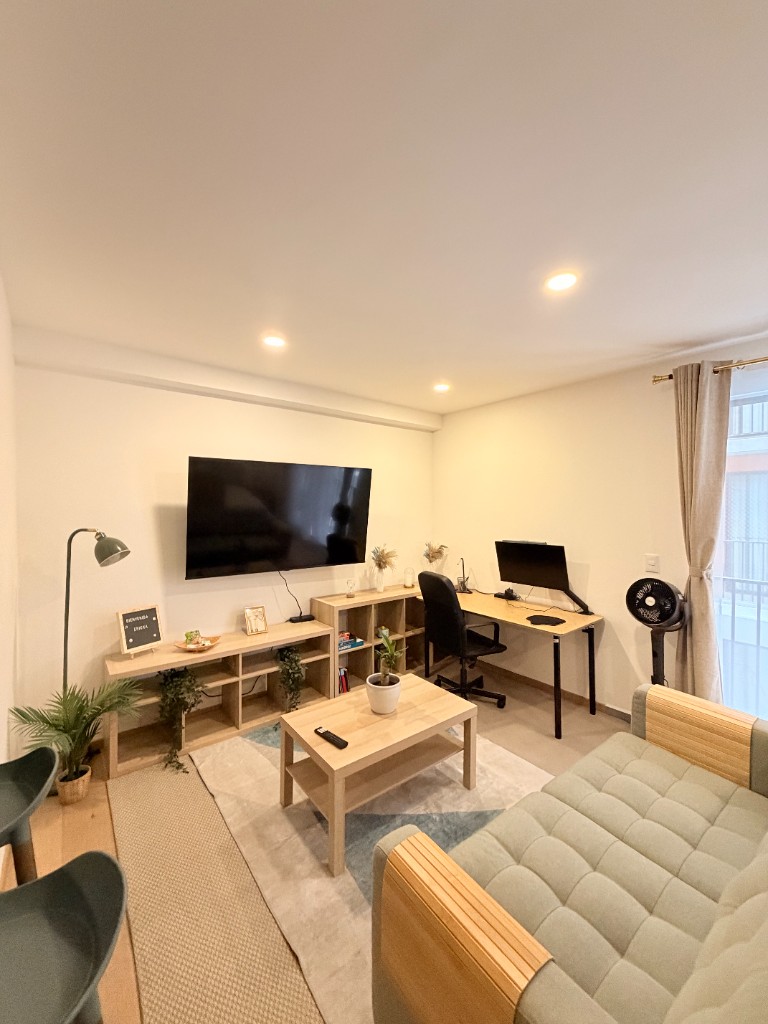
When a company books furnished accommodation in Mexico City, its finance, procurement, and relocation teams also need to know whether the provider can issue a valid Mexican tax invoice.
In Mexico, that invoice is called a CFDI (Comprobante Fiscal Digital por Internet). For companies with a Mexican entity, the correct CFDI can be necessary for expense approval, bookkeeping, tax deductions, and VAT documentation.
If you are still comparing the accommodation itself, start with corporate housing in Mexico City . This guide covers the invoicing process: what a CFDI is, which customer data to provide, how payment timing affects documentation, and what to confirm before booking.
This is a practical corporate-booking guide, not individual tax advice. Your accountant or finance department should confirm the right tax treatment, CFDI use code, and deductibility for your company.
Quick answer
Quick answer
A Mexican entity that needs accommodation documentation should confirm its CFDI requirements before payment. Send the company RFC, registered legal name, fiscal postal code, tax regime, and CFDI use code exactly as they appear in SAT records.
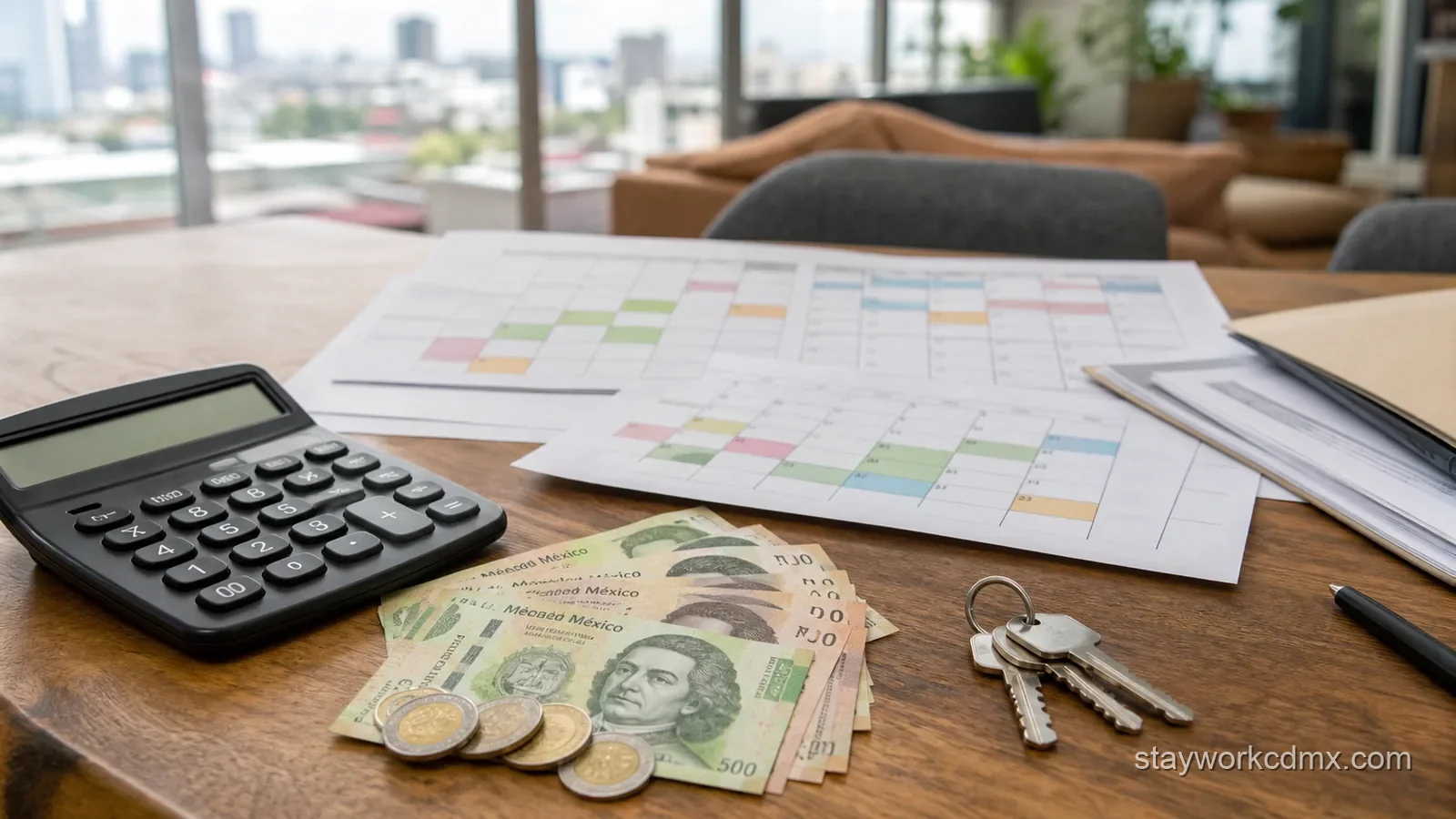
The right invoice structure depends on payment timing and the agreed billing schedule, not simply on whether a stay crosses a calendar month. When an invoice is issued before it is fully paid, the provider may need to issue a payment complement after payment.
What is a CFDI?
A CFDI is Mexico’s official electronic tax invoice. Unlike a booking confirmation, payment receipt, or ordinary PDF invoice, a valid CFDI is generated electronically, certified with a digital tax stamp, and reported through Mexico’s tax administration system.
The current general standard is CFDI 4.0, the only valid general CFDI version since 1 April 2023. A valid invoice normally includes:
- The issuer’s RFC and tax regime
- The customer’s RFC and registered legal name
- The customer’s fiscal postal code
- The customer’s tax regime and stated CFDI use
- A description of the accommodation service
- The amount, applicable taxes, payment method, and payment form
- The invoice UUID or fiscal folio
- Digital stamps from the issuer and the SAT
- An XML file and, normally, a readable PDF representation
The XML is the legally relevant electronic document. The PDF is useful for expense reports, but companies should normally retain both files. The SAT’s CFDI 4.0 guidance lists the required receiver information.
Does a company need a CFDI for corporate accommodation?
A company with a Mexican RFC will generally request a CFDI when it intends to record the accommodation as a business expense or needs it for tax and accounting support. Typical cases include accommodation for:
- Employees relocating to Mexico City
- Consultants assigned to a local project
- Visiting executives
- Medical or insurance-related stays
- Film, production, or technical teams
- Employees attending training or temporary assignments
- Groups occupying several furnished apartments
- Staff waiting for permanent housing
A CFDI is an important part of the documentation, but having one does not by itself make an expense deductible. The company must also satisfy applicable tax requirements, demonstrate the business purpose of the expense, and follow its own accounting policies.
Information required to issue a CFDI 4.0
For a company registered in Mexico, the accommodation provider will normally need five pieces of customer information:
- RFC: the company’s Mexican tax identification number.
- Razón social or registered legal name: this must match the name registered with the SAT. Do not add a commercial brand that is not part of the official registration.
- Fiscal postal code: the postal code registered for the company’s tax address.
- Régimen fiscal: the company’s SAT tax-regime code. Many Mexican corporations use code 601, General de Ley Personas Morales, but the correct code must come from the company’s fiscal records.
- Uso del CFDI: the tax-use code selected by the receiving company.
Your finance department may send a current Constancia de Situación Fiscal to reduce transcription errors. Send the required invoice data exactly as they appear in the company’s current SAT records.

For a broader view of the commercial paperwork and booking path, see corporate billing, CFDI, and compliance in Mexico City .
Do you need to provide the complete fiscal address?
Normally, no. For CFDI 4.0, the relevant address-related receiver field is the postal code of the registered fiscal domicile. A customer does not generally need to provide its complete street address, neighbourhood, municipality, and state solely to issue the CFDI.
A company may voluntarily provide more billing information for contracts or procurement records, but that information is separate from the minimum SAT invoicing data.
Which CFDI use code applies to corporate lodging?
Many Mexican companies use G03 — Gastos en general, but G03 should not be selected automatically.
The right CFDI use depends on the recipient’s tax regime, accounting treatment, and internal tax policy. StayWork CDMX issues the invoice using the valid code supplied by the customer’s finance or accounting team.
Before requesting the invoice, confirm internally:
- Which entity should receive the invoice
- Which RFC should appear
- Which tax regime applies
- Which CFDI use code should be entered
- Whether a purchase order or internal cost centre must appear in the description
- Whether the company requires separate invoices for accommodation and additional services
When should a company request the invoice?
The best time to request CFDI invoicing is before payment or while the reservation is being confirmed.
Mexican invoicing rules expect the CFDI to be issued when the transaction occurs. In practice, sending the invoicing information early also helps prevent:
- Incorrect customer information
- Invoices issued to the wrong company
- Month-end accounting delays
- Problems correcting an invoice after payment
- Procurement requests arriving after checkout
- Confusion over which legal entity received the payment
- Delays obtaining payment complements
Companies should not assume that requesting an invoice weeks after checkout will be straightforward. StayWork CDMX therefore asks corporate guests to confirm invoicing requirements at the quotation stage whenever possible.
Does a stay crossing two calendar months require two invoices?
A stay crossing two calendar months does not automatically need two invoices. For a guest staying from 20 January to 14 February, the invoicing structure can depend on:
- When payment is made
- Whether the reservation is paid in advance
- Whether the company is billed monthly
- Whether the contract separates service periods
- Whether the company requires monthly cost allocation
- Whether the booking is extended during the stay
- The accounting policy agreed with the customer
Possible structures include:
- One CFDI for the total prepaid stay
- One CFDI for each monthly billing period
- An invoice for an advance followed by the corresponding final invoice
- A CFDI issued before payment using deferred-payment treatment
- Separate invoices for separate reservations or extensions
Two invoices may be useful for internal accounting, but crossing a month boundary does not by itself require two CFDIs. Agree the billing schedule before the stay begins.

PUE, PPD, and payment complements
Corporate finance teams should understand the difference between PUE and PPD.
PUE — Pago en una sola exhibición
PUE is generally used when the invoice is fully paid at or before the time it is issued. The CFDI records the actual payment form, such as bank transfer, credit or debit card, or another applicable method.
PPD — Pago en parcialidades o diferido
PPD is used when the invoice is issued before full payment or when it will be paid later or in instalments. The initial CFDI will generally show:
- Payment method:
PPD - Payment form:
99 — Por definir
When payment is later received, the issuer must normally generate a CFDI with a Complemento para Recepción de Pagos (payment complement). The SAT’s payment-complement guidance explains that this also applies when an invoice is issued on credit and paid in full later.
For corporate bookings paid after receiving an invoice, the payment complement can be just as important as the original CFDI. Finance teams should verify that both documents are received and stored.

What happens when the company pays by bank transfer?
Bank transfer is often the simplest method for corporate accommodation because the paying entity, invoice recipient, and receiving entity can be identified clearly.
Before transferring funds, the company should confirm:
- The legal name of the payment recipient
- Whether that entity will issue the CFDI
- The bank-account details
- The reservation or invoice reference
- Whether the payment is being made before or after invoicing
- Whether a payment complement will be required
- Whether the quoted rate includes applicable taxes
The company paying for the accommodation should ideally be the same entity named as the CFDI recipient, unless its finance department has approved another structure.
Can a company pay by credit card?
Yes, although a corporate card can complicate the paperwork. The invoicing entity must be able to identify the payment correctly, and the payment processor or booking platform should not create uncertainty over which party is charging for which service.
A card receipt is not a substitute for the accommodation CFDI. Companies should distinguish between:
- The CFDI for the accommodation
- A platform service-fee invoice
- A card-processing record
- A booking confirmation
- A payment receipt
These documents may be issued by different legal entities.
Direct booking versus an accommodation platform
When accommodation is booked through an online platform, documentation can be split between the platform and the accommodation provider.
For example, a platform may charge a service fee and issue documentation for that fee, while the host or operator is responsible for documenting the accommodation charge. The exact arrangement depends on the platform, listing, and payment flow.
A corporate travel coordinator should ask:
- Who receives the accommodation payment?
- Who issues the CFDI for the stay?
- Does the platform invoice only its own service fee?
- Can invoicing capability be confirmed before payment?
- Will the company receive the XML as well as the PDF?
- Who handles invoice corrections or cancellations?
Booking directly with an established operator can make it easier to confirm the complete invoicing process before paying. When your booking requirements are ready, book direct with StayWork CDMX or request a quote before payment.
What about companies without a Mexican RFC?
A foreign company without a Mexican RFC may still request commercial documentation for its accounting records.
For CFDI purposes, qualifying transactions with foreign residents that are not registered in Mexico may use the generic foreign RFC XEXX010101000. The SAT’s rule on generic RFCs
sets out this foreign-resident RFC. Additional foreign-resident information may be required depending on the transaction and invoice configuration.
A CFDI issued with a generic foreign RFC does not have the same Mexican tax-deduction function as an invoice issued to a Mexican entity using its own RFC.
International companies should decide before booking whether the accommodation will be paid by:
- The foreign parent company
- A Mexican subsidiary
- A local branch
- The employee personally, followed by reimbursement
- A relocation or travel-management company
Who pays and who receives the invoice can materially affect the documentation process.
Corporate bookings for several employees
A company can normally receive invoices covering accommodation for several employees when the reservations, payment, and legal recipient are properly coordinated.
To prepare a multi-person quotation, provide:
- Company name
- Number of guests
- Number of apartments required
- Approximate arrival and departure dates
- Preferred neighbourhood
- Whether units must be in the same building
- Invoicing entity
- Payment schedule
- Purchase-order requirements
- Required invoice frequency
Depending on the arrangement, StayWork CDMX can discuss consolidated or separate billing for multiple units and extended project stays.
How should the company verify the CFDI?
After receiving the invoice, the finance team should check:
- The company RFC is correct
- The legal name matches SAT records
- The fiscal postal code is correct
- The tax regime is correct
- The CFDI use is the one requested
- The service dates or billing period are clear
- The totals and applicable taxes are correct
- The payment method is accurate
- The UUID appears in the document
- Both XML and PDF files were delivered
- A payment complement was issued when required
The CFDI can also be checked through the SAT’s invoice-verification services.
Can a CFDI be corrected?
Report errors as soon as they are detected. Depending on the issue, the original CFDI may need to be cancelled and replaced with a correctly related invoice. CFDI cancellations are governed by SAT procedures, and in some circumstances the recipient may be asked to accept the cancellation.
Common reasons for correction include:
- Incorrect RFC
- Incorrect legal name
- Wrong fiscal postal code
- Incorrect tax regime
- Wrong CFDI use
- Incorrect amount
- Incorrect payment method
- Duplicate invoicing
- Reservation changes or refunds
Corrections are considerably easier when the company reviews the invoice immediately rather than waiting until a later accounting period.
Corporate housing invoice checklist
Before confirming the reservation, send:
- Company RFC
- Registered legal name
- Fiscal postal code
- Tax regime code
- CFDI use code
- Dates and number of guests
- Preferred payment method
- Required billing frequency
- Purchase-order or cost-centre reference, when applicable
- Email address for XML and PDF delivery
Before submitting the expense, verify:
- XML received
- PDF received
- Recipient details correct
- Amount and service period correct
- Payment method correct
- Payment complement received when applicable
Requesting a corporate housing quote in Mexico City
To request a quote from StayWork CDMX, send:
- Approximate check-in and checkout dates
- Number of guests
- Preferred area, such as Roma Norte or Narvarte
- Number of apartments required
- Whether CFDI invoicing is required
- The company that will pay
- Preferred payment method
- Any procurement or monthly-billing requirements
For 30+ night stays, you can also compare long term rentals in Mexico City before requesting a quote.
Contact: info@stayworkcdmx.com
StayWork CDMX provides furnished apartments for corporate, relocation, medical, and extended stays in Mexico City. Invoicing availability, payment structure, and documentation requirements are confirmed before the reservation is finalised.