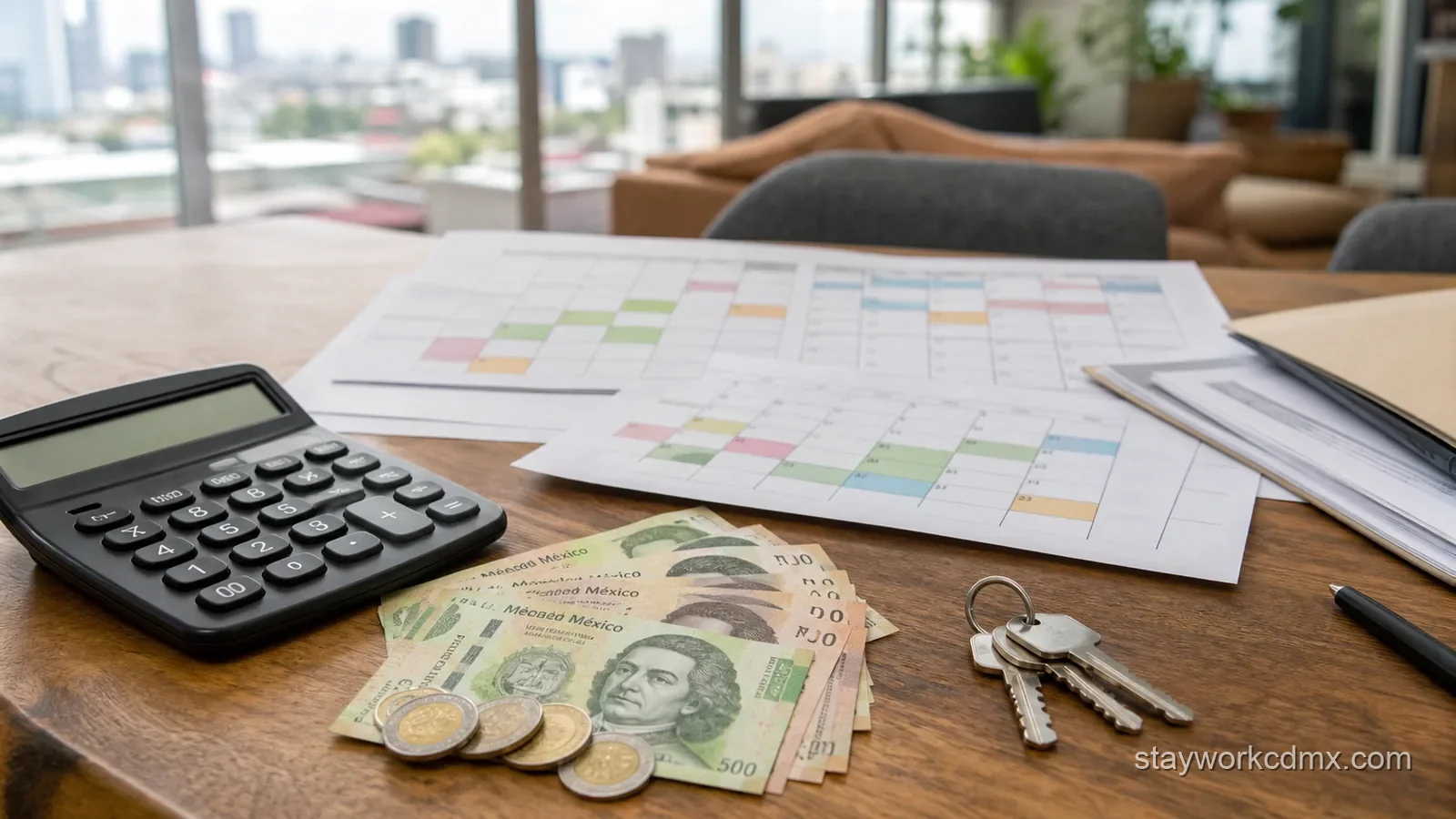
Coliving vs a furnished apartment in CDMX is really a question about what your month should feel like: a managed building with community programming, or a private home with your own kitchen, desk, and door. For stays of 30 nights or more, the answer is less obvious than the marketing on either side suggests — and the price gap is smaller than most people assume.
You open a tab and Selina’s Mexico City listing looks genuinely good. All-in pricing. A coworking desk included. Photos of people working in a sunlit common room. Maybe a rooftop.
Then you read the house rules.
No overnight guests without prior approval. Common kitchen closes at midnight. Quiet hours from 10 pm. Day visitors by registration only, common areas only. Minimum stay enforced. No refunds after check-in.
For a week, that’s fine. For a month — the length of stay that actually changes your working life — those rules become the texture of your entire experience.
This comparison is written for people who are genuinely weighing both options for a 30–90 night stay in Mexico City. If you are still mapping the broader furnished-stay market, compare monthly rentals in Mexico City before you decide whether coliving belongs on the shortlist. This guide is honest about what coliving does well. It’s also honest about where the model stops working.
What Coliving Actually Is in CDMX
Coliving in Mexico City: what you're buying
Coliving in CDMX means renting a private room (or sometimes a bed in a shared room) inside a building that also has managed common spaces: a coworking area, a shared kitchen, often a rooftop or lounge, and sometimes organized social events.
The pitch is: pay one rate, get accommodation + workspace + community. For a 1–2 week stay or a first-time visit to a city, it solves real problems. For a 30+ night stay by someone who already knows how to live in a city, it often creates problems that didn’t exist before. If you’re planning a month or more as a digital nomad, compare digital nomad apartments as your baseline before evaluating coliving costs and restrictions.
The major operators in Mexico City include:
- Selina Roma Norte — the most visible international brand. Private rooms, dorm beds, coworking day passes, bar and restaurant on-site.
- Outsite CDMX — smaller, more work-focused. Higher price point. Private rooms in curated buildings.
- Independent coliving buildings — scattered across Condesa, Polanco, and Roma. Often marketed as “furnished rooms with shared spaces.” Variable quality.
The Real Cost Comparison
Coliving vs furnished apartment — monthly cost for a solo remote worker in Roma Norte, 2026
| Item | Coliving (private room) | Furnished Apartment |
|---|---|---|
| Room / apartment rate | $13,000–$20,000 MXN/month | $9,000–$33,000 MXN/month by format |
| Coworking desk access | Included (limited hours) | In-unit, 24/7 |
| Fast dedicated Wi-Fi | Shared building connection | Dedicated line, 200+ Mbps |
| Kitchen access | Shared, communal | Private, fully equipped |
| Overnight guests | Prohibited or fee-based | No restrictions |
| Visitor policy | Sign-in, common areas only | Your apartment, your rules |
| Quiet hours / curfews | Yes (typically 10 pm–8 am) | None |
| Housekeeping | Common areas only | Periodic or on-request |
| Noise from common areas | Regular | None |
| Monthly total (realistic) | $16,000–$26,000 MXN ($900–$1,400 USD) | $9,000–$33,000 MXN by format |
The rate gap is real but smaller than people expect. The bigger gap is in what you’re actually buying for that money.
With coliving, you’re buying a private room inside a shared building. The common spaces are part of the product — the brand, the pitch, the photos. But after week one, most people use those common spaces less than they thought they would, and the rules governing them start to grate.
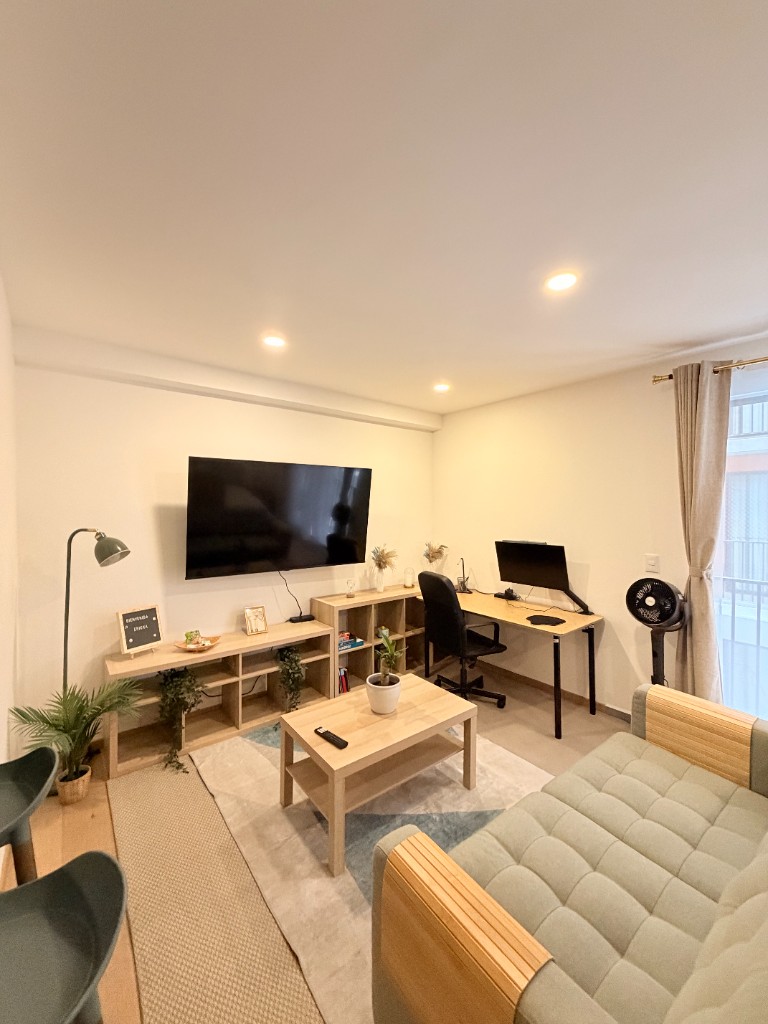
With a furnished apartment, you’re buying a complete private unit. The coworking desk is at the end of your bed. The kitchen is yours. Nobody asks you to sign in your girlfriend. Once you’ve decided a private furnished apartment fits the 30+ night plan better, book direct to see real inventory and availability.
Coliving vs Furnished Apartment: What a Month Costs in MXN (2026)
Coliving operators quote in USD; the Mexico City rental market runs in pesos. Putting both on the same MXN scale makes the comparison much clearer:
| Option | Monthly rate (MXN) | Approx. USD |
|---|---|---|
| Coliving private room, Roma Norte / Condesa (Selina, Outsite tier) | $16,000–$26,000 | $900–$1,400 |
| Serviced private room + own bathroom, Narvarte | $9,000–$17,000 | $500–$950 |
| Furnished 1BR, Narvarte | $22,000–$32,000 | $1,200–$1,750 |
| Furnished 1BR, Roma Norte | $23,000–$40,000 | $1,250–$2,200 |
| Furnished 1BR, Condesa | $30,000–$44,000 | $1,650–$2,400 |
Read that table twice, because it reframes the whole decision:
- A private room with its own bathroom in Narvarte undercuts every coliving quote in the city — and it comes with a real kitchen you don’t share, no quiet hours, and no visitor sign-in.
- A full private one-bedroom in Roma Norte overlaps the top of the coliving band. For roughly what Outsite charges for a room next to a shared kitchen, you can have an entire apartment in the same neighborhood.
- The coliving premium buys programming and common spaces — not more private space, not faster dedicated Wi-Fi, and not fewer rules.
A realistic full monthly budget, one person
| Monthly expense | Coliving room (Roma Norte) | Furnished 1BR (Narvarte) |
|---|---|---|
| Accommodation | $16,000–$26,000 MXN | $22,000–$32,000 MXN |
| Groceries | $2,500–$4,000 MXN (shared kitchen limits cooking) | $3,500–$5,000 MXN |
| Eating out | $5,000–$8,000 MXN (Roma café pricing, less cooking) | $2,500–$4,500 MXN |
| Transport | $600–$1,500 MXN | $800–$1,500 MXN |
| Coworking | Included (limited hours) | $0 — in-unit desk |
| Realistic total | $24,100–$39,500 MXN | $28,800–$43,000 MXN |
The totals land closer than the headline rates suggest, because coliving quietly pushes spending outward: a shared kitchen means more meals out, and Roma Norte café pricing compounds over 30 days. The apartment path costs slightly more in rent and gives you back a private kitchen, a dedicated desk, and a home that doesn’t have house rules.
Where to Base Yourself If You Skip Coliving
Almost every coliving in Mexico City sits in Roma Norte, Condesa, or Polanco — which tells you where the walkable, café-dense demand is, but not where the value is.
Roma Norte is the natural landing spot if what attracted you to coliving was the neighborhood itself: café density, coworking options, and social plans within walking distance. You keep all of that with a private apartment; browse real inventory on the Roma Norte monthly stays page.
Condesa delivers the park-and-walking-loop lifestyle — Parque México, Parque España, Avenida Ámsterdam — at a similar or higher premium. If you’re weighing the two, the Roma Norte vs Condesa monthly stay comparison breaks down where each one earns its price.
Narvarte is the value play that coliving marketing never mentions: a residential neighborhood 10–15 minutes from Roma with quieter nights, larger units, and rents 30–50% below Roma Norte for comparable furnished quality. It suits exactly the guest coliving underserves — someone working real hours from home who wants Roma’s cafés as an option, not a lifestyle. Start with the Narvarte guide for remote workers , then compare actual units on furnished monthly apartments in Narvarte .
For the full citywide picture — including Del Valle, Escandón, and how each area fits different work routines — see the ranked guide to the best neighborhoods in Mexico City for remote workers in 2026 .
The Visitor Policy: The Detail Nobody Talks About
This is the issue that matters most for monthly stays and gets the least attention in comparisons.
Every major coliving brand restricts visitors. The typical rules:
- Overnight guests require advance approval and often an extra fee ($15–$30 USD/night)
- Day visitors must check in at front desk with ID
- Visitors are not permitted in resident rooms — only in common areas
- Some locations restrict visits to designated hours
This is not a small print issue. It’s the core model. Coliving buildings are managing shared spaces, shared liability, and a guest roster. They cannot run those buildings like a private apartment building.
For a 2-week trip, this is irrelevant. For a 30–90 day stay, your life is actually in this city. You will want to have people over. A date, a friend from back home who’s also traveling, a colleague from a Mexico City coworking event. The moment you have to ask permission or pay a fee to have someone visit your own room, the illusion of home disappears.
In a private furnished apartment, your visitors are your business. Nobody logs their name. Nobody asks what time they’re leaving.
Privacy and Daily Life
Coliving works on the premise that you want community. That premise holds for some people, some of the time.
It breaks down for monthly remote workers who:
- Work on calls with sensitive client information
- Keep unusual working hours (late nights, early mornings)
- Want to cook what they want, when they want, without navigating a shared kitchen
- Value silence — not just at night, but during the day
- Don’t want to manage their energy around other people’s social moods
The shared kitchen issue deserves its own mention. In theory, a shared kitchen sounds fine. In practice: dishes that have been sitting, someone else’s smell in the fridge, a fire alarm from a burnt pan at 11 pm, and the quiet social negotiation of whether to say something. Over a full month, this is not a small thing.
A private apartment kitchen is yours. You know its state. You stocked it. You clean it.
Work Setup: Dedicated Desk vs Coworking Common Area
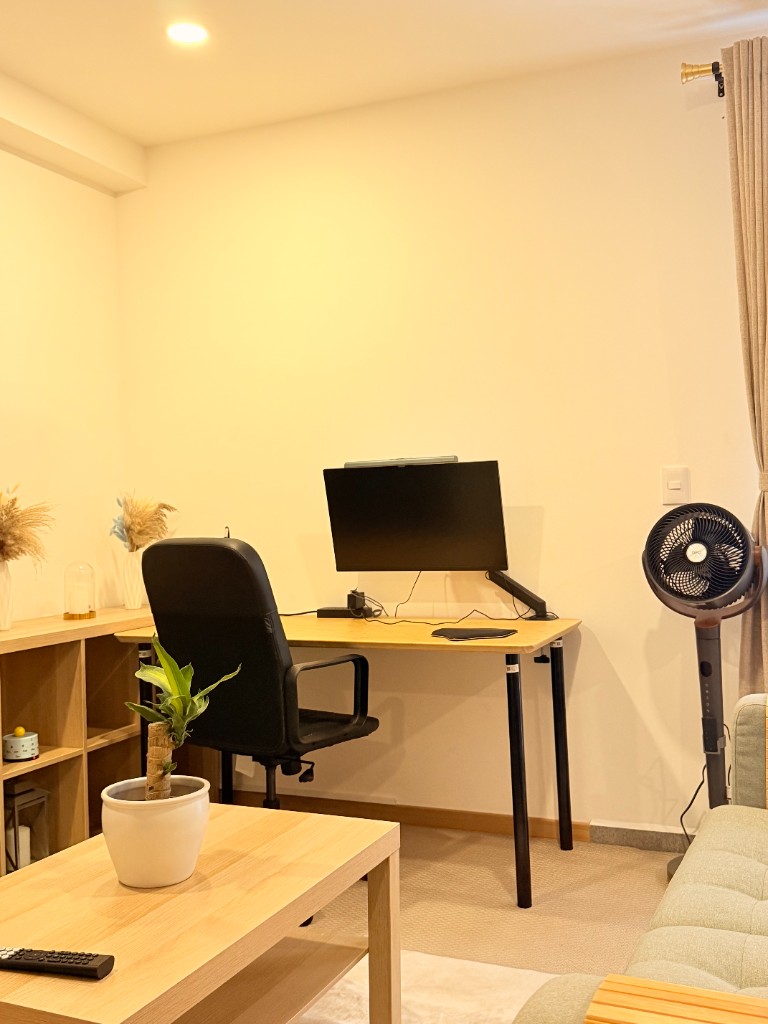
A dedicated in-unit desk: 200 Mbps fiber, ergonomic chair, 27-inch monitor. Available at 6 am and midnight, equally.
Coliving coworking areas look great in photos. In reality:
- Seats fill up during peak hours (9 am–1 pm)
- Noise levels vary — other people take calls, have conversations
- Hours may be limited (coliving coworking areas close; your room desk doesn’t)
- Some room categories don’t include coworking access — it’s an add-on
The pitch of “coworking included” is accurate. The implication that you’ll always have a quiet desk available is not.
In a furnished apartment with a proper work setup, your desk is yours at all hours. The fiber connection is dedicated to your unit — not shared with 40 other residents. Nobody is on a call behind you. You can take your own video call without headphones.
For remote workers doing async work occasionally, coliving is fine. For people running client calls, deep work sessions, or long on-camera days — the in-unit desk is not optional.
What Coliving Does Well
This is an honest comparison, so: coliving has real advantages.
For 1–2 week stays, coliving is excellent. Everything is figured out. You walk in, you have Wi-Fi, a desk, a kitchen, people to talk to. Zero friction. The rules don’t matter yet.
For first-time visits to CDMX, coliving provides instant social orientation. You’ll find out about the best taco spot within two hours of checking in. The community aspect — meetups, group dinners, impromptu rooftop conversations — is real and genuinely useful for people who arrive knowing no one.
For specific personality types, the structure of coliving is a feature, not a bug. If you want your social life pre-organized, your workspace visible and external, and your living situation to feel like a campus — coliving delivers exactly that.
The problem is that most people who are considering a month-long stay in CDMX don’t fit that profile. They’re remote workers who want to live like a local, not like a long-term tourist.
If your decision is really about the right setup for remote work — fast fiber, a private desk, flexible dates — compare digital nomad apartments in CDMX against coliving quotes. If the format question is really a neighborhood question, compare Narvarte vs Roma Norte for a monthly stay before paying for shared-space amenities you may not use.
Who Should Choose Each
Choose coliving if:
- Your stay is 1–2 weeks and social orientation is a priority
- You’ve never spent time in Mexico City before and want hand-held onboarding
- You genuinely want to meet other nomads and are happy to build your schedule around community events
- You don’t plan to have visitors or prefer a life without guests in your space
- You’re under 28, fine with hostel-like social energy, and want the cheapest possible per-night rate
Choose a furnished apartment if:
- You’re staying 30+ nights and want your life to feel normal, not managed
- You want to have visitors — a partner, a friend, a date — without asking permission
- You work long or irregular hours and need your desk available at 6 am and midnight
- You cook, or want to cook, on your own schedule
- You want to know exactly what you’re paying with no surprise add-ons
- Privacy matters more than programmed community
The Honest Verdict
Coliving is a good product for a specific use case: short stays, first-time city visitors, and people who want community pre-packaged. It is a mediocre product for monthly remote workers who already know how to be in a city.
The rules aren’t incidental — they’re structural. Every coliving building manages shared space, shared security, and a shared experience. Those management requirements produce the visitor policies, quiet hours, sign-in procedures, and kitchen rules. They don’t disappear because you stay longer.
After 30 nights in a coliving space, the community aspect has run its course and the restrictions remain. After 30 nights in a private furnished apartment in Roma Norte, you feel like you live there.
The price difference is smaller than the lifestyle difference. For most remote workers, the private apartment is the obvious answer — it just requires knowing where to look and what to verify before booking.
When your dates are firm, review book direct in Mexico City before checkout so you can compare the full direct-stay path against platform fees and coliving quotes.
For monthly stays
Private, work-ready apartments in Roma Norte and Narvarte
What to Verify Before Booking Either Option
Whether you choose coliving or a private apartment, verify these before paying:
For coliving:
- Does your room type include coworking access, or is it a day-pass add-on?
- What is the exact visitor policy — overnight and day visitors?
- What are the quiet hours and common area closing times?
- Is the kitchen truly shared or reserved for certain room types?
- What is the cancellation policy after check-in?
For a furnished apartment:
- Is there a real dedicated desk with an ergonomic chair, or just a small table?
- What are the actual internet speeds — and is the connection dedicated or shared with the building?
- Is the fiber router in the unit, or on a shared building line?
- Are utilities (electricity, internet, water) included in the monthly price?
- Is monthly pricing available directly, or only through a platform with booking fees?
Data based on listed prices from Selina CDMX, Outsite CDMX, Airbnb, and Booking.com, updated August 2026. Coliving rates vary by room type and season — always request a monthly quote directly from the operator. Furnished apartment prices reflect serviced furnished units in Roma Norte and Narvarte with dedicated work setups; MXN ranges use the same 2026 bands as our neighborhood cost guides.