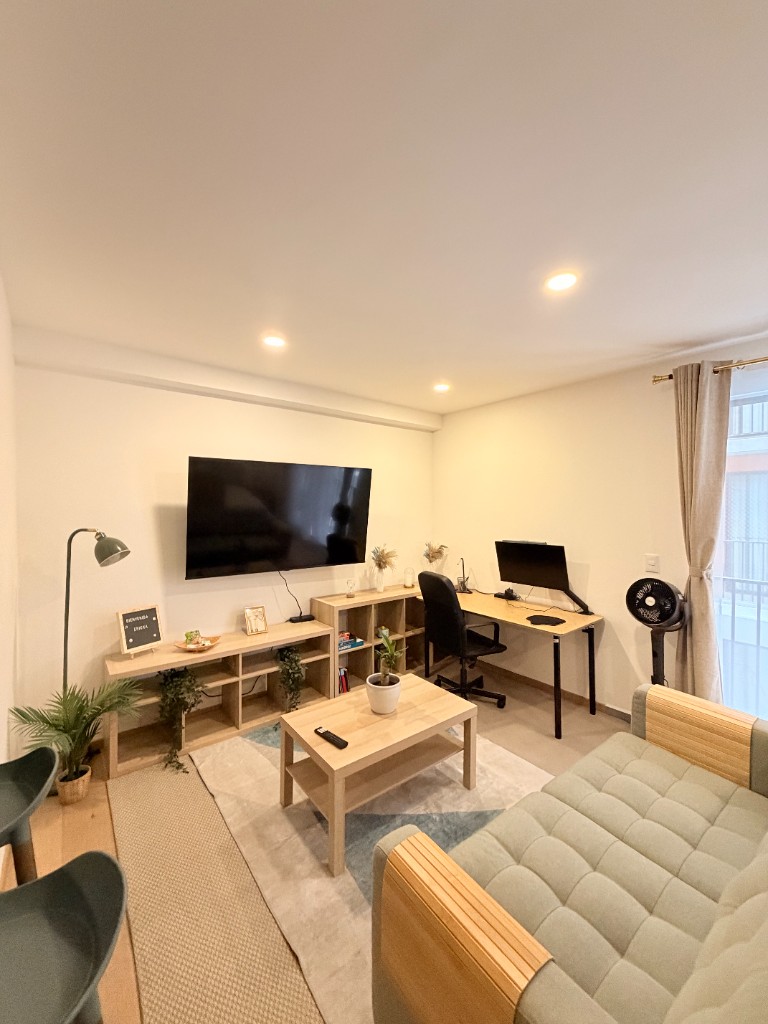
Lisbon and Mexico City look similar on a remote-work shortlist: strong cafe culture, international flights, active digital nomad scenes, and enough infrastructure for serious laptop work. The decision changes once you add the constraints remote workers actually feel after week two: rent, visa days, call times, neighborhood rhythm, safety, and whether the apartment is truly ready for daily work.
If your income depends on North American clients, start with the timezone and visa math before you fall in love with a balcony view. If you already lean toward CDMX, compare digital nomad apartments in Mexico City and monthly rentals in Mexico City early, because the right desk and neighborhood will matter more than a generic city ranking.
This guide uses May 2026 public data, official visa sources, and StayWork’s ground-level experience hosting remote workers in Roma Norte and Narvarte.
Quick answer
CDMX vs Lisbon: 30-second verdict
Choose Lisbon if: you have an EU passport, your team is in Europe, safety is your highest priority, you want easy weekend access to Portugal and the EU, and you can absorb higher rent.
Choose CDMX if: you work with US or Canadian clients, want a longer stay with less visa friction, care about rent-to-quality value, and need a furnished apartment where Wi-Fi, desk setup, food access, and daily errands are already solved.
The practical split: Lisbon is a cleaner Europe base. Mexico City is the stronger North American remote-work base.
The numbers side by side
CDMX vs Lisbon for remote workers, May 2026
| Category | Mexico City (CDMX) | Lisbon, Portugal |
|---|---|---|
| Comfortable solo monthly budget | ~$1,500-$2,400 USD | ~EUR 2,000-EUR 3,000 |
| 1BR rent, city-center benchmark | ~MXN 19,977 / EUR 976 | ~EUR 1,331 |
| Furnished long-stay apartment reality | Lower cost, wider range in Roma Norte, Condesa, Narvarte | Higher rent pressure in Príncipe Real, Bairro Alto, Chiado, Cais do Sodré |
| Visitor stay without national visa | Up to 180 days, granted at entry | 90 days in any 180-day Schengen period |
| Remote-work visa pressure | Temporary residency route exists, but many shorter stays use visitor status | D8 / remote-work route commonly requires 4x Portuguese minimum wage income |
| Timezone vs New York | Usually 1-2 hours behind | Usually 5 hours ahead |
| Timezone vs Los Angeles | Usually 2-3 hours ahead | Usually 8 hours ahead |
| Internet in modern apartments | 100-300 Mbps fiber is common in central neighborhoods | 100-300 Mbps fiber is common in modern rentals |
| Coworking monthly hot desk | Often ~$120-$250 USD | Often ~EUR 160-EUR 350 |
| Safety baseline | Strongly neighborhood-dependent | Easier city-wide safety baseline |
| Best-fit worker | North America-facing remote worker | Europe-facing remote worker |
The clean takeaway: Lisbon is not “bad value,” but it is no longer the cheap Europe hack many nomad posts still imply. CDMX is less expensive and much easier for US-client schedules. Lisbon is safer, more compact, and better for Europe-based work.
Cost of living: the real monthly pressure
Mexico City is not universally half the price of Lisbon. That would be lazy math. The more defensible 2026 read is this: Lisbon is roughly 20%+ more expensive overall in recent city comparisons, and rent is where the gap becomes painful. Numbeo’s May 2026 comparison shows a one-bedroom in Lisbon city center at about EUR 1,331 versus about MXN 19,977 / EUR 976 in Mexico City. Outside the center, the gap is wider.
For a remote worker, the monthly difference usually appears in four places:
- Rent: Lisbon’s best remote-work neighborhoods are expensive and competitive. CDMX still offers more furnished options below premium Europe pricing, especially if you compare Roma Norte with Narvarte instead of only Roma Norte with Príncipe Real.
- Utilities: Lisbon utilities can be much higher, especially in older apartments with weaker insulation.
- Coworking: CDMX hot desks often sit around $120-$250 USD/month, while Lisbon options commonly start near EUR 160 and move up quickly.
- Food: both cities have affordable everyday meals, but CDMX gives you more low-cost depth without leaving the central neighborhoods.
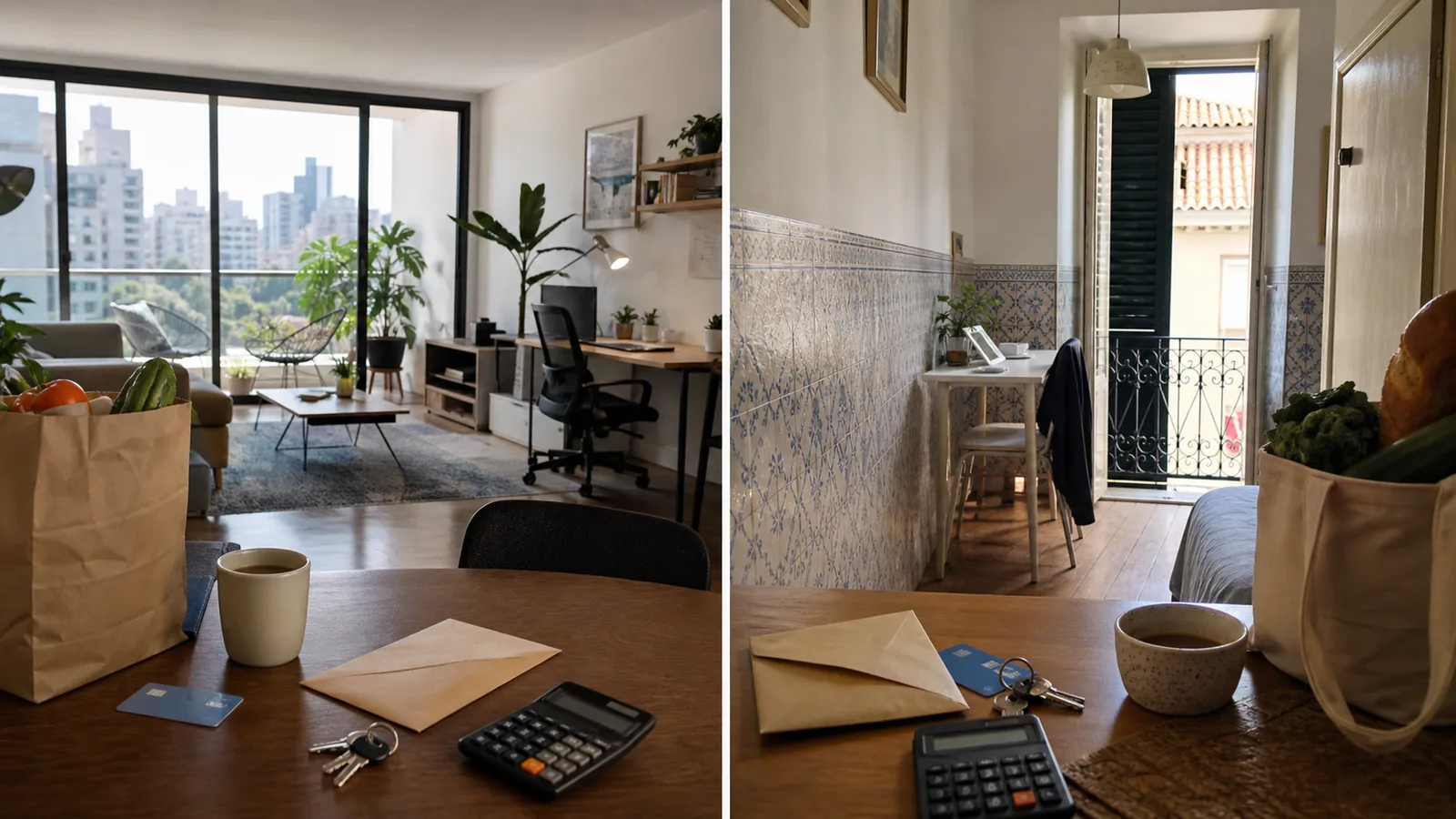
If you are comparing actual CDMX budgets, use the cost of living in Mexico City for digital nomads next to live monthly apartment options . A cheap rent number is not useful if the apartment has weak Wi-Fi, no real desk, or a location that makes every errand expensive.
Visa reality: Schengen is the Lisbon constraint
For EU passport holders, Lisbon gets much easier. You can live and work there under EU mobility rules and ignore the Schengen clock that affects non-EU travelers.
For US, Canadian, UK, Australian, and many other remote workers, the Schengen rule is the first serious constraint: 90 days in any 180-day period across the Schengen Area. That is not 90 days in Portugal and then 90 more in Spain. It is a rolling Schengen total.
That means a four- or five-month Lisbon stay usually requires one of three moves:
- Leave Schengen around day 90 and work from somewhere else.
- Apply for a Portuguese national visa before you need it.
- Shorten Lisbon to a true under-90-day stay.
Portugal’s remote-work visa route is useful but not casual. VFS Portugal’s remote-work checklist asks for proof of average monthly income in the last three months with a minimum equivalent to four times the Portuguese monthly minimum wage. Portugal’s official 2026 monthly minimum wage is EUR 920, so the practical single-applicant income benchmark is about EUR 3,680/month. Consulates can ask for additional documents, and processing time can affect your travel plan.
Mexico is simpler for many remote workers but still needs precise wording. Visitor status is up to 180 days, not a guaranteed automatic 180 for every traveler. The officer at entry grants the days. For a normal one- to four-month remote-work stay, CDMX is still less visa-complex than Lisbon for most North American workers.

Timezone: the hidden productivity cost
This is the part most city comparisons underweight.
Mexico City stays on UTC-6 year-round. Because the United States still changes clocks, CDMX is usually one or two hours behind New York and broadly aligned with US Central, Mountain, and Pacific workdays. A 10:00 a.m. Chicago call, a noon Denver review, and a 3:00 p.m. Los Angeles client meeting all fit inside a normal CDMX day.
Lisbon is usually five hours ahead of New York and eight hours ahead of Los Angeles. That can work beautifully for Europe-facing roles. It gets awkward fast for US-client work:
- a New York 9:00 a.m. standup is usually 2:00 p.m. in Lisbon
- a Pacific 2:00 p.m. review is usually 10:00 p.m. in Lisbon
- urgent US afternoon issues can become dinner or bedtime work
- couples with two US calendars usually feel the strain faster than solo workers
If your calendar is asynchronous and your clients are European, Lisbon may be better. If your revenue depends on North American response time, Mexico City has a real business advantage. For a deeper version of that argument, read working from Mexico City with US clients .
Neighborhoods: Príncipe Real vs Roma Norte and Narvarte
The city comparison only becomes useful when it turns into a neighborhood decision.
Príncipe Real, Bairro Alto, Chiado, Cais do Sodré, and parts of Mouraria are the Lisbon areas many remote workers compare first. They are walkable, beautiful, cafe-heavy, and close to restaurants, coworking, transit, and river views. The trade-off is obvious: small apartments, older buildings, steep streets, and rent pressure. A charming Lisbon apartment can still be a poor work apartment if the desk is improvised, the chair is bad, or the building is noisy.
Roma Norte is CDMX’s most obvious remote-work base: dense cafes, restaurants, coworking, parks, nightlife, and a neighborhood rhythm that works for a one-month test or a longer stay. It is busier and more expensive than many CDMX neighborhoods, but it gives first-time remote workers the easiest landing.
Narvarte is the calmer CDMX alternative. It is more residential, less performative, and often better value for longer work stays. You trade some cafe density for quieter nights, easier groceries, and quick access to Roma, Condesa, Del Valle, and the medical corridor. If that trade-off sounds relevant, compare Roma Norte vs Narvarte for a monthly stay before booking.

Use where to stay in Mexico City for monthly stays if you are still deciding between Roma Norte, Condesa, Narvarte, Polanco, and other CDMX bases.
Internet and work setup
Both cities can support serious remote work. The issue is not whether fiber exists. It does. The issue is whether the specific apartment is set up for daily work.
In Lisbon, NOS and MEO fiber are common in modern or upgraded apartments, and coworking spaces such as Heden, Lisbon-Cowork, Second Home, and other independent operators give you fallback options. The catch is that many attractive older apartments were optimized for short stays, not eight-hour workdays.
In CDMX, Telmex and Totalplay fiber are common in Roma Norte, Condesa, Narvarte, Juárez, and Polanco. The furnished monthly market is more visibly shaped around remote workers: real desks, dedicated Wi-Fi, monitor-friendly surfaces, and clear arrival instructions are now part of the booking decision. They are still not universal, which is why you should use a remote-work apartment checklist before payment.
For coworking backup in CDMX, compare the coworking price guide for Mexico City instead of assuming every cafe can handle client calls.
Safety: Lisbon wins, CDMX needs neighborhood discipline
Lisbon has the easier safety baseline. That matters, especially if you walk home late, travel alone, or want a lower-friction first month in Europe. Pickpocketing exists in tourist-heavy areas, but day-to-day personal safety is simpler than in most large cities in the Americas.
Mexico City requires more neighborhood discipline. Roma Norte, Condesa, Polanco, Narvarte, and parts of Juárez are the usual long-stay areas for a reason: walkability, services, lighting, transport, and lower day-to-day friction. CDMX is not a city where you should book only by cheapest rent or prettiest photos.
The practical answer is not fear. It is filtering:
- choose the colonia before the apartment
- ask about building access and arrival instructions
- avoid isolated streets if you will come home late
- use rideshare when the hour or route feels wrong
- keep your work equipment low-profile outside cafes
If safety is the top factor and Europe is viable for your work, Lisbon wins. If timezone, budget, and long-stay apartment quality matter more, CDMX remains a strong choice as long as the neighborhood is right.
Food, lifestyle, and staying power
Lisbon wins on coastal access and European weekend travel. Cascais, Sintra, Porto, Madrid, Paris, and London are all psychologically closer from Lisbon than from CDMX. The city is beautiful, the light is real, and the pace is easier to understand on arrival.
Mexico City wins on food and cultural depth. This is where the comparison stops being close. CDMX gives you street tacos, markets, bakeries, cantinas, Japanese-Mexican food, natural wine, fine dining, museums, galleries, music, parks, and neighborhood life at a scale Lisbon cannot match. Lisbon’s food is good. Mexico City’s food is a reason to stay.
For a two-week trip, Lisbon may feel easier. For a two- to four-month remote-work base, CDMX often has more staying power because the city keeps unfolding. If you want a softer first week in CDMX, use the first week in Mexico City remote worker guide to avoid stacking errands, calls, altitude adjustment, and neighborhood exploration into the same day.
Who should choose Lisbon
Choose Lisbon if:
- you hold an EU passport or already have a Portugal visa path
- your team, clients, or customers are in European timezones
- you value safety and walkable European infrastructure above cost
- you want beach access and easy EU weekend travel
- you are staying under 90 days and Schengen timing is not a problem
- you can afford a better apartment rather than settling for the cheapest central listing
Lisbon is especially good for remote workers who want Europe without jumping straight into Paris, Amsterdam, Berlin, or London prices.
Who should choose Mexico City
Choose CDMX if:
- your clients are in the US, Canada, or Latin America
- you want a one- to six-month base with less Schengen-style friction
- your rent-to-quality ratio matters
- you want food, culture, and neighborhood depth more than coastal access
- you need a furnished apartment with a reliable desk setup
- you want direct North American flights
- you are choosing between Roma Norte energy and Narvarte calm
If you have already chosen CDMX, the next useful decision is not “Mexico City vs Lisbon.” It is whether Roma Norte or Condesa fits your work rhythm, whether Narvarte gives you better monthly value, and whether the apartment setup passes the practical checklist.

The honest verdict
Lisbon is the better Europe base. Mexico City is the better North American remote-work base.
If you have an EU passport, European clients, and a strong safety preference, Lisbon makes sense. It is compact, beautiful, connected, and easier to navigate emotionally on arrival.
If you work US hours, CDMX is more rational. The timezone is better, the stay length is easier for many visitors, the monthly apartment market is strong, and your budget buys more daily life. The difference compounds over a month: fewer late calls, less rent pressure, more food choice, and a workday that still leaves your evening intact.
For most US and Canadian remote workers choosing a 2026 base, the answer is CDMX unless they specifically need Europe.
For monthly stays
Choosing CDMX over Lisbon? Compare work-ready monthly stays
If CDMX is your likely pick, continue with:
- long term rentals in Mexico City
- book direct in Mexico City
- Roma Norte vs Narvarte monthly stay comparison
- cost of living in Mexico City for digital nomads
- CDMX vs Medellin for digital nomads
Sources and further reading
Prices, visa rules, and exchange rates move. Use this guide for planning, then confirm visa and listing details before paying for housing.
- European Commission - Schengen visa policy and 90/180-day rule
- VFS Global Portugal - Temporary stay visa for remote work, digital nomads checklist
- Portugal Government - 2026 minimum wage increase to EUR 920
- Portugal Portal da Habitação - RMMG minimum monthly wage table
- AIMA - Residence authorization for remote work performed outside Portugal
- Mexican Consulate - visitor visa without permission to engage in paid activities, up to 180 days
- Numbeo - Mexico City vs Lisbon cost of living comparison
- Expatistan - Mexico City vs Lisbon cost comparison
- Lisbon-Cowork - 2026 coworking pricing
Spanish search intent
If you are searching in Spanish, this comparison appears as CDMX vs Lisboa para nómadas digitales, Ciudad de México vs Lisboa para trabajo remoto, costo de vida CDMX vs Lisboa, visa nómada digital Portugal requisitos, or mejor ciudad para trabajar remoto México vs Europa.
Spanish readers can continue with: