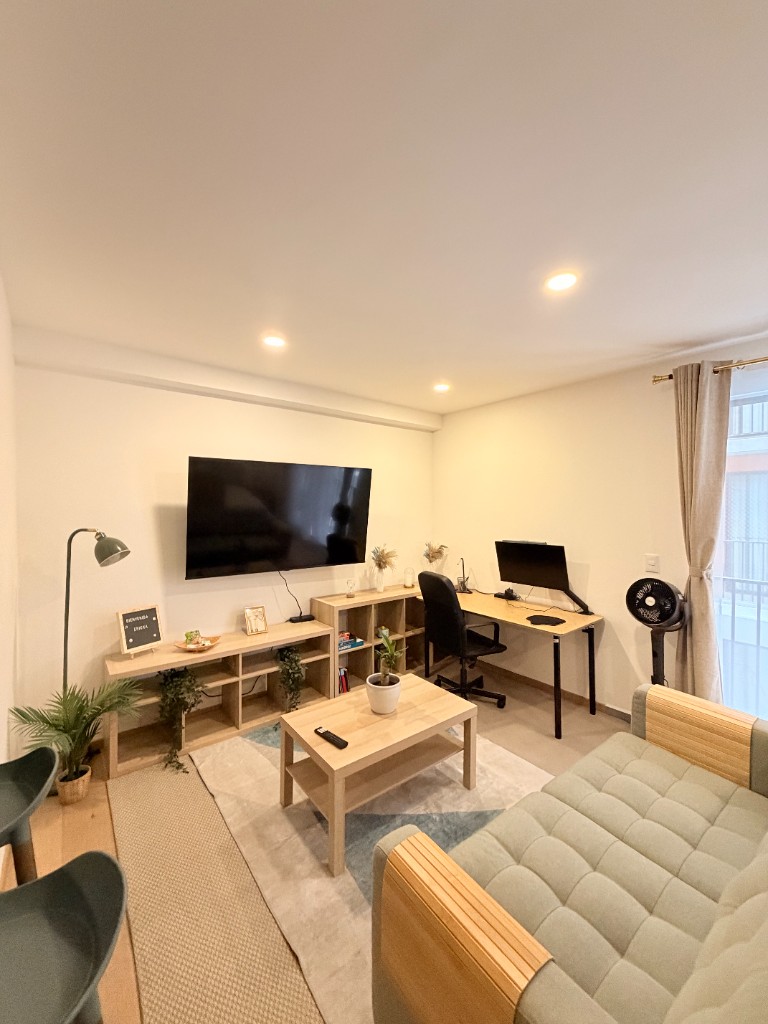
Every year, a cohort of digital nomads runs the same comparison: Mexico City or Buenos Aires? Both sit near the top of every Latin American nomad list. Both have sophisticated neighborhoods, fast internet, a deep food culture, and an expat infrastructure that makes arriving and working easy. Both are considerably cheaper than most of Western Europe or North America.
But choosing between them based on vague “vibes” costs you months of friction, currency confusion, or simply picking the wrong city for your work situation.
This guide is built on real 2026 data: Nomad List scores, Numbeo cost figures, published rental pricing, Argentina’s current exchange rate dynamics, and ground-level context from operating furnished apartments for remote workers in Roma Norte and Narvarte since 2022.
Quick Answer
CDMX vs Buenos Aires: 30-second verdict
Choose Buenos Aires if: you want European architecture and nightlife depth, you understand (or want to learn) how Argentina’s currency system works to your advantage, and safety score is a meaningful factor in your city selection.
Choose CDMX if: you work with US clients and need timezone overlap, you want 180 days visa-free without any paperwork, you value currency stability, and you want direct flights home when you need them.
On cost: BA can be cheaper — but only if you navigate the exchange rate correctly. Done wrong, it costs the same as CDMX or more. On US work logistics: Mexico City wins clearly and it’s not close.
The Numbers Side by Side
CDMX vs Buenos Aires — key metrics for digital nomads, 2026
| Category | Mexico City (CDMX) | Buenos Aires |
|---|---|---|
| Monthly budget (solo, comfortable) | $1,400–$2,200 USD | $1,200–$2,000 USD |
| Furnished 1BR, expat neighborhood | $700–$1,400 USD/month (Roma Norte) | $600–$1,100 USD/month (Palermo) |
| Nomad List overall score | 68.76 / 100 | ~72 / 100 |
| Safety score (Nomad List) | 41 / 100 | ~55 / 100 |
| Avg internet (modern apartment) | 100–300 Mbps fiber | 100–300 Mbps fiber |
| Altitude | 2,240 m (7,350 ft) | 25 m (sea level) |
| Average temperature | 17–20°C mild year-round | 17–18°C seasonal (hot summers) |
| Tourist visa (US/EU/UK) | 180 days, no application | 90 days, no application |
| Digital nomad visa | Residente Temporal (well-documented) | Exists; requires income proof + application |
| Timezone | UTC-6 (Central Time) | UTC-3 (same as US East -2 in summer) |
| Direct flights to US/EU | Extensive hub airport | 10–12 hr to US, fewer direct routes |
Cost of Living: Close, but Complicated
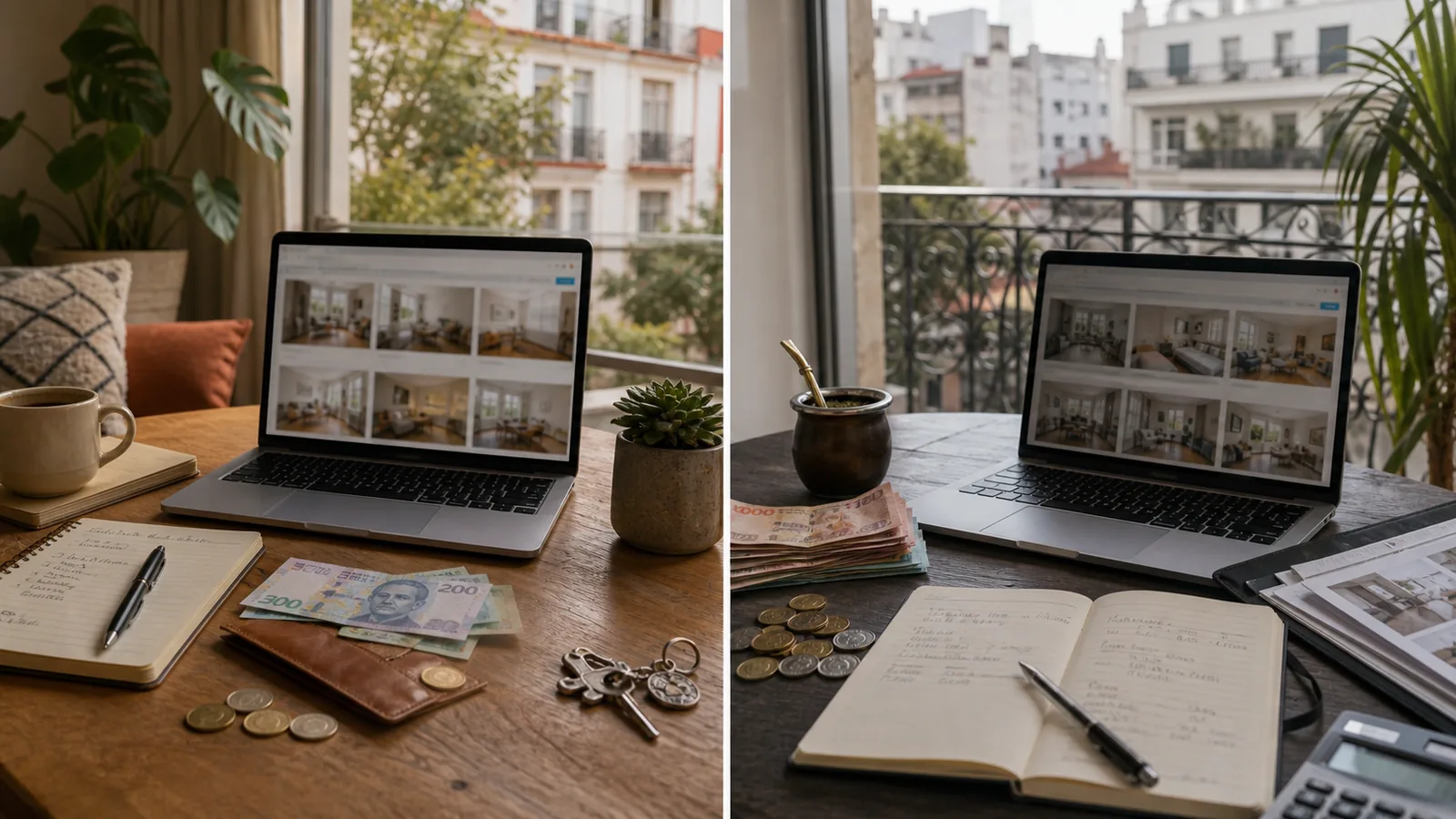
On paper, Buenos Aires is cheaper. A solo nomad living comfortably in Palermo or Recoleta spends $1,200–$2,000 USD/month all-in. The same lifestyle in Roma Norte, CDMX runs $1,400–$2,200 USD/month. The gap is real — but it comes with a significant asterisk.
Housing in 2026:
- Palermo/Recoleta furnished 1BR: $600–$1,100 USD/month (landlords price in USD; you pay in pesos at whatever rate applies)
- Roma Norte furnished 1BR: $700–$1,400 USD/month ($12,000–$24,000 MXN/month) for a work-ready unit with dedicated fiber
Food costs lean in BA’s favor at the local end — a menu del día lunch in Palermo runs $5–$8 USD. In Roma Norte, a sit-down lunch is $8–$15 USD. Street food in CDMX remains exceptional value at $1.50–$4 per taco. The gap across a full month is roughly $150–$300 USD.
The Argentina currency caveat: Buenos Aires costs significantly more if you exchange at the official rate and less if you use the informal dólar blue route. This creates meaningful uncertainty — rates move with political cycles, and the “cheap BA” calculus can change dramatically with a policy shift. Mexico City prices in MXN at market rate: what you see is what you pay.
For nomads who understand Argentine exchange mechanics and treat it as a skill to manage, BA can land at $1,000–$1,400 USD/month all-in — genuinely cheaper than CDMX. For those who don’t, expect to pay close to CDMX prices or more.
Neighborhoods: Palermo vs Roma Norte
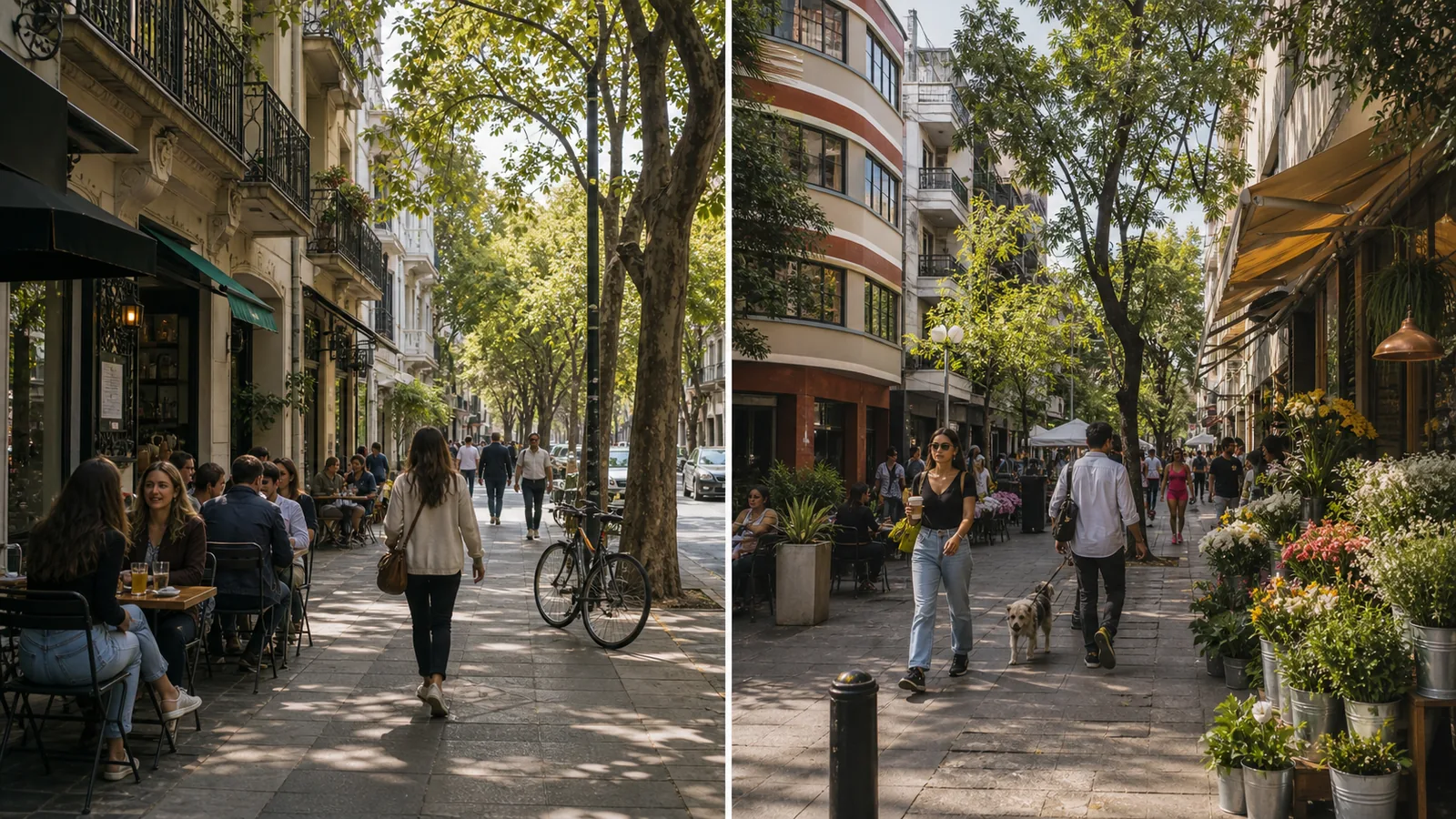
Palermo and Roma Norte both give remote workers cafe density and walkable daily life, but the feel of each neighborhood is different.
Both cities concentrate their nomad infrastructure in specific neighborhoods. The comparison in practice is Palermo (and Recoleta, Belgrano) in BA versus Roma Norte (and Narvarte, Condesa) in CDMX.
Palermo, Buenos Aires is the primary expat base — walkable, tree-lined, with outdoor cafes, a strong brunch culture, and some of the best nightlife infrastructure in South America. Palermo Soho is dense with restaurants, wine bars, and boutique hotels. Recoleta is more European in feel, formal, and residential. Belgrano is quieter and more local. The architecture throughout — French-influenced, early 20th century — gives BA a visual identity unlike any other Latin American city.
Roma Norte, Mexico City is a working neighborhood that happens to also be excellent for remote workers. The density of coffee shops, coworking spaces, markets, and restaurants is matched by actual neighborhood life — Mexican architects, university students, families at the park. It doesn’t feel like a bubble. For stays of 60 days or more, that texture matters.
Narvarte — our second CDMX property — is the quieter, more residential option when you want lower rent and less noise without leaving the city. There’s no direct BA equivalent; if you’re choosing between CDMX neighborhoods, see our Roma Norte vs Narvarte monthly stay comparison .
The honest take: Palermo has more concentrated nightlife depth and a distinct European aesthetic that CDMX doesn’t replicate. Roma Norte has more variety in food, a more active street-level scene during the day, and a richer cultural mix.
Internet and Work Setup
Both cities offer solid infrastructure for professional remote work.
Mexico City: 100–300 Mbps fiber is standard in modern apartments across Roma Norte, Condesa, and Narvarte. The coworking market is mature, with multiple spaces in every neighborhood at $120–$250 USD/month for a hot desk. Dedicated fiber in furnished apartments — the kind that doesn’t drop during video calls — is common enough to be expected, not a premium.
Buenos Aires: Fibertel and Claro offer 100–300 Mbps in modern buildings across Palermo, Recoleta, and Belgrano. Infrastructure quality is generally good in the top expat neighborhoods. The coworking market is smaller than CDMX but active, with hot desks ranging from $80–$200 USD/month.
One practical difference: Argentina’s periodic economic instability has historically affected ISP investment and service consistency. In stable periods, BA internet is reliable. During economic disruption, quality can vary. CDMX’s infrastructure has been more predictably consistent year-over-year.
If you’re booking digital nomad apartments in CDMX , the desk, monitor, and fiber setup should be confirmed before you book. The same applies in BA.
Food and Culture: A Genuine Competition
This is one area where Buenos Aires does not lose easily.
Mexico City has the greatest food culture in Latin America, and most serious food writers would extend that to the Western Hemisphere. The depth of ingredient quality, culinary tradition, and sheer variety — from $30 MXN ($1.50) al pastor to Michelin-level tasting menus — is unmatched. Roma Norte specifically is dense with markets, bakeries, cantinas, and restaurants that would anchor a neighborhood anywhere else in the world.
Buenos Aires has a legitimately world-class food scene. Argentine beef, natural wine, Italian-influenced pasta, empanadas, and a café culture that takes coffee seriously — BA’s dining scene is not trying to be CDMX, and it doesn’t need to. For someone who values steak and wine over tacos and mezcal, the preference reversal is completely reasonable.
On culture and nightlife: Buenos Aires is one of the great cities of the Americas. Tango, theater, football, contemporary art, and a nightlife that genuinely starts at midnight and runs until 6am — BA punches above its weight class culturally in ways that even CDMX doesn’t fully match. CDMX has Museo Nacional de Antropología, Bellas Artes, one of the deepest street art scenes in the world, and a concert calendar that rivals any city. They’re genuinely different in character. Neither loses this category.
In 2026, CDMX has one additional energy: the city is in the middle of World Cup 2026 preparations and hosting. The cultural buzz and international presence is palpable in ways that may tip the scale for nomads who want to be in the center of something.
Safety: The Honest Numbers
Safety is where comparisons usually get either too dismissive or too alarmist.
Nomad List scores Buenos Aires at approximately 55/100 versus CDMX’s 41/100. That 14-point gap is meaningful. Buenos Aires benefits from more concentrated expat neighborhoods with lower petty crime rates in the visitor-facing areas, a more European urban layout with good lighting and walkability, and generally lower violent crime statistics than CDMX’s aggregate.
Mexico City’s 41/100 reflects the city average, not Roma Norte. Petty theft exists in tourist-heavy zones like Centro Histórico and around major metro stations. Violent crime against tourists in Roma Norte, Condesa, Polanco, and Narvarte is rare and statistically below the headline numbers. Most nomads who stay 30–90 days in these neighborhoods experience nothing beyond the usual urban caution you’d apply anywhere.
The practical rules are similar in both cities:
- Buenos Aires: Palermo, Recoleta, Belgrano are safe; be careful at night in unfamiliar areas, and stay alert in the microcentro
- Mexico City: Roma Norte, Condesa, Narvarte, and Polanco operate at a similar risk level; the same logic applies
Neither city is inherently dangerous for a nomad living in a good neighborhood. Buenos Aires has a genuine edge on the numbers, and that’s worth acknowledging honestly.
Visa and Logistics: Where CDMX Wins Clearly

Mexico City wins on visa simplicity. US, EU, UK, Canadian, and Australian nationals get 180 days on tourist entry — no application, no income proof, no prior planning required. The Residente Temporal visa is the natural next step for longer stays and is well-documented. Many nomads complete 180 days as a tourist, exit briefly, and return.
Argentina gives 90 days visa-free for the same nationalities. Buenos Aires does have a formal Digital Nomad Visa, which requires proof of income and a formal application process. It’s a legitimate option, but it introduces friction that CDMX doesn’t have at all.
On flights, the difference is substantial. Mexico City’s Benito Juárez International (AICM) and the newer Felipe Ángeles (AIFA) together connect to dozens of US cities, major European hubs, and the entire Americas. Getting in or out of CDMX is cheap and flexible. Buenos Aires’s Ezeiza is well-connected to South America and has transatlantic routes, but flights to US cities typically run 10–12 hours and carry premium pricing. If you need to be in New York for a week, the round-trip from CDMX is materially simpler and cheaper.
For other LatAm comparisons, see our CDMX vs Medellín breakdown .
Climate and Altitude
Buenos Aires is at sea level (25m), which means no altitude adjustment, no altitude headaches, and warm, humid summers (30–35°C in January and February). The city has distinct seasons — mild springs and autumns (17–18°C average) and cool winters. If you’re planning a January-to-March stay, BA can be uncomfortably hot and humid in a way that affects productivity.
Mexico City sits at 2,240m — significantly higher than most visitors expect. Altitude adjustment affects some arrivals in the first 1–3 days: mild headaches, fatigue, reduced appetite. It passes for most people within 48 hours. After that, CDMX’s climate is exceptionally pleasant: mild days of 17–20°C year-round, cool evenings, an afternoon rainy season (June–October) that rarely disrupts plans.
For work-from-apartment comfort, CDMX’s mild year-round climate is an advantage — no need for AC in summer, no heat pump in winter, and consistent energy bills.
Who Should Choose Each City
Choose Buenos Aires if:
- European architecture, café culture, and nightlife depth matter to you more than food variety
- You understand or want to learn Argentina’s currency system — and want to use it to stretch your budget significantly below CDMX prices
- Safety score is a decision factor and you want BA’s advantage on the numbers
- You’re planning 30–60 days and want concentrated, easy-to-navigate expat infrastructure
- You work with European or South American clients where the UTC-3 timezone is neutral or better
Choose Mexico City if:
- You work with US clients and need real-time timezone overlap — CDMX’s Central Time is 1–2 hours from the entire US
- You want 180 days visa-free with zero paperwork
- Currency stability matters — you don’t want to track peso devaluations and blue rate fluctuations
- You want direct, frequent, and affordable flights back to North America
- You’re planning a 2–6 month stay and want a city that gets richer the longer you know it
- You want the best food culture in Latin America — CDMX isn’t a tie on this one
The Honest Verdict

Buenos Aires is a world-class nomad city. It has a legitimate claim to being the most culturally sophisticated city in Latin America: European architecture, serious theater, tango, wine bars, and nightlife infrastructure that few cities anywhere can match. The safety edge over CDMX is real and measurable. For nomads who know how to exchange currency, it can meaningfully undercut CDMX on cost.
Mexico City is the better operational base for most English-language remote workers in 2026. Central Time alignment with US clients, 180-day visa-free entry, stable currency, unmatched food culture, and direct flights home when you need them — the logistics stack up in CDMX’s favor in ways that compound over a 3–6 month stay.
The honest formula: if you work primarily with US clients, value simplicity, and want the best food on the continent, choose Mexico City. If you want European culture, nightlife depth, and are prepared to navigate Argentina’s currency system to your advantage, Buenos Aires will repay that effort.
The two cities are genuinely different enough that the choice is rarely wrong — just whether you’ve made it for the right reasons.
For monthly stays
Working from CDMX? See what's available
If CDMX is your pick, the next decision is which neighborhood. Roma Norte gives you maximum density — cafes, coworking, restaurants, parks — and the most energetic version of the city. Narvarte gives you the same infrastructure at a calmer pace and a lower price point.
For booking:
- Browse digital nomad apartments in CDMX if desk setup and call reliability are your top filters.
- Compare Mexico City monthly rentals if you are still choosing between Roma Norte and Narvarte.
- Use book direct in Mexico City when you want live availability and direct support.
Sources and further reading
Figures combine public cost-of-living datasets, city comparison tools, and booking-platform pricing snapshots taken in May 2026. Prices and scores move over time — confirm current numbers before you book.
- Nomad List — Mexico City
- Nomad List — Buenos Aires
- Numbeo — Cost of Living in Mexico City
- Numbeo — Cost of Living in Buenos Aires
- Expatistan — Mexico City vs Buenos Aires
- Argentina Digital Nomad Visa — official requirements
- Published listing snapshots on Airbnb and Booking.com (May 2026 sample checks)
Spanish Search Intent
If you are searching in Spanish, this comparison usually appears as CDMX vs Buenos Aires para nómadas digitales, costo de vida CDMX vs Buenos Aires, seguridad en Buenos Aires vs Ciudad de México, or dónde vivir trabajando remoto en Latinoamérica 2026.
Spanish readers can continue with: